
In the realm of personal finance, purchasing a vehicle represents one of the most significant outlays an individual will encounter. While the sticker price often captures the most attention, the structural integrity of the auto loan—specifically the down payment—is what ultimately dictates the long-term health of one’s balance sheet. Understanding how much to put down on a car is not merely a matter of following a dealership’s minimum requirements; it is a strategic decision that affects interest rates, monthly cash flow, and the overall cost of capital.

Whether you are navigating the high-stakes world of new car financing or scouting the used car market, the amount of cash you provide upfront serves as a powerful lever in your financial strategy.
1. The Gold Standard: Understanding the 20% Rule and Modern Benchmarks
Historically, financial advisors and automotive experts have championed the “20% Rule.” This benchmark suggests that a buyer should provide a down payment equal to at least 20% of the vehicle’s purchase price. While this may seem like a high hurdle in an era of rising vehicle costs, the logic behind it remains rooted in sound fiscal management.
The Logic of Immediate Depreciation
The primary reason for the 20% recommendation is depreciation. A new vehicle typically loses about 20% of its value within the first year of ownership, with a significant portion of that drop occurring the moment the tires hit the pavement outside the dealership. By putting 20% down, you effectively “pre-pay” that depreciation. This ensures that the amount you owe on the loan is never more than what the car is worth, a concept known as maintaining positive equity.
Used Cars vs. New Cars: Adjusting the Percentage
The rules of engagement shift slightly when moving from the new car showroom to the pre-owned lot. Because used cars have already undergone their steepest period of depreciation, the risk of “going underwater” is lower. For used vehicles, a down payment of 10% to 15% is often considered the baseline for financial stability. However, even in the used market, a larger down payment provides a buffer against market volatility and potential mechanical issues that could affect the car’s resale value.
The “Zero Down” Trap
In an effort to move inventory, many dealerships offer “zero down” or “no money down” financing. While attractive to those with limited liquid savings, these deals are often a “Money” trap. Without an upfront payment, you are financing the entire purchase price plus taxes, registration fees, and dealer markups. This almost guarantees that you will be in a state of negative equity for the first several years of the loan, which can be catastrophic if the vehicle is totaled or needs to be sold unexpectedly.
2. The Financial Ripple Effect: How Down Payments Impact Total Cost
A down payment is not just a one-time expense; it is an investment in the efficiency of your loan. By reducing the principal amount of the loan from day one, you trigger a series of beneficial financial outcomes that save you thousands of dollars over the life of the agreement.
Minimizing Interest Expenses
Interest is essentially the price you pay for the privilege of using someone else’s money. By increasing your down payment, you reduce the “Loan-to-Value” (LTV) ratio. Lenders view a lower LTV as a sign of lower risk. When you have significant “skin in the game,” lenders are more likely to reward you with a lower interest rate (APR). Over a 60-month or 72-month loan, even a 1% reduction in interest can result in substantial savings. Furthermore, because interest is calculated based on the remaining principal, starting with a smaller principal means you pay less interest every single month.
Enhancing Monthly Cash Flow
From a budgeting perspective, the monthly payment is often the most critical figure. A larger down payment directly correlates to a lower monthly obligation. For every $1,000 you put down, you typically shave roughly $15 to $20 off your monthly payment (depending on the interest rate and term). Lowering this fixed monthly cost provides more “breathing room” in your personal budget, allowing you to redirect those funds toward high-yield savings, retirement accounts, or other debt obligations.
Shortening the Loan Term
High down payments offer the flexibility to opt for shorter loan terms—such as 36 or 48 months—without making the monthly payments unaffordable. Long-term loans (72 to 84 months) are increasingly common but are generally poor financial moves because they result in paying significantly more in total interest. A robust down payment allows you to pay off the asset faster, reaching the point of “debt-free ownership” sooner.
3. Risk Mitigation: Avoiding Negative Equity and the Need for GAP Insurance

One of the most overlooked aspects of the down payment is its role as an insurance policy for your net worth. In the world of finance, being “underwater” or “upside down” on a loan means you owe more than the asset’s market value. This is a precarious position that a proper down payment is designed to prevent.
The Role of Equity in Total Loss Scenarios
If your vehicle is stolen or totaled in an accident, your primary auto insurance provider will only pay out the “Fair Market Value” of the car, not the balance of your loan. If you put $0 down and the car is totaled three months later, the insurance check might be $5,000 less than what you owe the bank. You would be legally obligated to pay that $5,000 difference out of pocket for a car you can no longer drive. A 20% down payment acts as a shield against this specific financial risk.
Evaluating the Cost of GAP Insurance
For those who cannot afford a large down payment, lenders often require or recommend “Guaranteed Asset Protection” (GAP) insurance. This coverage pays the difference between the insurance settlement and the loan balance. However, GAP insurance is an additional monthly expense. By saving for a larger down payment, you effectively eliminate the need for GAP insurance, further reducing your monthly “Money” leakage and simplifying your financial life.
Flexibility for Future Trade-ins
Life circumstances change. You might need a larger vehicle for a growing family or a more fuel-efficient one for a new commute. If you have positive equity—thanks to a strong down payment—trading in your vehicle is a seamless process. The trade-in value covers the loan, and the excess can be used as a down payment on the next vehicle. If you are underwater, you must either pay the difference in cash or “roll” the negative equity into a new loan, creating a dangerous cycle of compounding debt.
4. Leveraging Trade-ins and Incentives as Capital
When calculating your down payment, it is important to remember that “cash” is not the only form of capital available to you. Modern automotive finance allows for a combination of assets to meet your down payment goals.
The Power of the Trade-In
If you already own a vehicle, its trade-in value serves as a direct contribution to your down payment. For example, if you are buying a $30,000 car and your current car is worth $5,000, you have already met a significant portion of a 20% down payment without touching your liquid savings. To maximize this, it is vital to research your car’s “Black Book” or “Kelley Blue Book” value beforehand to ensure the dealer offers a fair price.
Manufacturer Rebates and Incentives
Automakers often offer “cash-back” incentives to spur sales. These rebates can frequently be applied directly to the down payment. If a manufacturer offers a $2,000 rebate, that is $2,000 less that you have to provide from your personal bank account. However, savvy consumers must weigh the “rebate vs. low APR” options. Sometimes, taking a slightly higher interest rate with a large rebate is less mathematically sound than taking a 0% APR offer with no rebate.
Strategic Timing and Market Analysis
The “Money” aspect of a down payment also involves timing. Dealerships often have quotas to meet at the end of the month, quarter, or year. Purchasing during these windows can lead to higher trade-in valuations or deeper discounts that effectively increase the value of your down payment.
5. Budgeting and Opportunity Cost: When to Put More (or Less) Down
While a large down payment is generally advisable, personal finance is never one-size-fits-all. Every dollar used for a down payment is a dollar that cannot be used elsewhere. This introduces the concept of opportunity cost.
Comparing Interest Rates to Investment Returns
If you are offered a promotional 0.9% or 1.9% APR on a car loan, the mathematical argument for a massive down payment weakens. If your money could earn 4.5% in a High-Yield Savings Account (HYSA) or 7-10% in a diversified index fund, it may be wiser to put down only the minimum required to avoid negative equity and keep the rest of your cash invested. In this scenario, you are using “cheap debt” to leverage your investments.
The Emergency Fund Priority
Under no circumstances should a down payment deplete your emergency fund. Financial stability dictates that you should have 3–6 months of living expenses tucked away. If putting 20% down on a car leaves you with zero liquidity for a medical emergency or job loss, you are overextending yourself. In this case, it is better to buy a less expensive car or wait a few more months to save specifically for the “car fund.”
Utilizing Financial Tools for Preparation
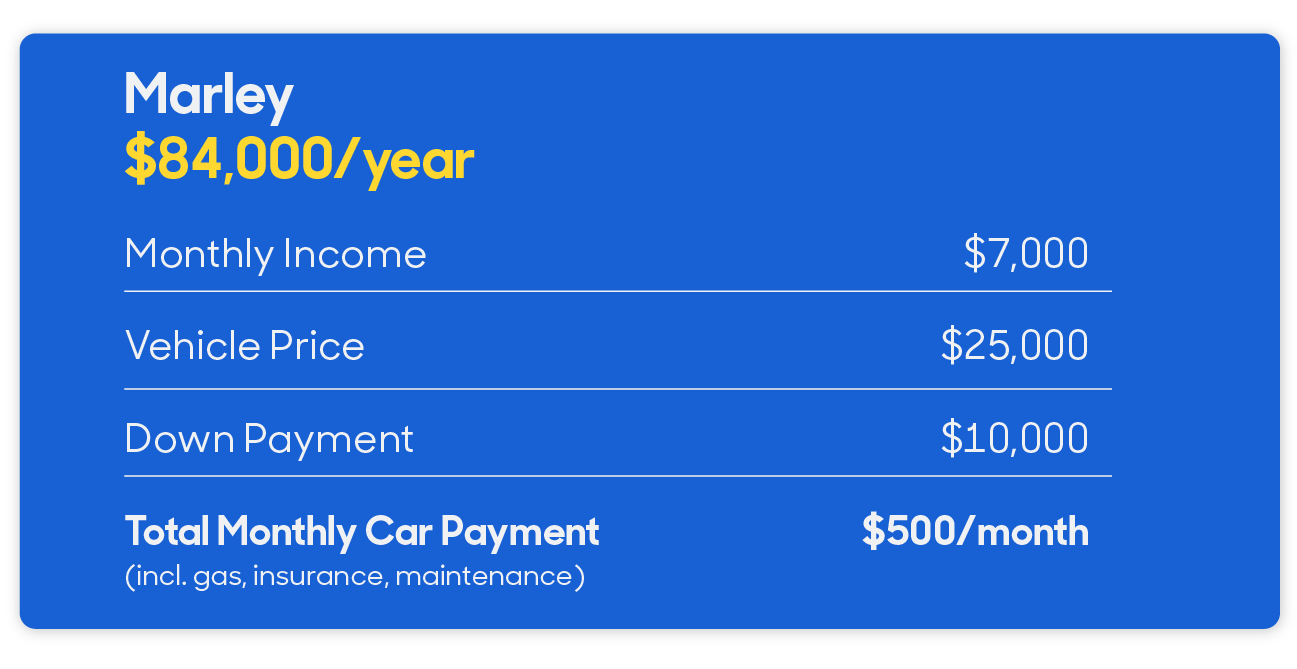
Before stepping onto a lot, use online amortization calculators to run different scenarios. Input various down payment amounts and see how they affect the total interest paid over the life of the loan. Seeing the “Total Cost of Ownership” in black and white often provides the motivation needed to save a little longer for a larger upfront payment.
In conclusion, the question of “how much” is a down payment on a car is answered by balancing institutional requirements with personal financial goals. While 20% remains the gold standard for protecting equity and minimizing interest, the “right” amount is one that aligns with your monthly cash flow, protects you from negative equity, and fits within your broader investment strategy. By treating the down payment as a strategic financial move rather than a mere transactional hurdle, you position yourself for long-term fiscal success on the road ahead.
aViewFromTheCave is a participant in the Amazon Services LLC Associates Program, an affiliate advertising program designed to provide a means for sites to earn advertising fees by advertising and linking to Amazon.com. Amazon, the Amazon logo, AmazonSupply, and the AmazonSupply logo are trademarks of Amazon.com, Inc. or its affiliates. As an Amazon Associate we earn affiliate commissions from qualifying purchases.