
Purchasing a vehicle is often the second-largest financial commitment a person makes, surpassed only by the purchase of a home. Yet, while most buyers spend weeks researching horsepower, safety ratings, and fuel efficiency, far fewer spend the necessary time dissecting the financial engine behind the purchase: the car loan interest. Understanding how to calculate car loan interest is not merely an academic exercise; it is a critical skill in personal finance that can save you thousands of dollars over the life of your loan.
When you sign a financing agreement, you are essentially renting money. The interest is the cost of that rental. By mastering the mechanics of these calculations, you move from a passive consumer to an informed strategist capable of negotiating better terms and managing debt with surgical precision.
1. Understanding the Foundations: Interest Rates vs. APR
Before diving into the mathematical formulas, it is essential to distinguish between two terms that are often used interchangeably but represent different financial realities: the nominal interest rate and the Annual Percentage Rate (APR).
The Nominal Interest Rate
The interest rate is the percentage of the principal amount that the lender charges you for borrowing the money. It is the base “cost” of the loan. However, looking at the interest rate alone provides an incomplete picture of your financial obligation.
The Annual Percentage Rate (APR)
The APR is a more comprehensive measure of the cost of credit. It includes the interest rate plus any additional fees or costs associated with the loan, such as origination fees, documentation fees, or loan processing charges. In the world of personal finance, the APR is the “true” number you should use when comparing offers from different lenders. If two loans have the same interest rate but different APRs, the one with the higher APR is more expensive because of hidden fees.
The Role of Credit Scores in Interest Determination
In the “Money” niche, your credit score is your most valuable financial asset. Lenders use this score to assess risk. A higher score typically results in a lower interest rate because the lender views you as a “safe bet.” Conversely, a lower score requires the lender to charge a higher interest rate to offset the risk of potential default. Understanding this relationship is the first step in calculating what your potential interest burden will look like before you even step onto a dealership lot.
2. The Mechanics of the Calculation: Simple Interest vs. Amortization
Most car loans utilize a “simple interest” model, which differs significantly from the compound interest models found in credit cards. In a simple interest car loan, interest is calculated based on the principal balance remaining on the day the payment is due.
The Simple Interest Formula
To calculate how much interest you will pay in a single month, you can use a basic formula:
Interest = (Principal Balance × Interest Rate) / 12
For example, if you owe $30,000 on a car with a 6% interest rate:
- Convert the percentage to a decimal: 0.06.
- Multiply the balance by the rate: $30,000 × 0.06 = $1,800 (this is the annual interest).
- Divide by 12 months: $1,800 / 12 = $150.
In this scenario, $150 of your first monthly payment goes directly to the lender as profit, while the remainder of your payment goes toward reducing the principal.
Daily Interest Accrual
In professional financial planning, we often look closer at daily accrual. Most modern car loans calculate interest daily. To find your daily interest rate, divide your annual rate by 365. If you make a payment a few days early, less interest has accrued, meaning more of your money goes toward the principal. This is a powerful “side hustle” for your savings—by paying early or more frequently, you effectively reduce the total interest paid over time without needing a higher income.
Understanding Amortization
Amortization is the process of spreading out a loan into a series of fixed payments. While your monthly payment remains the same, the ratio of interest to principal shifts over time. In the early stages of the loan, a larger portion of your payment is consumed by interest. As the principal decreases, the interest charges (which are a percentage of that principal) also decrease, allowing more of your money to chip away at the actual debt in the later years of the loan.
3. Step-by-Step Guide to Calculating Your Total Loan Cost

While many people use online calculators, knowing how to do the math yourself provides a deeper level of insight into your budget and long-term financial health.
Step 1: Determine the Monthly Payment
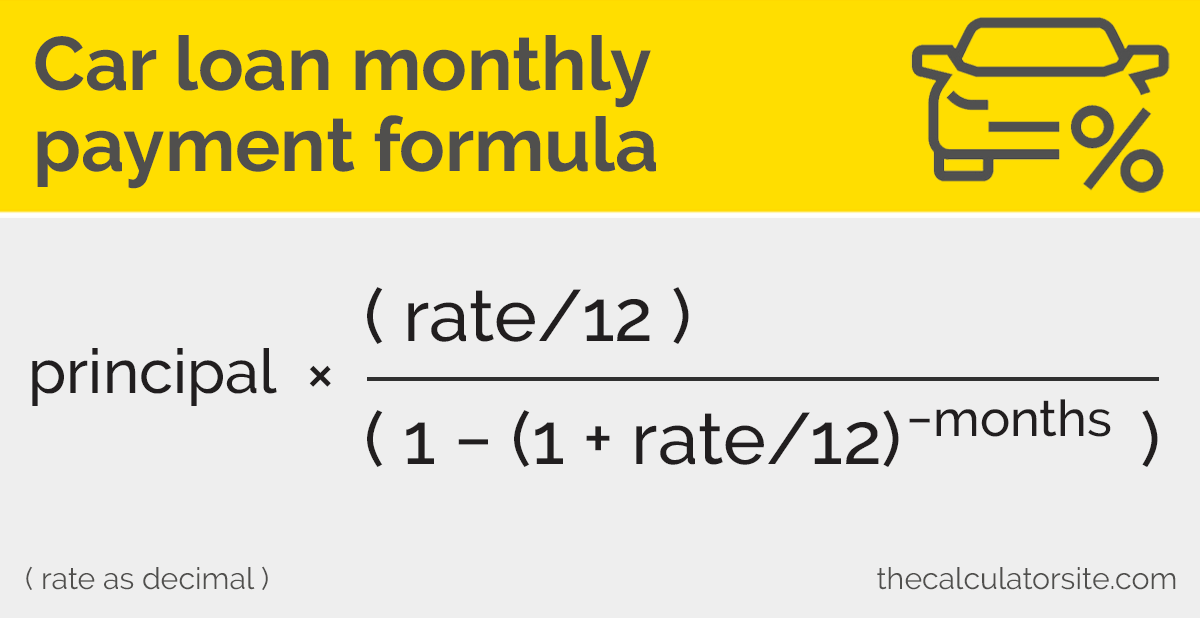
The formula for a monthly payment (M) is more complex because it accounts for the declining balance:
M = P [ i(1 + i)^n ] / [ (1 + i)^n – 1 ]
- P = Principal loan amount
- i = Monthly interest rate (Annual rate divided by 12)
- n = Number of months (the loan term)
Step 2: Calculate the Total Cost of the Loan
Once you have the monthly payment, calculating the total cost of the vehicle is straightforward. Multiply your monthly payment by the total number of months in the term.
- Total Paid = Monthly Payment × Number of Months
Step 3: Isolate the Total Interest
To find out exactly how much you are paying for the “privilege” of borrowing, subtract the original principal from the total paid.
- Total Interest = Total Paid – Original Loan Principal
For example, on a $35,000 loan at 7% interest for 60 months, your monthly payment would be roughly $693. Over five years, you would pay a total of $41,580. This means the “interest” cost of that car is $6,580. Identifying this number allows you to ask: “Is this vehicle worth $6,580 more than its sticker price?”
4. Factors That Influence Your Total Interest Paid
Calculations are not static; they are influenced by several levers that you, the borrower, can pull to change the outcome.
Loan Term Length
The “Money” strategy often involves a trade-off between monthly cash flow and total cost. A 72-month or 84-month loan will offer a lower monthly payment, making it easier on your monthly budget. However, because the interest has more time to accrue on the principal, the total interest paid will be significantly higher. From a wealth-building perspective, shorter loan terms (36 to 48 months) are almost always superior, as they minimize interest leakage.
The Impact of the Down Payment
A down payment is your most effective tool for reducing interest. By paying a portion of the car’s cost upfront, you reduce the principal (P) in our formulas. Since interest is a percentage of the principal, a smaller principal results in smaller interest charges every single month. In professional finance, we recommend at least 20% down to avoid “negative equity,” where you owe more than the car is worth.
Frequency of Payments
Because car loans are usually simple interest, the timing of your payments matters. If you split your monthly payment into two bi-weekly payments, you effectively pay down the principal faster. Over the course of a year, this reduces the average daily balance upon which interest is calculated, leading to subtle but meaningful savings.
5. Strategies to Minimize Interest and Optimize Your Financial Position
Once you understand how to calculate the interest, the final step is to apply that knowledge to optimize your personal balance sheet.
Refinancing for a Better Rate
If interest rates have dropped since you took out your loan, or if your credit score has improved significantly, you should recalculate your potential savings through refinancing. By moving your remaining principal to a new loan with a lower APR, you can reduce your monthly obligation and the total interest remaining.
The “Principal-Only” Payment Strategy
If your loan agreement allows it without penalty, making extra payments toward the principal is one of the best “investments” you can make. If your car loan interest rate is 8%, every extra dollar you pay toward the principal is essentially earning you a guaranteed 8% return on your money by avoiding future interest charges. In the world of investing, a guaranteed 8% return is highly attractive.

Negotiation Based on Total Cost, Not Monthly Payment
Dealerships often focus the conversation on “What monthly payment can you afford?” This is a distraction. They can meet your monthly payment goal by simply extending the loan term to 84 months, which increases the total interest you pay. Armed with your calculation skills, you should negotiate based on the “Out the Door” price and the APR. By focusing on the total cost (Principal + Total Interest), you protect your long-term wealth rather than just your monthly cash flow.
In conclusion, calculating car loan interest is about more than just numbers on a page; it is about taking control of your financial destiny. By understanding the difference between APR and interest rates, mastering the simple interest formula, and strategically adjusting your loan terms and down payments, you ensure that your vehicle remains a tool for mobility rather than a drain on your financial future. Knowledge is the ultimate collateral in the world of personal finance.
aViewFromTheCave is a participant in the Amazon Services LLC Associates Program, an affiliate advertising program designed to provide a means for sites to earn advertising fees by advertising and linking to Amazon.com. Amazon, the Amazon logo, AmazonSupply, and the AmazonSupply logo are trademarks of Amazon.com, Inc. or its affiliates. As an Amazon Associate we earn affiliate commissions from qualifying purchases.