
For the average consumer, purchasing a vehicle represents the second-largest financial commitment they will make in their lifetime, trailing only behind the purchase of a home. Because of this, the question “How much will my car payment be?” is not merely a matter of curiosity—it is a critical calculation that dictates monthly cash flow, long-term savings potential, and overall financial stability.
Navigating the complexities of auto financing requires more than just looking at a sticker price. It involves understanding the interplay between interest rates, loan durations, and the hidden costs of ownership. This guide will break down the mechanics of car payments to help you make an informed, financially sound decision.

1. The Fundamental Components of a Car Payment
To understand how your monthly obligation is calculated, you must first deconstruct the loan into its three primary pillars: the principal, the interest rate, and the term. Each of these variables acts as a lever; shifting one will inevitably affect the others and, ultimately, your bottom line.
The Principal Balance
The principal is the actual amount of money you borrow from a lender to purchase the vehicle. This is not necessarily the MSRP (Manufacturer’s Suggested Retail Price) of the car. It is the final negotiated price minus your down payment and the value of any trade-in vehicle, plus any added fees, taxes, or extended warranties you choose to finance. Reducing the principal is the most direct way to lower your monthly payment and the total interest paid over the life of the loan.
Interest Rates and APR
The Annual Percentage Rate (APR) is the cost you pay each year to borrow the money, expressed as a percentage. In the realm of personal finance, your credit score is the primary determinant of this rate. A high credit score signals to lenders that you are a low-risk borrower, allowing you to secure lower rates. Conversely, a lower score can result in “subprime” rates, which can add thousands of dollars to the total cost of the vehicle. It is important to distinguish between the nominal interest rate and the APR, as the latter includes lender fees, providing a more accurate picture of the loan’s cost.
The Loan Term
The term refers to the length of time you have to pay back the loan, typically ranging from 36 to 84 months. While longer terms (72 or 84 months) are becoming increasingly popular because they result in lower monthly payments, they come with a significant financial caveat. The longer the loan, the more interest you will pay in total. Furthermore, cars are depreciating assets; with a long-term loan, you run the risk of becoming “upside down” or having “negative equity,” where you owe more on the car than it is currently worth.
2. The Mathematics of Financing: How to Calculate Your Monthly Commitment
Before stepping onto a dealership lot, you should have a firm grasp of the math involved. Relying on a dealer’s “four-square” worksheet can often lead to confusion, as they may manipulate monthly payments by extending terms without highlighting the increased interest costs.
Using Online Financial Tools and Calculators
In the digital age, there is no excuse for entering a financial agreement blind. Utilizing a high-quality auto loan calculator allows you to input different scenarios. By toggling the down payment amount or the interest rate, you can see exactly how a 1% change in APR affects your monthly budget. Professional financial planners recommend using these tools to establish a “ceiling” for your payment before you ever begin shopping for a specific model.
The Impact of Down Payments and Trade-Ins
The down payment is your most powerful tool in the negotiation process. In the world of personal finance, the “20/4/10 rule” is a gold standard: put down at least 20%, finance for no more than four years, and ensure the total transportation costs (payment, insurance, fuel) do not exceed 10% of your gross income. A substantial down payment reduces the Loan-to-Value (LTV) ratio, which can sometimes help you qualify for a better interest rate because the lender’s risk is reduced.
Understanding Amortization
Most auto loans use a simple interest formula, but they are amortized. This means that in the early months of your loan, a larger portion of your monthly payment goes toward interest rather than the principal. As the balance decreases, the interest portion shrinks. Understanding this schedule is vital if you plan to pay off the loan early; ensuring your loan has no “prepayment penalties” is a key step in managing your long-term debt.
3. Beyond the Sticker Price: Understanding Total Cost of Ownership (TCO)
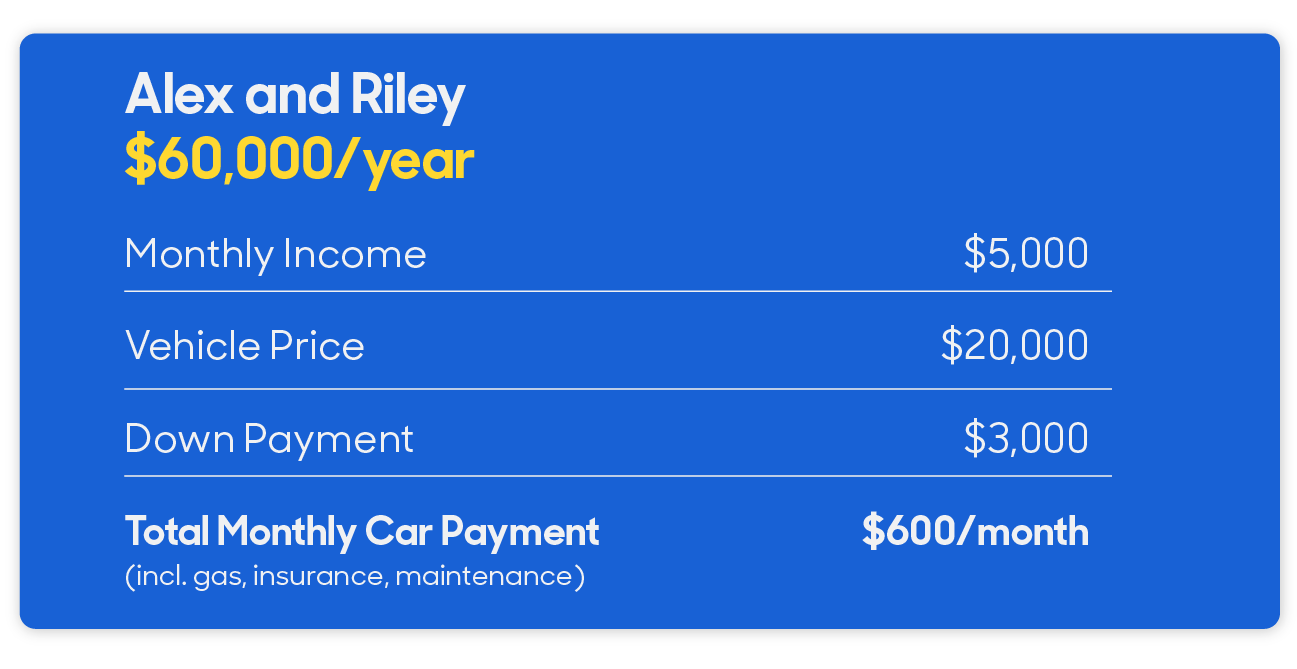
A common mistake in personal finance is equating the “car payment” with the “cost of the car.” To truly answer how much a car will cost you each month, you must look at the Total Cost of Ownership (TCO).
Insurance Premiums
The vehicle you choose significantly impacts your insurance rates. A sports car or a luxury SUV will carry higher premiums than a standard sedan. Additionally, if you are financing the vehicle, the lender will require you to carry “full coverage” (comprehensive and collision), which is more expensive than the liability-only coverage you might carry on a vehicle you own outright. Always get an insurance quote for the specific model you are considering before signing the loan papers.
Maintenance, Fuel, and Repairs
A lower monthly loan payment on an older, used luxury vehicle might seem attractive, but the maintenance costs can quickly eclipse the savings. Personal finance experts suggest setting aside a “sinking fund” for vehicle maintenance. When calculating your monthly budget, factor in the estimated cost of oil changes, tires, and scheduled service intervals. Furthermore, with fluctuating energy prices, the difference between a car that gets 20 MPG and one that gets 35 MPG can represent a hundred dollars or more in your monthly budget.
The Silent Killer: Depreciation
While depreciation isn’t a bill you pay every month, it is a real financial cost. Most new cars lose about 20% of their value in the first year and roughly 60% after five years. When you eventually sell or trade in the car, the “cost” of that depreciation becomes realized. Choosing vehicles with high resale value—often brands known for reliability—is a strategic move to preserve your net worth over time.
4. Strategic Ways to Lower Your Monthly Car Payment
If your initial calculations show a monthly payment that strains your budget, there are several strategic maneuvers you can employ to bring that number down without sacrificing your financial health.
Improving Your Credit Profile
If you aren’t in a rush to buy, spending six months improving your credit score can save you thousands. Paying down credit card balances to lower your utilization rate and ensuring all payments are made on time can bump you into a better “tier” of financing. The difference between a 4% and an 8% interest rate on a $30,000 loan is approximately $55 per month and over $3,000 over the life of a five-year loan.
Considering Certified Pre-Owned (CPO) Vehicles
One of the smartest moves in personal finance is letting someone else take the initial depreciation hit. A Certified Pre-Owned vehicle often comes with a manufacturer-backed warranty and a significantly lower price tag than a brand-new model. This allows you to borrow a smaller principal amount, leading to a more manageable monthly payment while still enjoying the peace of mind that comes with a newer vehicle.
Refinancing and Gap Insurance
If you already have a car loan with a high interest rate, refinancing is an option. If your credit has improved since you took out the loan, or if market rates have dropped, a credit union or online lender might offer you a better rate. Additionally, always evaluate the need for GAP (Guaranteed Asset Protection) insurance. If your car is totaled and you owe more than its market value, GAP insurance covers the difference. While it adds a small amount to the monthly cost, it protects you from a potential financial catastrophe.
5. Integrating a Car Payment into Your Long-Term Financial Plan
Ultimately, a car payment is an opportunity cost. Every dollar sent to a dynamic auto lender is a dollar that isn’t being invested in a 401(k), a Roth IRA, or a high-yield savings account.
The Rule of Thumb for Monthly Budgeting
Financial experts often suggest that your total car payment should not exceed 10% to 15% of your take-home pay. However, for those focused on aggressive wealth building, keeping this number as low as possible is preferable. A car is a tool for transportation, but in the context of personal finance, it is also a liability. Balancing the desire for a reliable, modern vehicle with the need to build an investment portfolio is the hallmark of financial literacy.
Avoiding the “Forever Loan” Cycle
A dangerous trend in modern finance is the “perpetual car payment.” This occurs when a consumer trades in a vehicle every three years, rolling the remaining debt of the old loan into a new one. This creates a cycle of debt that prevents the individual from ever actually owning the asset. To build true wealth, the goal should be to pay off the vehicle and then continue “paying yourself” that monthly amount into a savings account for your next car, eventually allowing you to buy your future vehicles in cash.
Conclusion: Making the Final Decision
Determining “how much will my car payment be” is the first step toward responsible vehicle ownership. By understanding the components of the loan, calculating the total cost of ownership, and strategically managing your credit and down payment, you can ensure that your car serves your lifestyle without sabotaging your financial future. Remember: a car is a means to get you to your destination, but your financial plan is what will get you to your goals. Plan wisely, calculate thoroughly, and prioritize your long-term net worth over short-term curb appeal.
aViewFromTheCave is a participant in the Amazon Services LLC Associates Program, an affiliate advertising program designed to provide a means for sites to earn advertising fees by advertising and linking to Amazon.com. Amazon, the Amazon logo, AmazonSupply, and the AmazonSupply logo are trademarks of Amazon.com, Inc. or its affiliates. As an Amazon Associate we earn affiliate commissions from qualifying purchases.