
In the modern marketplace, a brand is far more than a logo, a color palette, or a catchy slogan. It is a living entity—a collective perception held in the minds of consumers. As competition saturates every digital and physical space, companies are increasingly moving away from purely functional marketing toward emotional and psychological resonance. This brings us to a compelling metaphorical question used by top-tier brand strategists: What is your spirit animal?
In a professional branding context, identifying a “spirit animal” is not a whimsical exercise; it is a rigorous method of defining a brand’s archetype, personality, and core values. By personifying a brand through the lens of animalistic traits or Jungian archetypes, businesses can create a consistent, relatable, and powerful identity that cuts through the noise of the digital age.
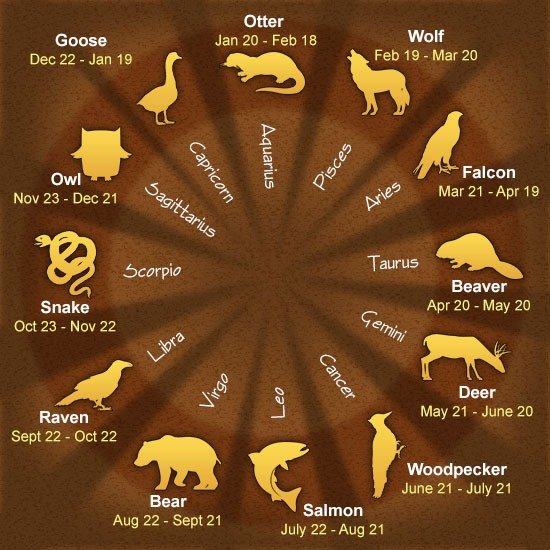
The Psychology of Symbolism in Modern Branding
The human brain is hardwired to seek patterns and personify the world around it. We attribute character traits to objects, cars, and, most importantly, the companies we buy from. When a brand fails to define its “spirit,” the public will define it for them, often resulting in a fragmented or unfavorable reputation.
Moving Beyond Logos: The Soul of the Brand
A logo is merely a visual shorthand. The “soul” of the brand—its spirit animal—is what that shorthand represents. For instance, when people see the silhouette of a mountain lion or a predatory bird, they immediately associate it with speed, precision, and dominance. If your brand strategy focuses solely on aesthetics without a foundational identity, your marketing efforts will feel hollow. A spirit animal serves as the North Star for all creative and strategic decisions, ensuring that every tweet, advertisement, and product launch feels like it is coming from the same “being.”
Why the “Spirit Animal” Metaphor Works for Consumers
Consumers no longer buy products; they buy identities. When a customer chooses a brand, they are often signaling something about their own personality. By adopting a spirit animal—whether it is the reliability of a Draft Horse or the wisdom of an Owl—a brand provides a mirror for the consumer. This creates an emotional bond that transcends price points and features. It moves the relationship from transactional to relational, fostering the kind of brand loyalty that survives market fluctuations.
Identifying Your Brand Archetype: The Four Pillars of Identity
To discover your brand’s spirit animal, you must first categorize the brand’s primary mission. In brand strategy, we often look at archetypes that represent different human desires. Here, we can translate these into “animal” identities to help visualize the brand’s behavior in the wild.
The Innovator (The Eagle)
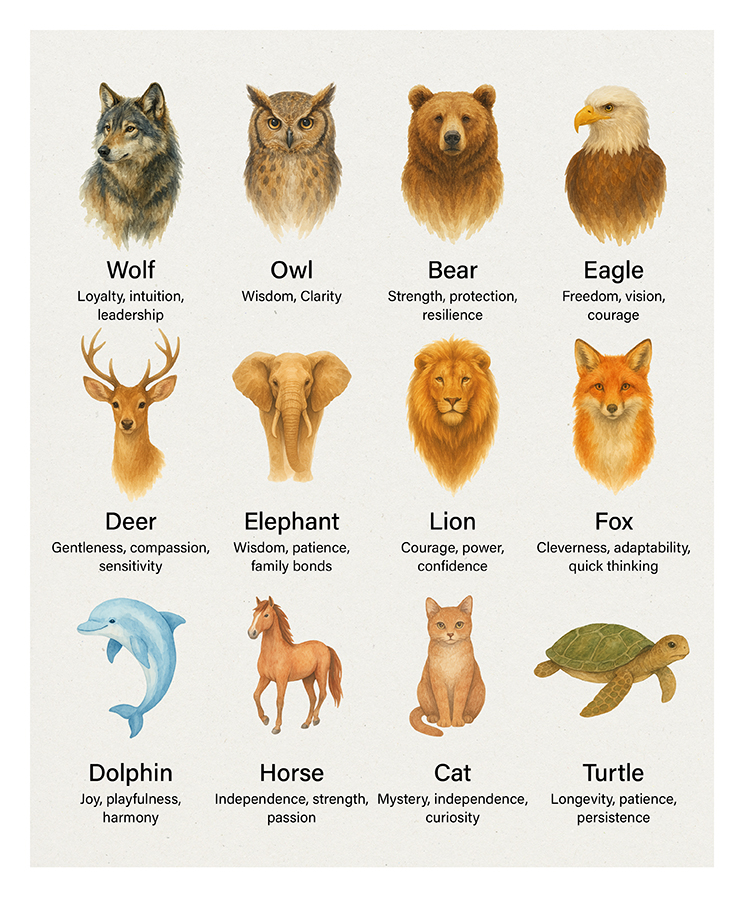
The Innovator brand is visionary, high-reaching, and possesses “eagle-eye” precision. These brands—think of companies like SpaceX or Apple in its early years—are focused on the big picture and the future. Their spirit animal is the Eagle because they soar above the competition, seeing opportunities that others miss. Their tone is authoritative, inspiring, and slightly detached, emphasizing excellence and “the view from the top.”
The Protector (The Elephant)
Brands that focus on safety, community, longevity, and heritage often find their spirit animal in the Elephant. These are the “Protector” brands—insurance companies, healthcare providers, or legacy banks. The Elephant represents memory (tradition), strength (stability), and a deep social bond (community focus). A Protector brand’s strategy is built on trust and the promise that they will be there for the long haul.
The Rebel (The Wolf)
The Rebel brand thrives on the fringes. They are challengers of the status quo. Unlike the Eagle, which dominates from above, the Wolf operates with a pack mentality but remains fiercely independent and untamed. Brands like Red Bull or Harley-Davidson embody this spirit. They appeal to consumers who feel like outsiders or who want to assert their individuality. Their brand strategy is often provocative, high-energy, and community-centric.
The Sage (The Owl)
The Sage brand is the seeker of truth and the provider of wisdom. Their spirit animal is the Owl. These brands—such as Google, TED, or The Economist—value knowledge above all else. They are not interested in being the loudest in the room; they want to be the smartest. Their marketing is educational, minimalist, and deeply researched. The goal of a Sage brand is to empower the consumer through information.
Aligning Visual Design with Your Brand’s Inner Essence
Once the spirit animal or archetype is identified, the next step in brand strategy is “manifestation.” This is where the abstract concept of a spirit animal is translated into tangible design elements. Every visual cue must reinforce the chosen identity.
Color Theory and Animalistic Psychology
Colors evoke specific instincts. If your spirit animal is the Lion (The Ruler), your palette should lean toward golds, deep purples, and charcoals—colors associated with royalty and power. If your spirit animal is the Dolphin (The Entertainer/Friend), your brand should utilize vibrant blues, teals, and yellows to evoke playfulness and accessibility. Misalignment here is fatal; a “Wolf” brand dressed in soft pastels will create cognitive dissonance in the consumer, leading to a lack of trust.
Typography as an Extension of Character
Typography carries the “voice” of the spirit animal. A “Bear” brand (The Caregiver/Protector) might use heavy, rounded, sans-serif fonts that feel sturdy but approachable. Conversely, a “Cheetah” brand (The Performance/Speed brand) would benefit from italicized, high-contrast serif fonts that imply motion and elegance. The weight and slant of your text are the subtle growls or chirps of your brand’s spirit.
Case Studies: Brands That Mastered Their Spirit Animal
Looking at successful global entities reveals how the “spirit animal” concept is executed at the highest levels of corporate strategy. These brands have successfully distilled complex values into a singular, recognizable essence.
Ferrari and the Prancing Horse: The Power of Performance
Ferrari is perhaps the most literal example. The Cavallino Rampante (Prancing Horse) is not just a logo; it is the brand’s entire DNA. The horse represents speed, vitality, and elite status. Every Ferrari design—low to the ground, muscular, and loud—mimics the physical presence of a thoroughbred. Their brand strategy never deviates from this spirit. They do not make “family” cars in the traditional sense because a spirit animal must remain true to its nature.
Mailchimp and Freddie: The Spirit of Accessibility
Mailchimp utilized “Freddie the Chimp” to humanize what could have been a dry, technical B2B software service. By choosing a primate—an animal known for being clever, social, and a bit mischievous—Mailchimp signaled that they were the “friendly” alternative to enterprise-grade email tools. This spirit animal allowed them to use humor and quirky illustrations in their marketing, which helped them dominate the small-business market by being the most “human” tech brand available.
How to Implement Your Spirit Animal into a Long-term Strategy
Defining your spirit animal is only the beginning. The true value lies in operationalizing that identity across every touchpoint of the business, from internal culture to external customer service.
Maintaining Consistency Across Touchpoints
A brand’s spirit animal must be evident in more than just the marketing department. If a company claims the spirit of the Honeybee (The Collaborator/Community Builder), but its internal culture is cut-throat and hierarchical, the brand identity will eventually collapse. Authentic branding requires that the “spirit” permeates the HR policies, the sales scripts, and even the way the office is designed. Consistency is what turns a metaphor into a brand reality.
Future-Proofing Your Brand Identity
The market evolves, and sometimes a brand must undergo a “metamorphosis.” However, the core spirit usually remains the same. As technology shifts—moving from web-based interfaces to AI-driven interactions—your brand’s spirit animal provides the framework for how your AI should speak and behave. Should your AI be as wise as an Owl or as playful as a Golden Retriever? By knowing your spirit animal today, you are setting the stage for how your brand will exist in the digital landscapes of tomorrow.
In conclusion, asking “what is your spirit animal?” is a profound exercise in brand strategy. It forces a business to look past its balance sheets and product features to find its true character. Whether you are an Eagle soaring above the market or a Wolf leading the pack, a clearly defined spirit animal provides the clarity, emotional resonance, and strategic direction needed to build a legendary brand.
aViewFromTheCave is a participant in the Amazon Services LLC Associates Program, an affiliate advertising program designed to provide a means for sites to earn advertising fees by advertising and linking to Amazon.com. Amazon, the Amazon logo, AmazonSupply, and the AmazonSupply logo are trademarks of Amazon.com, Inc. or its affiliates. As an Amazon Associate we earn affiliate commissions from qualifying purchases.