
When evaluating the cost of a Build-A-Bear Workshop experience, one must look beyond the simple price tag of a stuffed animal. From a personal finance and business economics perspective, Build-A-Bear represents a premier example of “experiential retail”—a model where consumers pay not just for a physical product, but for the process of creation. Understanding the financial breakdown of this experience is essential for parents, gift-givers, and budget-conscious consumers who want to navigate the store without overspending.
In this guide, we will analyze the various price tiers, the “upsell” mechanics inherent in the business model, and strategic ways to manage your discretionary spending while still enjoying the full value of the brand.
Understanding the Entry Point: Base Costs and Core Components
The total cost of a Build-A-Bear is rarely the number you see on the first shelf. The business operates on a modular pricing structure, starting with a base price for the “skin” (the un-stuffed plush) and scaling upward based on customization.
The Furry Friend Base Price
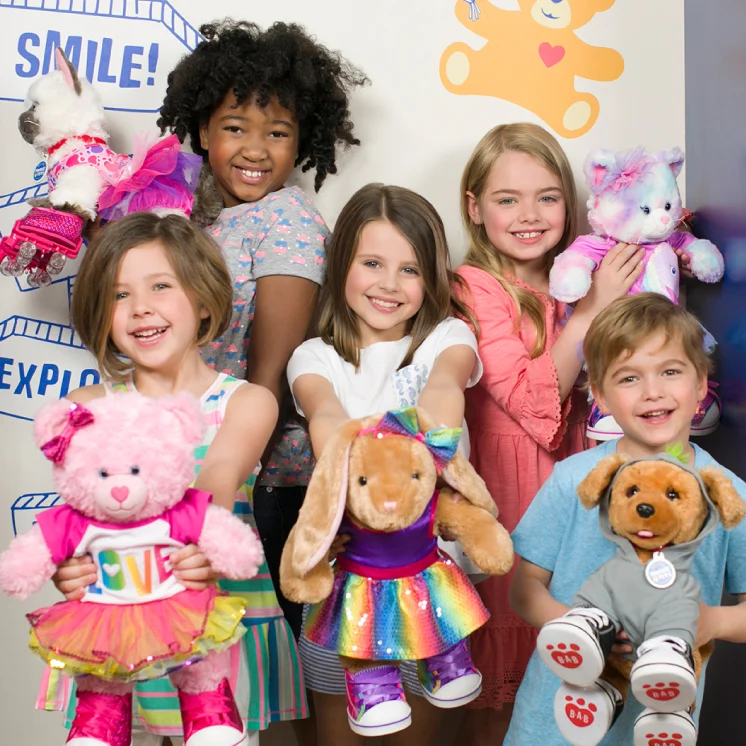
The entry-level cost for a standard plush typically begins around $14.00 to $20.00 for basic models, such as classic teddy bears or simpler animals. However, as you move into specialized designs, licensed characters, or limited editions, the base price can rise significantly.
For high-demand intellectual property—such as characters from Disney, Star Wars, or Pokémon—the base price usually starts between $30.00 and $45.00. This premium reflects the licensing fees the company pays to third-party brands, which are passed directly to the consumer. For a budget-conscious shopper, identifying the base price is the first step in setting a financial ceiling for the visit.
The Essential “Heart” Ceremony and Stuffing
One of the unique aspects of the Build-A-Bear financial model is that the “labor” and core components of assembly are included in the base price. The stuffing, the iconic fabric heart, and the birth certificate ceremony do not carry additional fees. This is a critical psychological component of the brand’s value proposition; the consumer perceives a high level of service and engagement that is “free,” even though it is baked into the initial margin of the plush.
The Upsell Economy: Clothing, Accessories, and Add-ons
The true financial complexity of Build-A-Bear lies in the customization phase. This is where a $20.00 bear can quickly transform into an $80.00 investment. The store layout is designed to guide consumers through a series of incremental spending decisions, each of which seems minor in isolation but contributes to significant “basket growth” at the point of sale.
Outfits and Footwear Pricing
Clothing is the primary driver of secondary costs. A single outfit—consisting of a shirt and pants or a dress—typically ranges from $12.00 to $25.00. Accessories like shoes, hats, and glasses generally cost between $5.00 and $10.00 per item. From a financial planning perspective, it is important to note that a full “head-to-toe” outfit often costs more than the base bear itself. For many families, this is where the budget often breaks, as the visual appeal of a fully dressed character is a powerful psychological trigger for children.
Sound Modules and Scents
Beyond the visual, Build-A-Bear offers sensory add-ons. “Scentaments” (small discs that make the bear smell like strawberries, pizza, or cotton candy) usually cost around $4.00 to $5.00. Sound modules—which can play pre-recorded clips, music, or even a personalized 10-second voice recording—range from $5.00 to $15.00. While these are low-cost items individually, they represent high-margin “impulse buys” that increase the total transaction value.
Licensing Fees and Premium Collections
It is vital to distinguish between “in-house” designs and licensed products. When purchasing a “Collector’s Edition” or a bear tied to a major film release, every accessory is priced at a premium. A standard pair of jeans might be $8.00, but a pair of “branded” superhero leggings might be $12.00. When budgeting for a licensed character, one should expect to pay a 20% to 30% premium across the entire transaction.
The Experience Premium: Analyzing the Value Proposition
To understand why consumers are willing to pay $50.00 to $100.00 for a stuffed animal that might cost $15.00 at a traditional big-box retailer, we must analyze the “Experience Economy.”

The “Experience Economy” and Consumer Psychology
In modern personal finance, we often distinguish between “goods” and “experiences.” Build-A-Bear successfully blurs this line. The cost of the bear includes the 20-30 minutes spent in-store interacting with staff, participating in the “heart ceremony,” and physically helping to stuff the toy. Economically, this is viewed as entertainment spending rather than a simple retail purchase. When the cost is amortized over the time spent and the emotional memory created, many consumers justify the higher price point as a “special occasion” expense.
Longevity vs. One-Time Cost
From a value-per-use perspective, the longevity of the product plays a role in its financial worth. Unlike cheaper toys that may break within weeks, Build-A-Bear products are generally known for higher-quality stitching and the “Lifetime Stitch Guarantee,” where the store will repair or re-stuff a bear for free if it becomes damaged. This “warranty” adds intrinsic value to the purchase price, positioning it as a long-term asset in a child’s toy collection rather than a disposable commodity.
Strategic Spending: How to Manage Costs at Build-A-Bear
Navigating a Build-A-Bear Workshop requires a tactical approach to personal finance. Without a strategy, the “all-in” price can be a shock at the register.
Leveraging Loyalty Programs and Gift Cards
The “Build-A-Bear Bonus Club” is a free loyalty program that provides points for every dollar spent, leading to $10.00 rewards. For regular shoppers, this represents a 5-10% “rebate” on total spending. Furthermore, savvy spenders often look for discounted gift cards on secondary markets or through warehouse clubs like Costco, where you can often purchase $100.00 worth of gift cards for $70.00 or $80.00. This immediate 20-30% savings is the most effective way to lower the “all-in” cost.
The “Pay Your Age” Strategy and Promotional Windows
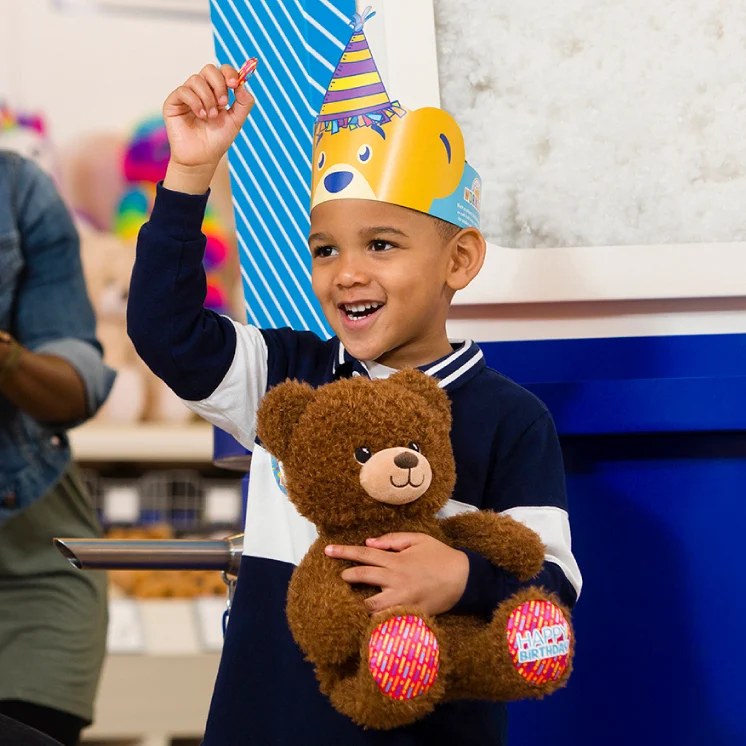
One of the most famous marketing and pricing strategies in recent retail history is the “Pay Your Age” event. While the company has transitioned this into a birthday-specific promotion, it remains a powerful tool for cost-saving. Members of the Bonus Club can bring a child during their birthday month and pay their age for a specific “Birthday Treat Bear.” For a three-year-old, a bear that usually costs $14.00 becomes $3.00. Identifying these promotional windows is essential for families operating on a strict budget.
Setting a Hard Budget for Special Occasions
The most effective way to control costs is to establish a “Total Cost of Ownership” (TCO) before entering the store. Parents often find success by giving children a “gift card” with a set limit (e.g., $35.00) and explaining that they must make choices within that balance. This turns the shopping trip into a lesson in financial literacy, teaching the child how to weigh the opportunity cost of a sound module versus a pair of shoes.
Comparative Analysis: Build-A-Bear vs. Traditional Toy Retail
When we look at the macroeconomics of the toy industry, Build-A-Bear occupies a middle-to-high ground.
Price Elasticity in the Stuffed Animal Market
The stuffed animal market is highly elastic, meaning consumers are usually sensitive to price changes. You can buy a stuffed bear at a discount retailer for $5.00. However, Build-A-Bear has managed to maintain “price inelasticity”—the ability to keep prices high without losing customers—by branding the experience as a rite of passage.
The financial cost of a Build-A-Bear is essentially a “bundle”:
- The Commodity: The plush itself (~$20).
- The Customization: Clothing and accessories (~$25).
- The Service: The interactive experience and “ceremony” (~$15).
When viewed this way, a $60.00 total spend is a composite of three different types of economic value.
Conclusion: The Bottom Line on Build-A-Bear Costs
So, how much does a Build-A-Bear cost? While the theoretical minimum is roughly $14.00, the average realistic expenditure for a complete experience ranges between $45.00 and $75.00.
For the modern consumer, the key is to recognize the store’s “upsell” logic and enter with a clear financial plan. By utilizing loyalty rewards, seeking out licensed character alternatives, and setting firm limits on accessories, you can enjoy the “Build-A-Bear experience” without compromising your personal financial goals. Ultimately, the cost is a reflection of the value you place on the “experience” over the “object”—a hallmark of 21st-century consumer behavior.
aViewFromTheCave is a participant in the Amazon Services LLC Associates Program, an affiliate advertising program designed to provide a means for sites to earn advertising fees by advertising and linking to Amazon.com. Amazon, the Amazon logo, AmazonSupply, and the AmazonSupply logo are trademarks of Amazon.com, Inc. or its affiliates. As an Amazon Associate we earn affiliate commissions from qualifying purchases.