
In the era of big data, the question “What is a half cousin?” has evolved from a simple genealogical curiosity into a complex problem of computational biology and algorithmic sorting. While traditionally defined by family trees and oral histories, the modern understanding of kinship is now driven by sophisticated software, massive genomic datasets, and the logic of identity-by-descent (IBD) segments. For developers, data scientists, and tech enthusiasts, the concept of a “half cousin” represents a fascinating intersection of graph theory and predictive analytics.
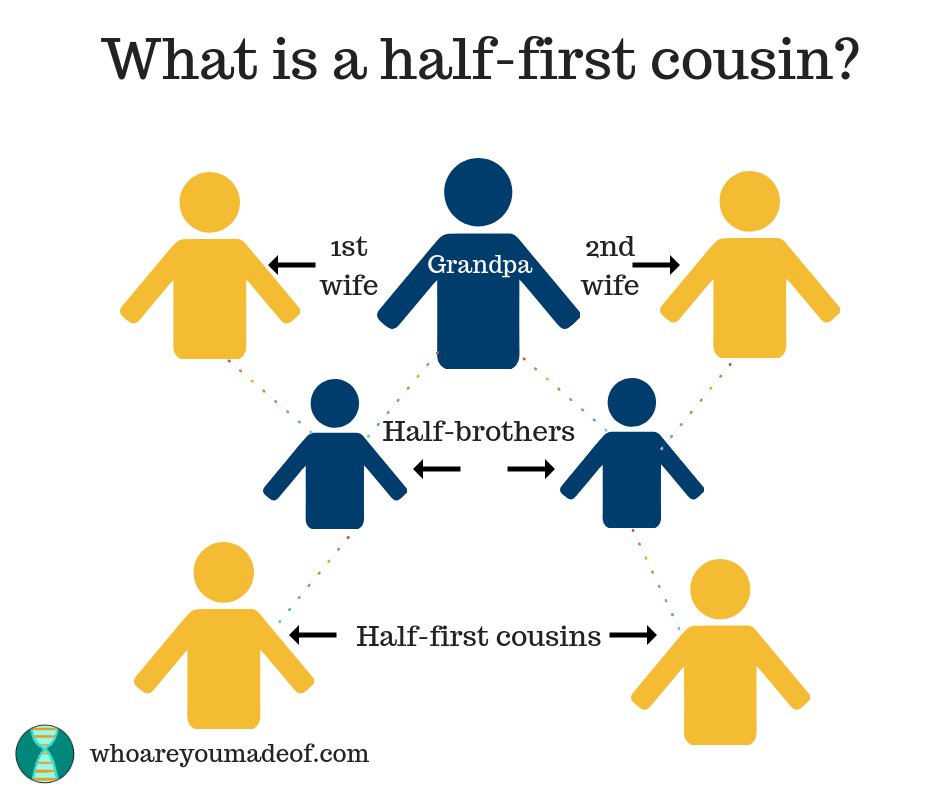
To understand a half cousin through a technical lens, one must look past the biological definition—children of half-siblings—and examine the underlying data structures that allow platforms like AncestryDNA, 23andMe, and MyHeritage to identify these individuals among millions of users.
The Computational Logic of Genetic Kinship
At the heart of any genealogical software is the ability to quantify biological relationships using digital metrics. When a user submits a DNA sample, the technology does not look for “family members” in a literal sense; it looks for shared sequences of nucleotides that indicate a common ancestor.
Centimorgans (cM) as a Unit of Digital Measurement
In the world of genetic tech, the “centimorgan” is the primary unit of measurement. It is not a physical distance, but a measure of genetic linkage. Specifically, it represents the probability that a specific segment of DNA will be separated by a recombination event in a single generation.
When an algorithm identifies a “half cousin,” it is looking for a specific range of shared centimorgans. Typically, first cousins share between 396 and 1,397 cM. However, a half-first cousin—someone with whom you share only one grandparent instead of two—shares significantly less, usually ranging from 156 to 979 cM. The challenge for software developers lies in the “overlap zones,” where the data for a half-first cousin might look identical to that of a first cousin once removed or a great-great-uncle. Solving this requires multi-layered heuristic analysis.
The Half-Identity-By-Descent (IBD) Algorithm
The core technology used to identify half-cousins is the Identity-by-Descent (IBD) algorithm. This software scans two different genomes to find long strings of DNA that match exactly. For full cousins, these segments are “Fully Identical Regions” (FIRs), meaning the DNA matches on both the maternal and paternal chromosomes.
For a half cousin, the algorithm identifies “Half-Identical Regions” (HIRs). Because half cousins share only one common ancestor (one grandparent), they only share DNA on one of their two chromosomes at any given location. The software must be programmed to distinguish between these HIRs and random noise or “Identical by State” (IBS) segments, which are matches that occur by chance rather than shared heritage.
Software Architecture in Genealogy: Mapping the Digital Family Tree
Building a platform that can accurately categorize a half cousin requires a robust back-end architecture capable of handling recursive relationships and massive relational databases.
Relational Databases and Graph Theory in Kinship Mapping
From a software engineering perspective, a family tree is a directed acyclic graph (DAG). Each individual is a node, and each biological relationship is an edge. When a user asks, “What is a half cousin?” the software performs a traversal of this graph.
To identify a half cousin, the system must locate the “Most Recent Common Ancestor” (MRCA). In a standard first-cousin relationship, the MRCA is a pair (the grandfather and grandmother). In a half-cousin relationship, the MRCA is a single node (one grandparent). The database must be optimized to query these paths across billions of nodes in real-time. Using graph databases like Neo4j allows companies to execute these complex queries much faster than traditional SQL databases, as they are designed to handle the “join-heavy” nature of genealogical connections.
Managing “Half” Relationships in Data Schema
Traditional data schemas often struggle with the “half” designation. In many legacy systems, siblings are grouped by a “Family ID.” However, half-siblings belong to two different family units. This requires a flexible schema where an individual can be linked to multiple parental units.

When the software calculates the relationship, it must account for “unlinked” nodes. If a user’s DNA matches another user’s at a 500 cM level, but the genealogical records show no shared grandmother, the software must be intelligent enough to flag a potential “half” relationship, suggesting that a single ancestor is missing from the digital record. This is where data gaps meet algorithmic inference.
The Role of AI and Machine Learning in Predicting Relationships
As genomic databases grow, the industry is moving away from static threshold-based calculations and toward machine learning (ML) models that can predict a “half cousin” with high precision.
Pattern Recognition in Large Genomic Datasets
Machine learning models, particularly those using neural networks, are trained on millions of known kinship pairs. These models learn the subtle nuances of how DNA is passed down. For example, some segments of the human genome are “stickier” than others, meaning they are less likely to break apart during recombination.
An ML-driven kinship tool doesn’t just look at the total number of shared centimorgans; it looks at the distribution and location of those segments. If a user shares a long, unbroken segment with another user on Chromosome 14, the AI might prioritize a “half cousin” designation over a “second cousin” designation, even if the total cM count is the same. This level of pattern recognition is what allows modern tech to distinguish between complex family structures that would baffle a human genealogist.
Eliminating “False Positives” in Distant Cousinship
One of the greatest technical hurdles in genealogical tech is “endogamy”—populations where people have been marrying within the same community for centuries. In these cases, two people might share enough DNA to look like half cousins, but they are actually related through multiple distant lines.
Advanced algorithms use “phasing”—the process of separating maternal DNA from paternal DNA—to clean the data. By using AI to phase the genome, the software can determine if the shared segments all come from one side of the family (indicating a half-cousin) or are scattered across both sides (indicating endogamy). This digital filtering is essential for maintaining the integrity of the “cousin” classification system.
Digital Privacy and the Security of Genetic Data
Identifying a half cousin isn’t just a data problem; it is a security and privacy challenge. When a software platform informs a user they have a half cousin they didn’t know existed, it is essentially exposing a biological “secret” that was previously hidden.
Encryption Protocols for Ancestry Platforms
The technology that stores this information must be incredibly secure. Most platforms use “homomorphic encryption” or “differential privacy” to allow for relationship matching without exposing the user’s entire raw genetic code. When the system searches for a half cousin, it isn’t comparing “A, C, G, T” strings in plain text. Instead, it compares encrypted hashes of genetic segments. This ensures that even if a data breach occurs, the biological identity of the users remains protected.
The Ethical Tech Landscape of Shared DNA
The tech industry is currently grappling with the ethics of “matching” algorithms. Should a user be automatically notified of a half cousin? Most modern apps now include “opt-in” filters for relationship matching. This adds a layer of complexity to the software’s front-end: managing user permissions and visibility states across a global network.
The API must be designed to respect these privacy toggles. If User A is a half cousin of User B, but User B has opted out of “DNA Discovery,” the algorithm must effectively “blind” itself to that connection, even though the data exists on the server. This balance between data utility and user privacy is the frontier of genealogical tech.

Conclusion: The Future of Kinship Tech
The question “What is a half cousin?” serves as a gateway to understanding how modern technology deconstructs the human experience. Through the use of centimorgan metrics, IBD algorithms, graph-based data structures, and machine learning, we have moved from family bibles to digital precision.
As we look toward the future, the integration of AI will only become more profound. We are moving toward a “Predictive Genealogy” where software can reconstruct the genomes of long-dead ancestors by aggregating the shared segments of their living “half” and “full” descendants. In this high-tech landscape, a half cousin is more than a relative; they are a vital data point in the ongoing project of mapping the human story. For the tech-savvy, the family tree is no longer a static image—it is a living, breathing database.
aViewFromTheCave is a participant in the Amazon Services LLC Associates Program, an affiliate advertising program designed to provide a means for sites to earn advertising fees by advertising and linking to Amazon.com. Amazon, the Amazon logo, AmazonSupply, and the AmazonSupply logo are trademarks of Amazon.com, Inc. or its affiliates. As an Amazon Associate we earn affiliate commissions from qualifying purchases.