
Tax season is often met with a mixture of anxiety and resignation. For many, the complexity of the federal and state tax codes necessitates professional help, which frequently comes at a steep price. However, as personal finance literacy grows and digital tools become more sophisticated, the opportunity to file taxes for free has expanded significantly. Filing for free is not merely about saving the $50 to $150 preparation fee; it is about taking control of your financial health, understanding your cash flow, and ensuring that you are not leaving money on the table through overlooked credits or unnecessary service charges.

In the modern financial landscape, “free” tax filing comes in several forms, ranging from government-sponsored programs to private software “freemium” models. Navigating these options requires a strategic approach to ensure you qualify for the zero-cost tier and that your specific financial situation—whether you are a W-2 employee, a freelancer, or an investor—is adequately covered.
Understanding the Landscape of Free Tax Filing
The first step in eliminating tax preparation costs is understanding the infrastructure that allows for free filing. For decades, the barrier to entry for DIY tax preparation was either the extreme complexity of paper forms or the high cost of proprietary software. Today, the landscape is defined by a partnership between the public sector and private industry, as well as new government-direct initiatives.
The IRS Free File Program: A Public-Private Partnership
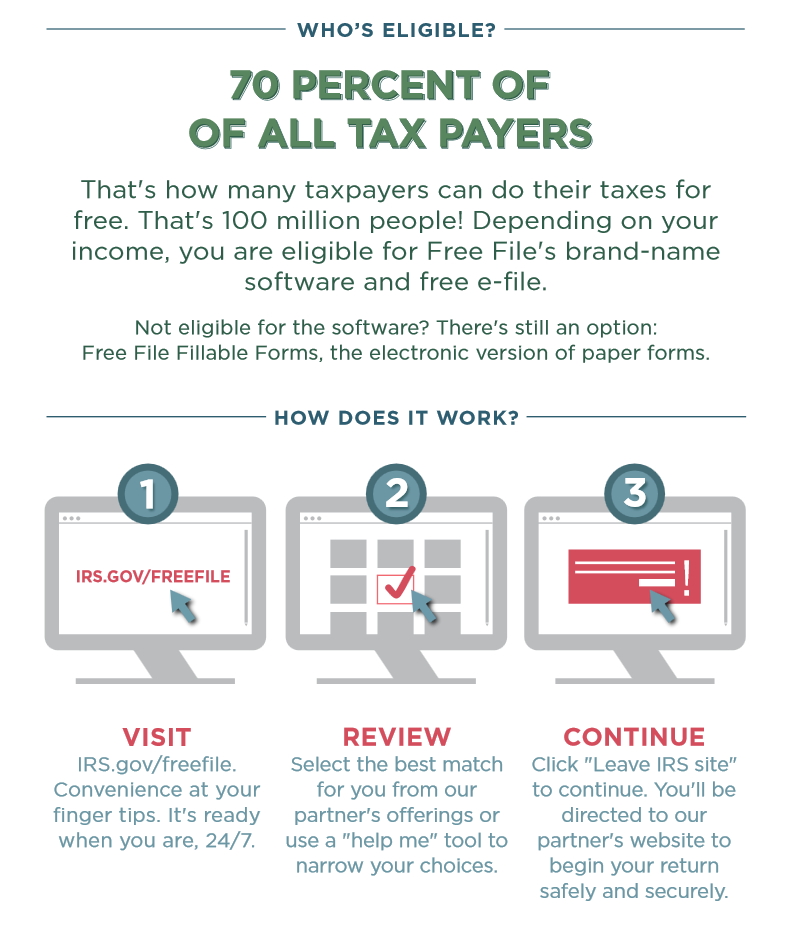
The IRS Free File program is perhaps the most well-known avenue for zero-cost filing. This is a public-private partnership between the Internal Revenue Service and the Free File Inc., a group of industry-leading tax software companies. Under this agreement, these companies provide their high-end software for free to taxpayers who fall below a specific income threshold.
For the current tax year, the income limit for IRS Free File is generally an Adjusted Gross Income (AGI) of $79,000 or less. If your income falls within this bracket, you can access full-featured software that handles complex calculations, schedules, and credits without paying a licensing fee. It is important to access these tools directly through the IRS.gov website to ensure you are directed to the truly free versions rather than the commercial “Free Edition” landing pages, which may attempt to upsell you.
Eligibility Requirements: Who Qualifies for Zero-Cost Preparation?
Eligibility for free filing is primarily determined by your AGI, but other factors such as age and military status also play a role. Some providers within the Free File Alliance offer their services specifically to younger taxpayers or active-duty military members regardless of income.
However, “free” can sometimes be a relative term. While federal filing is almost always free under these programs, some providers may charge a fee for state tax preparation. For a truly zero-cost experience, savvy filers look for providers that offer both federal and state filing for free, a feature that is becoming more common as competition in the financial tool space increases.
Direct File: The IRS’s New Internal Solution
A significant shift in the personal finance world is the introduction of IRS Direct File. This is a pilot program where the IRS provides its own interview-based filing software directly to taxpayers, bypassing third-party corporations entirely. While currently limited to certain states and specific types of tax situations (such as simple W-2 income and standard deductions), Direct File represents a move toward a more integrated, government-provided financial utility. For eligible taxpayers, this is the most direct way to fulfill their civic obligation without a middleman.
Top Software Solutions and Platforms for No-Cost Returns
While the IRS Free File program is a gateway, several independent platforms have built their brand identities around providing low-to-no-cost financial tools. These platforms often appeal to those who may exceed the Free File income limits but still wish to avoid the premium pricing of “Big Tax” corporations.
Commercial Options: Free Editions vs. Hidden Fees
Major players like TurboTax and H&R Block offer “Free Editions.” However, users must be cautious. These “simple return only” versions are often restricted to taxpayers filing a 1040 with no complex schedules. If you have student loan interest deductions, unemployment income, or health savings account (HSA) contributions, these commercial “free” versions might prompt you to upgrade to a paid tier mid-way through the process.
From a financial planning perspective, it is often better to use a platform like FreeTaxUSA or Cash App Taxes. FreeTaxUSA offers free federal filing for almost all complexities—including self-employment and investment income—charging only a small, flat fee for state returns. Cash App Taxes (formerly Credit Karma Tax) has gained a massive following by offering truly free federal and state filing with no income caps, monetizing instead through its broader ecosystem of financial services.
Volunteer Income Tax Assistance (VITA) and TCE
For those who prefer a human touch but cannot afford a CPA, the Volunteer Income Tax Assistance (VITA) program is an invaluable financial resource. VITA offers free tax help to people who generally make $64,000 or less, persons with disabilities, and limited English-speaking taxpayers.
Similarly, the Tax Counseling for the Elderly (TCE) program offers free tax help for all taxpayers, particularly those who are 60 years of age and older, specializing in questions about pensions and retirement-related issues unique to seniors. These programs are staffed by IRS-certified volunteers and provide a level of professional oversight that software cannot always replicate.
Maximizing Your Refund through Strategic Documentation
Filing for free is only one half of the equation; the other half is ensuring that your filing is accurate enough to maximize your refund or minimize your liability. In personal finance, tax efficiency is a core pillar of wealth building.
Organizing Your Financial Paperwork: From W-2s to 1099s
Before opening any software, you must aggregate your financial data. This includes traditional income statements like W-2s, but also 1099-INT for bank interest, 1099-DIV for dividends, and 1099-B for brokerage transactions. In the era of the “side hustle,” 1099-K and 1099-NEC forms have become increasingly common.
Filing for free requires you to be your own “data entry clerk.” Misplacing a single form can lead to an automated underreporter notice from the IRS, which can result in penalties and interest that far outweigh the money saved by filing for free. Digital organization—using folders categorized by tax year—is a fundamental habit for anyone serious about managing their personal finances.
Standard Deduction vs. Itemizing: Which Saves You More?
A key decision in the filing process is whether to take the standard deduction or to itemize. Since the Tax Cuts and Jobs Act of 2017, the standard deduction has been high enough that the vast majority of taxpayers do not need to itemize. For the 2023 and 2024 tax years, these amounts have continued to adjust for inflation.
However, if you have significant mortgage interest, large charitable contributions, or unreimbursed medical expenses that exceed 7.5% of your AGI, itemizing might save you more money. Most free software will run a “side-by-side” comparison for you. Choosing the right path is a strategic financial decision that impacts your net worth for the year.
Digital Security and Protecting Your Financial Identity
When you file taxes for free online, you are transmitting your most sensitive financial data across the internet. Digital security is a non-negotiable aspect of modern personal finance. Your Social Security number, bank account details, and income history are prime targets for identity thieves.
Avoiding Tax Scams and Phishing Expeditions
The IRS will never initiate contact with taxpayers by email, text messages, or social media channels to request personal or financial information. Any “free filing” offer that comes via an unsolicited text or email is almost certainly a phishing scam designed to steal your identity. Always ensure you are on a “https” secured website and check the URL to verify it is the official site of the software provider or the IRS.
The Importance of IP PINs and Secure Filing
To add an extra layer of security to your financial identity, you can opt into the IRS Identity Protection PIN (IP PIN) program. An IP PIN is a six-digit number that prevents someone else from filing a tax return using your Social Security number. It is a proactive financial security measure that ensures your “free” filing experience doesn’t turn into a costly identity theft nightmare. Furthermore, always use multi-factor authentication (MFA) on whichever tax platform you choose.
Year-Round Financial Planning to Minimize Future Tax Liability
Filing your taxes is a retrospective look at your financial life over the past year. However, the most successful individuals in personal finance treat tax preparation as a year-round activity. Filing for free becomes much easier when your finances are structured simply and efficiently.
Contributing to Tax-Advantaged Accounts
One of the most effective ways to lower your AGI—and potentially qualify for free filing programs in the future—is to contribute to tax-advantaged accounts. Contributions to a traditional 401(k) or a Traditional IRA reduce your taxable income dollar-for-dollar. Similarly, contributing to a Health Savings Account (HSA) provides a triple tax advantage: contributions are tax-deductible, growth is tax-free, and withdrawals for qualified medical expenses are tax-free.

Tracking Business Expenses for Side Hustles
If you are an independent contractor or have a side business, you must track your expenses meticulously throughout the year. Free filing software for the self-employed (like the versions offered via the Free File Alliance) allows you to deduct “ordinary and necessary” business expenses. This includes a portion of your home office, equipment, and travel. By maintaining a clean set of financial books, you make the free filing process seamless and ensure you are only paying tax on your net profit, not your gross revenue.
In conclusion, filing taxes for free is a highly achievable goal for the majority of taxpayers. By leveraging the IRS Free File program, utilizing robust free commercial platforms, and maintaining rigorous financial organization, you can eliminate unnecessary fees. More importantly, this process encourages a deeper engagement with your own financial data, paving the way for better investment decisions, improved security, and long-term fiscal stability.
aViewFromTheCave is a participant in the Amazon Services LLC Associates Program, an affiliate advertising program designed to provide a means for sites to earn advertising fees by advertising and linking to Amazon.com. Amazon, the Amazon logo, AmazonSupply, and the AmazonSupply logo are trademarks of Amazon.com, Inc. or its affiliates. As an Amazon Associate we earn affiliate commissions from qualifying purchases.