
The Cost of Goods Sold (COGS) is a fundamental accounting metric that represents the direct costs attributable to the production or acquisition of the goods sold by a company during a specific period. It’s not just a number on a financial statement; it’s a critical indicator that provides insights into a business’s operational efficiency, pricing strategies, and profitability. Understanding COGS is paramount for any business, from a small e-commerce startup to a large manufacturing enterprise, as it directly impacts gross profit and ultimately, net income. This metric helps in making informed decisions about pricing, inventory management, supplier relationships, and overall business strategy.

Understanding the Components of Cost of Goods Sold
At its core, COGS encompasses the direct expenses incurred in bringing a product to a sellable condition. This means excluding indirect costs like marketing, sales, and administrative expenses, which fall under operating expenses. The specific components of COGS can vary significantly depending on the nature of the business, whether it’s a manufacturer, a retailer, or a service provider. However, for most businesses dealing with physical products, the primary elements include:
Direct Materials
These are the raw materials or components that are directly incorporated into the finished product. For a bakery, this would include flour, sugar, eggs, and butter. For a furniture manufacturer, it would be wood, screws, and upholstery fabric. The cost of these materials is typically measured at their purchase price, including any freight-in costs (transportation costs to get the materials to the company’s premises) and import duties. It’s crucial to accurately track the cost of materials that actually end up in the sold goods. For instance, if a certain percentage of raw materials are typically wasted during the manufacturing process, only the cost of the materials that are part of the final product should be included in COGS.
Direct Labor
This refers to the wages and benefits paid to employees who are directly involved in the production or manufacturing process. This includes factory workers, assembly line staff, and machine operators. The time spent by these employees on activities directly related to creating the product is considered direct labor. For example, a baker’s wages for the hours spent mixing dough and baking bread are direct labor costs. Similarly, an assembly line worker’s wages for putting together a car are direct labor. It’s important to distinguish direct labor from indirect labor, such as supervisors or maintenance staff, whose wages are typically classified as manufacturing overhead.
Manufacturing Overhead (for Manufacturers)
For businesses that manufacture their own goods, COGS also includes a portion of manufacturing overhead. These are indirect costs associated with the production process that cannot be directly traced to a specific product but are essential for its creation. This category can be broad and includes:
- Factory Utilities: Electricity, gas, and water used by the factory.
- Factory Rent or Depreciation: The cost of using or owning the manufacturing facility.
- Factory Equipment Depreciation: The cost of using machinery and equipment over time.
- Factory Supplies: Lubricants, cleaning supplies, and other consumables used in the factory.
- Indirect Labor: Wages of factory supervisors, quality control personnel, and maintenance staff.
- Insurance on Factory Assets: Premiums for insuring the manufacturing facility and equipment.
Allocating manufacturing overhead to specific products requires a systematic approach, often based on predetermined overhead rates, machine hours, or direct labor hours. The goal is to assign a fair share of these indirect costs to each unit produced.
Direct Purchase Costs (for Retailers and Wholesalers)
Retailers and wholesalers, unlike manufacturers, do not produce goods. Their COGS primarily consists of the direct costs incurred in acquiring the inventory they sell. This typically includes:
- Purchase Price: The amount paid to suppliers for the goods.
- Freight-In Costs: The cost of transporting the goods from the supplier to the retailer’s warehouse or store.
- Import Duties and Taxes: Any customs duties or taxes paid on imported goods.
- Any direct costs associated with making the product ready for sale: This might include minor assembly or packaging costs if these are directly attributable to making the product saleable in its final form.
For example, a clothing boutique’s COGS would include the wholesale price of the garments, the shipping costs from the manufacturer to the store, and any import tariffs.
Calculating Cost of Goods Sold: The Formula and Its Variations
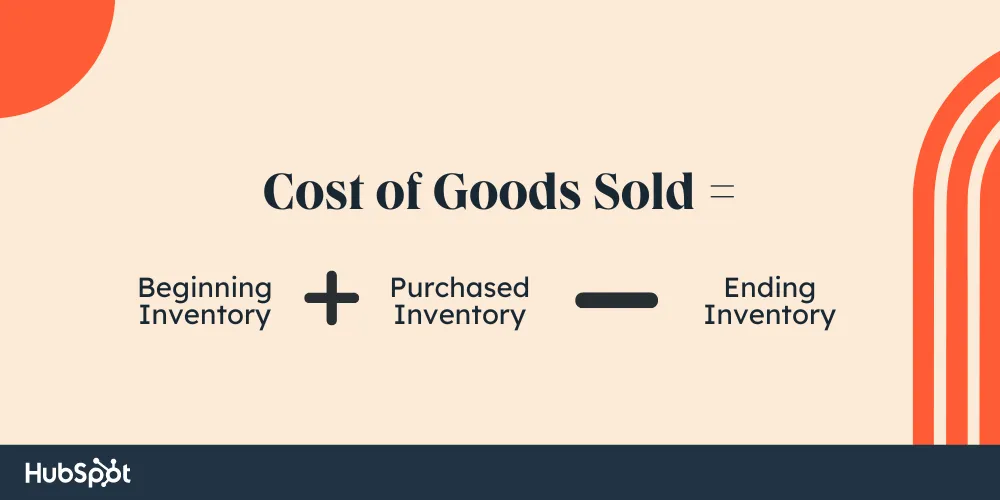
The fundamental formula for calculating COGS is:
Beginning Inventory + Purchases – Ending Inventory = Cost of Goods Sold
Let’s break down each element of this formula:
Beginning Inventory
This represents the value of inventory that a company had on hand at the start of an accounting period (e.g., the beginning of a month, quarter, or year). This figure is carried over from the ending inventory of the previous period. Accurately valuing beginning inventory is crucial for a correct COGS calculation.
Purchases
This includes all inventory purchased or manufactured during the accounting period. For manufacturers, this would encompass the cost of direct materials, direct labor, and manufacturing overhead. For retailers and wholesalers, it includes the cost of acquiring inventory from suppliers, including freight-in and duties. It’s important to consider any returns or allowances made during the period, which would reduce the total purchases.
Ending Inventory

This is the value of inventory that remains unsold at the end of the accounting period. Determining ending inventory is often the most complex part of the COGS calculation, especially for businesses with a large volume of inventory or items with varying costs. Different inventory valuation methods, such as First-In, First-Out (FIFO), Last-In, First-Out (LIFO), and Weighted-Average Cost, are used to determine the cost of ending inventory, which in turn affects the COGS.
Inventory Valuation Methods and Their Impact on COGS
The method used to value inventory has a direct impact on the calculated COGS and, consequently, on the company’s reported profit.
-
First-In, First-Out (FIFO): This method assumes that the first inventory items purchased are the first ones sold. Under FIFO, the cost of the oldest inventory is expensed as COGS, while the ending inventory reflects the cost of the most recently purchased items. In periods of rising prices, FIFO generally results in a lower COGS and higher net income.
-
Last-In, First-Out (LIFO): This method assumes that the most recently purchased inventory items are the first ones sold. Under LIFO, the cost of the newest inventory is expensed as COGS, leaving the older, often lower-cost inventory in ending inventory. In periods of rising prices, LIFO typically results in a higher COGS and lower net income, which can lead to lower tax liabilities. However, LIFO is not permitted under International Financial Reporting Standards (IFRS).
-
Weighted-Average Cost: This method calculates a weighted-average cost for all inventory items available for sale during the period. The average cost is then used to determine both COGS and ending inventory. This method smooths out price fluctuations and provides a more representative cost for both sold and unsold goods.
-
Specific Identification: For unique, high-value items (e.g., custom jewelry, vehicles), this method tracks the actual cost of each individual item. While highly accurate, it is often impractical for businesses with a large volume of similar inventory.
The choice of inventory valuation method can significantly influence a company’s financial statements, particularly during periods of inflation or deflation.
Why is Cost of Goods Sold Important for Businesses?
COGS is more than just an accounting entry; it’s a powerful tool for business analysis and decision-making. Its importance stems from several key areas:
Measuring Gross Profitability
The most direct application of COGS is in calculating gross profit. Gross Profit is calculated as:
Revenue – Cost of Goods Sold = Gross Profit
Gross profit represents the profit a company makes after deducting the direct costs of producing or acquiring its products. It’s a crucial indicator of how efficiently a company is managing its production and procurement processes. A healthy gross profit margin (Gross Profit / Revenue) suggests that the company is pricing its products effectively and managing its direct costs well. A declining gross profit margin may signal issues with rising material costs, increased labor expenses, or an inability to pass those costs on to customers through pricing.
Inventory Management Efficiency
COGS is intrinsically linked to inventory levels. By analyzing COGS in relation to average inventory, businesses can calculate the Inventory Turnover Ratio:
Cost of Goods Sold / Average Inventory = Inventory Turnover Ratio
This ratio indicates how many times a company has sold and replaced its inventory during a period. A higher inventory turnover generally signifies efficient inventory management, as goods are not sitting in stock for too long, reducing the risk of obsolescence, spoilage, or storage costs. Conversely, a low turnover might suggest overstocking, slow sales, or inefficient purchasing. Analyzing this ratio over time and against industry benchmarks helps businesses optimize their inventory levels, minimizing carrying costs while ensuring adequate stock to meet demand.
Pricing Strategies
Understanding the direct costs associated with each product is fundamental to setting competitive and profitable prices. If a company’s COGS is too high relative to its competitors, it may struggle to offer competitive pricing without sacrificing profitability. Conversely, a low COGS can provide pricing flexibility, allowing a company to offer more attractive prices or achieve higher profit margins. COGS analysis helps businesses determine the minimum price they can charge for a product and assess the profitability of various pricing strategies, such as discounts or promotions.
Operational Efficiency and Cost Control
A close examination of COGS components can reveal areas for operational improvement. For manufacturers, analyzing the cost of direct materials and direct labor can highlight opportunities for cost reduction through supplier negotiations, process optimization, or improved labor productivity. For retailers, understanding freight-in costs and supplier pricing can lead to better procurement strategies. By identifying where costs are highest within the COGS calculation, businesses can focus their efforts on improving efficiency and reducing expenses in those specific areas.
Financial Reporting and Tax Implications
Accurate COGS calculation is essential for preparing reliable financial statements. It directly impacts the income statement, affecting reported profits and earnings per share. Furthermore, the chosen inventory valuation method (e.g., LIFO in the US) can have significant tax implications by influencing taxable income. Tax authorities often have specific rules and regulations regarding inventory valuation and COGS reporting, making accuracy and compliance critical.
Conclusion
The Cost of Goods Sold is a cornerstone of financial analysis for any business involved in selling products. It provides a clear view of the direct expenses incurred in bringing those products to market. By meticulously tracking and analyzing its components, businesses can gain invaluable insights into their gross profitability, inventory management effectiveness, pricing power, and overall operational efficiency. Whether a company is a manufacturer, a retailer, or a wholesaler, a thorough understanding and strategic management of COGS are indispensable for sustainable growth, competitive advantage, and long-term financial health. It empowers informed decision-making, enabling businesses to navigate the complexities of their supply chain, optimize their production processes, and ultimately, maximize their profitability in a dynamic marketplace.
aViewFromTheCave is a participant in the Amazon Services LLC Associates Program, an affiliate advertising program designed to provide a means for sites to earn advertising fees by advertising and linking to Amazon.com. Amazon, the Amazon logo, AmazonSupply, and the AmazonSupply logo are trademarks of Amazon.com, Inc. or its affiliates. As an Amazon Associate we earn affiliate commissions from qualifying purchases.