
In the world of retail giants, Costco Wholesale Corporation stands as a titan of efficiency. While most consumers search for “what are Costco store hours” to plan their weekly grocery run, the specific window of time those warehouse doors remain open is not an arbitrary decision. From a financial and business strategy perspective, Costco’s operating hours are a masterclass in operational efficiency, labor cost management, and the maximization of membership-driven revenue. Unlike traditional retailers that strive for 24/7 accessibility, Costco uses restricted hours as a tool to protect its thin margins and bolster its bottom line.
The Membership Model and Operational Efficiency
To understand why Costco operates on a more condensed schedule than competitors like Walmart or Kroger, one must first look at its financial engine: the membership model. Approximately 75% to 80% of Costco’s operating income is derived from membership fees rather than product markups. This fundamental shift in how a business generates profit changes the way it views its operating hours.
Predictability as a Financial Asset
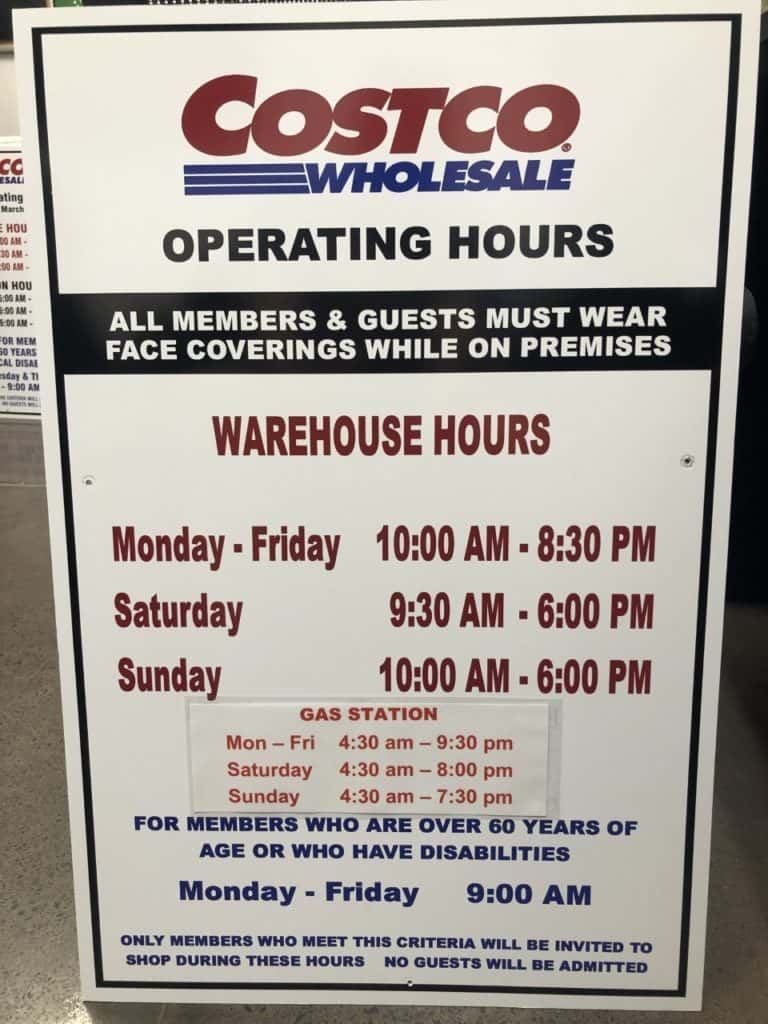
For a standard retailer, staying open late might capture a few extra impulse purchases. For Costco, the goal is high-volume, planned shopping. By maintaining a strict and predictable schedule—typically 10:00 AM to 8:30 PM on weekdays—Costco conditions its member base to shop during peak efficiency windows. This predictability allows the company to forecast foot traffic with high precision. In the realm of business finance, predictability equals lower risk. When a company knows exactly when its customers will arrive, it can optimize every dollar spent on lighting, heating, and staff.
How Restricted Hours Minimize Labor Overhead
Labor is one of the most significant variable costs in the retail sector. Costco is famous for paying its employees well above the industry average, offering robust benefits that lead to industry-leading retention rates. To afford this high-quality labor force while keeping product prices at a razor-thin 14-15% margin, the company must be surgical with its scheduling.
By closing earlier than “big box” competitors, Costco eliminates the “dead hours”—those late-night or early-morning slots where a store might have 50 employees on the floor but only five customers in the aisles. In a financial sense, those hours are “negative yield.” By compressing the shopping window, Costco ensures that every hour the store is open, the ratio of labor cost to sales volume is optimized. This ensures that the high wages paid to employees are justified by the massive volume of transactions occurring during peak hours.
Maximizing Revenue Per Square Foot During Peak Performance
Costco’s warehouse layout is designed for volume. Every square foot is a high-performing asset. However, a warehouse is not just a storefront; it is a distribution center. The hours the store is “closed” to the public are just as financially productive as the hours it is open.
The Psychology of Compressed Shopping Windows
From a behavioral economics standpoint, limited hours create a sense of urgency and density. When a store is open 24 hours a day, there is no “rush.” When a store closes at 6:00 PM on a Sunday, it creates a concentrated environment of high-intent shoppers. This density increases the “velocity” of inventory. The faster products move off the shelves, the less money Costco has tied up in “dead” inventory sitting on a floor. This rapid inventory turnover is a key metric in business finance, allowing Costco to often sell products and receive payment from customers before they even have to pay their own suppliers.
Logistics and After-Hours Productivity
The “closed” hours at Costco are perhaps the most vital to its financial success. Unlike traditional supermarkets that restock shelves while customers browse, Costco utilizes heavy machinery and forklifts to move massive pallets of goods. For safety and efficiency, this is best done when the warehouse is empty of members.
By closing at 8:30 PM, the “night crew” can take over the floor entirely. They can move thousands of pounds of inventory in a fraction of the time it would take in a populated store. This operational efficiency reduces the total man-hours required to maintain the inventory. If Costco were open 24/7, the logistical cost of restocking around customers would skyrocket, necessitating higher prices on the shelves. Thus, the store hours are a direct contributor to the low prices that drive membership renewals.
The Financial Impact of Holiday and Weekend Scheduling
One of the most frequent points of confusion for new members is Costco’s holiday schedule. While many retailers view major holidays as “prime time” for sales, Costco remains closed on New Year’s Day, Easter, Memorial Day, Independence Day, Labor Day, Thanksgiving, and Christmas. This is not just a cultural choice; it is a strategic branding and financial decision.
Why Costco Closes When Others Open
Closing on major holidays serves as a powerful tool for employee retention and brand loyalty. In the war for talent, Costco’s reputation as an employer that respects work-life balance allows them to recruit more experienced and dedicated staff. From a financial perspective, the cost of recruiting and training a new retail worker can range from $3,000 to $5,000. By keeping turnover low—Costco’s turnover rate is significantly lower than the retail average—the company saves millions of dollars annually in HR and training costs.
Furthermore, by closing on holidays, Costco avoids the “diminishing returns” of holiday pay. Many jurisdictions require time-and-a-half or double-time pay for holiday shifts. For a high-volume, low-margin business, the increased labor cost of a holiday shift often wipes out the marginal profit gained from staying open.
Long-term Employee Retention and its Bottom-Line Benefits
The financial health of a corporation is often tied to its internal stability. Costco’s store hours, including their slightly shorter weekend hours (often closing at 6:00 PM on Saturdays and Sundays), contribute to a predictable and desirable work environment. This stability results in “institutional knowledge” among staff. An employee who has been with a warehouse for ten years is more efficient, makes fewer errors in inventory management, and provides better “loss prevention” than a rotating door of part-time workers. The store hours are essentially a reinvestment in the company’s human capital.
Adapting to the Digital Economy: Beyond Physical Store Hours
In the modern financial landscape, “store hours” are becoming a hybrid concept. While the physical warehouse has a strict opening and closing time, Costco has strategically expanded its digital and specialized presence to capture revenue 24/7, ensuring that the company’s capital is always working.
Costco.com and the 24/7 Revenue Stream
To mitigate the limitations of physical store hours, Costco has invested heavily in its e-commerce infrastructure. Costco.com allows the company to tap into consumer spending at any time of day or night. This is a critical component of their modern business finance strategy. By moving low-frequency, high-value items (like jewelry, electronics, or large appliances) to the online platform, they free up physical floor space for high-turnover “daily essentials” like rotisserie chickens and paper towels. This “omnichannel” approach ensures that even when the physical doors are locked, the revenue stream remains active.
Business Centers: A B2B Financial Strategy
It is also worth noting that not all Costco locations follow the same hours. “Costco Business Centers” often open as early as 7:00 AM. This is a targeted financial move to capture the B2B (business-to-business) market. Small business owners, restaurant managers, and convenience store operators need to stock their own shelves before the traditional workday begins. By offering specialized hours for these high-volume buyers, Costco secures a specific segment of the market that operates on a different financial cycle than the average household. This diversification of store hours across different location types allows Costco to maximize its market share across multiple demographics.

Conclusion: The Value of a Locked Door
When a consumer asks “what are Costco store hours,” they are looking for a time to shop. When an investor or a business analyst looks at those same hours, they see a calculated strategy designed to protect a unique economic model. Every hour that Costco is closed is a testament to their commitment to operational excellence. By refusing to chase the marginal, high-cost sales of the late-night hours, Costco maintains the leanest operations in the retail world.
The restricted hours allow for better labor management, more efficient logistics, and a more dedicated workforce—all of which lead to the low prices and high membership value that define the Costco brand. In the world of business finance, sometimes the most profitable thing a store can do is close its doors, reset its assets, and prepare for the high-volume efficiency of the following day.
aViewFromTheCave is a participant in the Amazon Services LLC Associates Program, an affiliate advertising program designed to provide a means for sites to earn advertising fees by advertising and linking to Amazon.com. Amazon, the Amazon logo, AmazonSupply, and the AmazonSupply logo are trademarks of Amazon.com, Inc. or its affiliates. As an Amazon Associate we earn affiliate commissions from qualifying purchases.