
In the realm of estate planning and asset protection, trusts are powerful tools that allow individuals to manage and distribute their wealth according to their specific wishes. Among the various types of trusts, the distinction between revocable and irrevocable trusts is paramount. Understanding this difference is crucial for making informed decisions about how to safeguard your assets, minimize estate taxes, and ensure a smooth transition of wealth to your beneficiaries. While both serve as legal arrangements where a grantor transfers assets to a trustee for the benefit of beneficiaries, their fundamental flexibility and the consequences of their creation set them apart significantly. This article delves into the core differences, implications, and strategic uses of revocable and irrevocable trusts, focusing on their financial implications and how they can be leveraged within a sound financial strategy.

Understanding the Core Distinction: Control and Flexibility
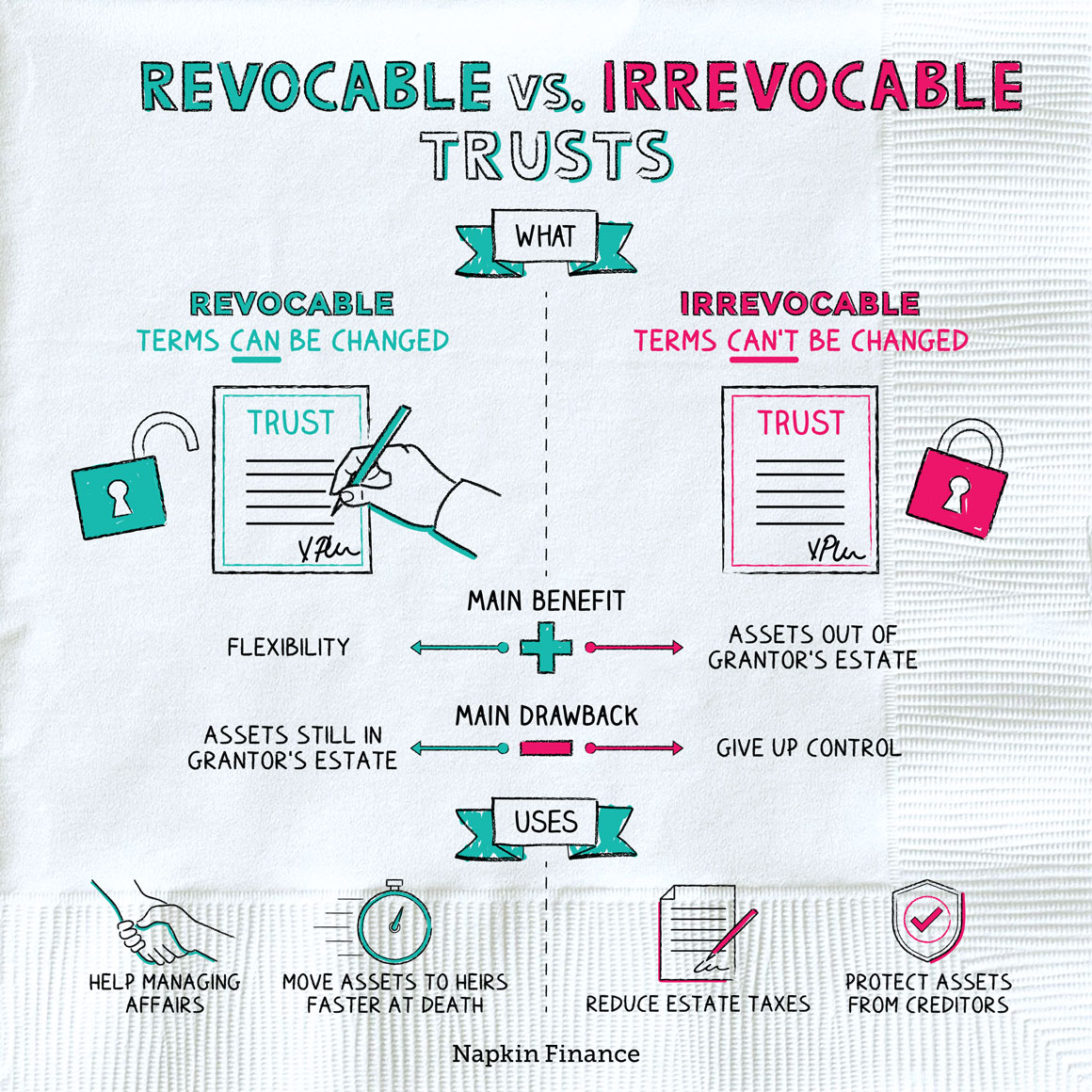
At the heart of the difference between revocable and irrevocable trusts lies the grantor’s ability to alter, amend, or terminate the trust after its creation. This fundamental aspect dictates the trust’s purpose, its benefits, and its limitations.
Revocable Trusts: The Grantor’s Enduring Control
A revocable trust, often referred to as a “living trust,” is established during the grantor’s lifetime. Its defining characteristic is that the grantor retains the power to modify its terms, add or remove beneficiaries, change the trustee, or even dissolve the trust entirely. This offers unparalleled flexibility, making it an attractive option for individuals who wish to maintain significant control over their assets during their lifetime while still planning for their eventual distribution.
Key Features of Revocable Trusts:
- Flexibility and Amendments: The primary advantage is the ability to adapt the trust as life circumstances change. Marriage, divorce, birth of children, changes in asset value, or evolving financial goals can all be accommodated without needing to create a new trust.
- Avoidance of Probate: Assets held within a revocable trust typically bypass the probate process. Probate, the legal process of validating a will and distributing assets, can be time-consuming, expensive, and subject to public scrutiny. By transferring assets into a revocable trust, the trustee can distribute them directly to beneficiaries upon the grantor’s death, according to the trust’s terms, without court involvement.
- Incapacity Planning: A revocable trust can include provisions for managing assets if the grantor becomes incapacitated. The successor trustee, as named in the trust document, can step in to manage the assets, pay bills, and handle financial affairs, preventing the need for a court-appointed conservator or guardian.
- Tax Implications During Life: During the grantor’s lifetime, assets in a revocable trust are generally treated as if they are still owned by the grantor for income tax purposes. Any income generated by the trust assets is reported on the grantor’s personal income tax return.
Limitations of Revocable Trusts:
- No Asset Protection: Because the grantor retains control over the assets, a revocable trust does not offer protection from creditors. If the grantor faces lawsuits or significant debt, the assets within a revocable trust can be attached by creditors.
- Estate Tax Inclusion: Assets in a revocable trust are still considered part of the grantor’s taxable estate upon their death. Therefore, they are subject to federal and state estate taxes if the estate’s value exceeds the applicable exclusion amount.
Irrevocable Trusts: The Grantor’s Surrender of Control
An irrevocable trust, by contrast, is a trust that, once established, generally cannot be altered, amended, or terminated by the grantor. The grantor relinquishes ownership and control of the assets transferred into the trust. This relinquishment is the cornerstone of its primary benefits: asset protection and potential estate tax reduction.
Key Features of Irrevocable Trusts:
- Asset Protection: One of the most significant advantages of an irrevocable trust is its ability to shield assets from creditors, lawsuits, and potential financial liabilities. Because the grantor no longer owns or controls the assets, they are generally beyond the reach of the grantor’s creditors.
- Estate Tax Reduction: Assets transferred to an irrevocable trust are typically removed from the grantor’s taxable estate. This can be a powerful strategy for reducing the overall estate tax burden, especially for individuals with substantial wealth who anticipate their estate exceeding the current estate tax exemption.
- Gift Tax Planning: When assets are transferred into an irrevocable trust, it is considered a completed gift. The grantor may need to file a gift tax return and utilize their lifetime gift tax exclusion. However, this act of gifting can effectively reduce the size of their taxable estate for future estate tax purposes.
- Medicaid Planning: Certain types of irrevocable trusts can be used for Medicaid planning. By transferring assets into an irrevocable trust, an individual may reduce their countable assets to become eligible for long-term care benefits under Medicaid, subject to specific look-back periods and rules.
Limitations of Irrevocable Trusts:
- Loss of Control: The defining characteristic that provides asset protection and tax benefits also means the grantor loses the ability to manage or access the assets directly. Decisions regarding the trust assets are made by the trustee, according to the terms of the trust document.
- Inflexibility: Once established, modifying an irrevocable trust can be exceedingly difficult, often requiring court intervention or the consent of all beneficiaries, which may not always be feasible.
- Complexity: Irrevocable trusts are generally more complex to establish and administer than revocable trusts. They require careful drafting and ongoing compliance with tax regulations.
Strategic Applications of Each Trust Type
The choice between a revocable and irrevocable trust hinges on an individual’s specific financial goals, risk tolerance, and estate planning objectives.
Revocable Trusts for Probate Avoidance and Incapacity
Revocable trusts are excellent tools for individuals who prioritize avoiding probate and ensuring their assets are managed smoothly during potential periods of incapacity.
Benefiting from Probate Avoidance:
The probate process can be a lengthy and costly ordeal. Wills must go through court validation, asset inventories are compiled, debts are settled, and only then can assets be distributed to heirs. This can take months, or even years, during which time beneficiaries may have limited access to inherited funds. A revocable trust allows for swift and private distribution of assets, often within weeks of the grantor’s passing. The trustee is empowered to manage and distribute assets according to the trust’s provisions, ensuring beneficiaries receive their inheritance without the delays and public record associated with probate.
Planning for Incapacity:
A significant concern for many individuals as they age is the potential for cognitive decline or physical limitations that render them unable to manage their financial affairs. A revocable trust provides a seamless solution. By naming a successor trustee in the trust document, you designate who will take over the management of your assets if you become incapacitated. This successor trustee can then pay your bills, manage investments, and ensure your financial well-being without the need for a court to appoint a guardian or conservator, a process that can be intrusive and time-consuming.
Irrevocable Trusts for Asset Protection and Tax Minimization
Irrevocable trusts are favored by individuals seeking robust asset protection and strategies to reduce potential estate tax liabilities.
Safeguarding Wealth Through Asset Protection:
For individuals in professions with high litigation risk (e.g., doctors, lawyers, business owners) or those with significant personal wealth, asset protection is a critical consideration. An irrevocable trust removes assets from the grantor’s personal ownership, placing them beyond the reach of future creditors, lawsuits, or divorce settlements. This means that if a legal judgment is entered against the grantor, the assets held within the irrevocable trust are generally protected and cannot be used to satisfy that judgment. This can provide a crucial layer of financial security for both the grantor and their intended beneficiaries.
Strategic Estate Tax Mitigation:
The prospect of significant estate taxes can be a major concern for individuals with substantial assets. By transferring assets into an irrevocable trust, the grantor can effectively remove those assets from their taxable estate. This can lead to substantial savings for beneficiaries, as the value of the assets passing to heirs will not be subject to estate taxes. Various types of irrevocable trusts exist for specific tax-planning purposes, such as Irrevocable Life Insurance Trusts (ILITs) to remove life insurance proceeds from the estate, or Grantor Retained Annuity Trusts (GRATs) to transfer appreciation on assets to beneficiaries with reduced gift tax consequences.
Choosing the Right Trust for Your Financial Future
The decision between a revocable and irrevocable trust is not a one-size-fits-all scenario. It requires careful consideration of your current financial situation, your long-term goals, and your tolerance for relinquished control.
Assessing Your Estate Planning Objectives:
Your primary objectives will guide your choice. If your main concern is avoiding probate and ensuring smooth asset management during your lifetime and after your death, a revocable trust is likely the more suitable option. It offers flexibility to adapt to life’s changes while still achieving these goals.
However, if your priority is to protect your assets from potential creditors or to significantly reduce your estate tax liability, an irrevocable trust becomes a more compelling choice. This often involves a trade-off of control for enhanced protection and tax efficiency.
The Importance of Professional Guidance:
Navigating the complexities of trust law and financial planning can be daunting. It is imperative to consult with experienced estate planning attorneys and financial advisors. These professionals can:
- Analyze your specific financial situation: They will review your assets, liabilities, income, and family circumstances.
- Explain the nuances of different trust structures: They can detail the advantages and disadvantages of various revocable and irrevocable trust variations.
- Help you align your trust with your overall financial plan: This ensures your estate plan integrates seamlessly with your investment strategies, tax planning, and insurance needs.
- Draft the trust documents with precision: This is critical to ensure the trust functions as intended and achieves your desired outcomes.
The Role of Trustees and Beneficiaries:
Regardless of the trust type, the roles of the trustee and beneficiaries are vital. A trustee is legally obligated to manage the trust assets responsibly and in accordance with the trust’s terms and the beneficiaries’ best interests. Selecting a trustworthy and competent trustee is paramount. Beneficiaries are the individuals or entities who will ultimately benefit from the trust. Understanding their rights and the terms of distribution is also crucial.

Conclusion: Tailoring Your Trust Strategy
In conclusion, the distinction between revocable and irrevocable trusts is fundamentally about the grantor’s control versus the benefits of asset protection and tax reduction. A revocable trust offers flexibility and probate avoidance, making it ideal for many individuals who wish to maintain oversight of their assets. An irrevocable trust, on the other hand, involves relinquishing control in exchange for significant asset protection and potential estate tax savings, making it a strategic tool for wealth preservation and intergenerational wealth transfer.
Ultimately, the “right” trust is the one that best aligns with your personal financial goals and circumstances. By understanding the core differences and seeking professional advice, you can make an informed decision that lays a solid foundation for your financial future and the legacy you wish to leave behind. Carefully considering these options is a vital step in comprehensive financial planning, ensuring your assets are managed and distributed in a way that maximizes security and meets your unique objectives.
aViewFromTheCave is a participant in the Amazon Services LLC Associates Program, an affiliate advertising program designed to provide a means for sites to earn advertising fees by advertising and linking to Amazon.com. Amazon, the Amazon logo, AmazonSupply, and the AmazonSupply logo are trademarks of Amazon.com, Inc. or its affiliates. As an Amazon Associate we earn affiliate commissions from qualifying purchases.