
The story of Bitcoin, the world’s first decentralized digital currency, is a fascinating saga of technological innovation, economic theory, and unprecedented financial growth. Few assets in history have witnessed such a meteoric rise from obscurity to global prominence, captivating the imagination of investors, economists, and technologists alike. At the heart of this intrigue lies a fundamental question: “How much did Bitcoin start at?” Understanding Bitcoin’s initial valuation isn’t merely a historical curiosity; it’s crucial for comprehending its financial journey, the dynamics of its market, and the investment principles that have driven its astonishing trajectory.
Bitcoin didn’t begin with an initial public offering (IPO) or a venture capital funding round at a set price. Its genesis was far more organic, rooted in code, cryptographic proof, and the pioneering spirit of a pseudonymous creator, Satoshi Nakamoto. For a period, it existed purely as a concept and a computational byproduct, exchanging hands for negligible value, if any, until real-world utility and market demand began to forge its financial identity. This article delves into Bitcoin’s formative years, tracing its valuation from theoretical zero to its first measurable monetary exchanges, and examines the profound implications these early prices have for understanding its financial significance today.
The Formative Years: Bitcoin’s Inception and Initial Valuation
To grasp Bitcoin’s starting price, one must first understand its unconventional birth. Unlike traditional assets, Bitcoin wasn’t launched by a corporation or government; it emerged from an open-source project, designed to be a peer-to-peer electronic cash system. Its initial “value” was not monetary in the traditional sense, but rather derived from the computing effort required to secure its network and the revolutionary ideas it represented.
Genesis Block and the Early Days (2008-2009)
The journey began on October 31, 2008, when Satoshi Nakamoto published the Bitcoin whitepaper, “Bitcoin: A Peer-to-Peer Electronic Cash System.” This document laid out the blueprint for a decentralized digital currency, secured by cryptography and managed by a network of computers rather than a central authority. On January 3, 2009, Nakamoto mined the “Genesis Block,” the very first block in the Bitcoin blockchain, marking the official launch of the network.
In these earliest days, Bitcoin had no established market price. It was a digital curiosity, understood and exchanged primarily by a small community of cryptographers, cypherpunks, and early adopters. The only way to acquire Bitcoin was through mining—using computational power to solve complex mathematical puzzles, which, upon successful completion, added new blocks to the blockchain and were rewarded with newly minted Bitcoins. The initial reward for mining a block was 50 BTC.
At this point, Bitcoin’s value was purely theoretical, or, more accurately, the cost of electricity and hardware used by miners. There was no exchange, no trading platform, and no accepted fiat currency equivalent. For all intents and purposes, Bitcoin started at $0.00. It was an experimental technology, not yet recognized as a financial asset by anyone outside its small, nascent community.
The First Real-World Transaction and Monetary Value (2010)
The pivotal moment when Bitcoin transitioned from a computational reward to a measurable financial asset occurred on May 22, 2010. This date is famously celebrated as “Bitcoin Pizza Day.” Laszlo Hanyecz, a programmer living in Florida, offered to pay 10,000 Bitcoins for two pizzas. Another Bitcoin enthusiast, Jeremy Sturdivant (Jercos), accepted the offer, buying two Papa John’s pizzas and having them delivered to Hanyecz.
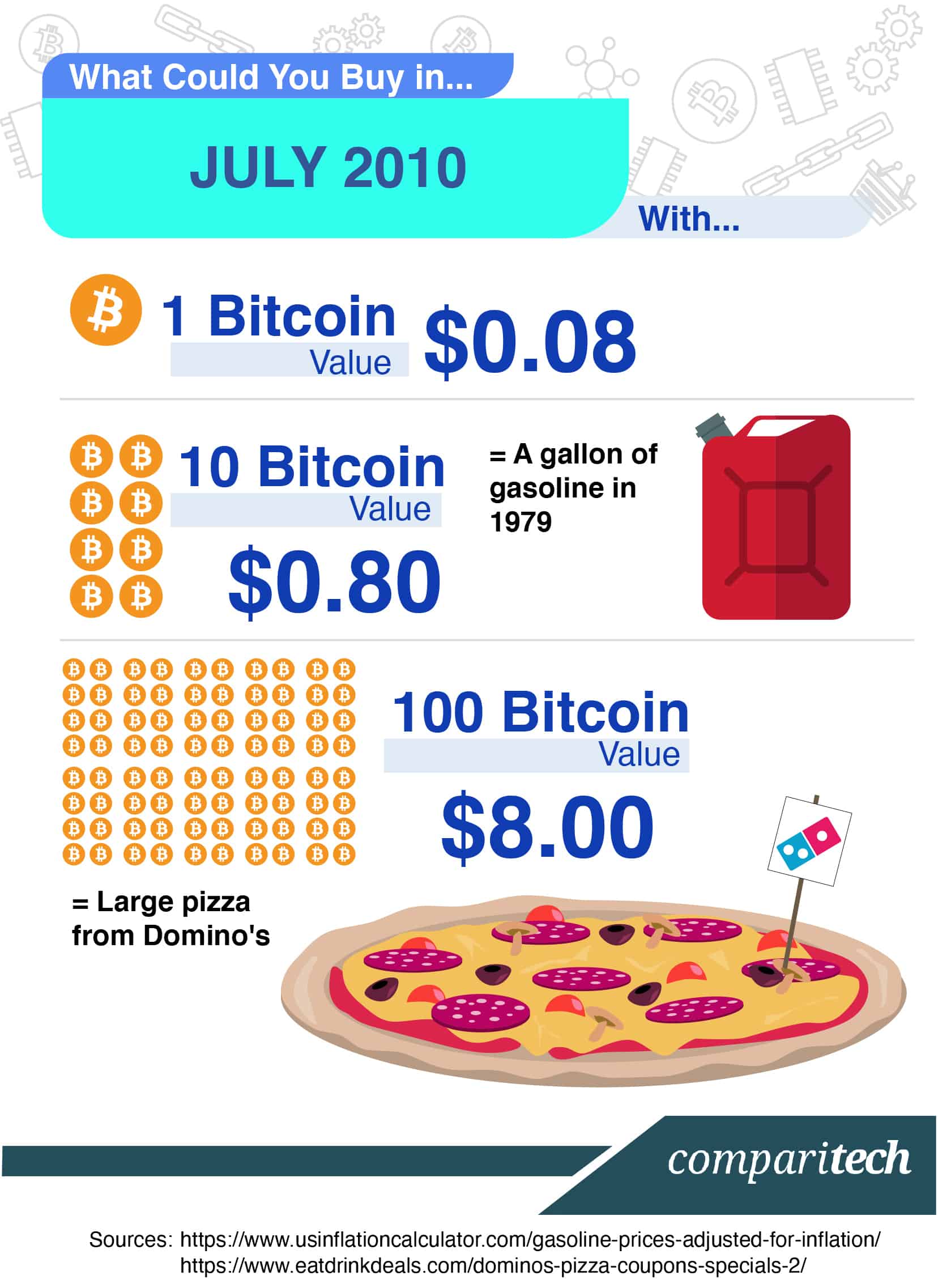
This transaction holds immense historical and financial significance. It was the first recorded instance of Bitcoin being used to purchase a physical good in the real world, thereby establishing its first de facto market value. At the time, the two pizzas were worth approximately $25 to $40. This means that, based on this transaction, Bitcoin’s initial market value was roughly $0.0025 to $0.004 per coin (or a quarter to four-tenths of a cent).
Soon after, in July 2010, the first Bitcoin exchange, BitcoinMarket.com, launched. On this platform, Bitcoin was initially listed at an approximate price of $0.05 per BTC. While a significant jump from the pizza transaction, it still represented an incredibly low entry point compared to its future valuations. These early price points—the pizza transaction providing an informal baseline and the exchange listing offering a more formal one—are the true starting lines for Bitcoin as a financial instrument. They illustrate its humble beginnings and underscore the sheer magnitude of its subsequent growth for early investors.
Understanding Bitcoin’s Early Market Dynamics
The initial valuation of Bitcoin was not arbitrary; it was a consequence of unique market dynamics driven by its design, the limited understanding of its potential, and the motivations of its early participants. These dynamics laid the groundwork for its subsequent evolution from a niche digital asset to a global financial force.
Supply, Demand, and Scarcity
Bitcoin’s design incorporates a fundamental economic principle: scarcity. Satoshi Nakamoto capped the total supply of Bitcoins at 21 million. This finite supply, combined with a predictable, halving schedule for block rewards (reducing the number of new Bitcoins minted approximately every four years), creates an inherent deflationary pressure, similar to precious metals like gold.
In the early days, the supply of Bitcoin was entirely generated through mining. While this ensured a steady influx of new coins, the demand side of the equation was extremely limited. Only a small, technically inclined community understood or cared about Bitcoin. There was no widespread investor interest, no institutional adoption, and no mainstream media coverage. Consequently, the demand for Bitcoin was minuscule, contributing to its very low initial price. The few individuals who accumulated large amounts of Bitcoin during this period, often referred to as “whales,” held disproportionate influence over the nascent market due to the scarcity of buyers and sellers. Their actions, whether buying or selling, could significantly impact the price in a market with extremely low liquidity.
The Birth of a Decentralized Economy
One of Bitcoin’s most radical departures from traditional financial systems is its decentralized nature. It operates without a central bank, government backing, or corporate oversight. Its value, therefore, is not derived from the creditworthiness of an issuing authority, but rather from the collective trust in its cryptographic security, its network utility, and its perceived scarcity. This was a challenging concept for a world accustomed to fiat currencies guaranteed by states.
Early adopters saw Bitcoin as a potential hedge against inflation, a censorship-resistant medium of exchange, and a way to circumvent traditional financial intermediaries. The “proof of work” mechanism, which requires significant computational effort (and thus energy costs) to secure the network and mint new coins, implicitly imbues Bitcoin with a “cost of production,” which some argue contributes to its inherent value, similar to the labor and resources required to extract gold. This foundational understanding among early proponents played a crucial role in establishing Bitcoin’s initial financial identity, positioning it not just as a currency, but as an entirely new class of asset designed to disrupt the existing financial paradigm.
From Pennies to Parity: Bitcoin’s Ascent and Investor Psychology
After its initial, almost imperceptible valuation, Bitcoin began a remarkable ascent, marked by significant price milestones and volatile swings. This period was characterized by growing awareness, increasing speculation, and the formation of a distinct investor psychology around this novel asset.
Early Price Milestones and Speculation
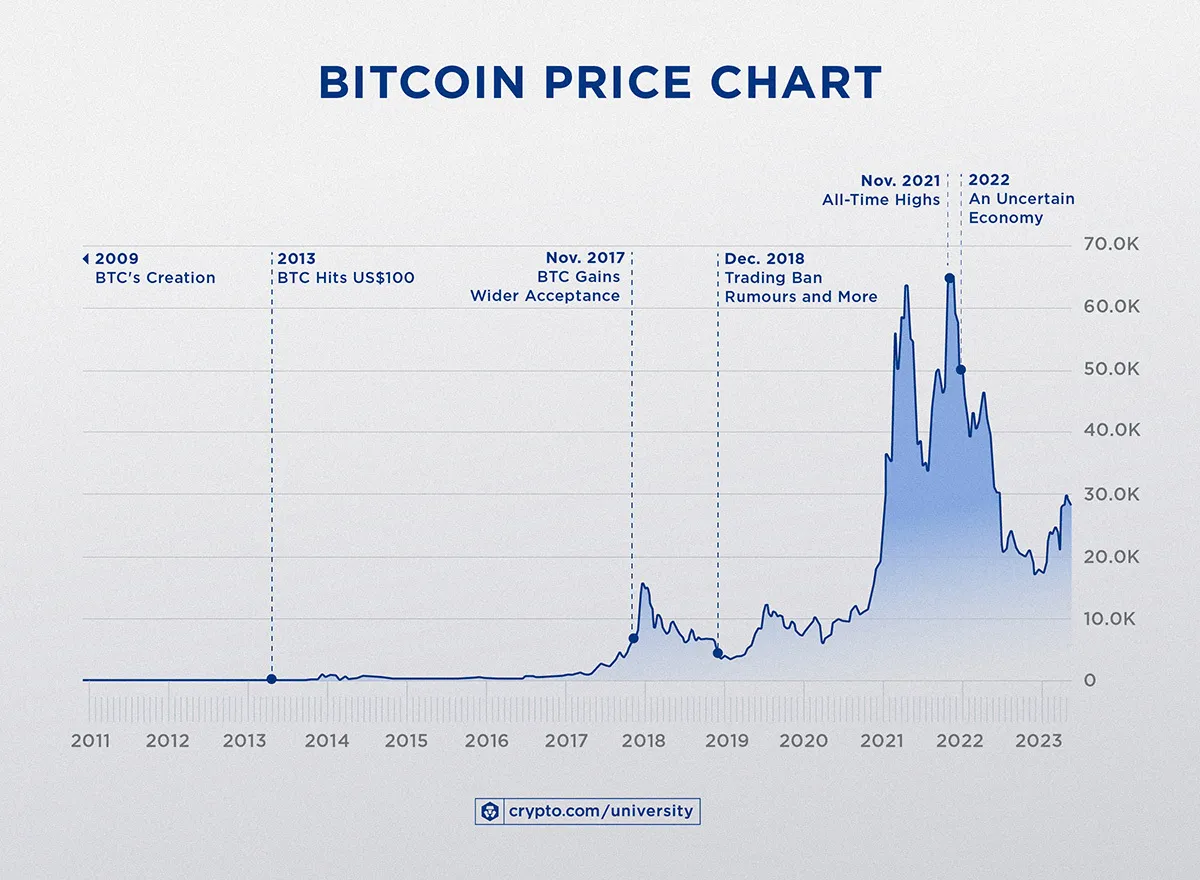
The trajectory from fractions of a cent to significant dollar values was surprisingly swift once market mechanisms were in place. Bitcoin reached parity with the US dollar in February 2011, trading at $1 per BTC. This was a psychological breakthrough, demonstrating that a purely digital asset could hold tangible value comparable to fiat currency. Later that year, it even briefly reached parity with the price of an ounce of silver, and by mid-2011, it surged to over $30 per coin.
These early surges, however, were often followed by dramatic corrections, characteristic of a nascent and highly illiquid market driven by speculation. The collapse of Mt. Gox, the dominant Bitcoin exchange at the time, which handled over 70% of all Bitcoin transactions, leading to a significant loss of funds, highlighted the extreme risks and volatility inherent in early crypto investing. These events served as early lessons for investors about the importance of security, regulation, and market stability in the emerging digital asset space. Despite the setbacks, the narrative of Bitcoin as a revolutionary financial technology continued to attract a growing, albeit still niche, investor base.
The Investment Thesis: Why Early Adopters Held On
The individuals who bought and held Bitcoin in its nascent stages were not driven by short-term profit motives alone. Many were ideologically aligned with its principles of decentralization, financial sovereignty, and censorship resistance. Their investment thesis was often deeply rooted in a belief that Bitcoin offered a superior alternative to traditional financial systems.
For these early adopters, Bitcoin was more than just a speculative asset; it was “digital gold”—a scarce, unconfiscatable store of value that could hedge against inflation and economic instability. They envisioned a future where Bitcoin could serve as a global, permissionless currency, free from the control of governments and banks. This long-term vision allowed many to weather the extreme volatility and maintain their conviction, even as the asset experienced multiple dramatic booms and busts. Their patience and belief were ultimately rewarded beyond wildest expectations, demonstrating the profound impact of a strong investment conviction combined with a revolutionary underlying technology.
The Enduring Legacy of Bitcoin’s Initial Valuation for Modern Investors
Bitcoin’s journey from a few cents to tens of thousands of dollars per coin has left an indelible mark on the financial world, offering crucial lessons and opening new frontiers for contemporary investors. Its initial valuation story is not just history; it’s a foundational narrative that continues to shape perspectives on digital assets and financial innovation.
The Power of Early Investment and Compounding Returns
The tale of Bitcoin’s starting price is a powerful illustration of the transformative potential of early investment in disruptive technologies. A hypothetical investment of just $100 at the pizza transaction price of $0.003 per BTC would have yielded over 33,000 Bitcoins. At Bitcoin’s peak prices, this theoretical investment would have been worth hundreds of millions, if not billions, of dollars. This staggering example highlights the power of exponential growth and compounding returns in highly successful, nascent assets.
While such gains are a matter of extreme hindsight and represent extraordinary risk, they fuel the fascination with “what if” scenarios and underscore the importance of identifying potentially revolutionary technologies in their infancy. It also serves as a cautionary tale, as most early-stage investments fail, but the outlier successes can redefine wealth creation.
Lessons for Contemporary Crypto Investing
Bitcoin’s early market behavior offers invaluable lessons for today’s crypto investors. It emphasizes the importance of:
- Understanding Fundamentals: Early investors focused on Bitcoin’s core value proposition (decentralization, scarcity, censorship resistance), rather than just price speculation. Modern investors need to understand the underlying technology and economic model of any digital asset.
- Risk Management and Volatility: Bitcoin’s volatile early years underscore the need for prudent risk management, including investing only what one can afford to lose and understanding the inherent price swings of emerging assets.
- Long-Term Vision vs. Short-Term Trading: While day trading crypto is popular, the colossal gains have historically gone to those with a long-term investment horizon, who held through multiple market cycles.
- Due Diligence: The Mt. Gox saga and other early scams highlight the critical need for robust security practices and thorough due diligence on exchanges and projects.
Today, Bitcoin is no longer just a speculative asset for tech enthusiasts; it’s considered by many as a legitimate store of value, a component of diversified investment portfolios, and a foundational element of the broader decentralized finance (DeFi) ecosystem.
Bitcoin as a Catalyst for Financial Innovation
Perhaps the most significant legacy of Bitcoin’s humble beginnings and subsequent success is its role as a catalyst for an entire new wave of financial innovation. Its ability to go from an initial value of virtually nothing to a multi-billion-dollar asset validated the concept of digital scarcity, decentralized networks, and cryptographic security as bases for monetary value.
Bitcoin paved the way for thousands of other cryptocurrencies (altcoins), each attempting to solve different problems or offer unique utilities. It inspired the development of smart contracts, decentralized applications (dApps), and the entire DeFi movement, which seeks to recreate traditional financial services (lending, borrowing, trading) on blockchain rails, without intermediaries. Furthermore, Bitcoin’s success has pushed traditional financial institutions to explore blockchain technology, leading to the development of central bank digital currencies (CBDCs) and institutional adoption of digital assets as a new asset class. The journey from $0.0025 per coin to its current value is not just a story of wealth creation; it’s a testament to how a single, radical idea can redefine the future of finance.
In conclusion, Bitcoin started at virtually nothing—a digital curiosity with no inherent monetary value. Its first quantifiable price emerged from a simple pizza purchase, valuing it at fractions of a cent. From this incredibly modest origin, driven by a pioneering community and revolutionary technology, Bitcoin embarked on a financial journey unparalleled in modern history. Understanding “how much did Bitcoin start at” is to appreciate not only the scale of its ascent but also the fundamental principles of innovation, market dynamics, and investor conviction that transformed a novel idea into a global financial phenomenon. Its legacy continues to shape the landscape of investing and financial technology, proving that even the most audacious ideas can, given time and belief, redraw the boundaries of economic possibility.
aViewFromTheCave is a participant in the Amazon Services LLC Associates Program, an affiliate advertising program designed to provide a means for sites to earn advertising fees by advertising and linking to Amazon.com. Amazon, the Amazon logo, AmazonSupply, and the AmazonSupply logo are trademarks of Amazon.com, Inc. or its affiliates. As an Amazon Associate we earn affiliate commissions from qualifying purchases.