
In the era of the “quantified self,” the pursuit of health has transitioned from guesswork and paper journals to sophisticated digital ecosystems. For many, the question is no longer just “what should I eat?” but “how do I use technology to precisely calculate my requirements?” Understanding how to calculate how many calories to eat is now a multidisciplinary endeavor involving advanced software engineering, biometric data sensors, and artificial intelligence.
While the fundamental principles of thermodynamics—calories in versus calories out—remain the constant, the technology we use to measure these variables has evolved exponentially. Today, we leverage complex algorithms like the Mifflin-St Jeor equation, integrated into sleek mobile interfaces, and sync them with wearable hardware that tracks every heartbeat and step. This guide explores the technological landscape of caloric calculation, detailing the tools, software, and data science that power modern nutritional tracking.
1. The Mathematics of Metabolism: Decoding the Core Algorithms
At the heart of every fitness app and smart scale lies a series of mathematical models designed to estimate human metabolism. To calculate caloric needs, developers must first implement the logic for Basal Metabolic Rate (BMR)—the energy expended while at rest.
The Evolution of the Algorithm: From Harris-Benedict to Mifflin-St Jeor
In the early days of fitness software, the Harris-Benedict equation (dating back to 1919) was the standard. However, as software evolved to be more accurate for modern sedentary and active populations, the Mifflin-St Jeor equation became the industry gold standard for developers.
When you input your age, weight, height, and gender into an app like MyFitnessPal or Cronometer, the backend code executes a specific string of logic:
- For Men: BMR = (10 × weight in kg) + (6.25 × height in cm) – (5 × age in years) + 5
- For Women: BMR = (10 × weight in kg) + (6.25 × height in cm) – (5 × age in years) – 161
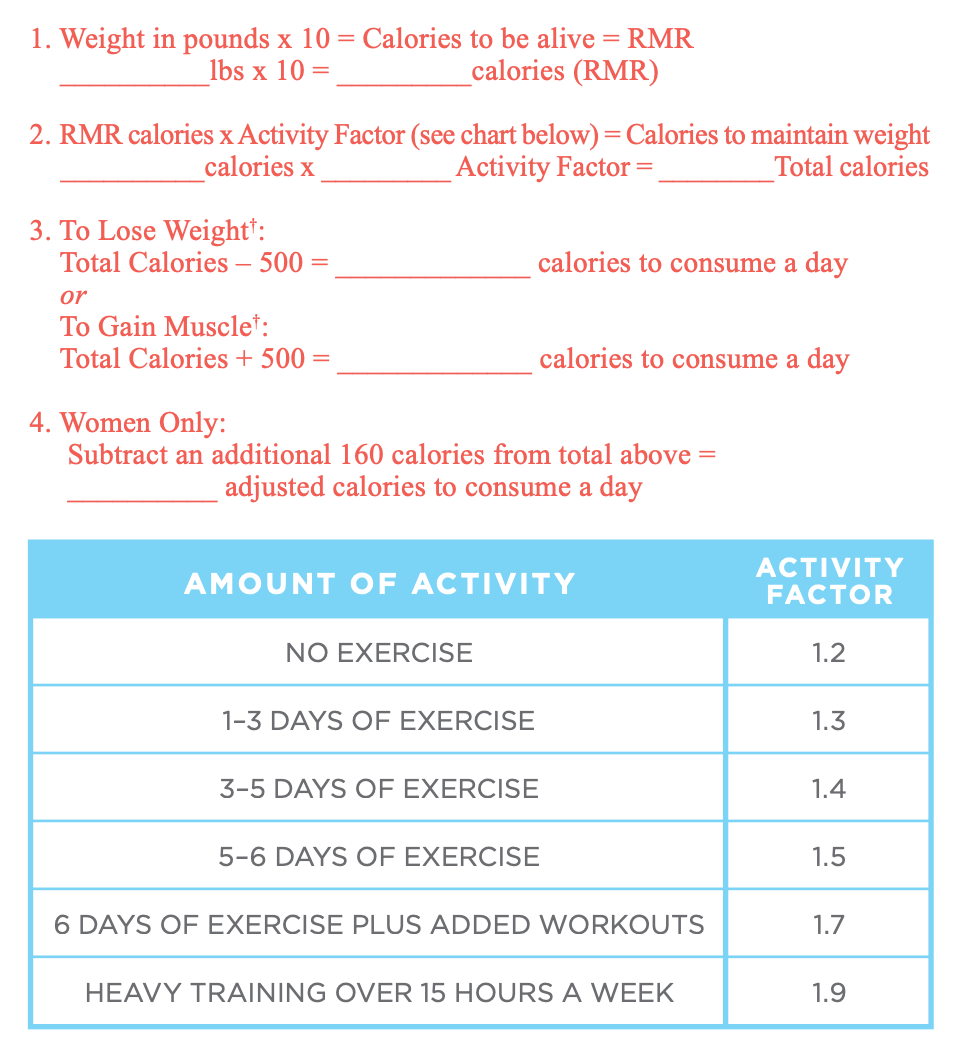
Tech platforms then apply an “Activity Multiplier” to determine Total Daily Energy Expenditure (TDEE). The precision of these multipliers is where modern software begins to differentiate itself, moving from static dropdown menus to dynamic adjustments based on real-time data inputs.
Coding for Macro-Nutrient Partitioning
Calculating total calories is only the first layer of the tech stack. Advanced nutritional software must also partition those calories into macronutrients: proteins, fats, and carbohydrates. This involves conditional logic within the application’s architecture. For instance, a “Ketogenic” setting in an app will reconfigure the calorie calculation to prioritize a 75/20/5 percentage split, while a “High Protein” setting for athletes might use a gram-per-kilogram of body weight calculation (e.g., 2.2g of protein per kg of lean mass). These calculations must be responsive, updating instantly as a user’s body weight or goal parameters change in the database.
2. Wearable Hardware: How Sensors Quantify Caloric Burn
The most significant technological leap in caloric calculation has been the move from static estimations to real-time biometric tracking. Wearable devices from companies like Apple, Garmin, and WHOOP have turned the human body into a data-generating node.
Photoplethysmography (PPG) and Metabolic Tracking
The primary sensor responsible for calculating caloric burn in wearables is the Photoplethysmography (PPG) sensor. By using green LED lights paired with light-sensitive photodiodes, these devices measure changes in blood volume at the wrist to determine heart rate.
From a tech perspective, the heart rate data is fed into a proprietary algorithm that correlates heart rate intensity with oxygen consumption ($VO_2$). Since there is a linear relationship between oxygen use and energy expenditure, the software can estimate calorie burn with surprising accuracy. High-end wearables also factor in Heart Rate Variability (HRV) to adjust caloric recommendations based on the user’s recovery state and physiological stress.
Accelerometers and AI-Driven Activity Classification
Beyond heart rate, 3-axis accelerometers and gyroscopes provide the “movement data” necessary for a complete caloric picture. Modern firmware uses machine learning to classify movement patterns. For example, the software must distinguish between the rhythmic motion of running (high caloric burn) and the erratic motion of washing dishes (low caloric burn).

Through signal processing, the device filters out “noise” to ensure that calories are not over-counted due to simple arm movements. The integration of GPS data further refines these calculations by measuring distance and elevation gain, allowing the software to apply physics-based calculations to determine the exact work performed against gravity.
3. Artificial Intelligence and the Future of Nutritional Logging
Manually searching a database for every food item is a friction point that leads to user churn. To solve this, the tech industry has turned to Artificial Intelligence (AI) and Computer Vision to automate the “calories in” side of the equation.
Computer Vision: Image-to-Calorie Processing
One of the most impressive feats in modern health tech is the ability to calculate calories through a smartphone camera. Using Neural Networks and Deep Learning models trained on millions of images of food, apps can now identify food types and estimate portion sizes.
The tech process involves:
- Object Detection: Identifying a “steak,” “broccoli,” and “mashed potatoes” on a plate.
- Volume Estimation: Using the camera’s depth sensors (like LiDAR on newer iPhones) to calculate the three-dimensional volume of the food.
- Database Mapping: Matching the identified volume and food type to a nutritional database (like the USDA FoodData Central) to calculate the total caloric content.
Predictive Modeling and Metabolic Adaptation
Traditional calorie calculators are static; they assume your metabolism stays the same. However, “Smart” platforms now use predictive modeling to account for metabolic adaptation. If a user logs 2,500 calories but the connected scale shows no weight loss over two weeks, the AI recognizes the discrepancy between the theoretical TDEE and the actual metabolic output. The software then “learns” the user’s specific metabolic rate and automatically adjusts the daily caloric target, effectively creating a personalized metabolic digital twin.
4. Digital Ecosystems: APIs, Syncing, and Data Security
A caloric calculation is only as good as the data it receives. The modern approach relies on an interconnected ecosystem where different apps and devices communicate via APIs (Application Programming Interfaces).
Cloud Synchronization and Health Data APIs
The “Tech Stack” of a health-conscious user often includes a smart scale (Withings), a wearable (Oura), and a logging app (MyNetDiary). The seamless integration of these tools is made possible by centralized health hubs like Apple HealthKit or Google Fit.
These hubs act as a decentralized database. When the smart scale records a new weight, it pushes that data to the cloud via Wi-Fi. The calorie-tracking app, authorized via OAuth 2.0, pulls that updated weight via an API call and instantly recalculates the user’s daily calorie budget. This automation ensures that the “how many calories to eat” calculation is always based on the most current data points.
Security Protocols in Biometric Tech
Because caloric calculations involve highly sensitive PII (Personally Identifiable Information) and biometric data, the tech infrastructure must be robust. Companies utilize end-to-end encryption (E2EE) to protect data moving from the wearable to the smartphone. Furthermore, many platforms are moving toward “Edge Computing,” where the caloric calculation happens locally on the device rather than in the cloud, reducing the risk of data breaches and ensuring user privacy regarding their physiological metrics.

The Convergence of Biology and Technology
Calculating how many calories to eat has evolved from a simple pen-and-paper math problem into a sophisticated technological process. By leveraging the Mifflin-St Jeor algorithm, PPG sensor hardware, AI-driven computer vision, and interconnected API ecosystems, we can now determine our nutritional needs with unprecedented precision.
As we look to the future, the integration of Continuous Glucose Monitors (CGM) and wearable metabolic trackers will likely refine these calculations even further, providing real-time feedback on how specific foods affect our energy expenditure. For the tech-savvy individual, the journey toward optimal health is no longer a guessing game—it is a data-driven optimization of the human machine. Through the clever application of software and hardware, we have finally mastered the art and science of the digital calorie.
aViewFromTheCave is a participant in the Amazon Services LLC Associates Program, an affiliate advertising program designed to provide a means for sites to earn advertising fees by advertising and linking to Amazon.com. Amazon, the Amazon logo, AmazonSupply, and the AmazonSupply logo are trademarks of Amazon.com, Inc. or its affiliates. As an Amazon Associate we earn affiliate commissions from qualifying purchases.