
YouTube TV represents a significant evolution in how we consume live television, a direct challenge to the traditional cable and satellite paradigms. It’s not merely a service; it’s a sophisticated technological platform designed to deliver a rich, real-time broadcast experience over the internet. At its core, YouTube TV functions by leveraging robust streaming technologies, cloud infrastructure, and intelligent user interfaces to provide access to dozens of live channels, on-demand content, and an unlimited cloud DVR, all accessible across a myriad of internet-connected devices. Understanding its operation requires delving into the underlying tech – from data compression and content delivery networks to adaptive bitrate streaming and intuitive interface design – illustrating how this modern solution redefines the television viewing experience.
The Core Mechanism: Internet-Based Broadcast Reinvented
The fundamental shift YouTube TV champions is the complete detachment from legacy broadcast infrastructure. Unlike traditional cable, which relies on physical wires to deliver signals, or satellite, which uses dishes to receive transmissions, YouTube TV operates entirely over the internet. This internet-centric approach allows for unparalleled flexibility, accessibility, and innovation in feature sets.
Moving Beyond Traditional Cable
For decades, accessing live television meant subscribing to a cable provider or installing a satellite dish. These systems relied on a physical infrastructure—coaxial cables, fiber optics, or line-of-sight satellite signals—to deliver a broadcast stream directly to a set-top box in a user’s home. The channels were pre-packaged, and the technology for recording shows (like a VCR or later, a DVR) was often a separate, hardware-dependent component.
YouTube TV, a “virtual Multi-channel Video Programming Distributor” (vMVPD), disrupts this model by virtualizing the entire process. It takes traditional broadcast signals, encodes them digitally, and transmits them as data packets over the internet. This means the “signal” is no longer a physical wave traveling through a wire, but rather a stream of digital information that any internet-connected device can interpret and display. This abstraction allows for a more dynamic service model, free from the geographical and infrastructural constraints of older systems. The entire concept hinges on the ubiquity of high-speed internet access, transforming the internet backbone into the primary conduit for television entertainment.
Infrastructure and Data Delivery
The journey of a live TV signal from broadcast tower to your screen via YouTube TV involves a complex interplay of advanced networking and data processing technologies. When a channel broadcasts its content, YouTube TV’s ingest points capture that signal. These signals, originally in various broadcast formats, are then rapidly encoded into digital video streams. This encoding process is critical, converting raw video and audio into highly compressed formats (such as H.264 or the more efficient H.265/HEVC) suitable for internet transmission. Compression algorithms work to reduce file sizes significantly without a perceptible loss in quality, which is vital for smooth streaming over varying internet speeds.
Once encoded, these digital streams are distributed through a vast network of servers, often leveraging Content Delivery Networks (CDNs). CDNs are geographically dispersed networks of proxy servers and data centers that cache content closer to end-users. When you request to watch a show on YouTube TV, the video stream isn’t necessarily coming from a central server far away; it’s likely being served from a CDN node relatively close to your location. This proximity drastically reduces latency, minimizes buffering, and ensures a more stable and high-quality viewing experience, especially during peak usage periods. IP protocols are the backbone of this delivery, orchestrating how these data packets travel across the internet from the CDN to your device, ensuring they arrive in the correct order and are reassembled to form a continuous video stream.
Navigating the YouTube TV User Experience
Beyond the technical marvels of content delivery, YouTube TV excels in presenting this complex ecosystem through a user-friendly and highly accessible interface. Its design principles are centered around intuitiveness, personalization, and seamless access across multiple devices.
Interface Design and Intuitiveness
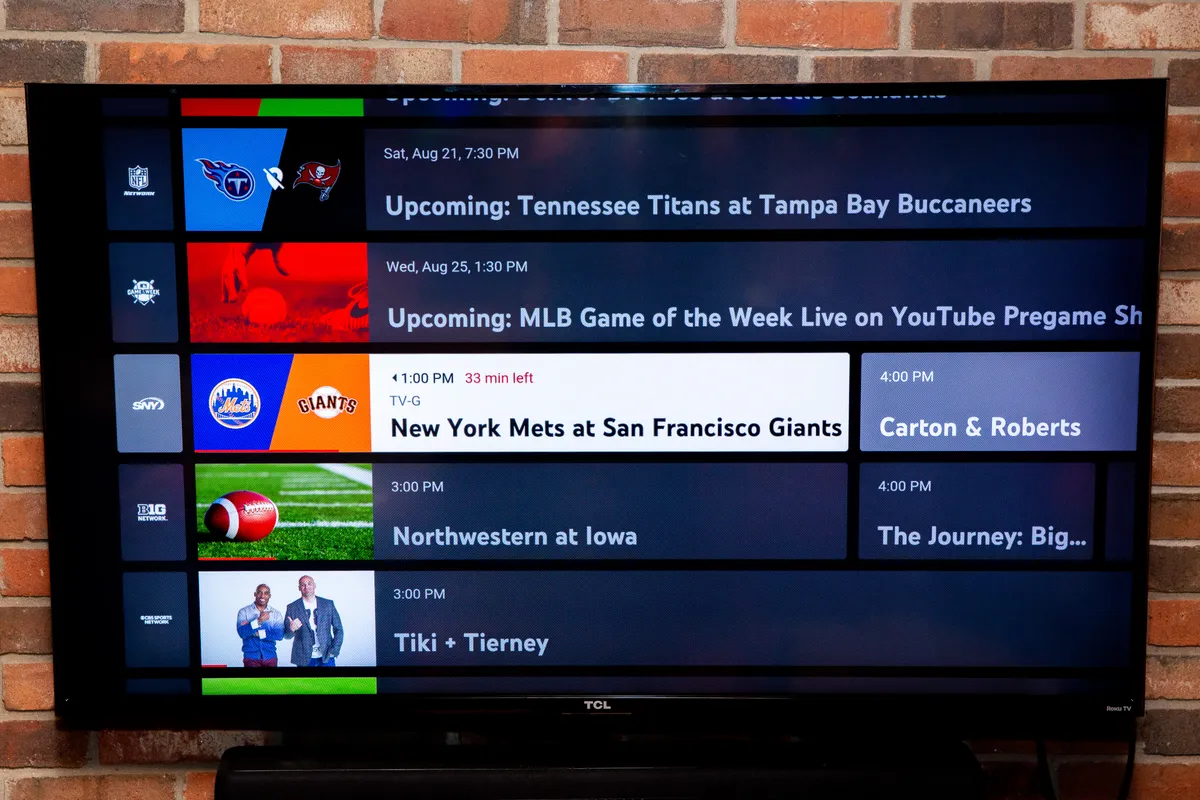
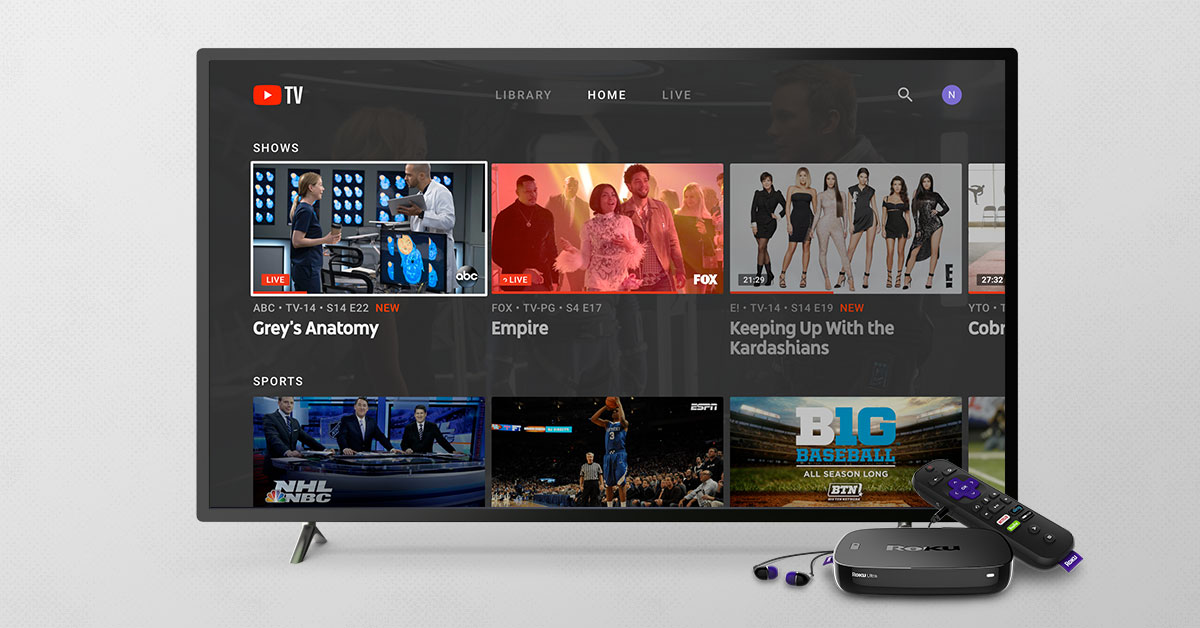
YouTube TV’s user interface (UI) and user experience (UX) design are critical to its appeal. The platform is engineered to feel familiar yet modern, whether accessed via a web browser, a smart TV app, or a mobile device. The layout typically features clear categories: “Live,” “Library,” and “Home” (or similar variations). The “Live” guide mimics the traditional grid-based TV schedule, allowing users to easily browse current and upcoming programming across all available channels. This familiarity eases the transition for users accustomed to traditional cable guides.
Navigation is designed to be straightforward, employing large, easily selectable tiles for shows and channels. Search functionality is robust, allowing users to find specific programs, teams, or actors quickly. Personalization elements are deeply integrated, with the “Home” section often featuring recommendations based on viewing history, popular shows, and content from favorited channels. The consistent design language across different device types ensures a uniform and predictable experience, minimizing the learning curve for new users regardless of their preferred viewing hardware.
Channel Lineup and On-Demand Libraries
YouTube TV distinguishes itself by offering a robust selection of live channels, mirroring or even exceeding the offerings of many basic cable packages. These channels span news, sports, entertainment, and local broadcasts, delivered in real-time. The service intelligently determines the appropriate local channels based on the user’s geographical location, a crucial feature for news and sports enthusiasts.
Crucially, YouTube TV also integrates a significant amount of on-demand content. Many shows that have aired live become available in an on-demand library shortly after broadcast, allowing users to catch up on missed episodes. Furthermore, some networks provide their entire back catalog or select seasons of popular shows directly through the YouTube TV interface. This hybrid approach—combining live linear television with an extensive VOD library—provides a comprehensive entertainment solution, bridging the gap between traditional broadcasting and the modern streaming paradigm of content access at your convenience.
Cloud DVR Functionality
One of YouTube TV’s most lauded technological features is its unlimited cloud Digital Video Recorder (DVR). Unlike traditional DVRs that rely on physical storage hardware in a user’s home, YouTube TV’s DVR stores recordings on Google’s cloud servers. This means there’s no storage capacity limit; users can record as many shows as they want simultaneously, without worrying about disk space.
When a user “records” a show on YouTube TV, the service doesn’t necessarily create a unique copy for that individual. Instead, it flags the broadcast in its central cloud system. When the user wishes to watch their recording, the system streams the archived content to their device. This cloud-based approach offers several advantages: recordings are accessible from any device, anywhere with an internet connection; there’s no hardware to maintain or upgrade; and multiple users within a household can access their own library of recordings without conflict. Most recordings are kept for nine months, though some content rights might dictate shorter retention periods, showcasing the intricate balance between technical capability and content licensing agreements.
Behind the Scenes: Features and Functionality
The seamless experience of YouTube TV is underpinned by a range of sophisticated features and technologies that operate quietly in the background, enhancing accessibility, personalization, and overall utility.
Multi-Device Compatibility
A cornerstone of any modern streaming service is its ability to be accessed across a wide array of devices, and YouTube TV is no exception. It supports virtually every major streaming platform. This includes smart TVs (from manufacturers like Samsung, LG, Vizio), dedicated streaming devices (Roku, Amazon Fire TV, Apple TV, Chromecast), gaming consoles (Xbox, PlayStation), web browsers on computers, and mobile devices (smartphones and tablets running iOS or Android).
Achieving this broad compatibility requires meticulous software development. Each device type presents unique hardware and operating system constraints. YouTube TV developers create optimized applications for each platform, ensuring that the interface is responsive, video playback is smooth, and all features function correctly. This cross-platform consistency is vital, allowing users to start watching a show on their TV, pause it, and seamlessly pick up exactly where they left off on their smartphone, all thanks to cloud synchronization of user data and viewing progress.
Simultaneous Streams and User Profiles
YouTube TV is designed for household usage, understanding that multiple family members often have different viewing preferences and schedules. The service typically allows for three simultaneous streams, meaning up to three different devices can be watching separate content from the YouTube TV library at the same time using a single subscription. This capability is managed by the service’s backend, which authenticates each stream against the user’s account, ensuring compliance with licensing agreements and service terms.
To further personalize the experience within a household, YouTube TV supports individual user profiles. Each profile maintains its own viewing history, favorite channels, DVR recordings, and personalized recommendations. This multi-profile system is a key technological enabler for a shared family subscription, allowing each user to have a tailored and uninterrupted viewing experience without interfering with others’ preferences or recorded content. The system intelligently stores and retrieves these individual preferences from the cloud, applying them dynamically when a profile is selected.
Personalization and Recommendation Engines
Leveraging Google’s extensive experience in data analysis and artificial intelligence, YouTube TV incorporates powerful personalization and recommendation engines. These algorithms are designed to learn from a user’s viewing habits, including what channels they watch most frequently, the genres of shows they prefer, what they record, and how they interact with the content.
Based on this data, the “Home” tab of YouTube TV becomes a highly personalized dashboard, suggesting live programs, on-demand episodes, and movies that align with the user’s inferred tastes. These recommendations are dynamic, evolving as viewing habits change, and aim to minimize the effort required for users to discover new and relevant content. This tech-driven personalization moves beyond simple genre matching, often identifying subtle patterns and connections across diverse content to offer surprisingly accurate suggestions, enhancing content discovery and user engagement.
Integrations and Add-ons
YouTube TV’s core offering is comprehensive, but it also provides an ecosystem for expanding content choices through integrated add-on networks. Users can subscribe to premium channels like HBO Max, Showtime, Starz, and others directly through their YouTube TV account.
Technologically, these integrations are seamless. Once an add-on is purchased, the additional content, whether live channels or on-demand libraries, appears directly within the YouTube TV interface alongside the base package content. This eliminates the need for separate apps or logins, consolidating the viewing experience. The billing and subscription management are also handled centrally by YouTube TV, simplifying the process for the user. This unified approach demonstrates the platform’s architectural flexibility, allowing it to expand its content offerings while maintaining a cohesive user experience.
The Technology Stack Powering Live Streaming
The magic of YouTube TV lies not just in its features but in the sophisticated technology stack that ensures high-quality, reliable, and low-latency delivery of live video content over the internet.
Adaptive Bitrate Streaming (ABS)
A critical component of YouTube TV’s technical prowess is Adaptive Bitrate Streaming (ABS). The internet connection speeds of users vary widely, from blazing-fast fiber optics to slower Wi-Fi or mobile data connections. ABS intelligently addresses this challenge by encoding a single video stream into multiple versions, each at a different resolution and bitrate (e.g., 1080p, 720p, 480p).
When you start watching a show, your device and the YouTube TV server continuously monitor your internet connection speed. If the connection is strong and stable, the server delivers the highest quality version of the video. If the connection degrades, ABS automatically and seamlessly switches to a lower bitrate version to prevent buffering and ensure continuous playback. This transition often happens so smoothly that the viewer hardly notices. This dynamic adjustment is essential for maintaining a consistent and enjoyable viewing experience, adapting to the unpredictable nature of internet bandwidth.
Low-Latency Streaming Protocols
Delivering live television over the internet presents a unique challenge: latency. Traditional over-the-air broadcasts are nearly instantaneous. Internet streaming, however, inherently involves delays due to encoding, buffering, and network travel. For live events like sports or breaking news, minimizing this delay is paramount.
YouTube TV employs advanced low-latency streaming protocols and techniques. While traditional HTTP Live Streaming (HLS) or MPEG-DASH can introduce several seconds of delay, innovations like Low-Latency HLS or WebRTC-based solutions are continuously explored and implemented. These protocols focus on reducing the size of video segments, optimizing server-to-client communication, and minimizing buffering times, all to bring the live stream as close to real-time as possible. This intricate optimization ensures that viewers are experiencing events with minimal lag compared to traditional broadcast, which is especially important for maintaining the excitement of live sports or the immediacy of breaking news.
Content Delivery Networks (CDNs) in Action
As touched upon earlier, CDNs are indispensable to YouTube TV’s operation. Imagine millions of users across a continent all trying to watch a popular live event simultaneously. Without CDNs, all those requests would hit a central server, overwhelming it and leading to buffering and outages.
CDNs solve this by distributing content geographically. YouTube TV’s content is replicated across numerous servers in various data centers around the world. When a user requests a stream, the CDN directs their request to the closest available server that holds the content. This significantly reduces the physical distance data has to travel, decreasing latency and improving load times. Furthermore, CDNs are designed with high bandwidth capacity and redundancy, meaning they can handle massive spikes in demand and route traffic around potential network failures, ensuring robust and reliable content delivery even under extreme load conditions.
Digital Rights Management (DRM)
Protecting copyrighted content is a non-negotiable aspect of any streaming service, especially one dealing with live broadcast television. Digital Rights Management (DRM) technologies are embedded within YouTube TV’s system to prevent unauthorized copying, distribution, and access to its programming.
DRM encrypts the video streams, ensuring that only authorized devices and applications with the correct decryption keys can play the content. This involves a complex handshake between the YouTube TV app, the user’s device, and the content provider’s licensing servers. Without DRM, content providers would be unwilling to license their programming, making services like YouTube TV impossible. While largely invisible to the end-user, DRM is a critical technological layer that secures the intellectual property of content owners, thereby enabling the legitimate distribution of premium live television.
The Future of Live TV Streaming with YouTube TV
YouTube TV is not a static product; it’s a dynamic platform continuously evolving within the rapidly changing landscape of media consumption. Its technological trajectory points towards even greater integration, personalization, and interactive experiences.
Continuous Innovation
Google’s commitment to innovation means YouTube TV is regularly updated with new features, performance enhancements, and technological improvements. This includes refining its streaming algorithms for better picture quality and lower latency, expanding device compatibility, and enhancing search and recommendation engines with more advanced AI. Future developments might include deeper integration with other Google services, more robust voice control capabilities, or even experimental features leveraging augmented reality for sports statistics or contextual information. The platform’s cloud-native architecture allows for agile development and rapid deployment of these innovations, keeping it at the forefront of streaming technology.
Competition and Market Positioning
The vMVPD market is competitive, with players like Hulu + Live TV, Sling TV, and FuboTV offering similar services. YouTube TV’s technological edge often lies in its robust infrastructure backed by Google, its highly scalable cloud DVR, and its refined user experience. While competitors may focus on specific niches (e.g., FuboTV on sports), YouTube TV aims for a broad appeal by providing a comprehensive tech-driven solution that balances channel variety, advanced features, and user-friendliness. Its positioning is less about being the cheapest option and more about being a technically superior and feature-rich replacement for traditional cable.
The Evolving Viewer Experience
The future of live TV streaming, as shaped by platforms like YouTube TV, is likely to be even more interactive and personalized. Imagine AI-powered summaries of sports games, real-time interactive polls during reality shows, or hyper-personalized news feeds tailored to individual interests. Technologies like 5G will further enhance mobile streaming quality and reliability, making on-the-go viewing indistinguishable from home viewing. As virtual reality and augmented reality mature, there could even be possibilities for immersive viewing experiences, such as watching a concert in a virtual stadium or overlaying player stats directly onto a live game feed. YouTube TV, with its deep technical foundation and Google’s overarching technological ecosystem, is well-positioned to explore and integrate these emerging technologies, continually redefining what live television can be.
In essence, YouTube TV operates as a meticulously engineered digital broadcast platform. It meticulously captures, compresses, distributes, and presents live and on-demand video content using an advanced suite of internet technologies. From its cloud-based DVR and adaptive bitrate streaming to its intuitive user interface and extensive device compatibility, every aspect is designed to deliver a modern, flexible, and high-quality television experience. It’s a testament to how sophisticated technology can transform traditional media consumption, offering a compelling alternative that is both powerful and user-centric.
aViewFromTheCave is a participant in the Amazon Services LLC Associates Program, an affiliate advertising program designed to provide a means for sites to earn advertising fees by advertising and linking to Amazon.com. Amazon, the Amazon logo, AmazonSupply, and the AmazonSupply logo are trademarks of Amazon.com, Inc. or its affiliates. As an Amazon Associate we earn affiliate commissions from qualifying purchases.