
Social Security is the cornerstone of retirement planning for millions of Americans, yet the mechanics behind how much you actually receive can often seem like a complex financial puzzle. For many, the question “How much money can I make?” isn’t just about the monthly check—it is about understanding the variables of earnings history, the timing of claims, and the impact of outside income.
In this comprehensive guide, we will break down the financial architecture of the Social Security Administration (SSA) to help you project your potential income and optimize your strategy for a more secure financial future.
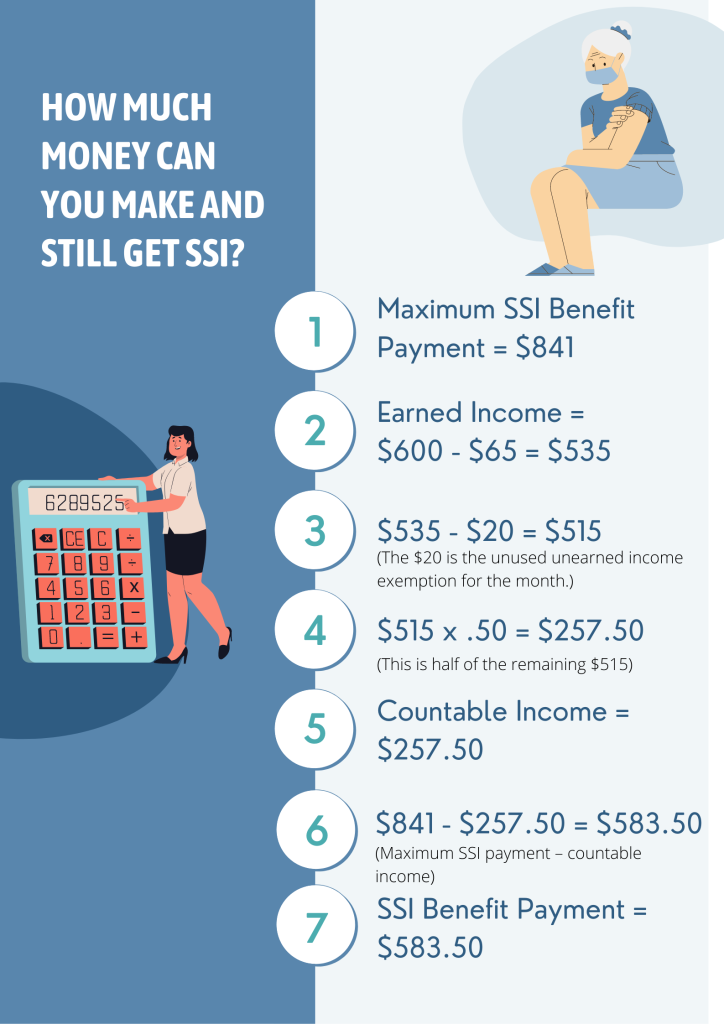
1. The Foundation of Social Security Calculations
Before you can estimate your monthly benefit, you must understand how the SSA calculates your Primary Insurance Amount (PIA). Unlike a flat-rate pension, Social Security is a “contributions-based” system designed to replace a portion of your pre-retirement income based on your specific work history.
The Role of Your 35 Highest-Earning Years
The SSA looks at your entire work history but focuses exclusively on your 35 highest-earning years. These earnings are “indexed” to account for changes in average wages over time. If you have fewer than 35 years of covered employment, the SSA averages in zeros for the remaining years, which can significantly drag down your monthly benefit.
From a personal finance perspective, this means that working just a few extra years if you have a “gap” in your history can provide a substantial boost to your lifetime income. Even if you are already at the 35-year mark, replacing a low-earning year from your youth with a high-earning year in your 60s will increase your calculation.
Understanding Average Indexed Monthly Earnings (AIME)
Once your top 35 years are indexed and averaged, the SSA arrives at your Average Indexed Monthly Earnings (AIME). They then apply a formula consisting of “bend points” to determine your monthly benefit. This formula is progressive; it replaces a higher percentage of lower earnings and a smaller percentage of higher earnings. This ensures a safety net for lower-wage workers while still providing higher absolute dollar amounts to those who contributed more to the system through payroll taxes.
2. The Timing Strategy: When to Claim for Maximum Payout
One of the most critical financial decisions you will make in your lifetime is choosing the exact month to begin receiving benefits. While you are eligible to claim as early as age 62, the “price” of doing so is a permanent reduction in your monthly income.
Claiming at Age 62: The Cost of Early Retirement
Choosing to take Social Security at age 62 results in a reduction of up to 30% compared to waiting for your Full Retirement Age (FRA). While the allure of immediate cash flow is tempting, especially for those looking to fund a side hustle or early retirement lifestyle, it is a move that carries long-term opportunity costs. If you live into your 80s or 90s, the cumulative loss of that 30% monthly reduction can amount to hundreds of thousands of dollars in “lost” potential income.
Full Retirement Age (FRA): The Baseline
Your Full Retirement Age is determined by the year you were born. For most people currently approaching retirement (born 1960 or later), the FRA is 67. This is the age at which you are entitled to 100% of your calculated benefit. Strategizing around your FRA is essential because it is also the point at which the “earnings test” (discussed later) no longer applies, allowing you to work and earn unlimited income without a temporary reduction in benefits.
Delayed Retirement Credits: The Power of Waiting Until 70
For those who can afford to wait, Social Security offers one of the best “guaranteed returns” in the financial world. For every year you delay claiming beyond your FRA up until age 70, your benefit increases by approximately 8% annually.
This is a simple interest increase that is added to your base amount. By waiting from age 67 to 70, you can increase your monthly check by 24%. In an era of market volatility, an 8% guaranteed annual increase is a powerful tool for any personal finance portfolio. There is no financial benefit to waiting past age 70, as the credits stop accumulating at that point.
3. The Maximum Benefit and Current Caps
Many high-earning professionals want to know the “ceiling” of Social Security. Because the SSA only taxes income up to a certain limit (the Social Security Wage Base), there is a maximum amount any individual can receive.
What is the Social Security Ceiling?
The maximum benefit depends entirely on the age at which you retire. For example, in 2024, the maximum monthly benefit for someone retiring at age 62 is approximately $2,710. However, for someone waiting until age 70, that maximum jumps to $4,873 per month.

To reach these maximum amounts, an individual must have earned at least the maximum taxable wage for at least 35 years of their career. For most Americans, the average benefit sits much closer to $1,900, emphasizing the need for supplementary investing and retirement accounts like 401(k)s and IRAs.
Factors for High Earners to Consider
If you have consistently been a high earner, Social Security will likely represent a smaller percentage of your “replacement income” (the percentage of your working salary you need in retirement). While a lower-income worker might see Social Security replace 75% of their earnings, a high-income executive might only see it replace 25%. This “gap” makes it imperative to view Social Security as one piece of a broader financial machine, rather than the sole engine of retirement.
4. Working While Collecting Social Security
A common question for those pursuing “semi-retirement” or side hustles is whether they can earn money while receiving benefits. The answer is yes, but with specific financial caveats depending on your age.
The Retirement Earnings Test Explained
If you are under your Full Retirement Age and you earn more than a certain threshold ($22,320 in 2024), the SSA will withhold $1 in benefits for every $2 you earn above that limit. In the year you reach your FRA, the threshold increases, and the penalty drops to $1 for every $3 earned.
It is important to note that these “withheld” benefits are not gone forever. Once you reach your FRA, the SSA recalculates your monthly amount to account for the months they withheld payment, effectively “giving back” the money over time in the form of a higher monthly check. However, for immediate cash-flow planning, this can be a significant hurdle.
Taxation of Benefits: The Combined Income Rule
Many retirees are surprised to find that their Social Security benefits are taxable. If your “combined income” (adjusted gross income + tax-exempt interest + half of your Social Security benefits) exceeds a certain level, you will pay federal income tax on a portion of your benefits.
- Individual Filers: If income is between $25,000 and $34,000, you may pay tax on up to 50% of your benefits. Above $34,000, up to 85% is taxable.
- Joint Filers: If income is between $32,000 and $44,000, you may pay tax on up to 50%. Above $44,000, up to 85% is taxable.
Managing your withdrawals from taxable IRAs and tax-free Roth accounts becomes a vital strategy here to keep your “combined income” below these thresholds.
5. Strategies to Optimize Your Financial Future
To truly maximize how much money you make from the system, you must look beyond your own work record and consider the broader household strategy.
Spousal and Survivor Benefits
Even if a spouse has never worked or has a very low earnings record, they can receive a benefit worth up to 50% of the higher-earning spouse’s FRA amount. This does not reduce the high-earner’s benefit. Furthermore, survivor benefits allow a widowed spouse to “step into the shoes” of the deceased spouse, taking over their higher monthly payment.
For many couples, the best financial strategy is for the higher-earner to wait until age 70 to claim. This not only maximizes their own lifetime income but ensures the highest possible survivor benefit for the remaining spouse, acting as a form of life insurance.
Cost-of-Living Adjustments (COLA) and Inflation Protection
One of the most valuable features of Social Security is the Cost-of-Living Adjustment (COLA). Unlike most private annuities or pensions, Social Security is indexed to inflation. This means that as the price of goods and services rises, your benefit increases to help maintain your purchasing power.
In a high-inflation environment, this adjustment is a critical financial hedge. When calculating your “long-term” income, you shouldn’t just look at the dollar amount today, but rather the fact that this income is one of the few sources of “real” (inflation-adjusted) returns available to the average investor.
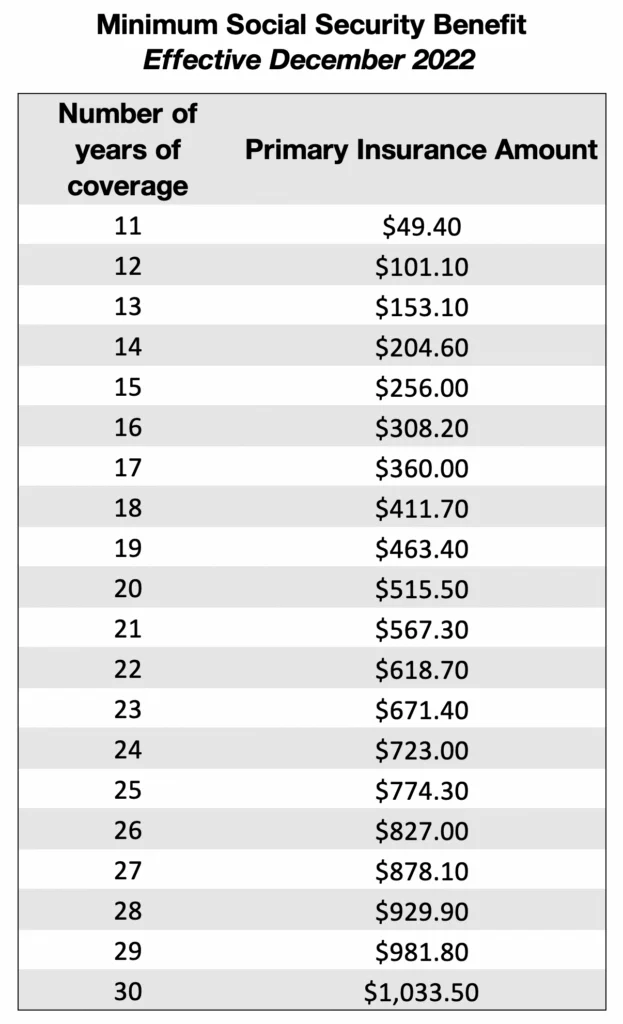
Final Thoughts on Maximizing Your Benefit
How much money you make on Social Security is not a matter of luck; it is a matter of calculated decisions. By understanding the 35-year calculation, strategically timing your claim to take advantage of delayed credits, and managing your outside income to avoid unnecessary taxes and withholdings, you can significantly enhance your financial standing.
Social Security was never intended to be a person’s only source of income, but for those who manage it as a sophisticated financial asset, it can provide a powerful, inflation-protected base for a comfortable and prosperous retirement. Always consult with a financial advisor to see how these rules apply to your specific tax bracket and investment portfolio.
aViewFromTheCave is a participant in the Amazon Services LLC Associates Program, an affiliate advertising program designed to provide a means for sites to earn advertising fees by advertising and linking to Amazon.com. Amazon, the Amazon logo, AmazonSupply, and the AmazonSupply logo are trademarks of Amazon.com, Inc. or its affiliates. As an Amazon Associate we earn affiliate commissions from qualifying purchases.