
The annual ritual of filing taxes can often feel daunting, not just because of the complexities involved, but also due to the perceived costs associated with professional assistance or sophisticated software. However, in the United States, a robust ecosystem of resources exists that empowers millions of taxpayers to fulfill their civic duty without spending a single dollar. Far from being a niche option for a select few, free tax filing is a widely accessible avenue, championed by the IRS itself and supported by various community initiatives and commercial providers. Understanding these options, knowing your eligibility, and navigating the process effectively can save you money, reduce stress, and ensure compliance. This comprehensive guide will demystify the process, revealing how you can confidently and accurately file your taxes for free, keeping more of your hard-earned money where it belongs—in your pocket.

The Landscape of Free Tax Filing Options
The journey to free tax filing begins with understanding the primary avenues available. These options range from government-backed programs to community initiatives and even free tiers offered by commercial tax preparation software. Each serves a slightly different demographic and offers varying levels of support, making it crucial to select the one that best fits your individual needs and tax situation.
IRS Free File Program: A Federal Gem
The cornerstone of free tax filing is the IRS Free File program, a public-private partnership between the IRS and leading tax software companies. This program allows taxpayers with an adjusted gross income (AGI) below a certain threshold (which changes annually, typically around $79,000 for 2023 taxes filed in 2024) to use free versions of commercial tax software. These are not simplified versions, but often the full-featured editions that guide users through the entire federal tax return process. The program is accessible directly through the IRS website, which acts as a portal to various approved providers. It’s important to access these services via the IRS Free File website to ensure you’re getting the free version, as navigating directly to a software provider’s site might lead you to their paid offerings.
Volunteer Income Tax Assistance (VITA) and Tax Counseling for the Elderly (TCE)
For taxpayers who prefer in-person assistance, or whose tax situations are more complex but still fall within specific income guidelines, VITA and TCE programs are invaluable. VITA sites offer free tax help to people who generally make $64,000 or less, persons with disabilities, and limited English-speaking taxpayers. TCE provides free tax help to all taxpayers, particularly those who are 60 years of age and older, specializing in questions about pensions and retirement-related issues unique to seniors. These programs are staffed by IRS-certified volunteers who provide free basic income tax return preparation with electronic filing. They can often help with common credits like the Earned Income Tax Credit (EITC), Child Tax Credit, and education credits.
Direct Filing: The IRS’s New Pilot Program
In a significant move, the IRS has launched a pilot program called “Direct File” in certain states for the 2024 filing season. This program allows eligible taxpayers to file their federal tax returns directly with the IRS for free, using a guided, mobile-friendly online service. This represents a potential future where the government provides its own tax preparation software, bypassing third-party providers entirely. While currently limited in scope (available only in specific states and for simpler tax situations), it offers a glimpse into a potentially broader, fully government-run free filing option down the line. Keep an eye on IRS announcements for its expansion and eligibility criteria.
Commercial Software with Free Tiers: A Hybrid Approach
Many popular commercial tax software providers, such as TurboTax, H&R Block, and TaxAct, offer free versions of their services. These are distinct from the IRS Free File program mentioned above. Typically, these free tiers are designed for individuals with very simple tax situations, often those who only need to file a Form 1040 without additional schedules. While convenient, it’s crucial to understand the limitations. As soon as your tax situation involves more complex forms, like itemized deductions (Schedule A), self-employment income (Schedule C), or investment income (Schedule D), you may quickly hit a paywall and be prompted to upgrade to a paid version. Always read the fine print to ensure the free tier covers your specific needs before investing time into data entry.
Determining Your Eligibility for Free Filing
Navigating the various free filing options requires a clear understanding of the eligibility criteria. These are primarily driven by income thresholds, age, and the complexity of your tax return. Misunderstanding these can lead to unnecessary costs or missed opportunities for free assistance.
Income Thresholds: The Primary Decider
For the IRS Free File program, your Adjusted Gross Income (AGI) is the main determinant. For the 2023 tax year (filed in 2024), this threshold is typically $79,000 or less. If your AGI falls below this, you are eligible to use free brand-name software through the IRS portal. For those whose AGI is above this threshold, the IRS still offers free fillable forms, which are essentially electronic versions of paper forms that you complete yourself, requiring a higher degree of tax knowledge. VITA sites also have income limits, generally around $64,000. It’s essential to check the specific year’s thresholds as they can change.
Age and Specific Situations for VITA/TCE
Age plays a significant role in eligibility for the TCE program, which specifically targets taxpayers 60 years and older. Beyond age, VITA/TCE programs cater to individuals with disabilities and those with limited English proficiency, regardless of age. These programs are particularly beneficial for those who appreciate hands-on guidance and reassurance from certified volunteers. Your overall tax situation, such as having certain types of income or claiming specific credits, can also determine if VITA/TCE volunteers are equipped to handle your return.
State Tax Filing: An Important Consideration
While federal tax filing often has robust free options, state tax filing can be a different story. Some IRS Free File partners offer free state filing if you qualify for their federal program, but this isn’t always the case, and sometimes it’s an additional charge. VITA/TCE sites often assist with state tax returns as well, provided their volunteers are trained for your specific state. For those using commercial software’s free tiers, state filing is almost always an upsell. Always verify if your chosen free federal option also covers your state return, or if you’ll need to explore separate free state filing options, such as those sometimes provided by state tax agencies themselves.
The Complexity of Your Tax Situation
The simplicity or complexity of your tax return is a critical factor. If you have only W-2 income, take the standard deduction, and don’t have many dependents or credits, a commercial free tier might suffice. However, if you have self-employment income (Form 1099-NEC or K-1), rental properties, significant investment gains/losses, foreign income, or need to file multiple schedules, your return will be considered more complex. In such cases, the IRS Free File program through a partner software or VITA/TCE might be your best bet, as commercial free tiers will almost certainly push you to a paid upgrade.
A Step-by-Step Guide to Filing Your Taxes for Free
Once you’ve identified the best free filing method for your situation, the actual process becomes much more manageable. A structured approach ensures accuracy, efficiency, and peace of mind.
Gather Your Documents
Before you even log into a website or visit a VITA/TCE site, collect all necessary documents. This typically includes:
- Proof of Identity: Social Security cards for yourself, spouse, and dependents.
- Income Statements: W-2s from employers, 1099-NEC for contract work, 1099-MISC, 1099-INT for interest income, 1099-DIV for dividends, 1099-R for retirement distributions, K-1s for partnership or S-corp income, and Social Security benefit statements (SSA-1099).
- Deduction & Credit Information: Form 1098 for mortgage interest, 1098-E for student loan interest, 1098-T for tuition, records of medical expenses, charitable contributions, property taxes, and child care expenses (Form 2441).
- Health Coverage: Form 1095-A, B, or C.
- Prior Year’s Tax Return: Often helpful for reference, especially if you need your prior year’s AGI for identity verification.
Having everything organized beforehand will streamline the filing process significantly.
Choose the Right Free Filing Method
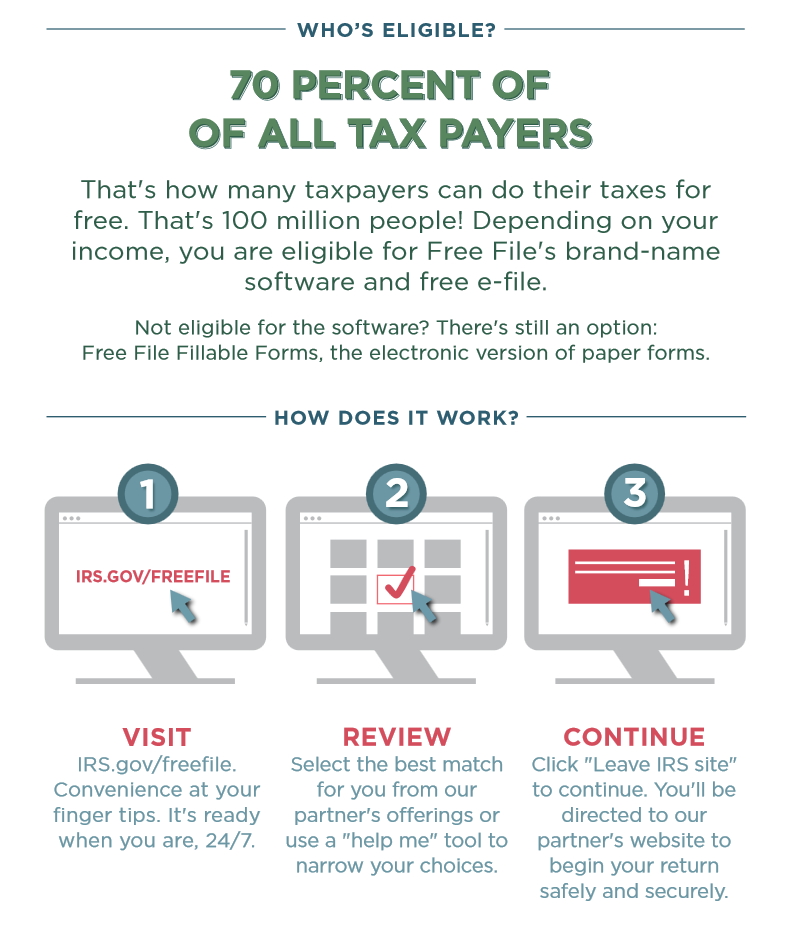
Based on your eligibility and preference (online vs. in-person), select your free filing option:
- IRS Free File Program: Go to IRS.gov/freefile and follow the links to choose a software provider.
- VITA/TCE: Use the IRS VITA/TCE locator tool on IRS.gov to find a site near you and schedule an appointment.
- Commercial Free Tier: Navigate directly to your preferred commercial software website (e.g., TurboTax, H&R Block) and select their free option. Be aware of limitations.
- IRS Direct File (Pilot): If you are in an eligible state and meet the criteria, access it via IRS.gov.
Navigate the Software/Assistance
- Online Software: The best free tax software options employ user-friendly interfaces with interview-style questions. Answer each question accurately. The software will guide you through entering your income, deductions, and credits. Don’t rush; take your time to ensure every detail is correct.
- VITA/TCE: During your appointment, volunteers will ask you questions and input your information into their tax software. They will explain items and ensure you understand your return before it’s filed. This personalized touch is invaluable for many.
Review and E-File
Before hitting “submit,” thoroughly review your entire tax return. Most software provides a summary or a final review section. Check for common errors like transposed numbers, missing forms, or incorrect personal information. If using VITA/TCE, the volunteer will review it with you. Electronic filing (e-file) is highly recommended as it’s faster, more accurate, and provides immediate confirmation that the IRS has received your return. If you are due a refund, opt for direct deposit for the quickest receipt of funds.
Keep Records
After filing, save a copy of your completed tax return and all supporting documents. Store them securely for at least three years from the date you filed the original return or two years from the date you paid the tax, whichever is later. This is crucial in case of an audit or if you need to reference prior year information for future filings.
Maximizing Your Free Tax Filing Experience
Beyond simply filing for free, there are strategies to ensure you get the most out of the process, optimizing your financial outcome and protecting your data.
Understanding Your Tax Credits and Deductions
One of the most valuable aspects of using comprehensive free tax software (via IRS Free File) or VITA/TCE assistance is the built-in guidance on tax credits and deductions. Many taxpayers inadvertently miss out on money they’re owed because they aren’t aware of all eligible deductions or credits. Free software often prompts you with questions that uncover these opportunities, while VITA/TCE volunteers are trained to identify them. Common examples include the Earned Income Tax Credit (EITC), Child Tax Credit (CTC), education credits, and deductions for student loan interest or IRA contributions. Being proactive in understanding what you might qualify for can significantly boost your refund or reduce your tax liability.
The Benefits of E-Filing and Direct Deposit
While paper filing is technically an option, electronic filing (e-file) is superior in almost every way. It dramatically reduces errors, speeds up processing, and provides clear confirmation of receipt from the IRS. When combined with direct deposit for your refund, it’s the fastest way to get your money back. Most free filing options inherently encourage or even require e-filing for efficiency. If you are paying taxes, e-file also allows you to make an electronic payment directly from your bank account, often with a scheduled payment date, avoiding late fees.
Cybersecurity Best Practices When Filing Online
When dealing with sensitive personal and financial data online, cybersecurity is paramount.
- Use Strong, Unique Passwords: Ensure your passwords for tax software accounts are complex and not reused elsewhere.
- Enable Multi-Factor Authentication (MFA): If available, activate MFA for an added layer of security.
- Use a Secure Internet Connection: Avoid public Wi-Fi networks when filing your taxes. Use a private, password-protected network.
- Beware of Phishing Scams: The IRS will never initiate contact with you via email, text message, or social media to request personal or financial information. Be skeptical of any unsolicited communications.
- Keep Software Updated: If you download any software, ensure it’s from a reputable source and kept updated.
What to Do If You Encounter Issues
Even with free filing, questions or issues can arise.
- Software Help Menus: Most online software has extensive help sections, FAQs, and even chat support.
- IRS Website: The IRS website (IRS.gov) is a vast resource for tax law information, forms, and instructions.
- VITA/TCE: If you used these services, they often offer follow-up assistance or clarification.
- Amended Returns: If you discover an error after filing, you may need to file an amended return (Form 1040-X). Free filing software might not always support free amended returns, but the IRS offers free fillable forms for this purpose.
Beyond Free Filing: Common Pitfalls and Pro Tips
While filing taxes for free is a fantastic advantage, it’s essential to approach it strategically, understanding its limitations and looking ahead to future tax seasons.
Avoiding Unnecessary Fees
The primary pitfall in free filing is inadvertently getting upsold. Many commercial free tiers are aggressive in their attempts to upgrade you to paid versions once a slightly more complex tax situation is detected. To avoid this, be very clear about your needs upfront and ensure the free option you choose (especially commercial ones) genuinely covers your situation. If you start a return and realize it’s going to cost you, don’t hesitate to abandon it and explore another free option, such as the IRS Free File Program, which generally has a higher income threshold and broader coverage. Always confirm the final cost before you’re ready to submit.
The Importance of Accuracy
Regardless of whether you pay for tax preparation or do it for free, accuracy is non-negotiable. Errors can lead to delays in refunds, penalties, or even an audit. Double-check all numbers, especially Social Security numbers, bank account details for direct deposit, and income figures. The IRS uses advanced data matching systems, and discrepancies are easily flagged. A little extra time spent reviewing can save you a lot of headaches later.
Planning for Next Year
Tax season is an excellent opportunity for financial reflection. As you file, consider:
- Withholding: Are you having too much or too little tax withheld from your paychecks? Adjusting your W-4 can help you avoid a large refund (giving an interest-free loan to the government) or a large tax bill.
- Estimated Taxes: If you have self-employment income, are you making quarterly estimated tax payments to avoid underpayment penalties?
- Record Keeping: How can you improve your record-keeping throughout the year to make next year’s filing even easier? Digital tools and consistent habits can be a game-changer.
- Financial Goals: Are there tax-advantaged ways to save or invest more (e.g., contributing to an IRA, 401(k), HSA)?

When Professional Help Might Be Worth It
While this article champions free tax filing, it’s important to acknowledge that some situations genuinely warrant professional paid assistance. If you have extremely complex investments, run a large business, have foreign income or assets, are dealing with significant life changes (marriage, divorce, death of a spouse), or are facing an audit, a qualified tax professional (CPA or Enrolled Agent) can provide invaluable expertise and peace of mind. The cost of their services can often be justified by the tax savings they identify or the avoidance of costly errors. However, for the vast majority of taxpayers, free filing options are perfectly adequate and incredibly beneficial.
In conclusion, filing your taxes for free is not just a possibility; it’s a readily available reality for millions of Americans. By understanding the diverse landscape of options, meticulously checking your eligibility, following a systematic approach, and adopting smart financial habits, you can confidently navigate tax season without incurring unnecessary costs. Embrace these free resources, secure your financial well-being, and keep more of your money where it belongs: with you.
aViewFromTheCave is a participant in the Amazon Services LLC Associates Program, an affiliate advertising program designed to provide a means for sites to earn advertising fees by advertising and linking to Amazon.com. Amazon, the Amazon logo, AmazonSupply, and the AmazonSupply logo are trademarks of Amazon.com, Inc. or its affiliates. As an Amazon Associate we earn affiliate commissions from qualifying purchases.