
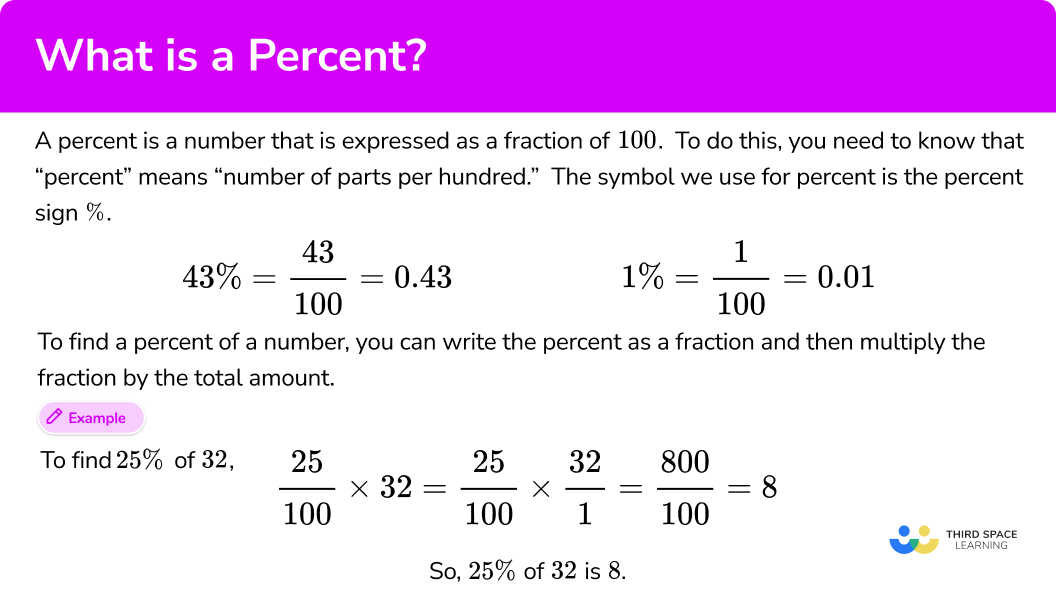
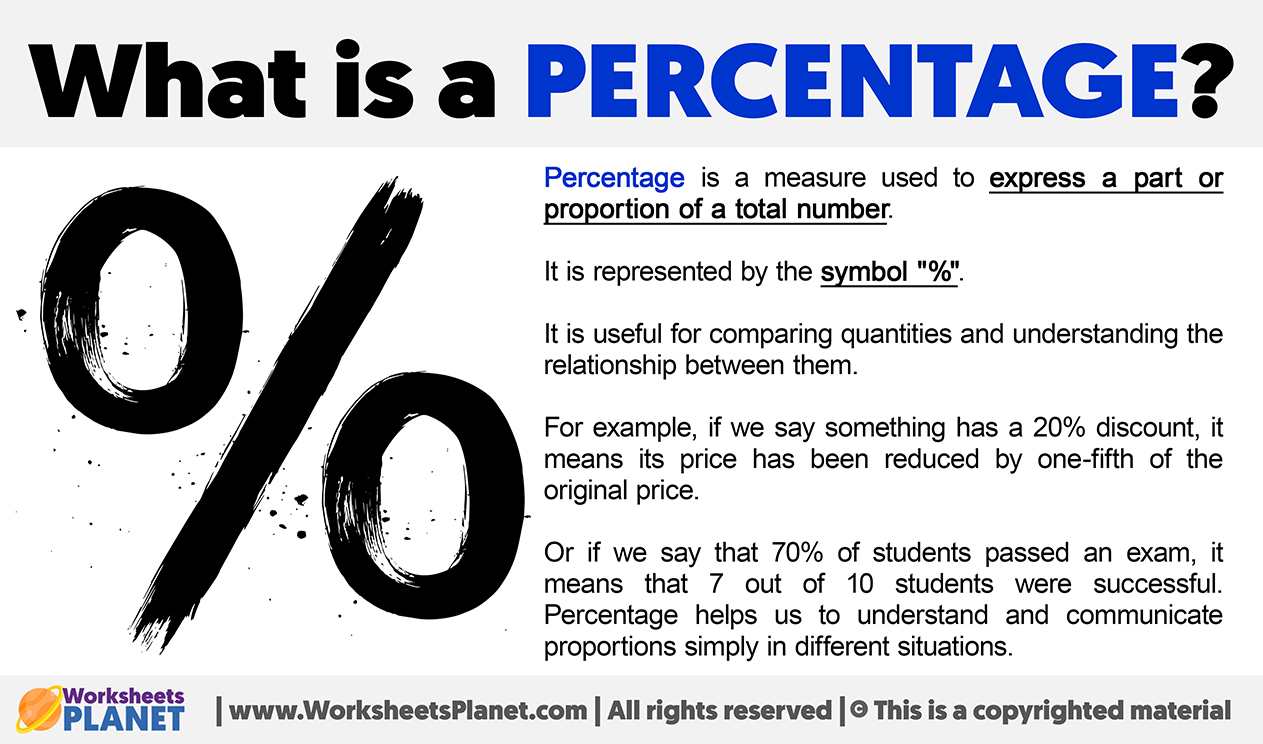
In the realm of personal finance and global economics, few symbols carry as much weight as the humble “%”. While many encounter percentages for the first time in a primary school classroom, their true significance is realized in the boardroom, the stock market, and the family budget. At its core, a percentage is a mathematical expression that represents a fraction of 100. However, in the context of money, a percentage is far more than a fraction; it is the fundamental language used to measure growth, assess risk, calculate the cost of debt, and determine the velocity of wealth creation.
To master your finances, you must first master the concept of the percentage. Whether you are evaluating a dividend yield, negotiating a mortgage rate, or calculating a year-over-year increase in your net worth, understanding how these ratios function is the first step toward financial literacy and long-term prosperity.
The Core Mechanics of Percentages in Personal Finance
To understand percentages in a financial context, one must move beyond abstract numbers and view them as a tool for comparison. Because financial figures can vary wildly—comparing a $100 investment to a $1,000,000 investment—percentages provide a “normalized” scale that allows an investor to see the efficiency of their capital regardless of the dollar amount involved.
Understanding the “Per Hundred” Concept
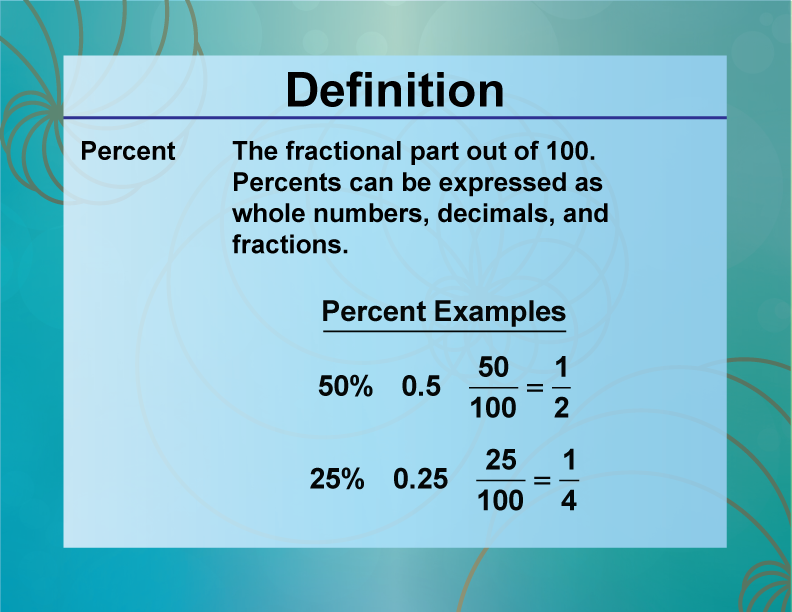
The word “percentage” originates from the Latin per centum, meaning “by the hundred.” In finance, this creates a standardized benchmark. If an investment returns 5%, it means that for every $100 you committed, you earned $5. This simplicity is deceptive, however, because it allows for the comparison of disparate assets. Without percentages, it would be difficult to quickly determine whether a $500 profit on a $5,000 stock trade is better or worse than a $2,000 profit on a $50,000 real estate flip. By converting these to 10% and 4% respectively, the percentage reveals the superior efficiency of the first trade.
The Math of Wealth: Decimals, Fractions, and Ratios
In professional financial analysis, percentages are often converted into decimals to perform complex calculations. For example, a 7% interest rate is expressed as 0.07. This conversion is crucial when calculating the future value of an account or the impact of inflation. Understanding the relationship between these forms is vital for anyone using financial tools or spreadsheets to track their “Online Income” or “Side Hustles.” When you realize that a 1% fee on a managed investment fund isn’t just “one percent,” but rather a 0.01 multiplier that can eat away 25% of your total gains over 30 years due to the loss of compounding, the gravity of the percentage becomes clear.
Percentages as the Language of Investing
Investing is essentially the art of putting your money to work in the hopes of receiving a larger percentage in return than what you started with. Professional investors rarely talk about “making a thousand dollars”; they talk about “basis points” and “percentage yields.”
Return on Investment (ROI) and Compound Interest
ROI is perhaps the most critical percentage in the world of money. It is the measure of the profitability of an investment. However, the most “magical” application of percentages in finance is compound interest—what Albert Einstein reportedly called the eighth wonder of the world.
Compound interest is the process where the percentage gain of one period is added to the principal, and the percentage for the next period is calculated based on that new, higher total. If you have $10,000 growing at a 10% annual rate, you don’t just gain $1,000 every year. In the second year, you gain 10% of $11,000 ($1,100), and so on. This “percentage on top of percentage” growth is the primary engine of wealth for long-term investors and the reason why starting early is more important than the initial amount invested.
Portfolio Allocation and Risk Management
Percentages are also the primary tool for managing risk. Modern Portfolio Theory suggests that an investor should allocate their assets across different classes (stocks, bonds, real estate, cash) based on specific percentages. For instance, a common “moderate” strategy might involve a 60% allocation to equities and 40% to fixed income.
This use of percentages ensures that a person’s financial health isn’t tied to the success of a single company or sector. Rebalancing a portfolio—the act of selling assets that have grown to represent too large a percentage of your total wealth and buying those that have shrunk—is a disciplined way to “buy low and sell high.” Without the framework of percentages, it would be nearly impossible to maintain a consistent risk profile over time.
Navigating Debt and Interest Rates
While percentages can build wealth, they can also dismantle it. In the world of borrowing, the percentage is the “price” of money. Whether you are dealing with credit cards, student loans, or mortgages, the interest rate (expressed as a percentage) determines how much of your future labor you are sacrificing to have money today.
APR vs. EAR: The Real Cost of Borrowing
When you take out a loan, you will often see the Annual Percentage Rate (APR). This is the standardized way that lenders show the yearly cost of a loan, including fees. However, the “Effective Annual Rate” (EAR) is often higher because it accounts for the effects of compounding within the year.
For example, a credit card with an 18% APR may actually have a higher effective rate if interest is compounded daily. Understanding the nuances of these percentages is the difference between a savvy borrower and one who is trapped in a cycle of debt. A difference of just 1% or 2% on a 30-year mortgage can result in tens of thousands of dollars in additional interest payments, illustrating why hunting for the lowest percentage rate is the most profitable “side hustle” a homeowner can have.
The Impact of Credit Utilization Ratios
In personal finance, your credit score is heavily influenced by another percentage: the credit utilization ratio. This is the percentage of your total available credit that you are currently using. Financial experts generally recommend keeping this percentage below 30%. If you have a $10,000 credit limit and carry a $3,000 balance, your utilization is 30%. Even if you pay your bills on time, allowing this percentage to creep upward can signal to lenders that you are overextended, leading to higher interest rate offers in the future. Here, the percentage acts as a barometer of financial responsibility.
Business Finance and Profitability Metrics
For entrepreneurs and those managing “Business Finance,” percentages are the ultimate indicators of a company’s health. Raw revenue numbers can be misleading; it is the “margins” (expressed as percentages) that tell the true story of sustainability.
Gross vs. Net Profit Margins
A business might generate $1 million in sales, which sounds impressive. But if the “Gross Profit Margin” is only 10%, the company only has $100,000 left after the direct costs of goods sold. Furthermore, after taxes, rent, and payroll, the “Net Profit Margin” might drop to 2%. This means the business only keeps $20,000 out of that million.
Successful business owners obsess over these percentages. Improving a net margin from 2% to 4% effectively doubles the business’s take-home pay without requiring a single extra dollar in sales. This is why cost-cutting and efficiency are just as important as marketing and growth in a professional financial strategy.
Market Share and Growth Projections
When a business looks to the future, it uses percentages to set goals. “Year-over-Year (YoY) Growth” is the percentage increase in a metric (like revenue or user count) compared to the same period the previous year. Similarly, “Market Share” is the percentage of total industry sales that a single company controls. These figures are what investors look for when deciding whether to buy a stock or fund a startup. A company that holds a 50% market share is often a safer, more dominant “Blue Chip” investment, whereas a company with only 1% share but 300% annual growth represents a high-risk, high-reward opportunity.
Conclusion: Mastering Percentages for Financial Freedom
Ultimately, a percentage is a tool for perspective. It strips away the noise of large or small numbers and reveals the underlying truth of a financial situation. Whether you are saving for retirement, managing a small business, or trying to pay off debt, your progress will be measured in percentages.
By shifting your mindset to think in percentages rather than just absolute dollars, you begin to see the world as an economist does. You recognize that a 5% discount on a $50,000 car is far more impactful than a 50% discount on a $10 meal. You understand that increasing your savings rate by just 1% of your income today can lead to years of additional freedom in the future. In the world of money, the percentage is the ultimate equalizer, and mastering its application is the surest path to achieving and maintaining financial independence.
aViewFromTheCave is a participant in the Amazon Services LLC Associates Program, an affiliate advertising program designed to provide a means for sites to earn advertising fees by advertising and linking to Amazon.com. Amazon, the Amazon logo, AmazonSupply, and the AmazonSupply logo are trademarks of Amazon.com, Inc. or its affiliates. As an Amazon Associate we earn affiliate commissions from qualifying purchases.