
Tesla has fundamentally redefined what consumers expect from electric vehicles, especially concerning performance. The question “how fast is Tesla?” isn’t merely about top speed or a 0-60 mph sprint; it’s an inquiry into a sophisticated blend of cutting-edge battery technology, advanced electric motor design, sophisticated software algorithms, and aerodynamic engineering that coalesces into an unparalleled driving experience. This article delves into the technological underpinnings that enable Tesla vehicles to achieve their astonishing speeds and acceleration, exploring the specific innovations that place them at the forefront of automotive performance.
The Engineering Marvel Behind Tesla’s Electrifying Acceleration
Tesla’s ability to deliver breathtaking speed is not a singular feat but the result of a meticulously engineered ecosystem. Unlike traditional internal combustion engine (ICE) vehicles that rely on complex gearboxes to manage power delivery, electric vehicles (EVs) like Teslas offer instant torque from zero RPM. This fundamental characteristic, combined with Tesla’s specific technological advancements, creates a performance profile distinct from anything seen before.
Instant Torque and Power Delivery
At the heart of Tesla’s speed lies its permanent magnet synchronous reluctance motors (or induction motors in some earlier models). These electric motors generate maximum torque almost instantaneously, meaning there’s no lag time for an engine to spool up or gears to shift. When the driver presses the accelerator, the power is delivered directly and without hesitation to the wheels. This immediate responsiveness is a significant contributor to the “push-you-into-your-seat” sensation synonymous with Tesla’s performance models. The motor design itself is optimized for high efficiency and power density, allowing a relatively compact unit to produce immense horsepower and torque.
Battery Technology and Thermal Management
The battery pack is more than just a power source; it’s a critical component of the performance equation. Tesla’s large, flat battery packs, often integrated into the vehicle’s floor, contribute to a low center of gravity, enhancing stability and handling during rapid acceleration. More importantly, these battery packs are designed for high power output, capable of discharging enormous amounts of energy quickly to feed the motors. Advanced thermal management systems are crucial here, ensuring the battery pack remains within optimal operating temperatures during extreme performance demands like repeated hard acceleration or track driving. Overheating can lead to power degradation and battery damage, so Tesla’s liquid cooling systems are vital for sustained performance. Innovations in cell chemistry and packaging also play a role, allowing for higher energy density and improved power delivery characteristics.
Aerodynamics and Lightweighting
While not always as visible as motors or batteries, aerodynamics plays a crucial role in speed, especially at higher velocities. Tesla vehicles are designed with sleek, minimalist profiles to minimize drag. Features like flush door handles, smooth underbodies, and carefully sculpted body lines reduce air resistance, allowing the vehicle to cut through the air more efficiently. This not only contributes to higher top speeds but also improves energy efficiency, extending range. Furthermore, Tesla employs lightweight materials, such as aluminum alloys in various structural components, to reduce the overall mass of the vehicle. A lower curb weight means less inertia to overcome during acceleration and better power-to-weight ratios, directly translating to superior performance.
Model-Specific Performance: A Deep Dive into Tesla’s Lineup
Tesla’s commitment to speed and performance is evident across its entire product line, with each model offering impressive acceleration for its segment, and specific high-performance variants pushing the boundaries of what’s possible for a production vehicle.
Model S: The Apex Predator of Acceleration
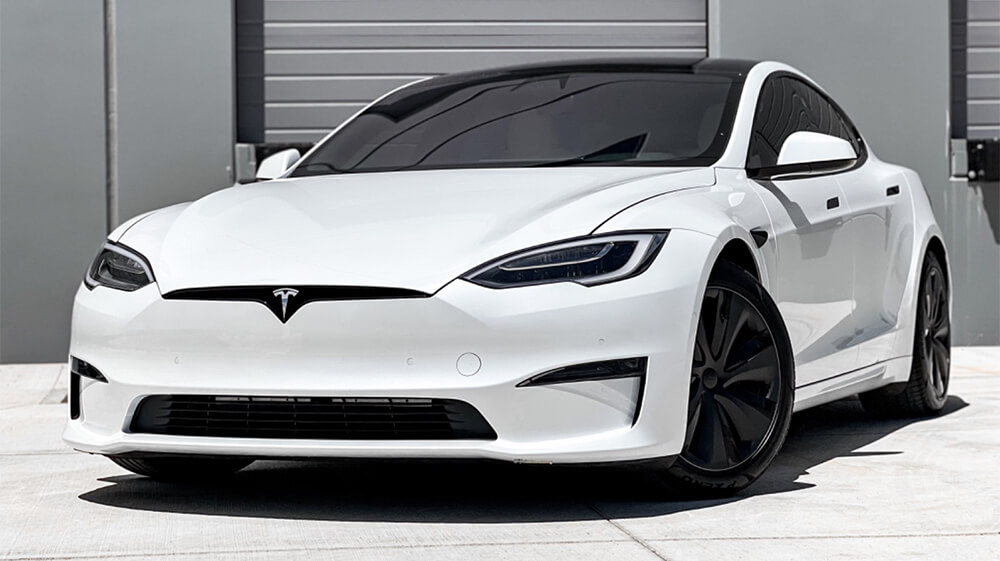
The Model S has long been the flagship of Tesla’s performance lineup. Its “Plaid” variant stands as a testament to hypercar-level acceleration in a sedan body.
- Model S Plaid: Boasting a tri-motor all-wheel-drive system, the Plaid achieves an astonishing 0-60 mph time of just 1.99 seconds (with rollout subtracted), making it one of the quickest production cars ever made. Its quarter-mile time is under 9.23 seconds, and it has a top speed of 200 mph (with appropriate tires and software updates). This level of performance is achieved through immense power output from its three electric motors, delivering over 1,020 horsepower. The advanced drivetrain constantly monitors traction at each wheel, optimizing power delivery for maximum grip and acceleration.
- Model S Long Range: While not as extreme as the Plaid, the Long Range variant still offers exhilarating performance, typically achieving 0-60 mph in around 3.1 seconds, underscoring Tesla’s commitment to brisk acceleration even in its non-performance-focused variants.
Model 3: Performance for the Masses
The Model 3 brought Tesla’s performance within reach of a broader audience, without compromising on thrilling acceleration.
- Model 3 Performance: This variant is a track-ready machine, capable of 0-60 mph in approximately 3.1 seconds. Its dual-motor all-wheel-drive system provides immediate traction and significant power, complemented by a lowered suspension, performance brakes, and 20-inch wheels for enhanced handling dynamics. It strikes an impressive balance between daily usability and sports car-rivalling performance.
- Model 3 Long Range: Still a quick car, the Long Range variant typically hits 60 mph from a standstill in around 4.2 seconds, making it faster than many premium sports sedans.
Model X: The Quickest SUV
The Model X defies the common perception of SUVs as slow or cumbersome. Its large dimensions and falcon wing doors belie truly supercar-level acceleration.
- Model X Plaid: Much like its Model S sibling, the Model X Plaid uses the tri-motor setup to achieve a 0-60 mph time of 2.5 seconds (with rollout subtracted). This makes it the fastest accelerating production SUV in the world, capable of seating up to seven passengers while delivering hypercar performance. This variant also features a top speed of 163 mph.
- Model X Long Range: Even the base Model X offers impressive acceleration, with 0-60 mph times typically around 3.8 seconds, demonstrating how Tesla integrates performance into its larger, more practical vehicles.
Model Y: The Compact Performance Crossover
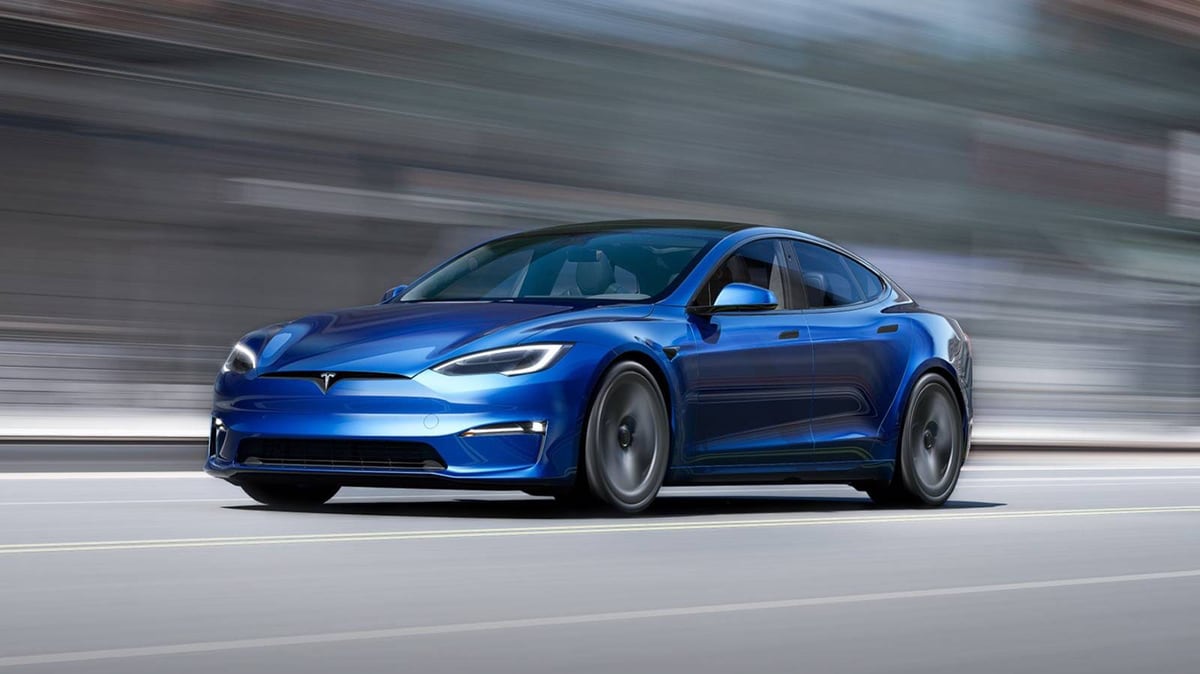
The Model Y, sharing much of its platform with the Model 3, also inherits its performance credentials.
- Model Y Performance: With a 0-60 mph time of 3.5 seconds, the Model Y Performance is an exceptionally quick compact SUV, combining practicality with exhilarating speed. It also features performance-tuned suspension and braking for a more engaging driving experience.
- Model Y Long Range: Similar to the Model 3 Long Range, this variant provides strong acceleration for daily driving, typically hitting 60 mph in approximately 4.8 seconds.
The Future of Speed: Cybertruck and Second-Gen Roadster
Tesla continues to push the boundaries with upcoming vehicles.
- Cybertruck: While a truck, the Cybertruck is slated to offer astonishing performance. The “Cyberbeast” variant is advertised with a 0-60 mph time of 2.6 seconds (with rollout subtracted) and a top speed of 130 mph, making it one of the fastest production pickup trucks ever. Its unique stainless steel exoskeleton also contributes to its rigidity and potential for high performance.
- Second-Gen Roadster: This car promises to redefine hypercar performance. Advertised with a theoretical 0-60 mph time of 1.1 seconds (with the SpaceX package) and a top speed exceeding 250 mph, the new Roadster aims to be the fastest production car in the world, leveraging advanced battery technology and possibly innovative thruster systems.
The Pivotal Role of Software and Over-the-Air Updates
While hardware provides the raw capability, Tesla’s software is the intelligent conductor that orchestrates and optimizes every aspect of the vehicle’s performance. Software defines how efficiently power is used, how the motors respond, and even how the car handles dynamic situations.
Firmware Optimizations and Performance Modes
Tesla continuously refines its vehicles’ performance through over-the-air (OTA) software updates. These updates aren’t just for infotainment or autopilot features; they frequently include firmware enhancements that directly impact power delivery, thermal management, and drivetrain efficiency. For instance, updates have sometimes unlocked additional horsepower, refined launch control algorithms, or improved the battery’s ability to sustain peak power. Performance modes like “Ludicrous” and “Plaid” are entirely software-driven, reconfiguring the vehicle’s parameters to prioritize maximum acceleration, often by pre-conditioning the battery to its optimal temperature for high power discharge.
Traction Control and Dynamic Stability
Sophisticated software algorithms govern Tesla’s traction control and stability control systems. Electric motors allow for extremely precise control of torque at each wheel. In dual-motor and tri-motor setups, the car’s computer can instantly adjust power to individual wheels to prevent slip, ensuring maximum grip during acceleration, cornering, and braking. This leads to superior traction even in challenging conditions and allows for more aggressive launches without wheel spin. The software intelligently manages the interaction between the electric motors, brakes, and steering to keep the vehicle stable and predictable, even when pushed to its limits.
Track Mode and Customization
For performance enthusiasts, Tesla’s “Track Mode” (available on Performance models) exemplifies software’s impact. This mode transforms the car’s dynamics by allowing drivers to customize settings for handling balance, stability assist, regenerative braking, and even coolant override for prolonged high-performance driving. It optimizes the thermal management system, stiffens suspension (if adaptive), and allows for a more rear-biased torque split, mimicking a rear-wheel-drive sports car feel. This level of software-enabled customization fundamentally alters the driving experience and allows the vehicle’s hardware to be fully exploited on a closed course.
Beyond Straight-Line Speed: Handling, Braking, and the Tech Ecosystem
While acceleration figures often dominate headlines, true performance encompasses more than just going fast in a straight line. Tesla’s technological approach extends to ensuring their vehicles can handle, brake, and integrate into a broader tech ecosystem that supports high-performance driving.
Chassis Dynamics and Suspension Systems
Tesla vehicles, particularly the performance variants, are engineered with chassis dynamics that complement their prodigious power. The heavy battery pack, positioned low in the floor, creates a very low center of gravity, which inherently improves stability and reduces body roll during aggressive maneuvers. Many models feature multi-link suspension systems designed for precise wheel control. Performance models often include adaptive suspension components that can adjust damping rates in real-time, firming up for spirited driving and softening for comfort, all managed by intelligent software. This allows for a blend of high-speed stability and engaging cornering capability.
High-Performance Braking Systems
To match their incredible acceleration, Teslas are equipped with robust braking systems. Performance models often feature larger brake rotors, multi-piston calipers, and high-performance brake pads to ensure consistent and powerful stopping power. Furthermore, regenerative braking plays a significant role. When the driver lifts off the accelerator, the electric motors act as generators, converting kinetic energy back into electrical energy to recharge the battery. This not only increases efficiency but also provides powerful deceleration, reducing wear on the conventional friction brakes and allowing for “one-pedal driving” which can be particularly effective in performance driving scenarios. The blend of regenerative and friction braking is seamlessly managed by the vehicle’s software for optimal stopping.

The Interconnected Tech Ecosystem and Future Potential
Tesla’s “how fast” is deeply intertwined with its entire technological ecosystem. This includes everything from the advanced computing power of its FSD (Full Self-Driving) chip, which manages sensor data and vehicle controls, to the intricate communication networks within the car. The integration of robust computing power means that future performance enhancements could potentially come from even more sophisticated algorithms, better energy management, or AI-driven optimizations that learn from driving patterns. The potential for future software updates to unlock even greater performance, improve range, or enhance dynamic capabilities remains a defining characteristic of Tesla’s tech-first approach to automotive engineering.
In conclusion, the answer to “how fast is Tesla?” is a multifaceted narrative of technological innovation. It’s about more than just numbers; it’s about instant torque, sophisticated battery management, aerodynamic efficiency, and the continuous evolution delivered through software updates. Tesla has not only pushed the boundaries of speed but has also redefined what an electric vehicle can achieve, making exhilarating performance accessible and sustainable.
aViewFromTheCave is a participant in the Amazon Services LLC Associates Program, an affiliate advertising program designed to provide a means for sites to earn advertising fees by advertising and linking to Amazon.com. Amazon, the Amazon logo, AmazonSupply, and the AmazonSupply logo are trademarks of Amazon.com, Inc. or its affiliates. As an Amazon Associate we earn affiliate commissions from qualifying purchases.