
The ability to visualize mathematical functions is no longer a skill confined to the pages of a high school calculus textbook. In the contemporary technology landscape, graphing functions has evolved into a sophisticated discipline that sits at the intersection of data science, software engineering, and UI/UX design. Whether you are a developer building a financial forecasting tool, a researcher modeling neural network behaviors, or a student leveraging SaaS platforms to solve complex equations, understanding the digital tools and methodologies for graphing is essential.
Digital graphing has transitioned from static representations to dynamic, interactive experiences. This shift has been driven by the surge in computational power and the democratization of high-level programming libraries. Today, graphing a function is less about the manual plotting of points on Cartesian coordinates and more about selecting the right technological stack to convey complex information accurately and intuitively.
The Evolution of Graphing Technology: From Hardware to Cloud-Based SaaS
The journey of function visualization has seen a radical transformation over the last few decades. For years, the handheld graphing calculator—led by brands like Texas Instruments—was the pinnacle of accessible technology. While these devices are still in use, the tech industry has largely migrated toward cloud-based platforms and integrated software environments that offer superior resolution, sharing capabilities, and processing power.
From Graphing Calculators to Browser-Based Platforms
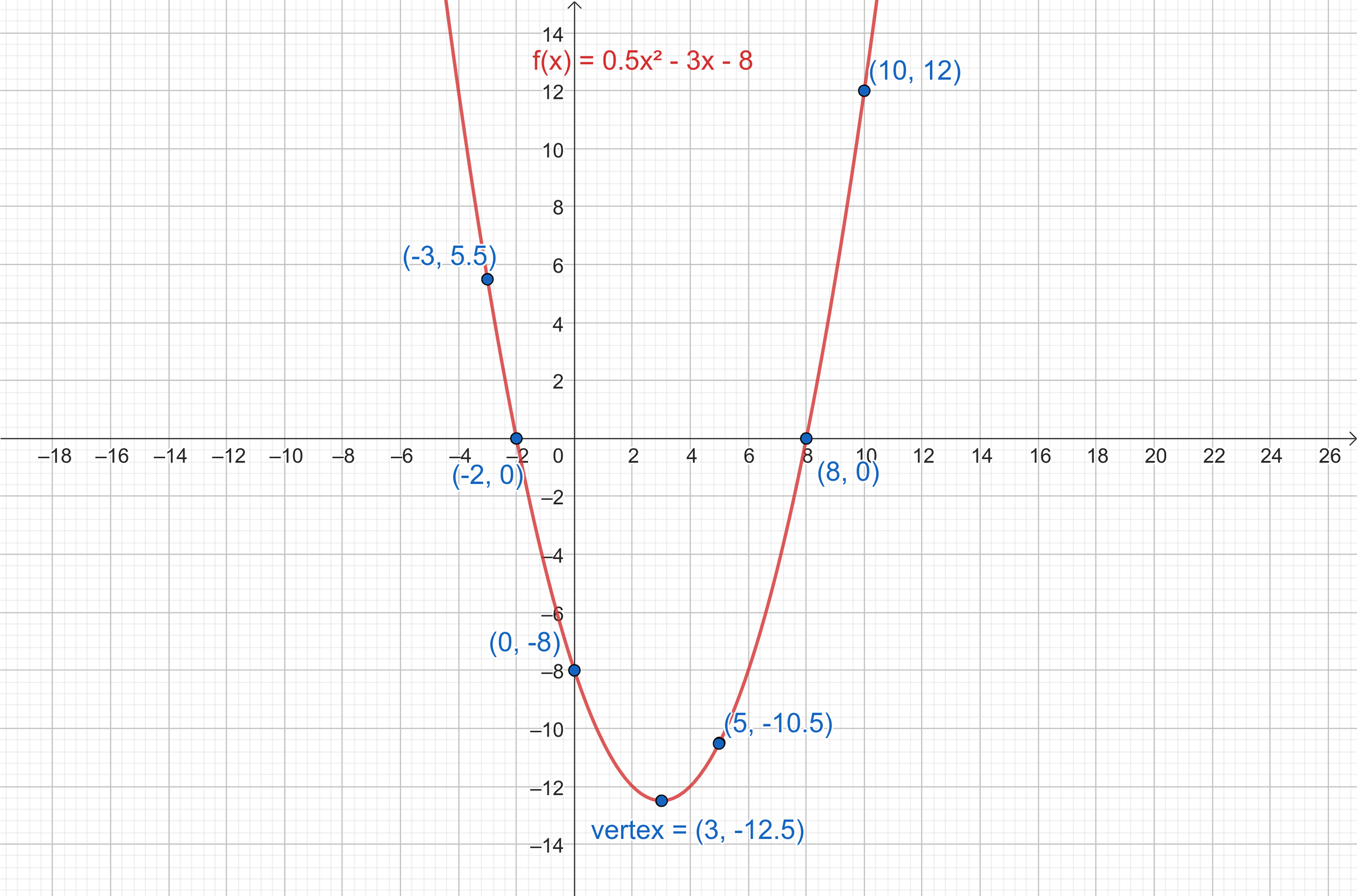
The traditional graphing calculator was a breakthrough because it automated the tedious process of point-plotting. However, its limitations in screen resolution and processing speed were eventually surpassed by browser-based tools. Platforms like Desmos and GeoGebra have revolutionized how we interact with functions. These tools utilize HTML5 and JavaScript to provide real-time updates; as you modify a coefficient in a quadratic equation, the curve shifts instantly. This “live” feedback loop is a hallmark of modern educational and professional tech, allowing for a deeper intuitive understanding of mathematical relationships.
The Rise of Symbolic Computation Engines
Beyond simple plotting, tools like WolframAlpha have introduced symbolic computation to the masses. Unlike standard calculators that approximate values, these tech tools understand the underlying mathematics. When you graph a function in a symbolic engine, the software identifies critical points such as limits, derivatives, and integrals automatically. For tech professionals, this means the software is not just a canvas but an analytical partner that provides context to the visual data.
Cloud Collaboration and Integration
Modern graphing tools are rarely standalone applications. They are now integrated into broader productivity suites. For instance, graphing functions within Notion, Obsidian, or Google Workspace via specialized plugins allows teams to maintain documentation that remains mathematically “live.” This shift toward cloud-based, collaborative graphing ensures that complex models can be audited, edited, and shared across global teams in real-time.
Professional Software Suites for Advanced Function Visualization
For engineers, physicists, and data scientists, general-purpose graphing tools are often insufficient. When the function represents a high-frequency trading algorithm or a structural stress test, the software must handle massive datasets and multi-dimensional variables.
MATLAB and the Engineering Standard
MATLAB (Matrix Laboratory) remains the industry gold standard for technical computing. When graphing functions in MATLAB, users are working with a language designed specifically for matrix manipulations. This is particularly useful for graphing functions that involve linear algebra or complex differential equations. MATLAB’s ability to generate high-quality vector graphics makes it indispensable for technical publications where clarity and precision are non-negotiable.
GeoGebra for Dynamic Geometry and 3D Modeling
While often viewed as an educational tool, GeoGebra’s technical capabilities extend into 3D modeling and augmented reality (AR). Graphing a function in a three-dimensional plane—such as a multivariable function representing a topographical map—requires significant graphical rendering power. GeoGebra provides a bridge between pure math and visual design, allowing users to export their functions into formats compatible with 3D printers or CAD software.
Specialized Financial Graphing Tools
In the “FinTech” sector, graphing functions often revolves around time-series data and stochastic processes. Specialized tools like Bloomberg Terminal or TradingView allow users to overlay mathematical functions (like moving averages or Bollinger Bands) onto live market data. Here, the “function” is a dynamic algorithm reacting to a constant stream of external inputs, requiring high-speed data pipelines and low-latency rendering.
Graphing Functions via Programming: The Developer’s Approach
For many in the tech world, the most powerful way to graph a function is through code. This approach offers unparalleled flexibility, allowing the graph to be integrated into applications, automated reports, or machine learning pipelines.
Python: The King of Mathematical Plotting
Python has become the primary language for scientific computing, thanks largely to its robust ecosystem of libraries. To graph a function in Python, one typically turns to Matplotlib. This library provides a MATLAB-like interface for creating static, animated, and interactive visualizations.
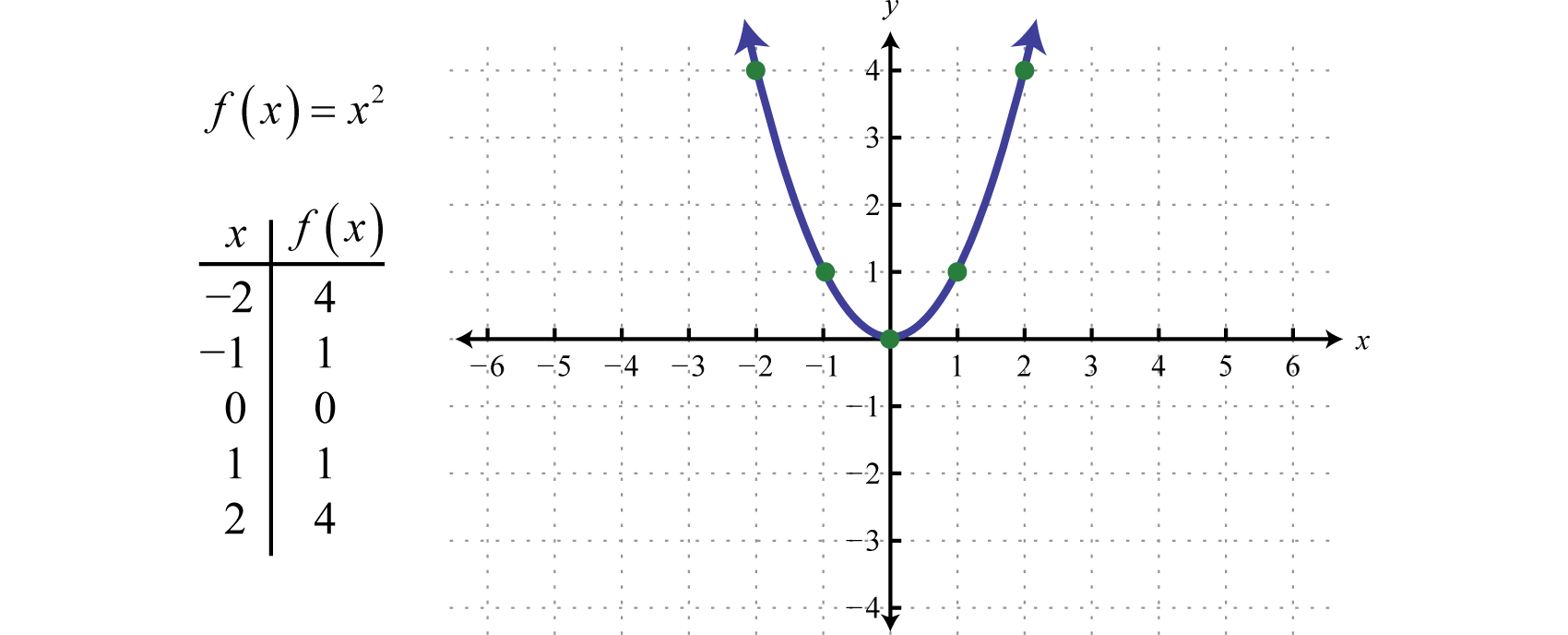
- NumPy Integration: To graph a continuous function, a developer uses NumPy to create an array of inputs (the domain) and then applies the function across that array to generate the outputs (the range).
- Seaborn and Plotly: For those needing more aesthetic or interactive “web-ready” graphs, Seaborn offers beautiful statistical defaults, while Plotly enables the creation of graphs that users can zoom, pan, and hover over within a web browser.
The Role of JavaScript in Front-End Function Graphing
If you are building a web application that needs to display a function—such as a mortgage calculator or a fitness tracker’s progress chart—JavaScript is the go-to tool. Libraries like D3.js (Data-Driven Documents) allow developers to bind arbitrary data to a Document Object Model (DOM) and then apply data-driven transformations to the document. While D3.js has a steep learning curve, it allows for the creation of bespoke, highly interactive function graphs that are optimized for web performance.
AI and Natural Language Processing in Graphing
The newest frontier in graphing functions is the integration of Large Language Models (LLMs). Tools like ChatGPT (with Advanced Data Analysis) or Claude can now take a natural language prompt—such as “Graph a sine wave with a frequency of 5Hz and show its Fourier transform”—and instantly generate both the code and the resulting visual. This tech reduces the barrier to entry, allowing non-coders to generate complex mathematical visualizations by simply describing the desired outcome.
Best Practices for Clarity and Accuracy in Digital Graphing
Technology provides the tools, but the effectiveness of a graph depends on how it is constructed. In a professional tech environment, a poorly labeled or misleading graph can lead to expensive errors in judgment.
Choosing the Right Scale and Coordinate System
One of the most common mistakes in digital graphing is failing to choose the appropriate scale. While the Cartesian (X-Y) plane is the default, certain functions are better represented using logarithmic scales, especially when dealing with exponential growth (common in tech scaling or viral growth modeling). Tech professionals must also decide between 2D and 3D representations; while 3D graphs look impressive, they can often obscure data points, making 2D heatmaps a more “pro” choice for complex function density.
Accessibility and UX in Visualization
As tech becomes more inclusive, graphing functions must follow accessibility standards. This includes using high-contrast color palettes for those with visual impairments and ensuring that interactive graphs are navigable via keyboard or screen readers. In a professional dashboard, a graph should not just be a picture; it should be an accessible data object.
Verification and Sanity Checks
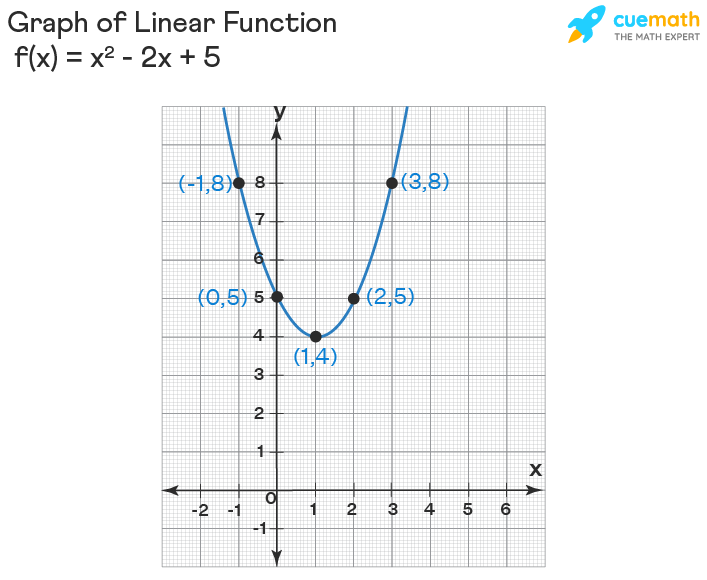
In the era of AI-generated content, it is crucial to verify that the software is graphing the function correctly. This involves “sanity checks”—manually calculating a few known points of the function to ensure the digital output matches the mathematical reality. In high-stakes software development, unit tests are often written specifically to verify that the graphing logic handles edge cases, such as asymptotes or undefined values, without crashing the application.
The Future of Function Visualization: VR and AR
As we look toward the future of tech, the way we graph functions is likely to move beyond the flat screen. Virtual Reality (VR) and Augmented Reality (AR) are beginning to offer “spatial graphing” experiences. Imagine an engineer walking through a 3D graph of a fluid dynamics function or a data scientist physically manipulating the variables of a multi-dimensional function in a virtual workspace.
The integration of haptic feedback and spatial computing will turn graphing from a visual exercise into a multisensory one. As these technologies mature, the “how-to” of graphing functions will expand to include spatial design and 3D interaction patterns, further blurring the line between abstract mathematics and tangible reality.
In conclusion, graphing functions in the modern age is a multifaceted technical skill. From the simple elegance of browser-based tools like Desmos to the high-powered scripting capabilities of Python and the immersive potential of AR, the tech world provides an unprecedented array of tools for visualization. By mastering these tools and adhering to the principles of clarity and precision, professionals can transform raw equations into insightful, actionable visual narratives.
aViewFromTheCave is a participant in the Amazon Services LLC Associates Program, an affiliate advertising program designed to provide a means for sites to earn advertising fees by advertising and linking to Amazon.com. Amazon, the Amazon logo, AmazonSupply, and the AmazonSupply logo are trademarks of Amazon.com, Inc. or its affiliates. As an Amazon Associate we earn affiliate commissions from qualifying purchases.