
Determining the precise market value of your used car is a crucial step whether you’re looking to sell, trade it in, or simply curious about your asset’s worth. In a dynamic automotive market, the perceived value of a vehicle can fluctuate significantly based on a myriad of factors, making it a complex yet essential financial assessment. For many, a car represents one of the most substantial assets outside of a home, and understanding its true worth directly impacts personal financial planning, potential trade-in equity, or the success of a private sale. This comprehensive guide delves into the intricate financial landscape of used car valuation, offering insights, tools, and strategies to help you accurately appraise your vehicle and make informed monetary decisions. From deciphering the impact of mileage to leveraging online valuation platforms and navigating various selling avenues, we will explore how to maximize your car’s financial potential.

Understanding the Factors Influencing Your Car’s Financial Value
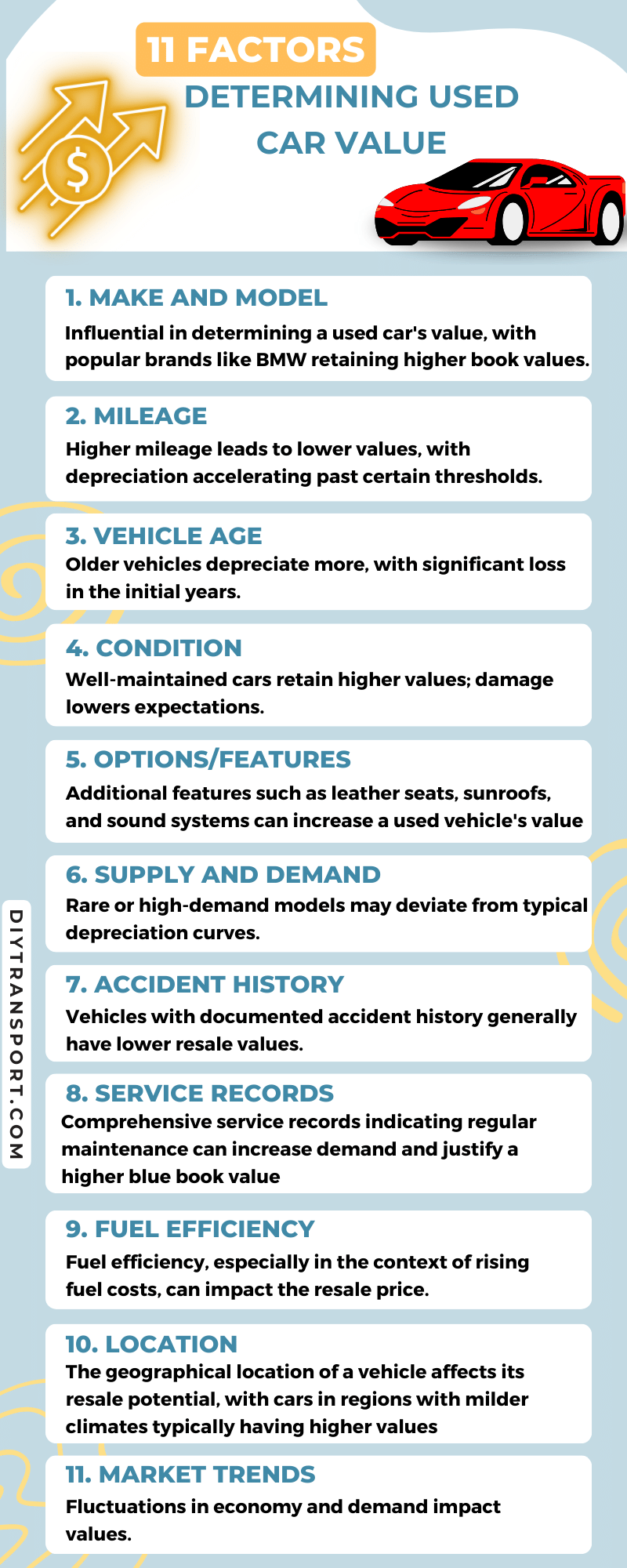
The market value of a used car is not an arbitrary figure but rather a complex calculation influenced by a multitude of interconnected variables. Each factor plays a significant role in dictating the final price a buyer is willing to pay or a dealer is prepared to offer. A deep understanding of these elements is the first step toward accurately assessing your vehicle’s worth and positioning it competitively in the market.
Make, Model, and Year: The Foundation of Value
At its core, the make, model, and year of your vehicle form the fundamental basis of its value. Certain brands and models inherently hold their value better than others due to reputation for reliability, fuel efficiency, safety features, or brand desirability. For instance, Toyota Camrys and Honda Civics are renowned for their depreciation resistance, while luxury brands often experience a steeper initial depreciation curve. The year of manufacture is also critical, as newer cars generally command higher prices due although depreciation is most rapid in the first few years. Understanding current market trends for your specific make and model is paramount.
Mileage: The Invisible Clock
Mileage is often considered one of the most significant indicators of a car’s wear and tear, acting as an “invisible clock” that reflects its operational life. While there’s no magic number, higher mileage generally correlates with lower value, as it suggests increased potential for mechanical issues and a shorter remaining lifespan for components. However, this factor must be considered in context. A well-maintained car with high highway mileage might be in better condition than a lower-mileage car used exclusively for stop-and-go city driving with poor maintenance history. Buyers typically look for averages around 12,000-15,000 miles per year, so deviations from this can significantly impact valuation.
Condition: Beyond the Surface
The physical and mechanical condition of your vehicle is a critical determinant of its worth. This encompasses three main aspects:
- Exterior: Dents, scratches, rust, paint fade, and the condition of tires and wheels all contribute to the car’s aesthetic appeal and perceived value. A pristine exterior signals a well-cared-for vehicle.
- Interior: Stains, tears in upholstery, dashboard cracks, unpleasant odors, and functionality of electronic components (infotainment, power windows, AC) directly impact comfort and desirability.
- Mechanical Health: This is arguably the most crucial aspect. A car with a strong engine, smooth transmission, functional brakes, and a clean bill of health from a recent inspection will always fetch a higher price. Any known mechanical issues, even minor ones, can significantly reduce value and increase buyer apprehension.
Vehicle History: Accidents and Ownership
A car’s history report (e.g., CarFax, AutoCheck) provides a detailed financial narrative of its past. Records of accidents, flood damage, salvage titles, multiple previous owners, or inconsistent service history can severely diminish a vehicle’s value. Conversely, a clean history, especially one showing regular maintenance and a single owner, can significantly boost its appeal and price. Buyers are increasingly reliant on these reports for transparency and peace of mind, making a clean history a valuable asset.
Location and Market Demand
The geographical location where you sell your car can surprisingly impact its value. Certain vehicles are more desirable in specific regions due to local climate (e.g., SUVs/4WDs in snowy areas, convertibles in sunny locales), fuel prices (e.g., smaller, fuel-efficient cars), or even local cultural preferences. Furthermore, overall market demand—influenced by economic conditions, new car availability, and consumer trends—plays a crucial role. A sudden surge in demand for used cars, or a shortage of new vehicles, can temporarily inflate values, offering a fortuitous window for sellers.
Optional Features and Trim Level
Beyond the base model, specific optional features and higher trim levels can add significant value. Premium sound systems, navigation, sunroofs, leather seating, advanced driver-assistance systems (ADAS), and upgraded wheel packages are desirable enhancements that can justify a higher asking price. However, not all additions retain their value equally; some aftermarket modifications might even deter potential buyers. Understanding which features are most sought-after for your particular model is key.
Reliable Valuation Tools and Resources for Financial Assessment
Once you understand the factors influencing value, the next step is to leverage reliable tools and resources to get concrete figures. These platforms and methods provide data-driven estimates that can guide your financial expectations and negotiation strategies.
Online Valuation Websites: Your Digital Appraisers
Several prominent online platforms have become industry standards for used car valuation. They compile vast amounts of sales data, market trends, and vehicle specifications to provide estimated values based on various conditions.
- Kelley Blue Book (KBB): Widely recognized, KBB offers multiple valuation figures, including “Private Party Value” (what you can expect to sell it for privately), “Trade-in Value” (what a dealer might offer), and “Suggested Retail Value” (what a dealer might sell it for). You input your car’s details, mileage, condition, and optional features.
- Edmunds: Similar to KBB, Edmunds provides “True Market Value” (TMV) estimates, which aim to represent the average transaction price in your area. They also offer trade-in and private party estimates, often with more granular detail on local market conditions.
- NADAguides (J.D. Power Valuation Services): Historically favored by financial institutions and dealerships, NADAguides provides values based on average prices, taking into account various options and conditions. Their values often tend to be slightly higher than KBB or Edmunds.
It’s advisable to check all three resources and average their estimates. Be honest about your car’s condition when using these tools; overestimating its condition will lead to an unrealistic financial expectation.
Dealership Appraisals: Quick and Convenient
Visiting a few local dealerships for a trade-in appraisal is a quick way to get a professional financial assessment. While these offers will typically be lower than what you might get from a private sale (as dealers need room for profit), they provide a baseline and can be a good option if convenience is a priority. Remember, a dealership appraisal is a firm offer to buy your car, not just an estimate. It can also serve as a negotiation tool if you decide to sell privately.
Professional Independent Appraisers: For Unique Situations
For classic cars, highly modified vehicles, or those with unique characteristics that online tools struggle to quantify, a professional independent appraiser can offer a more accurate and legally defensible valuation. These experts consider historical data, rarity, restoration quality, and specialized market niches to determine a precise financial value. This option is typically an investment but can be worthwhile for high-value or unusual vehicles.
Local Market Analysis: Classifieds and Listings
Beyond official valuation tools, real-world market data is invaluable. Browse local online classifieds (e.g., Craigslist, Facebook Marketplace), auto listings websites (e.g., AutoTrader, Cars.com), and even dealership used car inventories for vehicles similar to yours. Pay attention to their asking prices, how long they’ve been listed, and any details about their condition and features. This provides a tangible sense of what buyers in your specific area are currently paying for comparable vehicles, offering a crucial financial pulse of the local market.
Strategies to Maximize Your Car’s Resale Value
Once you have a realistic understanding of your car’s worth, the next financial objective is to ensure you achieve the highest possible return. Strategic preparation can significantly enhance your vehicle’s appeal and, consequently, its selling price.
Regular Maintenance and Service Records: A Financial Guarantee
One of the most impactful ways to preserve and enhance your car’s value is diligent maintenance. A comprehensive, up-to-date service history demonstrates responsible ownership and provides prospective buyers with confidence in the vehicle’s mechanical integrity. Keep all receipts for oil changes, tire rotations, major repairs, and scheduled services. Presenting a binder full of meticulously organized service records is a powerful selling point, effectively acting as a financial guarantee of the car’s health. Consider performing any overdue maintenance or minor repairs before selling, as the cost of these fixes is usually less than the value they add.
Cosmetic Improvements: The Power of First Impressions
First impressions are paramount in car sales. Investing a small amount of money and effort into cosmetic improvements can yield significant returns.
- Professional Detailing: A thorough cleaning, inside and out, can transform a car. This includes shampooing carpets, cleaning upholstery, polishing exterior paint, and dressing tires. A professionally detailed car looks newer and more cared for, justifying a higher price.
- Minor Repairs: Address easily fixable cosmetic flaws. This might include touching up paint chips, replacing worn floor mats, fixing a cracked taillight lens, or replacing a missing trim piece. These small investments prevent buyers from using them as negotiation points for larger price reductions.
- Tire Condition: Ensure your tires have adequate tread depth and are properly inflated. New or nearly new tires are a major plus for buyers.
Gathering Necessary Documentation: Financial Transparency
Beyond service records, having all essential documentation readily available streamlines the selling process and builds trust. This includes:
- Vehicle Title/Pink Slip: Crucial for transferring ownership. Ensure it’s clear of any liens.
- Current Registration and Inspection Records: Proves the car is roadworthy and legally compliant.
- Owner’s Manual: Shows completeness and care.
- Vehicle History Report: Consider proactively running one yourself and having it ready to share. This transparent approach can alleviate buyer concerns.
- Warranty Information: If any transferable warranty still applies.
Having these documents organized and ready reflects professionalism and transparency, making the transaction smoother and often leading to a better financial outcome.
Smart Timing for Sale: Market Dynamics
The time of year can subtly influence demand and price. For example, convertibles tend to fetch higher prices in spring and summer, while SUVs and AWD vehicles see increased demand in autumn and winter. Generally, spring and early summer are good times to sell used cars as tax refunds provide buyers with extra cash, and warmer weather encourages car shopping. Conversely, the end of the year can be slower, though some buyers might be looking for year-end deals. Monitoring local market trends can help you choose the most opportune time to list your vehicle.
Navigating the Selling Process: Different Avenues and Their Financial Implications
The method you choose to sell your used car has direct financial consequences, impacting the final price you receive, the effort required, and the speed of the transaction. Each avenue offers a distinct balance of convenience versus profit.
Selling Privately: The Highest Return, More Effort
Selling your car directly to a private buyer typically yields the highest financial return. You cut out the middleman (dealership) and capture more of the retail value. However, this method demands more effort and time. You are responsible for marketing the car (photos, compelling description), screening potential buyers, arranging test drives, negotiating the price, and handling all paperwork. It requires patience and strong negotiation skills but can be financially the most rewarding.
Trading In: Convenience Over Profit
Trading your car in at a dealership is the most convenient option. It simplifies the process by rolling the sale of your old car into the purchase of a new one, potentially reducing sales tax on the new vehicle. Dealers handle all paperwork and the car is off your hands immediately. The major drawback, however, is that you will almost certainly receive less money than you would through a private sale. Dealerships need to purchase your car at a price that allows them to recondition it and resell it for a profit. For sellers prioritizing ease and speed, this financial trade-off is often acceptable.
Selling to a Dealership or Online Buyer: Quick Cash, Lower Offer
If you need to sell your car quickly but aren’t buying another from a dealership, you can sell it directly to a dealership or an online car-buying service (e.g., Carvana, Vroom, GiveMeTheVIN). These options offer immediate cash payment and remove the hassle of private selling. Similar to trade-ins, the offers will generally be lower than private sale prices because these entities operate on a profit margin. However, they provide a guaranteed sale and instant liquidity, making them attractive for those seeking a swift and straightforward transaction.
Consignment Sales: A Hybrid Approach
Some dealerships or specialized consignment services will sell your car for you, charging a fee or a percentage of the sale price. This offers a middle ground: you typically get more than a trade-in value, but less than a full private sale, while the consignment service handles the marketing, showings, and negotiation. It can be a good option for owners who want more money than a trade-in but lack the time or inclination for a full private sale.
Beyond the Sticker Price: Financial Considerations for Sellers
While the sale price is the primary focus, several other financial aspects can influence the net proceeds from selling your used car. Overlooking these can lead to unexpected expenses or reduce your overall profit.
Outstanding Loans and Liens: Clearing the Debt
If you still owe money on your car, the outstanding loan balance must be cleared before the title can be transferred to a new owner. If the sale price is less than the loan amount (you’re “upside down”), you’ll need to pay the difference out of pocket. If you sell privately, you’ll need to coordinate with your lender to ensure a smooth payoff and title release. For trade-ins or sales to dealerships, they typically handle the payoff as part of the transaction, deducting it from your new car’s price or your cash offer. Understanding your loan payoff amount is crucial for accurate financial planning.
Taxes and Fees: The Hidden Costs
Depending on your location, various taxes and fees might apply to the sale of a used car. While the buyer usually covers sales tax and registration fees, you might incur fees for a duplicate title, a notary public for signing documents, or specific state-mandated disclosures. If you trade in your vehicle, some states offer a sales tax credit on your new car purchase for the value of your trade-in, effectively reducing the tax burden on your new vehicle. Factor these potential costs into your financial calculations to arrive at a true net profit.

Negotiation Tactics: Securing Your Value
Negotiation is a critical financial skill when selling a car. Be prepared to haggle, especially in a private sale.
- Set a realistic asking price: Start slightly above your minimum acceptable price to leave room for negotiation, but don’t price it so high that it deters buyers.
- Highlight value: Emphasize all the positive aspects: clean history, recent maintenance, desirable features.
- Be firm but flexible: Know your bottom line and be prepared to walk away if an offer is too low. However, also be willing to compromise on smaller details if it means closing the sale.
- Don’t ignore minor flaws: Be honest about any imperfections but present them in context. Buyers appreciate transparency.
- Understand buyer psychology: Buyers are looking for a deal. Sometimes offering a small concession (like a full tank of gas) can seal the deal without significantly impacting your profit.
By diligently applying these financial considerations, you can navigate the selling process with confidence, ensuring that your efforts translate into the best possible financial outcome for your used vehicle.
In conclusion, understanding “how much is my used car worth” is far more than a simple inquiry; it’s a strategic financial endeavor. By meticulously evaluating the myriad factors that influence value, leveraging accurate appraisal tools, and implementing savvy selling strategies, you empower yourself to make informed decisions that maximize your return on investment. Whether you’re upgrading, downsizing, or simply liquidating an asset, approaching your used car sale with a professional and insightful financial perspective will undoubtedly lead to a more successful and profitable outcome.
aViewFromTheCave is a participant in the Amazon Services LLC Associates Program, an affiliate advertising program designed to provide a means for sites to earn advertising fees by advertising and linking to Amazon.com. Amazon, the Amazon logo, AmazonSupply, and the AmazonSupply logo are trademarks of Amazon.com, Inc. or its affiliates. As an Amazon Associate we earn affiliate commissions from qualifying purchases.