
In the world of finance, numbers are the language of success. Whether you are tracking the growth of a retirement portfolio, evaluating the health of a small business, or simply trying to understand how much of your monthly income is consumed by rent, the ability to calculate a percentage is an essential skill. While it may seem like a basic arithmetic operation, the application of percentages in money management provides the clarity needed to make informed, data-driven decisions.
Understanding how to find the percentage from two numbers allows you to strip away the noise of raw data and reveal the underlying trends of your financial life. It transforms abstract figures into actionable insights. In this comprehensive guide, we will explore the fundamental mechanics of percentage calculations and delve into their critical applications across personal finance, investment analysis, and business profitability.

The Fundamental Role of Percentages in Personal and Business Finance
At its core, a percentage is a way to express a number as a fraction of 100. In finance, this is rarely just a schoolroom exercise; it is a tool for comparison. It allows an investor to compare a $500 gain on a $5,000 investment with a $500 gain on a $50,000 investment. Without percentages, both look equal; with them, we see that one is a 10% return while the other is a mere 1%.
Understanding the Basic Formula
The mathematical foundation for finding a percentage from two numbers is straightforward, yet its implications are vast. To find what percentage “Part A” is of “Total B,” the formula is:
** (Part / Whole) × 100 = Percentage **
For example, if you saved $1,200 last month out of a total income of $5,000, you would divide 1,200 by 5,000 to get 0.24. Multiplying by 100 gives you 24%. This simple calculation is the heartbeat of budgeting. It tells you exactly what portion of your resources is being allocated toward your future versus your current lifestyle.
Why Percentage Calculations Matter for Wealth Building
Wealth building is less about the absolute amount of money you earn and more about the efficiency of how that money is utilized. High-net-worth individuals and successful corporate treasurers use percentages to set benchmarks. By converting financial goals into percentages—such as aiming for a 15% savings rate or keeping housing costs below 30% of gross income—you create a scalable framework for wealth.
As your income grows, the raw numbers will change, but the percentage-based rules of thumb remain constant. This consistency is what prevents “lifestyle creep,” where expenses rise at the same rate as income, preventing any real accumulation of net worth.
Evaluating Investment Performance: ROI and Growth Rates
For an investor, the ability to calculate percentages is the difference between guessing and knowing. The financial markets fluctuate daily, and looking at price changes in dollars can be deceptive. A $2 increase in a stock price is massive for a $10 stock, but negligible for a $2,000 stock.
Calculating Return on Investment (ROI)
Return on Investment, or ROI, is perhaps the most vital percentage in the world of money. It measures the efficiency of an investment or compares the efficiencies of several different investments. To find the ROI, you take the net profit of the investment, divide it by the original cost, and multiply by 100.
If you invested $10,000 in a mutual fund and its value grew to $11,500, your profit is $1,500.
** ($1,500 / $10,000) × 100 = 15% ROI **
By focusing on the percentage, you can compare the performance of your real estate holdings against your stock portfolio or a high-yield savings account, ensuring your capital is always working in the most productive environment possible.
Analyzing Year-Over-Year (YoY) Growth
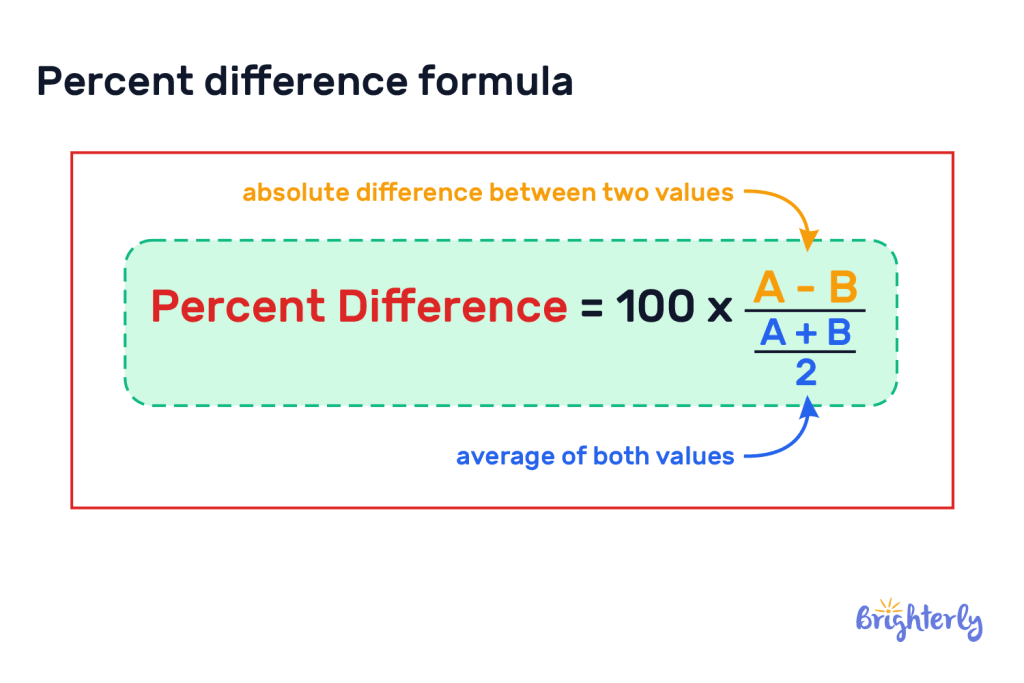
In financial analysis, looking at a single point in time is rarely enough. Investors use Year-Over-Year (YoY) growth to identify trends. This involves finding the percentage difference between two numbers from two different periods.
The formula for percentage growth is:
** [(New Value – Old Value) / Old Value] × 100 **
If a company’s revenue was $1 million last year and $1.2 million this year, the growth is 20%. Understanding this percentage allows an investor to see if a company is accelerating, stagnating, or declining. In personal finance, you can use this to track your net worth growth, helping you determine if you are on track for retirement or if you need to adjust your strategy.
Optimizing Business Profitability and Margin Analysis
For entrepreneurs and business owners, understanding percentages is a matter of survival. Business finance relies heavily on “margins”—the percentages that tell you how much of every dollar in sales you actually keep after expenses.
Gross Profit Margin vs. Net Profit Margin
Finding the percentage of profit relative to revenue is the primary way to measure business health.
- Gross Profit Margin: This is calculated by taking the Gross Profit (Revenue minus Cost of Goods Sold) and dividing it by Revenue. It reveals how efficiently a business produces its core products.
- Net Profit Margin: This is the “bottom line” percentage. It is the Net Income (after all expenses, taxes, and interest) divided by Revenue.
A business might have high revenue, but if the Net Profit Margin is only 2%, it is in a precarious position. Conversely, a smaller business with a 25% margin might be much more resilient. By constantly calculating these two numbers, business owners can identify where costs are leaking and where pricing may need to be adjusted.
Markup vs. Margin: Avoiding Common Financial Errors
A common pitfall in business finance is confusing markup with margin. While both involve percentages derived from cost and price, they tell different stories.
- Markup is the percentage added to the cost to reach the selling price.
- Margin is the percentage of the selling price that is profit.
If an item costs $80 and you sell it for $100, your markup is 25% ($20 profit / $80 cost). However, your profit margin is only 20% ($20 profit / $100 selling price). Miscalculating this can lead to disastrous pricing strategies where a business owner thinks they are making more money than they actually are. Mastering the relationship between these two numbers is essential for maintaining a healthy cash flow.
Managing Personal Debt and Interest Calculations
Percentages are a double-edged sword. While they help grow your investments, they also determine the cost of your debt. Understanding how interest rates—expressed as percentages—impact your total repayment is a cornerstone of financial literacy.
The Impact of Interest Rates on Debt Repayment
When you take out a loan, the interest rate is the “price” of the money. By finding the percentage of your monthly payment that goes toward interest versus principal, you can see the true cost of borrowing. In the early years of a mortgage or a long-term car loan, a surprisingly high percentage of your payment is often interest.
Using the percentage formula helps you visualize the benefit of “extra” payments. If you know that your credit card has a 24% annual interest rate, you can calculate that roughly 2% of your balance is being added in interest every single month. Seeing that percentage allows you to prioritize high-interest debt over low-interest debt, a strategy known as the “Debt Avalanche” method.
Debt-to-Income Ratio: A Key Metric for Borrowers
Lenders use a specific percentage to decide if you are a “safe” borrower: the Debt-to-Income (DTI) ratio. To find this, you divide your total monthly debt payments by your gross monthly income.
If your monthly debt (rent, car loan, student loans) totals $2,000 and your gross income is $6,000:
** ($2,000 / $6,000) × 100 = 33.3% DTI **
Most mortgage lenders look for a DTI of 43% or lower. By knowing how to calculate this percentage yourself, you can assess your financial standing before applying for a loan, ensuring you don’t overextend your finances and put your solvency at risk.
Leveraging Digital Financial Tools for Real-Time Analysis
While the math can be done by hand or with a basic calculator, the modern financial landscape offers sophisticated tools that automate these percentage calculations, providing real-time insights into your money.
Automating Calculations with Spreadsheets
Microsoft Excel and Google Sheets are the gold standard for financial tracking. Using simple formulas like =(A1/B1) and formatting the cell as a percentage allows you to build dynamic dashboards. You can track your “Savings Rate” or “Portfolio Allocation” automatically every time you update your account balances. This automation reduces human error and ensures that you are always looking at the most accurate percentage of your financial health.
Using Financial Apps for Budget Tracking
For those who prefer a more mobile-centric approach, budgeting apps like YNAB (You Need A Budget) or Mint specialize in showing you percentages. These tools automatically categorize your spending and show you what percentage of your income is going toward “Needs,” “Wants,” and “Savings.”
The psychological impact of seeing a “Spending Pie Chart” is profound. It is one thing to know you spent $800 on dining out; it is another to see that dining out accounts for 20% of your total income. That percentage provides the “shock” necessary to trigger behavioral changes in spending habits.

Conclusion
Finding the percentage from two numbers is more than a math problem; it is a vital financial competency. In the context of money, percentages provide the context, comparison, and clarity needed to navigate a complex economic world. From evaluating the ROI of a new stock to monitoring the profit margins of a growing business, or managing the debt-to-income ratio for a first home, these calculations empower you to take control of your financial destiny. By moving beyond raw numbers and focusing on percentages, you gain a deeper, more sophisticated understanding of how wealth is created, managed, and sustained.
aViewFromTheCave is a participant in the Amazon Services LLC Associates Program, an affiliate advertising program designed to provide a means for sites to earn advertising fees by advertising and linking to Amazon.com. Amazon, the Amazon logo, AmazonSupply, and the AmazonSupply logo are trademarks of Amazon.com, Inc. or its affiliates. As an Amazon Associate we earn affiliate commissions from qualifying purchases.