
In the world of finance, whether you are managing a household budget, evaluating a corporate balance sheet, or trading on the stock market, numbers are the primary language. However, raw numbers—like a profit of $10,000 or a debt of $500—rarely tell the whole story. To gain true insight into financial health and performance, we must translate these figures into percentages. Percentages provide the necessary context to compare different data points, measure growth over time, and assess risk levels. Understanding how to find the percentage of something is not merely a middle-school math requirement; it is a fundamental skill for financial literacy and wealth building.

This guide explores the mechanics of percentage calculations through the lens of personal and business finance, providing you with the tools to analyze your wealth with professional precision.
The Fundamental Role of Percentages in Personal Finance
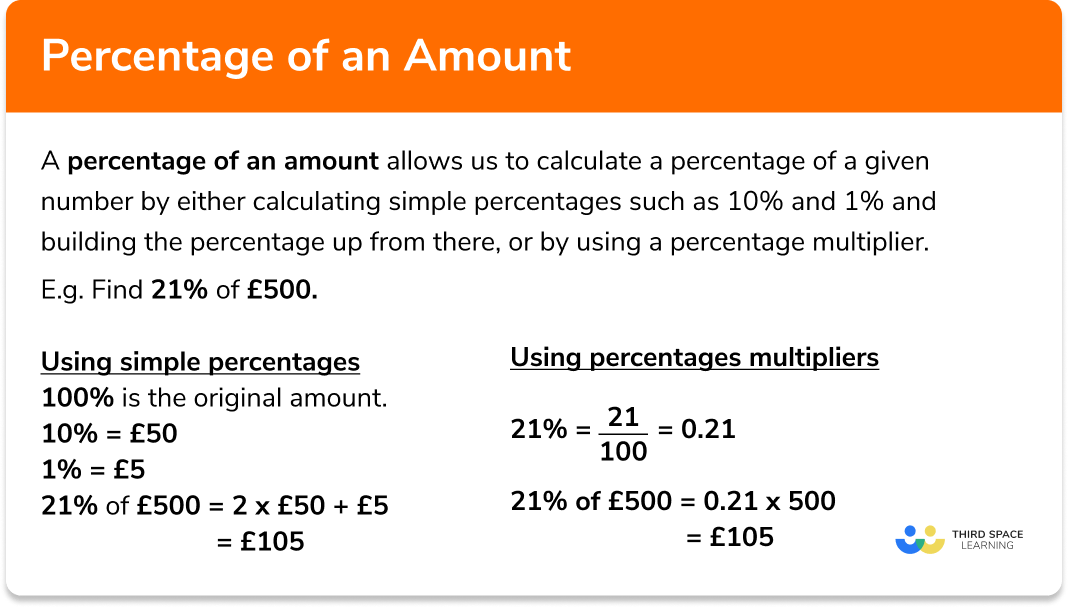
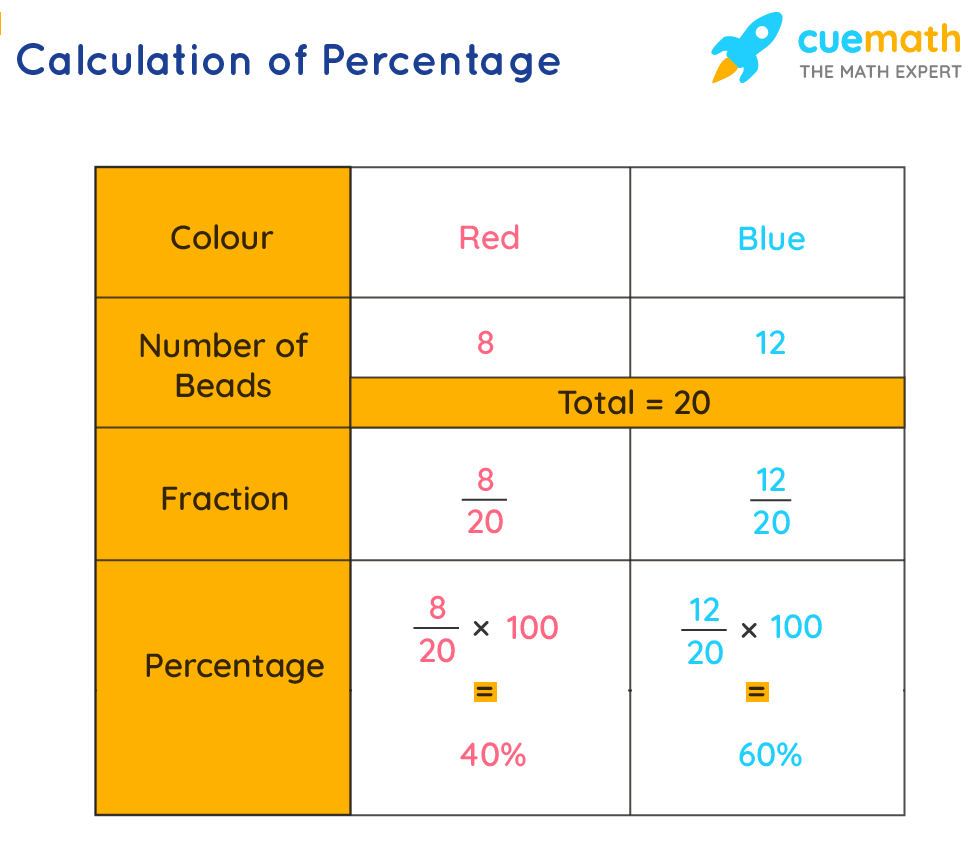
At its simplest level, a percentage represents a fraction of 100. To find the percentage of something in a financial context, you use the standard formula: (Part / Whole) × 100 = Percentage. While the math is straightforward, the application of this formula is the bedrock of effective money management.
Determining Monthly Budget Allocations
The most immediate application of percentage calculation is in budgeting. Financial experts often recommend the 50/30/20 rule: 50% of income for needs, 30% for wants, and 20% for savings and debt repayment. To find if your spending aligns with this, you must calculate the percentage of your total income that each category consumes.
For example, if your take-home pay is $5,000 and your rent is $1,750, you find the percentage by dividing 1,750 by 5,000 to get 0.35, then multiplying by 100 to reach 35%. By identifying these percentages, you can quickly see where your money is leaking and adjust your lifestyle to meet your long-term financial goals.
Understanding Debt-to-Income (DTI) Ratios
When you apply for a mortgage or a car loan, lenders don’t just look at your salary; they look at your Debt-to-Income ratio. This is a percentage that compares your monthly debt payments to your gross monthly income. To find this percentage, a lender adds up all your monthly debt obligations (credit cards, student loans, etc.) and divides that sum by your pre-tax income.
A DTI of 36% or lower is generally considered healthy. If your percentage is higher, it signals to financial institutions that you may be overleveraged. Knowing how to calculate this percentage yourself allows you to “pre-qualify” your own finances before ever stepping into a bank, giving you the leverage to negotiate better interest rates or wait until your financial standing improves.
Calculating Investment Returns and Performance
In the realm of investing, percentages are the only way to measure success. A gain of $1,000 is impressive on a $2,000 investment (a 50% return), but it is negligible on a $1,000,000 investment (a 0.1% return). To be a successful investor, you must master the calculation of performance metrics.
Computing Simple vs. Compound Interest
Interest is the cost of borrowing or the reward for saving, and it is almost always expressed as a percentage. Simple interest is calculated only on the principal amount, while compound interest is calculated on the principal plus the interest that has accumulated over previous periods.
To find the percentage of return on a savings account, you look at the Annual Percentage Yield (APY). If you see an APY of 4%, you can estimate your earnings by multiplying your balance by 0.04. However, the true power of percentage math lies in compounding. By understanding that your “whole” (the denominator in your percentage formula) grows every year as interest is added, you can visualize the exponential growth of your wealth.
Measuring Portfolio Growth and Capital Gains
Investors use the “Percentage Change” formula to track the performance of stocks, bonds, or real estate. The formula is: [(New Value – Old Value) / Old Value] × 100.
If you bought a share of a tech company at $150 and it is now trading at $195, your profit is $45. To find the percentage of growth, you divide 45 by the original price of 150, resulting in 0.30, or a 30% gain. This calculation is vital because it allows you to compare the performance of different asset classes. You might find that while your real estate investment made more “total dollars” than your stock portfolio, the stock portfolio had a higher “percentage return,” suggesting it may be a more efficient use of your capital.
Navigating the Complexities of Business Finance Percentages
For entrepreneurs and business owners, percentages are the pulse of the company. They distinguish a hobby from a sustainable enterprise. Without calculating margins and growth trajectories, a business is flying blind.
Gross vs. Net Profit Margins
Profitability is never measured by revenue alone; it is measured by margins. The Gross Profit Margin is calculated by subtracting the Cost of Goods Sold (COGS) from total revenue, then dividing that number by total revenue. This percentage tells you how efficiently your business is producing its products.
Even more critical is the Net Profit Margin. This takes the “whole” (total revenue) and calculates what “part” remains after all expenses—taxes, interest, rent, and payroll—have been paid. If a company has $1 million in sales but only $50,000 in net profit, its net margin is a slim 5%. By calculating these percentages, business owners can identify if they have a “pricing problem” (low gross margin) or an “overhead problem” (low net margin).
Assessing Market Share and Growth Trajectories
In competitive strategy, “Market Share” is a percentage that represents the portion of total sales in an industry generated by a particular company. To find this, you divide your company’s total sales by the total industry sales over the same period.
Furthermore, businesses use Year-over-Year (YoY) growth percentages to gauge momentum. If a startup increased its subscriber base from 10,000 to 15,000 in one year, its growth percentage is 50%. This percentage is the primary metric used by venture capitalists and investors to determine the valuation of a company. A high growth percentage often justifies a high “Price-to-Earnings” (P/E) ratio, another critical percentage-based financial tool.
The Impact of Macroeconomic Percentages on Your Wealth
Even if you aren’t actively trading or running a business, global economic percentages affect your purchasing power and long-term financial security. Two of the most important metrics are inflation and central bank interest rates.
Real vs. Nominal Interest Rates
When you see a 5% interest rate on a bond, that is the “nominal” rate. However, to find the “real” percentage of your earnings, you must subtract the inflation percentage. If inflation is running at 3%, your real return is only 2%. Understanding how to find the difference between these percentages prevents you from falling into the “money illusion,” where you feel wealthier because you have more dollars, even though those dollars buy fewer goods.
The Power of Inflation Percentages on Purchasing Power
Inflation is the percentage at which the general level of prices for goods and services is rising. To find how much your money will be worth in the future, you can use the “Rule of 72.” This is a quick financial shorthand: divide 72 by the annual inflation percentage to find how many years it will take for the value of your money to be cut in half. At a 3% inflation rate, your money loses half its value in 24 years. This calculation is a sobering reminder of why investing—seeking a percentage return that exceeds the inflation percentage—is a necessity rather than an option.
Leveraging Financial Tools for Precision
While manual calculation is a vital skill, the modern financial professional uses technology to manage complex percentage-based data. Spreadsheets like Microsoft Excel or Google Sheets are built on percentage logic. Functions like =(A2-B2)/B2 allow for instantaneous tracking of portfolio fluctuations, while specialized financial calculators can determine the “Internal Rate of Return” (IRR) for complex multi-year projects.
By integrating these tools with a solid understanding of the underlying math, you can transition from someone who merely “sees” numbers to someone who “interprets” them. Whether you are calculating the “Effective Tax Rate” on your annual filing or determining the “Dividend Yield” on a potential stock purchase, finding the percentage is the key to unlocking the story your money is trying to tell you.
In conclusion, the ability to find the percentage of something is the bridge between raw data and actionable financial intelligence. By applying these formulas to your budget, your investments, and your business ventures, you gain a level of clarity that is essential for navigating the modern economic landscape. Wealth is not just about how much you have; it is about the percentages—the rate at which you save, the rate at which you grow, and the efficiency with which you manage your resources.
aViewFromTheCave is a participant in the Amazon Services LLC Associates Program, an affiliate advertising program designed to provide a means for sites to earn advertising fees by advertising and linking to Amazon.com. Amazon, the Amazon logo, AmazonSupply, and the AmazonSupply logo are trademarks of Amazon.com, Inc. or its affiliates. As an Amazon Associate we earn affiliate commissions from qualifying purchases.