
For investors, traders, and anyone with a stake in the global financial system, few questions can be as immediate or as impactful as “Why is the market closed today?” Whether it’s an unexpected quiet on the trading floor or a regularly scheduled break, understanding the reasons behind market closures is fundamental to navigating the financial landscape. These periods of inactivity, far from being mere interruptions, play crucial roles in market integrity, operational efficiency, and even investor well-being. They provide necessary pauses for reflection, system maintenance, and the observance of national and global events. Unpacking the rationale behind these closures not only helps investors plan their strategies more effectively but also deepens their understanding of the intricate mechanisms that govern our financial markets.
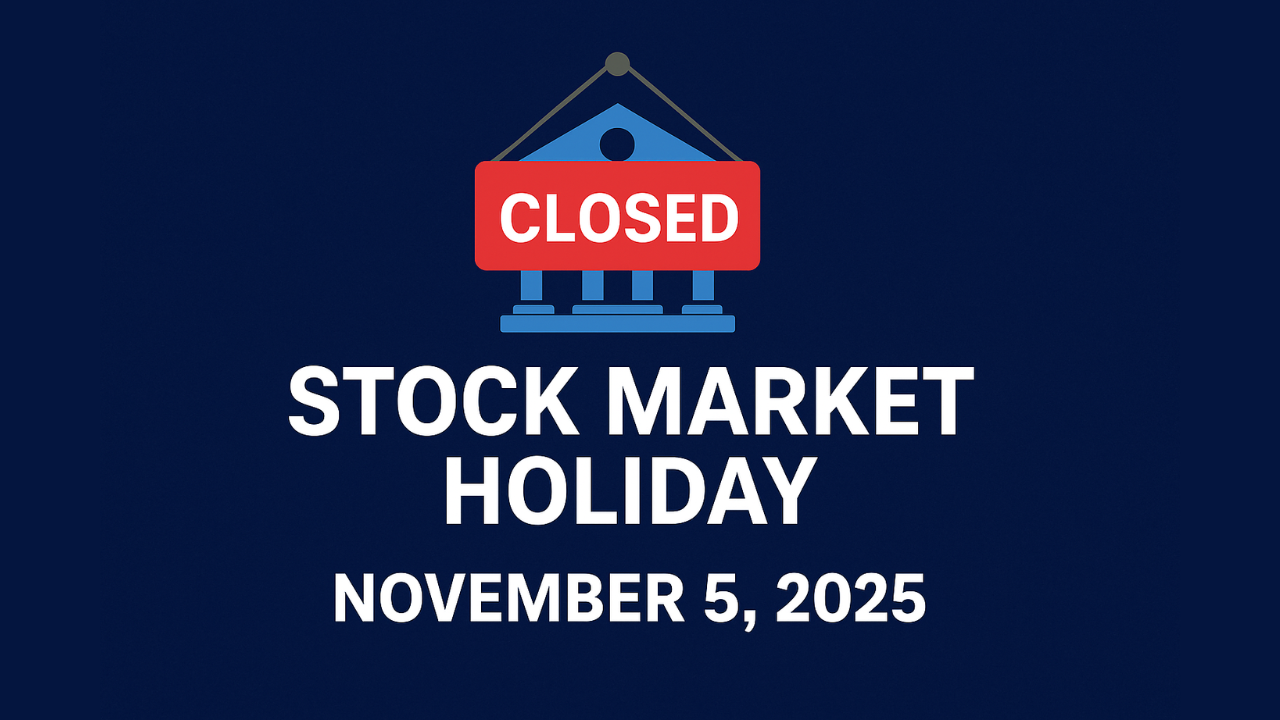
Understanding the Rationale Behind Market Closures
Market closures are not arbitrary; they are meticulously planned events, rooted in a blend of historical tradition, regulatory requirements, and practical necessities. While the most common reason is a public holiday, there are several layers to why financial markets might cease operations, even temporarily.
National Public Holidays
The most frequent cause for a market closure is the observance of national public holidays. In major financial centers like the United States, holidays such as New Year’s Day, Martin Luther King, Jr. Day, Presidents’ Day, Good Friday, Memorial Day, Juneteenth National Independence Day, Independence Day, Labor Day, Thanksgiving Day, and Christmas Day typically see stock exchanges like the NYSE and NASDAQ shut down. Similar observances occur in other countries, with their respective national holidays leading to closures on the local exchanges (e.g., Boxing Day in the UK, Golden Week in Japan).
The logic behind these closures is multifaceted. Firstly, it allows market participants – from traders and brokers to back-office staff and regulators – to observe these significant national events with their families. Secondly, closing on holidays prevents “thin trading,” a situation where low trading volumes due to absenteeism can lead to exaggerated price swings and reduced liquidity, making the market susceptible to manipulation or unusual volatility. Lastly, it ensures operational consistency; if most banks and businesses are closed, processing trades and settling transactions becomes significantly more complex, making a full market closure the most practical solution.
Bank Holidays
While often overlapping with national public holidays, “bank holidays” can sometimes have distinct implications. In many countries, bank holidays primarily affect banking operations and services, which, in turn, can indirectly impact the broader financial markets. For instance, if banks are closed, the processing of funds for trade settlements might be delayed, even if the stock exchange itself is technically open for a half-day. However, for major stock exchanges, a designated market holiday usually implies a full closure, often coinciding with bank holidays to streamline financial operations across the board. The key distinction lies in understanding which specific financial services are affected, as not all bank holidays equate to a stock market shutdown.
Special Observances and Events
Beyond scheduled holidays, markets may close under extraordinary circumstances. These are rare but impactful. Examples include national days of mourning, such as following the death of a prominent national leader, or in response to severe national crises. A stark historical example is the closure of U.S. markets for several days following the September 11, 2001, terrorist attacks, a decision made to protect market integrity amidst unprecedented national trauma and to ensure the safety of market participants. Natural disasters, pandemics, or significant infrastructure failures (like power outages impacting exchange operations) can also trigger temporary closures to ensure the safety of personnel, prevent panic, or allow for critical system recovery. Such closures are typically enacted by regulatory bodies or the exchange itself, often in consultation with government authorities.
Impact on Investors and Trading Strategies
Market closures, whether planned or unforeseen, have significant implications for investors and demand careful consideration in trading strategies. The temporary halt in trading activity doesn’t mean the world stops turning; rather, it introduces unique dynamics that investors must understand.
Liquidity and Volatility Concerns
One of the primary impacts of a market closure is on liquidity. When the market is closed, liquidity effectively dries up to zero for the primary exchange. This can lead to increased volatility immediately before and after reopening. As the market approaches a closure, traders might “square off” positions to avoid overnight risk, leading to unusual price movements. Upon reopening, pent-up trading activity, combined with any news or events that occurred during the closure, can trigger significant price gaps or rapid swings as large volumes of orders are executed simultaneously. Investors holding positions over a holiday must be prepared for potential gap openings (up or down) and increased price instability.
Pre-Market and After-Hours Trading
While the main trading session for major exchanges is closed, limited trading opportunities may still exist through pre-market and after-hours sessions. These sessions allow institutional investors and some retail brokers to execute trades outside standard market hours. However, it’s crucial to understand that liquidity in these sessions is dramatically reduced compared to regular hours. Spreads are typically wider, and prices can be more volatile due to fewer participants and lower trading volumes. Retail investors often have limited access, and trading in these periods carries higher risks, making it generally unsuitable for novice traders or significant capital deployment.
Derivatives and Futures Markets
Not all financial markets operate on the same schedule as stock exchanges. Futures and options markets, for instance, often have different trading hours, and some may even remain open during certain stock market holidays. This divergence can create unique challenges and opportunities. For example, if a stock market is closed but a related futures market remains open, the futures price might move in response to global events, potentially foreshadowing the direction of the underlying stock market when it reopens. This can lead to arbitrage opportunities for sophisticated traders but also presents significant overnight risk for those unprepared for the potential disconnect.
International Markets and Global Impact
When a domestic market is closed, investors should remember that the global financial system continues to operate. Major markets in other time zones will likely be open, and significant news or economic data releases from those regions can impact global sentiment. For an investor in the U.S., a holiday closure means that while their portfolio isn’t trading, markets in Asia or Europe might be actively reacting to events, potentially influencing how U.S. stocks will open on the next trading day. Monitoring global news and understanding international market movements becomes critical during domestic closures to anticipate potential impacts on one’s portfolio.
Operational and Regulatory Aspects
Beyond the visible impact on trading, market closures serve vital functions related to the behind-the-scenes mechanics of the financial system, encompassing everything from trade settlement to system maintenance and regulatory oversight.
Settlement and Clearing Processes
Financial markets rely on robust settlement and clearing processes to ensure that transactions are accurately recorded, and funds and securities are exchanged correctly. Most stock trades operate on a T+2 settlement cycle, meaning a trade executed today (T) will settle two business days later (+2). Market holidays directly impact this cycle. If a market is closed on a Monday, a trade executed on Friday won’t settle until Wednesday, effectively shifting the settlement date. These pauses are crucial for clearinghouses and custodians to process transactions, reconcile accounts, and manage risks without the added pressure of live trading. Without these breaks, the immense volume of daily trades could overwhelm the system, increasing the risk of errors and systemic failures.
Back-Office Operations and Maintenance
Market closures provide essential windows for exchanges and financial institutions to perform critical back-office operations and system maintenance. This includes upgrading trading platforms, performing security checks, patching software vulnerabilities, conducting system stress tests, and carrying out extensive data reconciliation. These activities are vital for ensuring the reliability, speed, and security of the financial infrastructure. Attempting such complex operations during active trading hours would pose significant risks, potentially leading to system outages, data corruption, or unfair trading conditions. The scheduled downtime allows technology teams to implement necessary improvements and fixes without disrupting market participants.
Regulatory Oversight and Compliance
Regulatory bodies like the SEC in the U.S. or the FCA in the UK also benefit from market closures. These periods offer an opportunity for regulators to review market activity, investigate potential compliance issues, and implement new rules or guidance without the immediate pressure of active trading. It allows for a more thorough and deliberate approach to ensuring market integrity, investor protection, and systemic stability. Furthermore, it gives financial firms a chance to update their internal compliance systems, train staff on new regulations, and ensure their operations align with the latest regulatory requirements, ultimately contributing to a fairer and more transparent market environment.
Navigating Market Closures: A Guide for Investors
Understanding why markets close is one thing; knowing how to navigate these periods effectively as an investor is another. Proactive planning and strategic adjustments can help mitigate risks and even uncover opportunities during downtime.
Planning Ahead
The most straightforward advice for investors is to always check the market calendar. Major exchanges publish their holiday schedules well in advance, often a year or more out. Incorporating these dates into your investment calendar allows you to anticipate closures and adjust your trading plans accordingly. Knowing when the market will be closed helps you avoid surprises, manage liquidity expectations, and plan the timing of any significant trades or portfolio adjustments.
Managing Open Orders
Investors often have various open orders in the market, such as limit orders, stop-loss orders, and stop-limit orders. It’s crucial to understand how these orders behave during market closures. Some orders might remain active but won’t be executed until the market reopens, potentially at a vastly different price than anticipated. Others might be automatically cancelled if they are “day orders” or if the system is reset during the closure. Always review your broker’s policy on how open orders are handled during holidays or extended closures, and consider adjusting or cancelling orders before a shutdown if you’re uncomfortable with the potential for price gaps upon reopening.
Monitoring Global News and Economic Data
Even with your local market closed, the world keeps spinning. Major economic reports from other countries, geopolitical events, or significant corporate news from internationally traded companies can all impact investor sentiment. Savvy investors use market closures as an opportunity to catch up on global news and economic data. This proactive monitoring helps them form a more informed perspective and anticipate potential market reactions when their local exchange reopens, allowing for quicker and more strategic decision-making.
Rebalancing and Strategy Review
Market downtime offers a valuable opportunity for portfolio review and strategic rebalancing. Without the daily distractions of price fluctuations, investors can step back and assess their long-term goals, risk tolerance, and asset allocation. This is an ideal time to research new investment opportunities, analyze the performance of existing holdings, and make any necessary adjustments to ensure the portfolio remains aligned with financial objectives. It’s a chance to work on your portfolio, rather than just in it.
Understanding Market Hours for Different Asset Classes
It’s important to remember that “the market” isn’t a monolith. While stock exchanges may be closed, other asset classes might operate on different schedules. For example, foreign exchange (forex) markets operate nearly 24/5, and some bond markets or commodity futures might have partial or altered trading hours during specific holidays. Diversified investors need to understand the holiday schedules for each asset class relevant to their portfolio to avoid overlooking opportunities or mismanaging risk across different market segments.
The Future of Market Hours in a Digitized World
The traditional concept of fixed market hours and holiday closures is increasingly being challenged by technological advancements and the relentless march towards globalization. As technology makes continuous trading more feasible, the debate around extending market hours or even moving towards 24/7 operations intensifies.
The Push for Extended Trading Hours
The drive for extended trading hours stems from several factors: the desire to react immediately to global news, the growing influence of retail investors who might trade outside traditional work hours, and the technological capability to maintain continuous operations. Some exchanges already offer limited pre-market and after-hours trading, and the concept of truly 24/7 trading for specific asset classes, particularly cryptocurrencies and some derivatives, is already a reality. Proponents argue that extended hours could increase liquidity, reduce overnight risks, and provide greater flexibility for investors worldwide.
Globalized Markets and Continuous Trading
In an interconnected global economy, the idea of one major market being entirely “closed” while others operate seems increasingly anachronistic. Major multinational corporations report earnings that impact markets globally, and geopolitical events resonate instantly across continents. Continuous trading, where assets can be bought and sold around the clock across different time zones, represents a logical evolution for a globalized financial system. This model could potentially eliminate the “gap risk” that currently arises from closures and ensure price discovery is a constant, real-time process.

Regulatory Hurdles and Operational Challenges
While the concept of 24/7 markets is appealing, the practical implementation faces significant regulatory and operational hurdles. Regulatory bodies would need to harmonize rules across different jurisdictions and ensure fair and orderly markets around the clock. Operationally, exchanges and financial firms would need to invest heavily in robust, always-on infrastructure, cybersecurity measures, and significantly expand staffing to support continuous operations. The human element, including trader well-being and the need for downtime, also poses a substantial challenge. These complexities mean that while the market’s future may lean towards greater availability, traditional closures are likely to remain a feature for the foreseeable future, at least for core equity markets.
In conclusion, understanding “Why is the market closed today?” goes far beyond simply knowing it’s a holiday. It delves into the intricate workings of financial markets, revealing the critical roles of national observance, operational efficiency, regulatory oversight, and risk management. For investors, these closures are not merely periods of inactivity but essential junctures requiring informed planning, strategic adjustments, and a global perspective. As technology continues to reshape the financial landscape, the future of market hours may evolve, but the fundamental importance of structured pauses for market health and participant well-being will undoubtedly endure.
aViewFromTheCave is a participant in the Amazon Services LLC Associates Program, an affiliate advertising program designed to provide a means for sites to earn advertising fees by advertising and linking to Amazon.com. Amazon, the Amazon logo, AmazonSupply, and the AmazonSupply logo are trademarks of Amazon.com, Inc. or its affiliates. As an Amazon Associate we earn affiliate commissions from qualifying purchases.