
In the rapidly evolving landscape of digital finance, terms and services often blur, creating a need for clarity regarding the nature of emerging platforms. One such common query revolves around Cash App and its perceived identity as a “bank.” While colloquially referred to as such by some users due to its expansive range of financial functionalities, it is crucial to understand that Cash App is not a bank in the traditional sense, but rather a financial technology (fintech) platform that offers banking-like services through its innovative application.
This distinction is not merely semantic; it underpins the operational model, regulatory framework, and technological infrastructure that define Cash App. Developed by Block, Inc. (formerly Square, Inc.), Cash App leverages cutting-edge technology to provide a suite of financial tools accessible directly from a smartphone, fundamentally reshaping how individuals manage their money, send payments, and even invest. To truly grasp “what is Cash App bank,” one must delve into its technological underpinnings, the digital services it provides, and its position within the broader fintech ecosystem.

The Digital Evolution of Financial Services: Cash App’s Core Proposition
The advent of smartphones and robust internet connectivity has paved the way for a new generation of financial services that prioritize convenience, speed, and accessibility. Cash App stands as a prime example of this digital transformation, offering an alternative to, or often a complement for, traditional banking institutions. Its core proposition is to empower users with immediate control over their finances through a user-friendly mobile application.
Beyond Traditional Banking: A New Paradigm
Traditional banks operate within a heavily regulated framework, characterized by physical branches, extensive paperwork, and often slower transaction processing times. Cash App, in contrast, represents a paradigm shift. It operates entirely digitally, eliminating the need for brick-and-mortar locations and streamlining processes through software algorithms and intuitive user interfaces. This digital-first approach allows Cash App to innovate rapidly, deploying new features and services without the legacy constraints faced by established financial institutions. It’s less about building a new bank and more about re-imagining how banking functions in a digital world, utilizing technology to mimic and often surpass traditional banking functionalities.
Cash App’s Technology Stack: Powering Seamless Transactions
At its heart, Cash App is a sophisticated software application built on a robust technology stack designed for scalability, security, and real-time processing. Its architecture facilitates a myriad of transactions, from instantaneous peer-to-peer (P2P) transfers to direct deposits and investment activities. This involves a complex interplay of backend servers, databases, APIs (Application Programming Interfaces) for integrating with other services (like payment networks and partner banks), and frontend mobile applications (iOS and Android).
The seamless user experience, which often masks the underlying complexity, is a testament to its engineering. Data encryption, secure authentication protocols, and sophisticated fraud detection systems are integral components, ensuring that transactions are not only fast but also protected against unauthorized access. The ability to handle millions of transactions daily, often with sub-second latency, highlights the computational power and architectural design required to operate such a widespread financial utility.
Regulatory Framework and Partnerships: The Backend Infrastructure
While Cash App is not a bank, it operates within a stringent regulatory environment applicable to money services businesses. To offer banking-like features such as direct deposit and debit cards, Cash App forms strategic partnerships with FDIC-insured banks. For instance, Cash App partners with institutions like Sutton Bank or Lincoln Savings Bank. These partnerships are crucial because they allow Cash App to leverage the banking licenses and FDIC insurance (up to $250,000 per depositor) provided by these traditional banks, extending a layer of security and trust to user funds that Cash App itself, as a non-bank entity, cannot directly provide. This integrated model exemplifies how fintechs often collaborate with traditional financial infrastructure to deliver innovative digital services while adhering to regulatory requirements. The technology enables these partnerships to function seamlessly, allowing users to interact with Cash App as a unified platform.
Key Technological Features Simulating Traditional Banking
Cash App’s success lies in its ability to offer a comprehensive suite of financial services that mimic, and in some cases improve upon, those traditionally found at banks. These features are all powered by sophisticated technology designed for the mobile user.
Digital Wallets and Direct Deposit Capabilities
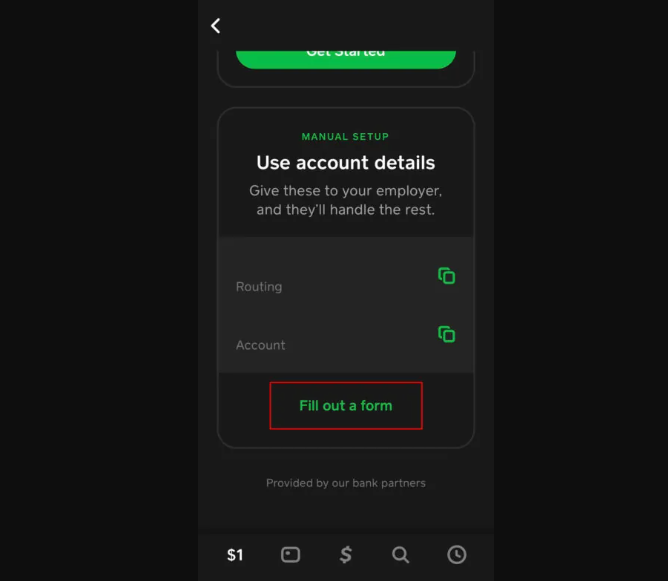
At its core, Cash App functions as a digital wallet, allowing users to store funds electronically. This wallet is accessible 24/7 through the app, providing instant access to balances and transaction history. A significant feature that aligns Cash App with traditional banking is its direct deposit capability. Users can receive their paychecks, tax refunds, and other government benefits directly into their Cash App account. This is facilitated by providing routing and account numbers, which are typically associated with bank accounts. From a technological standpoint, this involves secure data exchange protocols with employers’ payroll systems and the partner banks to ensure funds are routed correctly and settled efficiently into the user’s digital wallet. This feature significantly enhances the app’s utility as a primary financial tool for many.
Peer-to-Peer Payments: The Network Effect
Cash App revolutionized peer-to-peer (P2P) payments with its simplicity and speed. Users can send and receive money from friends, family, or even businesses with just a few taps. This feature leverages a robust internal payment network that processes transactions almost instantaneously, circumventing the slower clearing processes often associated with traditional interbank transfers. The technology behind P2P payments relies on secure user identification (via $Cashtags, phone numbers, or email addresses), real-time balance updates, and sophisticated algorithms to prevent fraudulent transfers. This functionality is arguably one of Cash App’s most defining tech characteristics, fostering a network effect that rapidly expanded its user base.
Debit Cards and ATM Access: Bridging Digital and Physical

To bridge the gap between digital funds and physical transactions, Cash App offers a customizable Cash Card. This is a free, customizable Visa debit card linked directly to the user’s Cash App balance. Technologically, this card functions like any traditional debit card, allowing users to make purchases online or in physical stores wherever Visa is accepted. It also enables ATM withdrawals. The underlying technology involves secure tokenization and encryption to protect cardholder data during transactions, and real-time communication with payment networks (like Visa) and partner banks to authorize purchases and dispense cash. The app provides instant notifications for all card activity, enhancing transparency and control over spending.
Bitcoin Trading and Stock Investing: Expanding the Digital Frontier
Pushing beyond conventional banking services, Cash App has integrated capabilities for buying, selling, and holding Bitcoin and even fractional shares of stocks. This foray into digital asset and traditional market investing showcases Cash App’s commitment to leveraging technology to broaden financial accessibility. For Bitcoin, the app provides a simplified interface for cryptocurrency transactions, managing secure wallet functionalities (though users don’t directly control private keys, the app manages them on their behalf in a custodial manner) and integrating with cryptocurrency exchanges in the backend. For stock investing, it offers an intuitive platform for micro-investing, often powered by partnerships with brokerage firms. These features demonstrate Cash App’s ambition to be a holistic financial platform, driven by sophisticated algorithmic trading, market data feeds, and robust cybersecurity measures to handle these new asset classes.
Digital Security and User Trust in a Mobile-First World
In a world increasingly reliant on digital transactions, security is paramount, especially for platforms handling sensitive financial data. Cash App employs a multi-layered approach to digital security to safeguard user funds and personal information, fostering the trust essential for a mobile-first financial service.
Encryption and Fraud Prevention Mechanisms
Every piece of data transmitted through the Cash App is encrypted using industry-standard protocols, similar to those used by traditional banks. This end-to-end encryption ensures that sensitive information, such as account numbers, personal identifiers, and transaction details, remains confidential and secure from interception. Furthermore, Cash App utilizes advanced fraud detection algorithms and machine learning models that continuously monitor transactions for unusual activity. These systems can identify and flag potentially fraudulent transfers in real-time, often before they are completed, adding a critical layer of protection against financial crime.
Account Protection and User Responsibilities
Cash App integrates several features to protect individual user accounts. This includes mandatory PIN or fingerprint/Face ID authentication for accessing the app and authorizing transactions, adding a barrier against unauthorized access if a device is lost or stolen. Two-factor authentication (2FA) is also available, providing an additional layer of security by requiring a second verification method, such as a code sent to a registered phone number or email. While Cash App implements robust security measures, it also emphasizes user responsibility. Educating users about phishing scams, strong password practices, and vigilance against social engineering tactics is an ongoing effort, highlighting the shared responsibility in maintaining digital financial security.
Compliance with Industry Standards
As a regulated money services business, Cash App adheres to various financial regulations and industry standards designed to protect consumers and prevent illicit activities. This includes compliance with PCI DSS (Payment Card Industry Data Security Standard) for handling cardholder data, as well as AML (Anti-Money Laundering) and KYC (Know Your Customer) regulations. Technologically, this translates into sophisticated data management systems for storing and verifying user identities, transaction monitoring systems for detecting suspicious financial flows, and secure reporting mechanisms for regulatory bodies. This commitment to compliance is crucial for maintaining operational legitimacy and reinforcing user trust.
The Impact and Future Trajectory of Cash App in Fintech
Cash App’s innovative use of technology has not only propelled its rapid growth but has also profoundly impacted the financial technology landscape, setting new benchmarks for convenience, accessibility, and integrated services.
Disrupting Traditional Models and Empowering Users
Cash App, along with other fintech platforms, has played a significant role in democratizing access to financial services. By offering a mobile-first, low-cost, and often fee-free alternative for basic banking functions, it has empowered individuals who might be underserved by traditional banks, or those simply seeking more agile financial tools. Its simplicity has made financial management less intimidating, while features like fractional stock investing have opened up investment opportunities to a broader audience. This disruption forces traditional banks to innovate and adapt, fostering a competitive environment that ultimately benefits the consumer through improved services and technological advancements.
Challenges and Opportunities in the Evolving Landscape
Despite its success, Cash App faces ongoing challenges inherent in the rapidly evolving fintech space. Regulatory scrutiny is ever-present, requiring continuous adaptation to new laws and compliance standards globally. Scaling its technological infrastructure to meet exponential user growth while maintaining performance and security is another constant challenge. Furthermore, the competitive landscape is intense, with new fintechs constantly emerging and traditional banks enhancing their digital offerings.
However, these challenges also present opportunities. The continuous evolution of mobile technology, AI, and blockchain offers new avenues for innovation. Enhancing personalization through AI, integrating more sophisticated financial planning tools, expanding into new geographical markets, and exploring further integrations with cryptocurrency and decentralized finance (DeFi) are potential growth vectors. The future of “app banks” like Cash App hinges on their ability to continually leverage technology to anticipate user needs, remain secure, and adapt to a dynamic regulatory and competitive environment.
The Future of “App Banks”: Integration and Innovation
The trajectory of platforms like Cash App points towards an increasingly integrated and intelligent financial future. We can expect further convergence of banking, investing, and other financial services into single, seamless digital experiences. The technology will become more predictive, offering personalized financial advice and automated savings or investment strategies. The concept of a “bank” itself will continue to evolve, moving away from a physical location to an intelligent, ubiquitous service embedded within our digital lives. Cash App, as a pioneer in this space, is not just a digital wallet or a payment app; it is a testament to how technology is fundamentally redefining financial interaction, paving the way for the “app bank” of tomorrow.
aViewFromTheCave is a participant in the Amazon Services LLC Associates Program, an affiliate advertising program designed to provide a means for sites to earn advertising fees by advertising and linking to Amazon.com. Amazon, the Amazon logo, AmazonSupply, and the AmazonSupply logo are trademarks of Amazon.com, Inc. or its affiliates. As an Amazon Associate we earn affiliate commissions from qualifying purchases.