
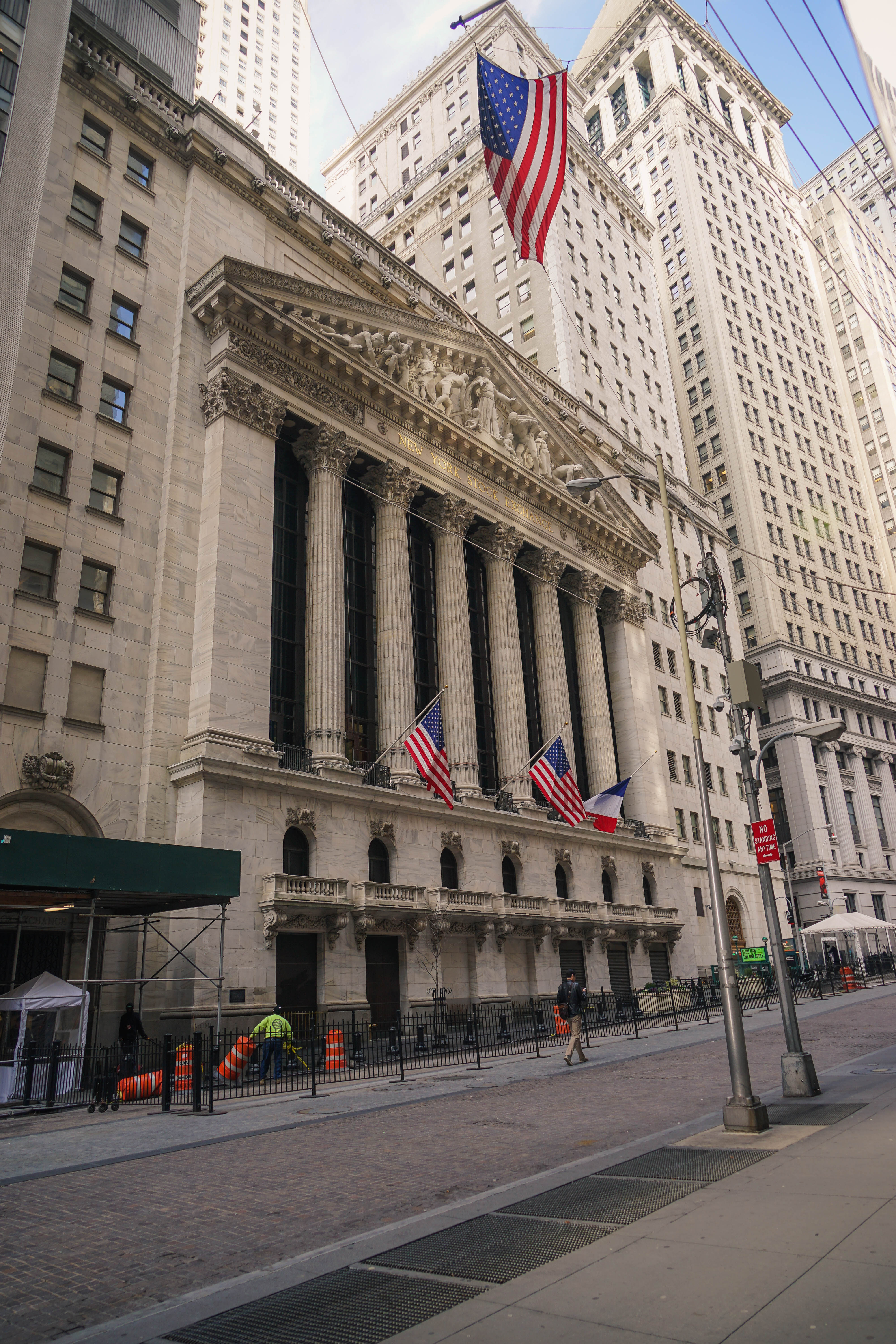
For investors and traders worldwide, the ringing of the bell at 11 Wall Street represents more than just the start of a business day; it marks the commencement of global liquidity and price discovery. Understanding when the New York Stock Exchange (NYSE) opens is a fundamental prerequisite for anyone looking to navigate the financial markets effectively. Whether you are a retail investor managing a 401(k) or a day trader looking for intraday volatility, the clock is just as important as the ticker symbol.

In this guide, we will explore the precise schedule of the NYSE, the mechanics of extended-hours trading, the strategic importance of market timing, and the specific calendar days when the “Big Board” goes dark.
Standard Trading Hours and the Opening Bell Ritual
The primary trading session for the New York Stock Exchange is the most liquid and active period of the day. For the vast majority of individual investors, this is the window during which orders are executed at the most competitive prices.
The Core Session: 9:30 AM to 4:00 PM ET
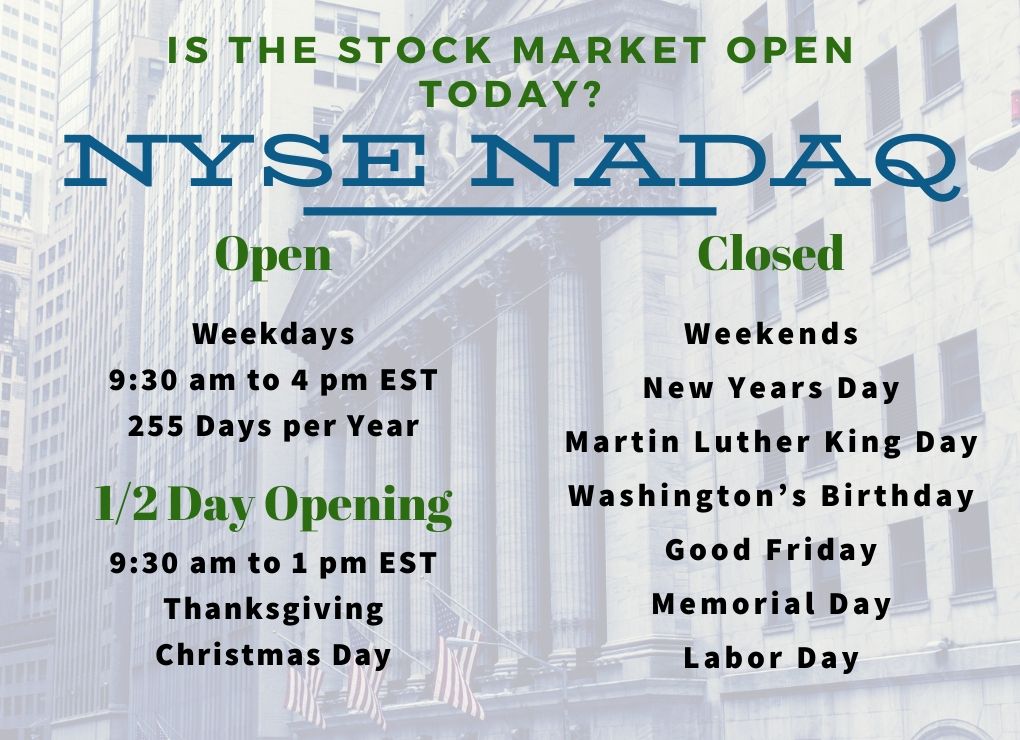
The NYSE operates on a standard schedule from Monday through Friday, opening at 9:30 AM Eastern Time (ET) and closing at 4:00 PM ET. Unlike some international markets that observe a lunch break—such as the Tokyo Stock Exchange—the NYSE remains open continuously throughout the day. This seven-and-a-half-hour window is when the “specialists” and high-frequency trading algorithms facilitate the bulk of the world’s equity transactions.
The Significance of the Opening Bell
The opening bell is perhaps the most iconic image in global finance. Beyond the ceremony, the 9:30 AM open serves a critical technical purpose: the Opening Auction. During this time, the exchange aggregates buy and sell orders that have accumulated overnight to determine a single opening price for each security. This process ensures a fair and orderly start to the day, minimizing “gaps” that could occur if trades were simply executed haphazardly as they arrived.
Volatility and the “Opening Range”
The first 30 to 60 minutes after the 9:30 AM open are often characterized by the highest volume and volatility of the day. Institutional investors often spend this time reacting to news that broke overnight or adjusting positions based on global economic data. For many seasoned investors, this period is viewed with caution; the “opening range” sets the tone for the day, but the high volatility can lead to “whipsawing” prices that catch inexperienced traders off guard.
Beyond the Bell: The Mechanics of Extended Hours Trading
While the core session is where the most action happens, the digital age has extended the trading day far beyond the traditional 9:30 to 4:00 window. Electronic Communication Networks (ECNs) allow participants to trade stocks outside of standard hours, though these sessions come with unique risks.
Pre-Market Trading: The Early Bird Session
The NYSE Arca platform and other electronic exchanges allow for pre-market trading, which begins as early as 4:00 AM ET and runs until the official open at 9:30 AM. Activity during these early hours is typically sparked by overseas economic news or early-morning earnings releases. For the average retail investor, most brokerage platforms (such as Charles Schwab or Fidelity) allow access to pre-market trading starting at 7:00 AM or 8:00 AM ET.
After-Hours Trading: Reacting to the News
After the closing bell rings at 4:00 PM ET, the “after-hours” session begins, lasting until 8:00 PM ET. This is arguably the most critical time for corporate news. Most public companies wait until at least 4:01 PM to release their quarterly earnings reports to ensure the information is digested while the primary market is closed. This prevents a sudden, chaotic spike or crash during the core session and allows for a more measured price discovery process in the after-market.
Risks: Liquidity, Spreads, and Price Integrity
It is vital for investors to understand that trading at 6:00 AM or 7:00 PM is fundamentally different from trading at noon. In the extended sessions, there are far fewer participants. This lack of “liquidity” means that the “bid-ask spread”—the difference between what a buyer will pay and what a seller will accept—is often much wider. You may find yourself paying a significantly higher price to buy a stock than you would during the day, or receiving much less when selling. Furthermore, price movements in extended hours can be “fakeouts,” where a stock jumps 5% after-hours on low volume, only to open flat at 9:30 AM when the institutional money arrives.
Global Coordination and Time Zone Synchronization
Because the NYSE is the world’s largest stock exchange by market capitalization, its schedule dictates the rhythm of the global financial system. However, for investors located outside the Eastern Time zone, staying synchronized requires constant vigilance.
Converting Eastern Time for Global Investors
The NYSE follows the time in New York City, which alternates between Eastern Standard Time (EST) and Eastern Daylight Time (EDT).
- Pacific Time (PT): The market opens at 6:30 AM and closes at 1:00 PM.
- Greenwich Mean Time (GMT/UTC): The market typically opens at 2:30 PM and closes at 9:00 PM.
- Central European Time (CET): The market typically opens at 3:30 PM and closes at 10:00 PM.
The Impact of Daylight Savings Time
One of the most confusing periods for international investors occurs in March and October/November. The United States transitions to and from Daylight Savings Time on different dates than Europe and other regions. For a few weeks each year, the “gap” between the NYSE and the London Stock Exchange (LSE) might shrink or grow by an hour. If you are an investor in London or Berlin, you must double-check the local opening time during these transition periods to avoid missing the market open.
The Interaction with International Markets
The NYSE open is often influenced by how the European markets (which are mid-day when New York opens) and Asian markets (which have already closed) performed. For example, if the FTSE 100 in London is down 2% by noon local time, the NYSE will likely open in the red as well. This “intermarket correlation” makes the 9:30 AM ET open a focal point where global sentiment is synthesized into U.S. asset prices.
The NYSE Holiday Schedule and Early Closures
The New York Stock Exchange does not operate every day. In addition to weekends, the exchange observes several federal and cultural holidays. For an investor, knowing these dates is crucial for managing margin requirements and avoiding “liquidity traps” over long weekends.
Standard Market Holidays
The NYSE is closed on the following days (or the nearest Monday/Friday if the holiday falls on a weekend):
- New Year’s Day
- Martin Luther King, Jr. Day (Third Monday in January)
- Washington’s Birthday/Presidents’ Day (Third Monday in February)
- Good Friday (The Friday before Easter Sunday)
- Memorial Day (Last Monday in May)
- Juneteenth National Independence Day (June 19)
- Independence Day (July 4)
- Labor Day (First Monday in September)
- Thanksgiving Day (Fourth Thursday in November)
- Christmas Day (December 25)
Early Closures: The 1:00 PM Rule
On certain days—most notably the Friday after Thanksgiving (Black Friday) and sometimes Christmas Eve or July 3rd—the NYSE observes an early closing time of 1:00 PM ET. These days are usually characterized by extremely low trading volume. While the market is technically open, many institutional desks are thinly staffed, which can lead to erratic price movements if a major news event occurs.
Why the Market Closes
Unlike the cryptocurrency market, which operates 24/7/365, traditional stock exchanges maintain these hours to ensure stability and human oversight. The closures allow for clearinghouses to settle trades, for companies to audit their books, and—perhaps most importantly—to prevent “panic-selling” spirals by providing investors with a “cooling-off” period overnight or during holidays.
Strategic Timing: When Should You Actually Trade?
Knowing when the market is open is a matter of fact; knowing when to trade is a matter of strategy. In the world of finance, not all hours are created equal.
The “Golden Hour” (9:30 AM – 10:30 AM)
For those seeking to capitalize on high volume and clear trends, the first hour of the day is often the most productive. This is when the market reacts to all the pent-up demand from the previous evening. However, for conservative long-term investors, it is often better to wait until 10:30 AM. By then, the initial “noise” of the open has settled, and a more sustainable trend for the day has usually emerged.
The Mid-Day Lull (12:00 PM – 2:00 PM)
Often referred to as the “lunchtime doldrums,” this period typically sees a significant drop in volume as floor traders and institutional managers take breaks. Prices during this time may drift aimlessly. Unless there is a major breaking news story or a Federal Reserve announcement (which usually happens at 2:00 PM ET), mid-day is generally considered a poor time to execute large trades due to lower liquidity.
The “Power Hour” (3:00 PM – 4:00 PM)
The final hour of the trading day is when the “smart money”—institutional investors and mutual fund managers—often executes its final positions. This period is vital because the “closing price” of a stock is the benchmark used for valuing portfolios and calculating index levels. Volatility often ramps up again as traders “square their books” (close out intraday positions) before the 4:00 PM bell.
Conclusion: Mastering the Clock for Financial Success
In the realm of personal finance and investing, time is more than just a measurement; it is a variable that dictates risk and opportunity. The New York Stock Exchange’s 9:30 AM to 4:00 PM ET window is the heartbeat of the American economy. By understanding the nuances of the opening auction, the pitfalls of extended-hours trading, and the impact of the holiday calendar, you can ensure that your capital is deployed at the most advantageous times.
Whether you are placing your first trade or managing a complex portfolio, remember that the “when” is often just as important as the “what.” Respect the opening bell, stay mindful of the closing auction, and always synchronize your watch with Wall Street.
aViewFromTheCave is a participant in the Amazon Services LLC Associates Program, an affiliate advertising program designed to provide a means for sites to earn advertising fees by advertising and linking to Amazon.com. Amazon, the Amazon logo, AmazonSupply, and the AmazonSupply logo are trademarks of Amazon.com, Inc. or its affiliates. As an Amazon Associate we earn affiliate commissions from qualifying purchases.