
In the world of high-stakes finance, timing is not just a factor—it is the foundation upon which fortunes are built and lost. For the retail investor, the institutional trader, and the curious entrepreneur alike, the operating hours of the New York Stock Exchange (NYSE) represent the pulse of the global economy. While the simple answer to “what time does the New York Stock Exchange close?” is 4:00 PM Eastern Time, the implications of that closing bell resonate far beyond a mere timestamp.
Understanding the temporal boundaries of the market is essential for anyone looking to navigate personal finance, manage a retirement portfolio, or engage in active trading. The NYSE, located at the iconic 11 Wall Street in Lower Manhattan, governs the flow of trillions of dollars. To master your money, you must master the market’s schedule, the nuances of extended trading, and the strategic importance of the “closing cross.”
Understanding the Core Trading Hours of the New York Stock Exchange
The NYSE operates on a disciplined schedule that provides a standardized window for price discovery and liquidity. For the vast majority of investors, the “Standard Trading Session” is where the bulk of activity occurs.
The Standard Session: 9:30 AM to 4:00 PM ET
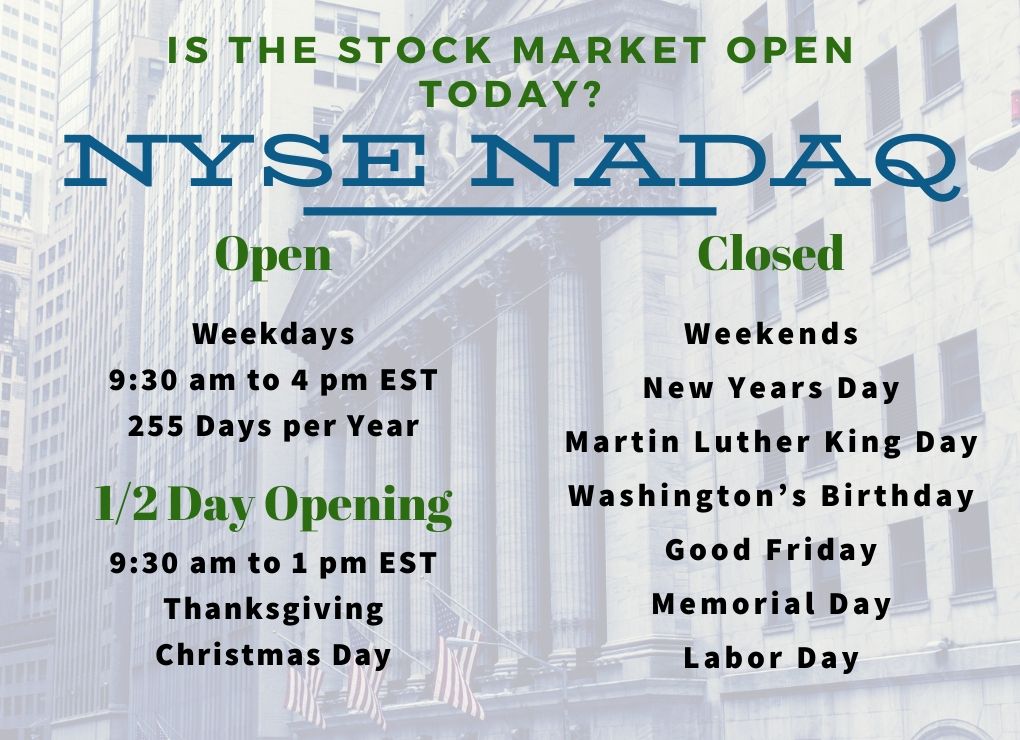
The NYSE officially opens its doors for trading at 9:30 AM ET and rings the closing bell at 4:00 PM ET, Monday through Friday. These hours were established to concentrate liquidity, ensuring that there are enough buyers and sellers active at the same time to facilitate fair pricing. For the personal investor, this 6.5-hour window is the “safest” time to trade, as the high volume of participants typically leads to narrower bid-ask spreads, meaning you get a price closer to the actual market value.
Holiday Closures and Early Dismissals
Financial planning requires an awareness of when the market takes a breather. The NYSE observes nine major federal holidays, including New Year’s Day, Martin Luther King Jr. Day, Washington’s Birthday, Good Friday, Memorial Day, Juneteenth, Independence Day, Labor Day, Thanksgiving, and Christmas.
Furthermore, the market often observes “early closes” at 1:00 PM ET on the days preceding or following certain holidays, such as the day after Thanksgiving (Black Friday) and Christmas Eve. For those managing business finance or short-term side hustles in the stock market, tracking these dates is vital to avoid being caught in a “liquidity trap” where you cannot exit a position because the exchange is closed.
The Significance of the Opening and Closing Bells
The ringing of the bell is more than just a tradition; it signals the start and end of the continuous auction process. The opening bell initiates the “Opening Auction,” which sets the starting price for the day based on orders that accumulated overnight. Similarly, the closing bell marks the start of the “Closing Auction,” arguably the most important few minutes of the financial day, where the official daily closing price for every listed security is determined.
Navigating the Extended Market: Pre-Market and After-Hours Trading
While the physical floor of the NYSE may go quiet after 4:00 PM, the digital gears of modern finance never truly stop. Technology has enabled “Extended-Hours Trading,” allowing investors to react to news that breaks outside of the standard 9:30 AM to 4:00 PM window.
The Mechanics of the Pre-Market Session
Pre-market trading for NYSE-listed securities typically begins as early as 4:00 AM ET and runs until the official open at 9:30 AM ET. This session is primarily populated by institutional investors and high-frequency traders, though most major retail brokerages now allow individual investors to participate.
Why trade at 6:00 AM? Usually, it is a reaction to international economic data or early-morning corporate earnings reports. However, for the average person focused on long-term wealth building, pre-market trading is fraught with risk. The volume is significantly lower, which can lead to extreme price volatility. A stock might swing 5% on very few shares, only to normalize once the “real” market opens at 9:30 AM.
After-Hours Trading: Risks and Rewards for the Modern Investor
After-hours trading commences immediately at 4:00 PM ET and can run until 8:00 PM ET. This is the “danger zone” for many retail investors. Most public companies release their quarterly earnings reports shortly after the 4:00 PM close to ensure that the information is disseminated when the main market is not in session, theoretically allowing for a more orderly digestion of the news.
If you are managing your own investing side hustle, the after-hours market offers the opportunity to trade on these earnings reports instantly. However, the lack of liquidity means you might suffer from “slippage”—where your order is executed at a much worse price than you intended. For most personal finance strategies, it is often wiser to wait until the following morning to see how the broader market settles on a valuation.
The Role of Electronic Communication Networks (ECNs)
Extended trading is made possible by ECNs, which are automated systems that match buy and sell orders directly without the need for a traditional exchange floor or specialist. Understanding that the NYSE operates within a larger ecosystem of electronic markets is crucial for modern financial literacy. It reminds us that while the “closing time” is 4:00 PM, the price of your assets is constantly being re-evaluated in a 24-hour global cycle.
The Strategic Importance of Timing in Investing and Wealth Management
Knowing when the market closes is one thing; knowing how to use that information to improve your financial outcomes is another. Market timing, in the sense of predicting daily peaks and troughs, is notoriously difficult, but understanding market mechanics around closing time is a sophisticated tool for any investor.
Why the “Closing Cross” Matters to Your Portfolio
The final moments of the NYSE trading day are characterized by the “Closing Cross.” This is a centralized auction that bundles all the limit, market, and “market-on-close” (MOC) orders to find the single price that clears the maximum number of shares.
For someone focused on business finance or managing a large 401(k), the closing price is the gold standard. It is the price used by mutual funds to calculate their Net Asset Value (NAV). If you are moving large sums of money, executing at the close ensures you are getting the most “representative” price of the day, minimizing the impact of mid-day fluctuations.
Market Volatility: The “U-Shaped” Trading Day
Empirical data shows that market volatility and volume typically follow a U-shaped pattern. The first 30 minutes (9:30–10:00 AM) and the last 30 minutes (3:30–4:00 PM) see the highest activity. For the disciplined personal investor, the middle of the day—often called the “lunchtime doldrums”—is frequently the quietest and most stable time to make adjustments to a portfolio. Conversely, the “power hour” before the 4:00 PM close is when institutional “whales” rebalance their positions, leading to rapid price movements that can trap unwary retail traders.
Developing a Disciplined Trading Schedule
Successful investing is as much about psychology as it is about math. By respecting the NYSE closing time, you create a boundary for your financial life. Constant monitoring of tickers can lead to “decision fatigue” and emotional trading. A professional approach to personal finance involves setting specific times to check the markets—perhaps once at the open to see how the world has reacted to news, and once near the close to evaluate the day’s trend—rather than obsessing over every tick in between.
Global Time Zones and the Ripple Effect on Financial Markets
The NYSE does not exist in a vacuum. Because it is the largest exchange in the world by market capitalization, its closing time sets the stage for markets across the globe.
Correlating NYSE Hours with International Exchanges
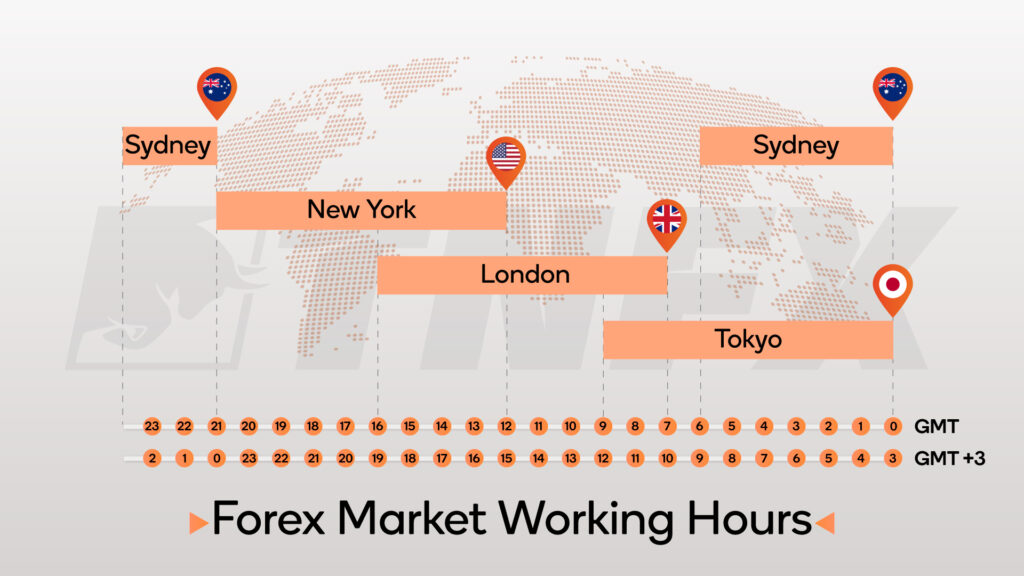
When the NYSE closes at 4:00 PM ET, it is 9:00 PM in London and early morning the next day in Tokyo and Hong Kong. The “closing” of New York often acts as a catalyst for the “opening” of Asian markets. If the NYSE closes on a sharp downturn, it often triggers a sell-off in the Nikkei or the Hang Seng. For an investor with a globalized portfolio, understanding these hand-offs is essential for managing “overnight risk”—the risk that a major event happens while the domestic exchange is closed and you cannot trade.
The Impact of Daylight Savings Time
One often overlooked detail in business finance is the shift in Daylight Savings Time. Not all countries switch clocks on the same day. For a few weeks a year, the gap between the NYSE close and the London Stock Exchange or the Frankfurt exchange may shift by an hour. For those involved in international arbitrage or foreign exchange (Forex) side hustles, these discrepancies can create unique, short-lived opportunities or unexpected risks.
Tools for Monitoring Real-Time Market Shifts
In the digital age, you no longer need a Bloomberg Terminal to keep track of these movements. A variety of financial tools and apps—ranging from Yahoo Finance and CNBC to specialized platforms like TradingView—provide real-time countdowns to the NYSE close. Utilizing these tools allows you to set alerts for the “Power Hour,” ensuring you are never caught off guard by a 4:00 PM surge or dip.
Conclusion: Integrating Market Hours into a Long-Term Financial Strategy
The question “what time does the New York Stock Exchange close?” serves as the entry point into a deeper understanding of market structure and financial discipline. For the person looking to optimize their personal finance, the 4:00 PM ET close represents the daily “final score” of the economic game.
By understanding the standard sessions, the risks of extended-hours trading, and the importance of the closing auction, you move from being a passive observer to an informed participant. Whether you are building a side hustle in swing trading or quietly accumulating wealth in a diversified index fund, the clock is a tool.
Respect the opening bell for its energy, the midday for its calm, and the closing bell for its definitive clarity. In the end, wealth is not just built by what you buy or sell, but by when you choose to act. As the NYSE closes its doors each afternoon, it offers every investor a moment of reflection: a chance to evaluate the day’s gains, learn from the losses, and prepare for the 9:30 AM bell that will inevitably ring tomorrow.
aViewFromTheCave is a participant in the Amazon Services LLC Associates Program, an affiliate advertising program designed to provide a means for sites to earn advertising fees by advertising and linking to Amazon.com. Amazon, the Amazon logo, AmazonSupply, and the AmazonSupply logo are trademarks of Amazon.com, Inc. or its affiliates. As an Amazon Associate we earn affiliate commissions from qualifying purchases.