
In an age dominated by advanced computing, artificial intelligence, and sophisticated digital tools, the concept of a “four function calculator” might seem quaint, even anachronistic. Yet, this humble device remains a cornerstone of computational understanding and a persistent fixture in countless daily scenarios. Far from being obsolete, the four function calculator represents the very bedrock of digital computation, embodying principles that underpin virtually every complex technological marvel we encounter today. To truly appreciate the vast landscape of technology, one must first grasp the elegant simplicity and enduring utility of its most fundamental tools.
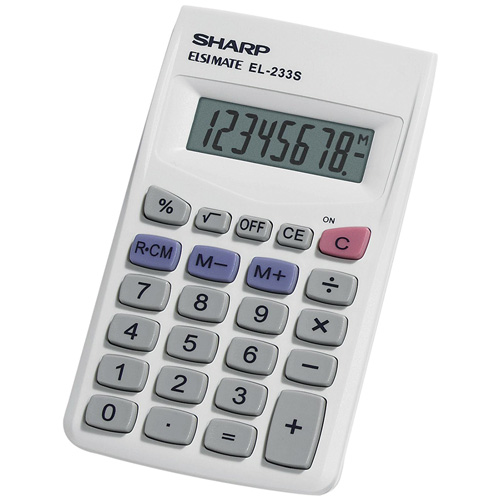
This article delves into the essence of the four function calculator, exploring its core capabilities, historical journey, contemporary relevance, and future trajectory within the ever-evolving tech ecosystem. We’ll unpack why this seemingly basic gadget continues to hold significant value, from educational settings to professional environments, and how its straightforward design provides a critical bridge to understanding more complex computational logic.
The Fundamental Tool of Computation
At its heart, a four function calculator is precisely what its name implies: a device capable of performing the four elementary arithmetic operations. This minimalist approach to number crunching is its defining characteristic and its enduring strength.
Defining the Core Functions
The four fundamental operations are:
- Addition (+): Combining two or more numbers to find their total sum. This is perhaps the most intuitive and frequently used operation, essential for everything from balancing a checkbook to summing up grocery bills.
- Subtraction (-): Determining the difference between two numbers. This operation is critical for calculating change, tracking expenses, or measuring variances.
- Multiplication (×): A shortcut for repeated addition, used to find the product of two numbers. It’s vital for scaling quantities, calculating areas, or determining costs for multiple items.
- Division (÷): The inverse of multiplication, used to split a number into equal parts or determine how many times one number fits into another. This is crucial for calculating averages, distributing resources, or determining rates.
These four functions, simple as they are, form the basis of nearly all quantitative analysis and problem-solving. Without a solid understanding and reliable execution of these operations, tackling more complex mathematical or computational challenges becomes impossible.
Historical Context and Evolution
The concept of mechanical aids for calculation predates electronic calculators by centuries, with tools like the abacus emerging thousands of years ago. Later, mechanical calculators by Pascal and Leibniz in the 17th century laid theoretical groundwork. However, the modern electronic four function calculator truly took shape in the latter half of the 20th century. Early electronic calculators, emerging in the 1960s, were bulky, expensive, and primarily aimed at scientific and engineering fields. The breakthrough that brought the four function calculator to the masses was the development of integrated circuits (microchips).
Companies like Busicom, Canon, and Sharp were pioneers, introducing progressively smaller, more affordable models. The Canon Pocketronic in 1970, for instance, was one of the first truly portable electronic calculators, paving the way for the ubiquitous devices we recognize today. The miniaturization and cost reduction continued throughout the 1970s and 80s, transforming the calculator from a specialized tool into an everyday necessity found in homes, schools, and offices worldwide. This technological evolution wasn’t just about making things smaller; it was about democratizing access to computational power.
The Enduring Simplicity in a Complex World
In an era of smartphones brimming with advanced apps and powerful desktop computers, the four function calculator stands out precisely because of its simplicity. There are no confusing menus, no internet connectivity, no complex algorithms to master. Its interface is direct: a keypad for input, a display for output, and a clear set of function buttons. This singular focus ensures ease of use, speed, and reliability for basic tasks. For many, its straightforward nature reduces cognitive load, allowing for quick, accurate calculations without the distractions or complexities of multi-functional devices. This enduring simplicity is a testament to effective, purpose-built technology.
Beyond Basic Arithmetic: Understanding Its Capabilities and Limitations
While foundational, it’s crucial to understand both the strengths and inherent boundaries of a four function calculator. Knowing when to use it and when to reach for a more sophisticated tool is key to efficient problem-solving.
When a Four Function Calculator Suffices
The four function calculator excels in situations requiring immediate, straightforward numerical processing. Common scenarios include:
- Everyday Household Tasks: Calculating grocery bills, balancing budgets, converting recipes, or determining tips.
- Educational Settings: Serving as a crucial learning tool for elementary and middle school students to grasp arithmetic principles without being overwhelmed by complex functions. Many standardized tests in these grades specifically allow only four-function calculators to ensure focus on foundational math skills.
- Retail and Service Industries: Quickly calculating totals, discounts, or change.
- Basic Financial Planning: Simple interest calculations, splitting bills, or tracking daily expenses.
- Quick Estimations: Performing on-the-spot calculations for rough estimates in various professional fields.
Its speed and ease of use for these specific tasks often make it preferable to pulling out a smartphone, which can be prone to notifications and other distractions.
Recognizing Its Constraints
The very simplicity that makes a four function calculator so effective also defines its limitations. It is not designed for:
- Scientific and Engineering Calculations: Functions like trigonometry (sine, cosine, tangent), logarithms, exponents, roots, or statistical analysis are beyond its scope.
- Memory and Storage: Most basic four function models have limited or no memory function to store previous calculations or constants, making multi-step complex problems cumbersome.
- Programmability: Unlike programmable calculators or computers, it cannot execute sequences of operations automatically or store user-defined functions.
- Graphing Capabilities: Visualizing data or functions is a feature of more advanced graphing calculators, not a four function device.
- Fraction or Complex Number Handling: Operations often default to decimal representation, making precise fraction arithmetic or complex number calculations impractical.
Understanding these boundaries is vital to selecting the appropriate tool for the task at hand, preventing frustration and ensuring accuracy. Attempting to force complex calculations onto a four function calculator is akin to using a hammer to drive a screw – it might eventually work, but it’s inefficient and prone to error.
Key Components and How They Work
Despite their apparent simplicity, four function calculators are marvels of miniaturized engineering. Their core components include:
- Display: Typically an LCD (Liquid Crystal Display) or LED (Light Emitting Diode) screen that shows numerical input and results. LCDs are common due to their low power consumption and clear visibility.
- Keypad: The primary interface for user input, featuring number keys (0-9), decimal point, the four function operators, an equals sign, and usually an “on/off” or “clear” button. Key design focuses on tactile feedback and durability.
- Microprocessor/Integrated Circuit: The “brain” of the calculator. This tiny chip contains the logic gates and circuitry necessary to interpret key presses, perform calculations (using binary arithmetic), and send results to the display. Early calculators used multiple discrete components, but modern ones rely on highly integrated, specialized chips.
- Power Source: Most commonly, small button-cell batteries (e.g., CR2032) or AAA batteries. Many models also incorporate solar cells to extend battery life, or even power the device entirely in sufficient light, showcasing clever energy efficiency design.
- Casing: A durable plastic housing designed to protect the internal electronics and provide an ergonomic interface.
When a user presses a number key, an electrical signal is sent to the microprocessor. The processor stores this number. When an operation key is pressed, the processor prepares to perform that operation with the next number entered. The equals sign triggers the execution of the calculation, and the result is then converted from binary back to decimal and displayed. This entire process occurs almost instantaneously, a testament to the efficiency of modern microchip technology.
The Modern Relevance and Niche Applications
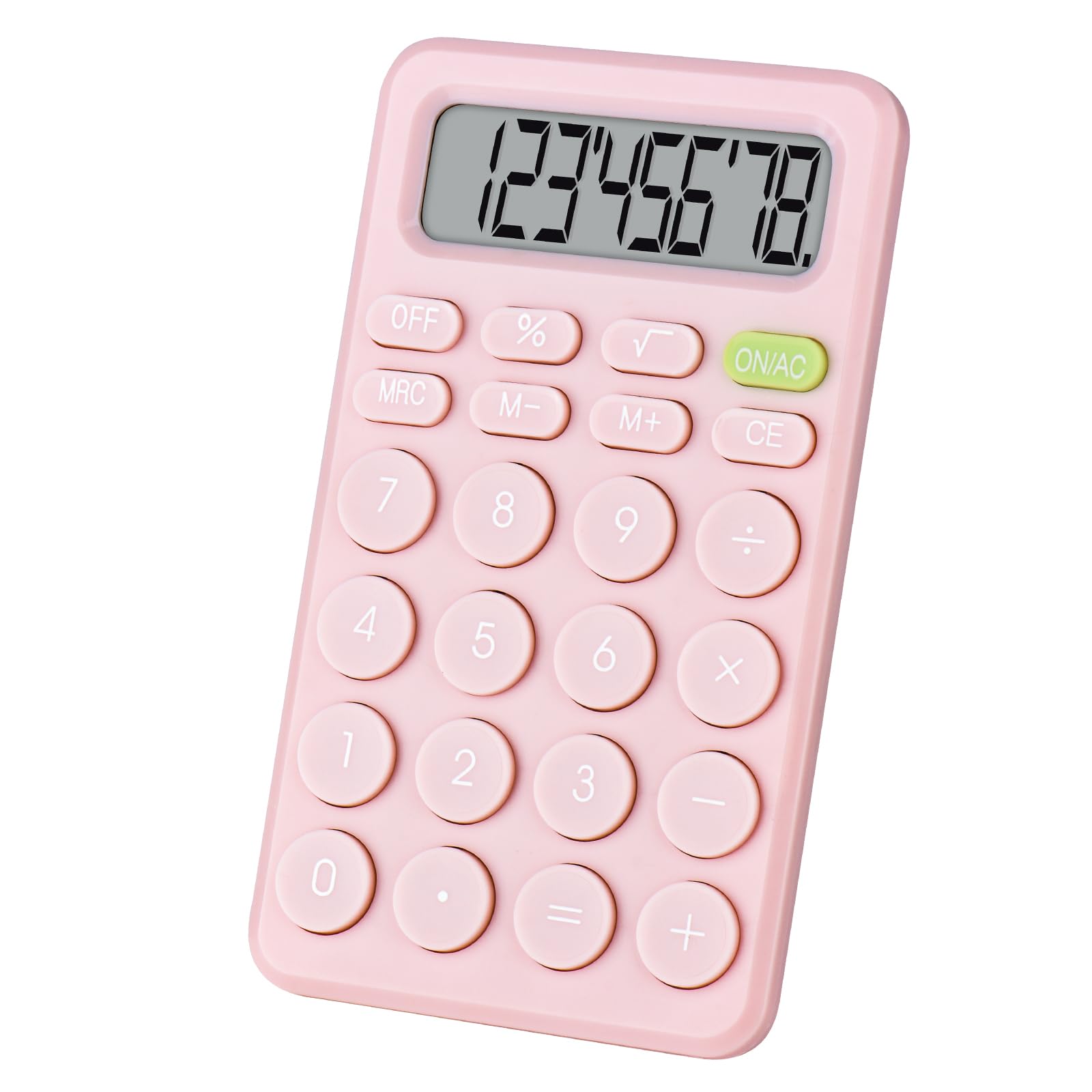
Despite the proliferation of powerful computing devices, the four function calculator hasn’t disappeared. Its continued relevance is underscored by its specific utility in various contexts, from education to professional life.
Everyday Use Cases
The daily utility of a four function calculator remains undeniable. For individuals managing personal finances, quickly tallying expenses during a shopping trip, or performing unit conversions in the kitchen, a dedicated four function calculator offers unparalleled convenience. It’s often quicker and less distracting than pulling out a smartphone, unlocking it, opening a calculator app, and then being bombarded by notifications. Its physical buttons provide tactile feedback that many prefer over touchscreens for rapid input, reducing errors. This tangible interaction contributes to its enduring popularity for quick, on-the-go calculations.
Educational Significance
In the realm of education, the four function calculator plays a pivotal, albeit often understated, role. For elementary and middle school students, it acts as a foundational tool. By limiting students to basic operations, educators ensure that they first master the core principles of arithmetic—understanding how addition, subtraction, multiplication, and division work—before relying on more advanced tools that might obscure the underlying mathematical concepts. It helps students verify their manual calculations, building confidence and reinforcing learning without doing the conceptual heavy lifting for them. This focus on conceptual understanding is critical for building a strong mathematical foundation, essential for future STEM pursuits.
Professional Contexts
Within certain professional environments, the four function calculator remains a preferred tool due to its reliability and specific functionality.
- Retail and Hospitality: Cashiers, waitstaff, and sales associates frequently use them for quick calculations of totals, taxes, discounts, and change, particularly in environments where POS systems might be momentarily unavailable or for manual verification.
- Small Business and Trades: Entrepreneurs, contractors, and artisans often rely on these calculators for on-site estimates, material measurements, and basic invoicing. Their ruggedness and battery life make them suitable for environments where access to power or delicate electronic devices is limited.
- Inventory Management: For quick counts, price checks, and simple stock calculations, a dedicated four function calculator can be more efficient than a full-fledged computer system.
- Healthcare: Nurses and medical professionals may use them for quick dose calculations or unit conversions in non-critical situations, providing a dependable, single-purpose device.
In these contexts, the simplicity and robustness of a four function calculator often outweigh the need for more complex features, proving that specialized, single-purpose tools can still be indispensable.
Choosing the Right Four Function Calculator
While seemingly identical, there’s a surprising variety within the realm of four function calculators, and selecting the right one can enhance usability and longevity.
Design and Ergonomics
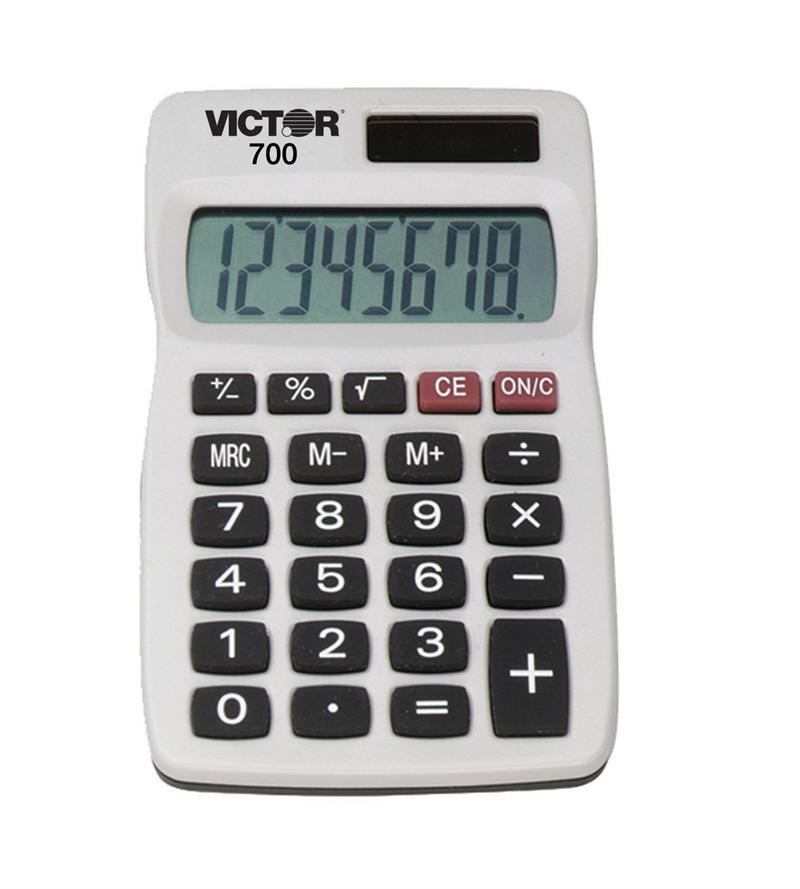
- Size and Portability: From credit-card-sized pocket calculators to larger desktop models with bigger keys and displays, size dictates portability and ease of use. Pocket models are great for on-the-go, while desktop versions offer comfort for prolonged use.
- Keypad Layout and Feel: Look for well-spaced, responsive keys that provide satisfying tactile feedback. Some prefer rubber keys for durability, others hard plastic for precision. A clear, logical layout minimizes errors.
- Display Clarity: A large, high-contrast display with big digits is crucial, especially for those with visual impairments or for quick glances. Backlighting is rare but can be a bonus in low-light conditions.
Power Source and Durability
- Battery vs. Solar: Many calculators feature dual power (solar and battery), offering the best of both worlds. Solar power extends battery life and reduces environmental impact, while battery ensures operation in dim light.
- Auto-Off Feature: This is standard on most models and conserves battery life significantly.
- Construction Quality: For educational or field use, a robust casing that can withstand drops and spills is important. Some models even offer protective covers.
Special Features
While basic, some four function calculators offer minor enhancements:
- Memory Functions (M+, M-, MRC): Allows temporary storage of numbers, useful for multi-step calculations.
- Percentage Key (%): Simplifies percentage calculations (e.g., discounts, taxes).
- Square Root Key (√): While technically a more advanced function, it’s often included due to its common utility.
- Correction/Backspace Key: Essential for correcting input errors without clearing the entire calculation.
- Tax Keys: Pre-programmed tax rates for quick calculation of sales tax.
For most users, a calculator with a clear display, comfortable keys, and dual power will suffice. The choice often comes down to personal preference for size, aesthetics, and a few minor convenience features.
The Future of Basic Calculation Tools
The future of the four function calculator, like many specialized gadgets, is one of integration and enduring niche relevance.
Integration into Smart Devices
The most obvious evolution is the calculator app on smartphones, tablets, and smartwatches. These digital versions perfectly emulate the four function calculator, often adding more advanced scientific or graphing capabilities at the tap of a screen. This integration means that most people carry a powerful calculator in their pockets at all times, making standalone devices less common for casual users. Operating systems often include a built-in calculator, removing the need for third-party apps for basic functions.
The Persistence of Physical Calculators
Despite the rise of digital integration, physical four function calculators are unlikely to vanish entirely. Their distinct advantages—tactile feedback, lack of distractions, robust design, and simple interface—ensure their continued presence in classrooms (where phones are often banned), retail environments, and professional settings where a dedicated tool is preferred. Moreover, for many, the act of physically pressing buttons provides a more satisfying and less error-prone experience for rapid numeric entry. The low cost and long battery life of physical calculators also make them highly practical for specific use cases.
Pedagogical Role in STEM Education
As foundational technology, the four function calculator will likely retain its pedagogical importance. Educators will continue to leverage it as a teaching aid for basic arithmetic, ensuring students develop a deep conceptual understanding of numbers and operations before moving on to more complex mathematics and computational thinking. It serves as a gateway to understanding algorithms and digital logic, preparing students for the increasingly digital world they inhabit. In a world where AI can solve complex problems, the ability to understand and perform basic arithmetic remains a fundamental human skill, and the four function calculator is an accessible tool for fostering that skill.
In conclusion, the four function calculator is far more than just a relic of simpler times. It is a profound example of effective, minimalist technology that has stood the test of time. Its enduring presence underscores the fundamental importance of basic arithmetic in our tech-driven world and serves as a vital bridge for understanding the complex computational systems that define modern life. From the classroom to the checkout counter, this humble gadget continues to demonstrate that sometimes, the simplest tools are the most powerful.
aViewFromTheCave is a participant in the Amazon Services LLC Associates Program, an affiliate advertising program designed to provide a means for sites to earn advertising fees by advertising and linking to Amazon.com. Amazon, the Amazon logo, AmazonSupply, and the AmazonSupply logo are trademarks of Amazon.com, Inc. or its affiliates. As an Amazon Associate we earn affiliate commissions from qualifying purchases.