
The modern stock market is a global titan, a complex web of fiber-optic cables, high-frequency algorithms, and trillions of dollars in daily turnover. For the contemporary investor, participating in the market is as simple as tapping a smartphone screen. However, this seamless digital infrastructure is the result of centuries of financial evolution. To understand when the stock market started is to trace the history of human ambition, risk management, and the fundamental desire to pool resources for grander ventures than any single individual could fund.
From the spice-scented docks of 17th-century Amsterdam to the buttonwood trees of early Manhattan, the story of the stock market is a narrative of how capital was democratized to fuel the progress of civilizations.
The Genesis: The Dutch East India Company and the Birth of Modern Shares
While informal systems of credit and debt existed in ancient Rome and among Renaissance-era Italian merchants, the “official” birth of the stock market as we recognize it today occurred in 1602. This was the year the Dutch East India Company (Vereenigde Oost-Indische Compagnie, or VOC) was established.
From Shipping Risks to Public Equity
In the late 1500s, maritime trade with the East Indies was a high-risk, high-reward endeavor. Voyages were incredibly expensive and prone to shipwrecks, piracy, and disease. Initially, Dutch merchants formed “ad hoc” partnerships for single voyages. Once a ship returned, the partnership was dissolved, and profits were split.
The formation of the VOC changed everything. To mitigate individual risk and ensure a steady flow of capital for long-term dominance, the Dutch government granted the VOC a monopoly on trade with Asia. Crucially, the company issued shares of stock to the general public. Unlike previous models, these shares represented a permanent investment in the company’s ongoing operations, not just a single voyage.
The Amsterdam Stock Exchange: The World’s First Formal Market
Because VOC shares were “permanent,” investors needed a way to get their money back without waiting for a company to liquidate. This birthed the secondary market. If you owned a share but needed cash, you had to find someone else to buy that share from you.
The Amsterdam Stock Exchange was established shortly after the VOC’s inception to facilitate these trades. It was the first venue in history where individuals could buy and sell standardized securities in a regulated environment. This innovation introduced the concept of “liquidity” to the masses, proving that an investment could be both long-term for the company and short-term for the investor.
The Coffee House Origins: London and the Birth of Wall Street
Following the success of the Dutch model, the concept of joint-stock companies crossed the English Channel. By the late 1600s, London had become a hotbed of financial experimentation, though it lacked a centralized building for these activities.
The Coffee House Origins of the London Stock Exchange
In the late 17th century, the precursors to the London Stock Exchange (LSE) were not found in marble halls, but in the smoky atmosphere of coffee houses like Jonathan’s and Garraway’s. Stockbrokers, who were often banned from the Royal Exchange for their boisterous behavior, gathered in these shops to trade shares of the South Sea Company and the East India Company.
In 1698, a broker named John Castaing began publishing a list of stock and commodity prices called “The Course of the Exchange and Other Things.” This provided the transparency and structure needed for a formal market. By 1801, the first regulated stock exchange in London was officially formed, setting the stage for Britain’s era of global financial dominance.
The Buttonwood Agreement: 24 Brokers and a Tree
Across the Atlantic, the United States was a fledgling nation with a significant amount of post-Revolutionary War debt. In the early 1790s, the U.S. government issued bonds to consolidate this debt, and several banks began issuing shares.
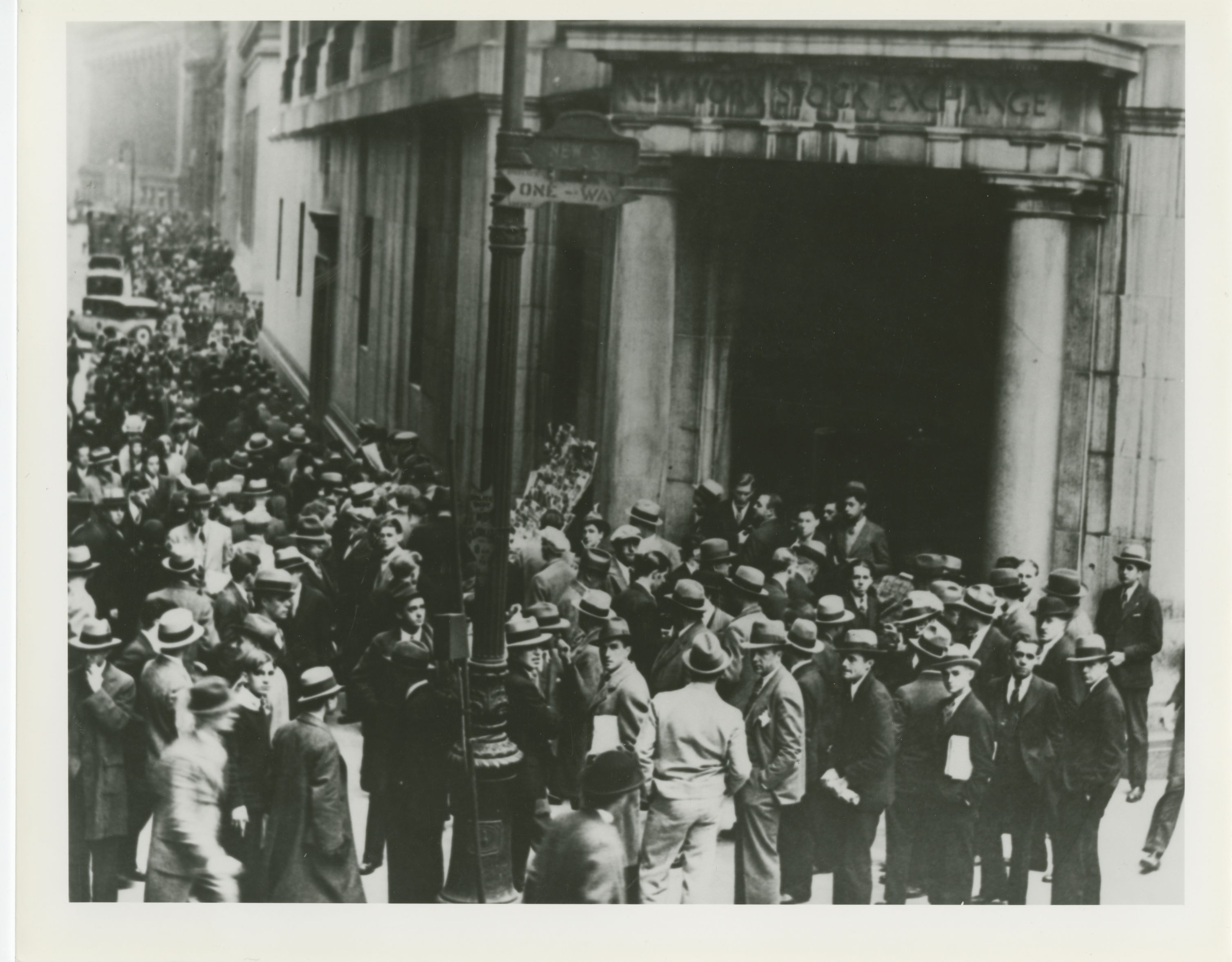
On May 17, 1792, twenty-four stockbrokers met under a buttonwood tree on Wall Street in New York City. They signed the Buttonwood Agreement, which established a set of rules for trading and a commission structure. This small, informal gathering was the seed that grew into the New York Stock Exchange (NYSE). Unlike the London coffee houses, the New York market was initially focused on government bonds, but it quickly evolved to accommodate the burgeoning private sector.
Industrialization and the Formalization of Global Exchanges
The 19th century acted as a catalyst for the stock market. As the Industrial Revolution took hold, the scale of enterprise grew beyond what even the wealthiest families could fund. The need for massive infrastructure—specifically railroads—required a level of capital formation that only a public stock market could provide.
Financing the Railroads and the Rise of the NYSE
In the mid-1800s, the New York Stock Exchange moved into its first permanent home. The primary driver of growth during this period was the railroad industry. Building tracks across the vast American landscape required astronomical sums of money.
The NYSE became the central hub where investors from around the world could buy into the American dream. This era also saw the rise of the first financial analysts and the creation of the Dow Jones Industrial Average in 1896, which helped investors track the overall “health” of the market rather than just individual stocks.
The Shift from Physical Trading Floors to Electronic Systems
For most of its history, the stock market relied on “open outcry”—a chaotic system where traders shouted and used hand signals to execute orders on a physical floor. However, as the 20th century progressed, the limitations of physical presence became apparent.
The development of the telegraph, and later the ticker tape, allowed price information to travel faster than ever before. This expanded the market’s reach, allowing people in San Francisco or Chicago to participate in the New York markets in near real-time. The formalization of these processes transformed the stock market from a niche activity for the elite into a central pillar of the global economy.
The Modern Era: Digital Transformation and Retail Democratization
The most radical changes to the stock market occurred in the last fifty years. The transition from paper certificates to digital entries revolutionized how capital flows and who has access to it.
The 1971 NASDAQ Launch and the Tech Boom
In 1971, the National Association of Securities Dealers Automated Quotations (NASDAQ) was launched. It was the world’s first electronic stock market. Initially, it was just a computer-based quotation system, but it eventually evolved into a trading platform.
The NASDAQ didn’t have a physical trading floor; it existed entirely on servers. This was perfectly suited for the burgeoning technology sector. Companies like Apple, Microsoft, and Intel chose the NASDAQ, cementing the link between the stock market and technological innovation. The rise of electronic trading reduced “bid-ask” spreads and made the market significantly more efficient.
The 21st Century: High-Frequency Trading and Fractional Shares
Today, the stock market is dominated by algorithms. High-frequency trading (HFT) uses powerful computers to execute thousands of orders in fractions of a second, capitalizing on minute price discrepancies. While controversial, HFT has contributed to the unprecedented levels of liquidity we see today.
Furthermore, the “FinTech” revolution of the 2010s brought about the democratization of investing. Through zero-commission brokerages and the introduction of fractional shares, the barriers to entry have vanished. You no longer need thousands of dollars to buy a single share of a high-priced company; you can start with five dollars. This shift has brought millions of retail investors into the fold, echoing the original spirit of the Dutch East India Company—allowing the public to participate in the growth of the world’s most successful enterprises.

Conclusion: A Legacy of Risk and Growth
When we ask when the stock market started, the answer is not a single date, but a series of pivotal moments that redefined our relationship with money. It began in 1602 as a way to fund spice voyages, evolved in the 1700s in the coffee houses of London and under trees in New York, and was supercharged by the Industrial Revolution.
Today, the stock market is the ultimate reflection of human progress. It is a mechanism that rewards innovation, provides a path to retirement for millions, and ensures that capital is directed toward the most promising ideas. From the first handwritten VOC ledger to the nanosecond-speed trades of the modern era, the stock market remains the world’s most powerful tool for wealth creation and economic development. Understanding its history is the first step for any investor looking to navigate its future.
aViewFromTheCave is a participant in the Amazon Services LLC Associates Program, an affiliate advertising program designed to provide a means for sites to earn advertising fees by advertising and linking to Amazon.com. Amazon, the Amazon logo, AmazonSupply, and the AmazonSupply logo are trademarks of Amazon.com, Inc. or its affiliates. As an Amazon Associate we earn affiliate commissions from qualifying purchases.