
Understanding your annual income is far more than just knowing the number on your paycheck. It’s the bedrock of sound financial planning, impacting everything from your daily budget and savings goals to your tax obligations, eligibility for loans, and long-term financial security. Whether you’re an employee, a freelancer, a business owner, or navigating a blend of income streams, accurately calculating this figure is a fundamental skill for effective money management. This comprehensive guide will walk you through the various components of income, practical methods for calculation, and the profound implications of knowing your true annual earnings.
Understanding the Components of Your Income
Before you can calculate your annual income, you must first identify and categorize all the various sources contributing to your financial flow. Income isn’t monolithic; it often comes from multiple directions, each with its own characteristics and tax implications.
Wages and Salary
For most individuals, wages and salary form the core of their annual income. This category includes the regular pay you receive from an employer.
- Gross vs. Net Income: It’s crucial to distinguish between gross income (your total earnings before any deductions) and net income (what you actually take home after taxes, insurance premiums, and other deductions). For annual income purposes, you’ll generally be interested in your gross annual income, as this is the figure typically used for tax reporting, loan applications, and overall financial assessment.
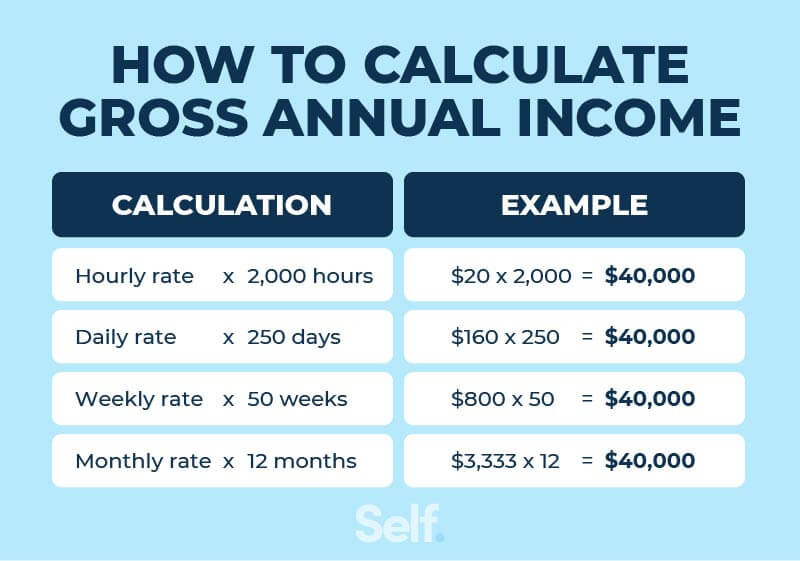
- Hourly vs. Salaried Pay: If you’re paid hourly, your annual income is calculated by multiplying your hourly rate by the number of hours worked per week, then by 52 weeks. Don’t forget to factor in any regular overtime. For salaried employees, your annual salary is usually a fixed figure, though it can be augmented.
- Bonuses and Commissions: Many jobs offer performance-based bonuses, sales commissions, or profit-sharing incentives. These variable payments are a significant part of your annual income and must be included. While they might fluctuate year-to-year, an average or a conservative estimate should be incorporated into your annual calculation.
- Tips: For those in service industries, tips can constitute a substantial portion of income. These must also be accurately tracked and reported as part of your annual earnings.
Self-Employment and Business Income
The landscape for entrepreneurs, freelancers, and small business owners is different. Your income isn’t a fixed salary but rather the revenue your business generates, minus its operating expenses.
- Revenue Minus Expenses: For self-employed individuals, your annual income is generally calculated as your total business revenue less your legitimate business expenses. This net figure is what you’ll report as taxable income. Keeping meticulous records of all income and outgoings is paramount here.
- Contractor Income: If you work as an independent contractor (often receiving 1099 forms), your income is the total amount paid to you for your services. You are responsible for setting aside money for self-employment taxes (Social Security and Medicare) and income taxes, as these are not automatically withheld.
- Freelance Earnings: Similar to contractors, freelancers must track all payments received from clients. Due to the often sporadic nature of freelance work, it’s advisable to project a conservative annual income based on past performance or current contracts.
Investment Income
For many, investment income represents a growing, often passive, stream of earnings that contributes significantly to overall annual wealth.
- Dividends: Payments from stock investments.
- Interest: Earnings from savings accounts, bonds, certificates of deposit (CDs), and other interest-bearing assets.
- Capital Gains: Profits realized from selling investments (stocks, real estate, etc.) for more than their purchase price. Both short-term (held for one year or less) and long-term (held for more than one year) capital gains are part of your annual income, though they are taxed differently.
- Rental Income: Earnings from properties you own and rent out, after deducting expenses like mortgage interest, property taxes, maintenance, and depreciation.
Other Income Sources
Beyond traditional employment and investments, various other sources can contribute to your annual income.
- Pensions and Retirement Distributions: Income received from pension plans or withdrawals from retirement accounts (401(k)s, IRAs) are generally counted as taxable income in the year they are received.
- Social Security Benefits: For retirees or those receiving disability benefits, Social Security payments form a part of their annual income, though a portion may be tax-exempt depending on overall income levels.
- Alimony and Child Support: While child support is generally not considered taxable income for the recipient (and not deductible for the payer), alimony payments may be taxable income for the recipient if the divorce or separation agreement was executed before 2019.
- Unemployment Benefits: Payments received during periods of unemployment are generally taxable income.
- Gambling Winnings: Winnings from lotteries, casinos, and other forms of gambling are considered taxable income.
Practical Methods for Calculating Your Annual Income
Once you’ve identified all potential income streams, the next step is to aggregate them into a single, accurate annual figure. The method you use will depend largely on the consistency and nature of your income.
Using Pay Stubs and Tax Documents
This is often the most straightforward method for W-2 employees.
- W-2 Forms: Your annual Wage and Tax Statement (Form W-2) from your employer is the definitive source for your gross wages, tips, and other compensation for the year. Box 1 typically shows your taxable wages, while Box 3 and Box 5 show wages subject to Social Security and Medicare taxes, respectively. Using Box 1 is generally sufficient for your overall taxable income.
- 1099 Forms: If you’re an independent contractor, freelancer, or have received certain types of investment income (e.g., interest, dividends), you’ll receive various 1099 forms (e.g., 1099-NEC for non-employee compensation, 1099-INT for interest, 1099-DIV for dividends). These forms collectively report your gross income from these sources.
- Pay Stubs: If you need to estimate your annual income mid-year or verify figures, your last pay stub will often show “Year-to-Date” (YTD) gross earnings. You can project your annual income by taking your YTD earnings, dividing by the number of pay periods elapsed, and then multiplying by the total number of pay periods in the year (e.g., YTD / 6 months * 12 months). This is particularly useful if your pay or hours have changed during the year.
The “Projection” Method for Variable Income
For those with fluctuating income, such as freelancers, commissioned salespeople, or small business owners, simply looking at a single pay period won’t suffice.
- Average Earnings: Look at your income over the past 6-12 months. Calculate the average monthly or quarterly income and project that forward for the full year. Be conservative; it’s better to underestimate slightly than to overestimate significantly and face a shortfall.
- Contract-Based Projections: If you have ongoing contracts or projects, tally the total value of these agreements for the year. Add in a realistic estimate for new work you anticipate securing.
- Seasonal Fluctuations: Account for seasonal highs and lows in your business. If your income is higher in certain quarters, ensure your projection reflects this variability rather than just a flat average.
- Expense Tracking: For self-employment and business income, meticulous tracking of expenses is vital. Your “income” for financial planning and tax purposes is your gross revenue minus legitimate business expenses. Use accounting software or detailed spreadsheets to maintain these records.
Accounting for Deductions and Pre-Tax Contributions
When calculating your taxable annual income, it’s important to understand the impact of pre-tax deductions. While these contribute to your overall financial picture, they reduce the income figure that the IRS uses to assess your tax liability.
- Pre-Tax Retirement Contributions: Contributions to 401(k)s, 403(b)s, traditional IRAs, and certain other retirement plans are often made on a pre-tax basis, meaning they reduce your taxable income.
- Health Insurance Premiums: If you pay for health insurance through your employer with pre-tax dollars, this also reduces your taxable income.
- Flexible Spending Accounts (FSAs) and Health Savings Accounts (HSAs): Contributions to these accounts are typically made with pre-tax dollars.
- Other Deductions: Itemized deductions (like mortgage interest, state and local taxes, charitable contributions) or the standard deduction further reduce your taxable income but do not change your gross annual income.

For most financial planning scenarios (e.g., loan applications), the gross annual income (before any of these pre-tax deductions but after accounting for all income sources) is the figure requested. For tax purposes, however, understanding the impact of these deductions is critical.
Why Accurately Calculating Annual Income Matters
Knowing your annual income isn’t just a number; it’s a powerful tool that enables informed decision-making across all facets of your financial life.
Budgeting and Financial Planning
Your annual income is the cornerstone of your personal budget. Without an accurate figure, it’s impossible to create a realistic spending plan, set meaningful savings goals, or effectively manage debt.
- Setting Spending Limits: Knowing your total income allows you to allocate appropriate amounts to housing, food, transportation, and discretionary spending without overextending yourself.
- Savings Goals: Whether you’re saving for a down payment, retirement, or an emergency fund, your income dictates how much you can realistically set aside each month or year.
- Debt Repayment Strategies: A clear understanding of your income helps you determine how aggressively you can tackle debts, such as credit card balances or student loans.
Tax Planning and Filing
Accurate income calculation is indispensable for proper tax compliance and optimization.
- Accurate Tax Declarations: Reporting your correct annual income prevents issues with tax authorities, including audits or penalties.
- Identifying Deductions and Credits: Knowing your income helps you understand which deductions (e.g., IRA contributions, student loan interest) and credits (e.g., earned income tax credit, child tax credit) you may qualify for, potentially lowering your overall tax bill.
- Estimating Quarterly Taxes: For self-employed individuals, an accurate income projection is essential for calculating and paying estimated quarterly taxes, avoiding penalties.
Loan Applications and Creditworthiness
Lenders heavily rely on your annual income to assess your ability to repay loans.
- Mortgages and Car Loans: Lenders use your debt-to-income (DTI) ratio, which directly depends on your gross annual income, to determine how much you can borrow. A higher, stable income often translates to better loan terms and higher borrowing limits.
- Personal Loans and Credit Cards: Your income helps credit card companies and personal loan providers gauge your financial stability and set credit limits.
- Rental Applications: Landlords frequently require proof of income (often 2-3 times the monthly rent) to ensure you can meet your obligations.
Setting Financial Goals and Benchmarks
Your annual income serves as a benchmark for measuring financial progress and setting future aspirations.
- Financial Independence and Retirement: Calculating your annual income allows you to project how much you need to save to reach financial independence or a comfortable retirement, based on your desired lifestyle and expenses.
- Major Purchases: Whether it’s buying a home, starting a business, or funding higher education, your income dictates your capacity to save and invest towards these significant life goals.
- Career Advancement: Understanding your current annual income provides a baseline for evaluating potential raises, new job offers, and career moves.
Tools and Resources to Assist Your Calculation
Fortunately, you don’t have to tackle the complexities of income calculation alone. Numerous tools and resources can simplify the process.
Spreadsheets and Budgeting Apps
Digital tools are invaluable for organizing your financial data and performing calculations.
- Excel and Google Sheets: These powerful spreadsheet programs allow you to create custom income trackers, categorize expenses, and project annual figures. You can set up formulas to automatically sum various income sources.
- Budgeting Apps (Mint, YNAB, Personal Capital): Many personal finance apps automatically link to your bank accounts and investment portfolios, categorizing transactions and providing an overview of your income and spending. They can often generate reports that consolidate your annual earnings.
- Online Accounting Software (QuickBooks, FreshBooks): For freelancers and small business owners, dedicated accounting software is essential. These tools not only track income and expenses but also generate profit and loss statements, which are crucial for determining your net self-employment income.
Online Income Calculators
For quick estimates and scenario planning, online calculators can be very helpful.
- Gross to Net Paycheck Calculators: Many financial websites offer tools that allow you to input your hourly rate or salary, and it will estimate your net pay after typical deductions.
- Self-Employment Income Estimators: Some calculators help freelancers estimate their tax obligations based on projected gross income and common business expenses.
- Retirement Income Calculators: These tools can help you project how much income your retirement savings might generate annually.
Professional Financial Advisors
For complex financial situations or simply for peace of mind, consulting a professional can be highly beneficial.
- Tax Preparers: A qualified tax professional can accurately calculate your taxable income, identify all eligible deductions and credits, and ensure compliance with tax laws. They are experts in deciphering W-2s, 1099s, and various income forms.
- Financial Planners: A certified financial planner (CFP) can help you integrate your income figures into a comprehensive financial plan, covering budgeting, investing, retirement planning, and wealth accumulation. They can offer insights into optimizing your income streams and tax strategy.
- Accountants for Businesses: If you run a complex business, a professional accountant can handle all your financial record-keeping, ensuring accurate income statements and tax filings.

Conclusion
Understanding “how to figure your annual income” is a foundational skill for anyone seeking financial clarity and stability. It’s the numerical snapshot that informs your budget, dictates your tax strategy, influences your borrowing power, and guides your journey toward financial goals. By diligently tracking all your income sources, utilizing available tools and resources, and seeking professional advice when needed, you empower yourself with the knowledge to make confident, informed financial decisions. Don’t let this crucial figure remain a mystery; take the time to calculate it accurately, and unlock a clearer path to your financial future.
aViewFromTheCave is a participant in the Amazon Services LLC Associates Program, an affiliate advertising program designed to provide a means for sites to earn advertising fees by advertising and linking to Amazon.com. Amazon, the Amazon logo, AmazonSupply, and the AmazonSupply logo are trademarks of Amazon.com, Inc. or its affiliates. As an Amazon Associate we earn affiliate commissions from qualifying purchases.