
In a financial landscape saturated with data, metrics, and projections, the simple question, “what percent increase is this?” often holds the key to profound understanding. From personal savings to global markets, grasping the concept of percentage increase is not just a mathematical exercise; it’s a fundamental pillar of financial literacy, empowering individuals and businesses alike to make informed decisions, assess performance, and strategize for the future. Whether you’re tracking your investment portfolio, evaluating a salary offer, or analyzing a company’s quarterly earnings, the ability to calculate, interpret, and contextualize percentage increases is an indispensable skill. It transforms raw numbers into actionable insights, revealing the true pace and impact of financial change. This article delves into the critical role of percent increase within the money niche, exploring its applications, nuances, and strategic importance for anyone navigating the complexities of their financial journey.
The Foundational Power of Percentage Increase in Finance
At its core, a percentage increase quantifies the relative change between two values over time, expressing that change as a proportion of the original value. This simple calculation provides a universal language for growth, making disparate financial figures comparable and understandable. Without it, we would struggle to accurately gauge progress, measure success, or identify areas for improvement across the vast spectrum of financial activities.
Defining and Demystifying the Calculation
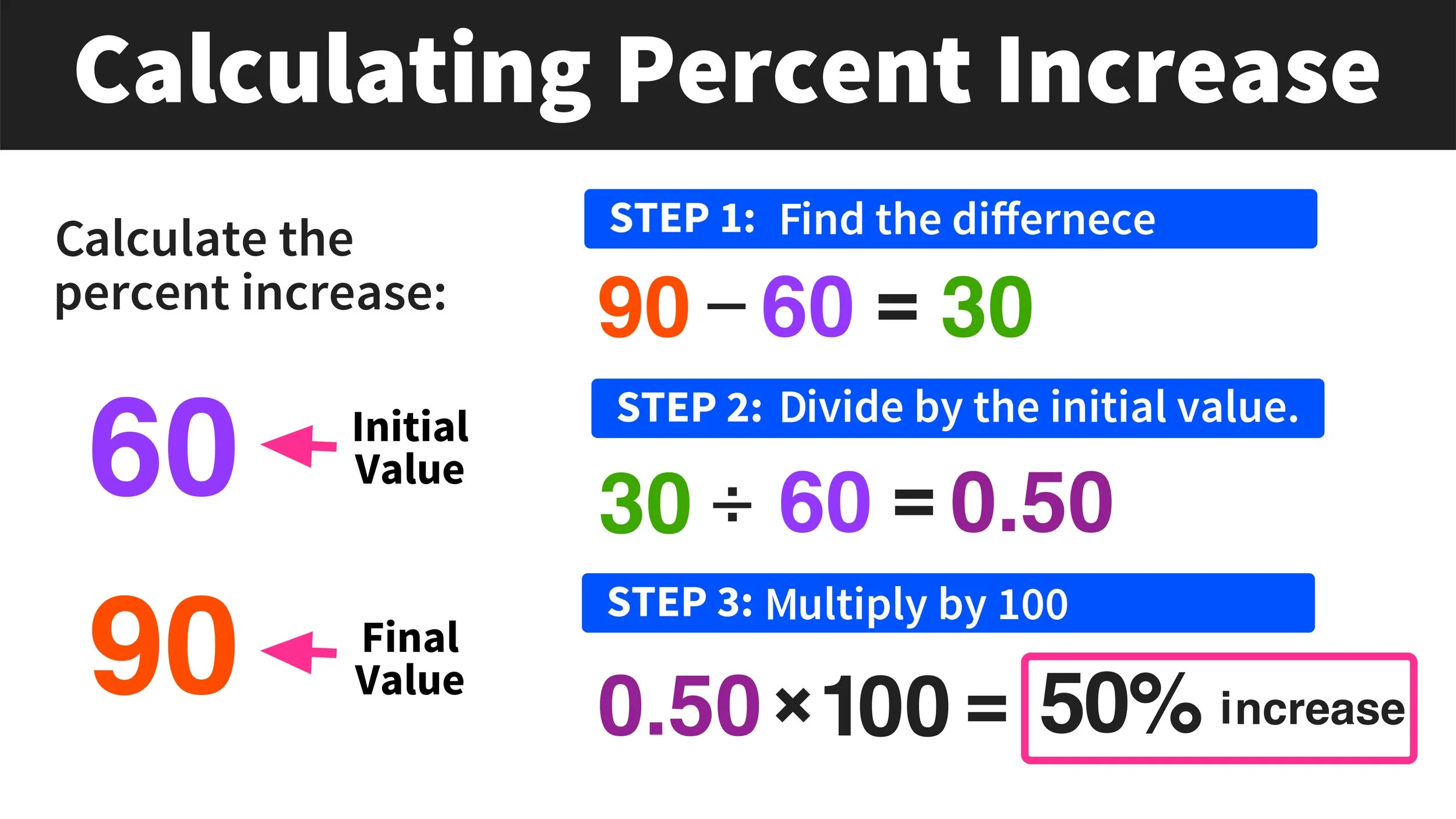
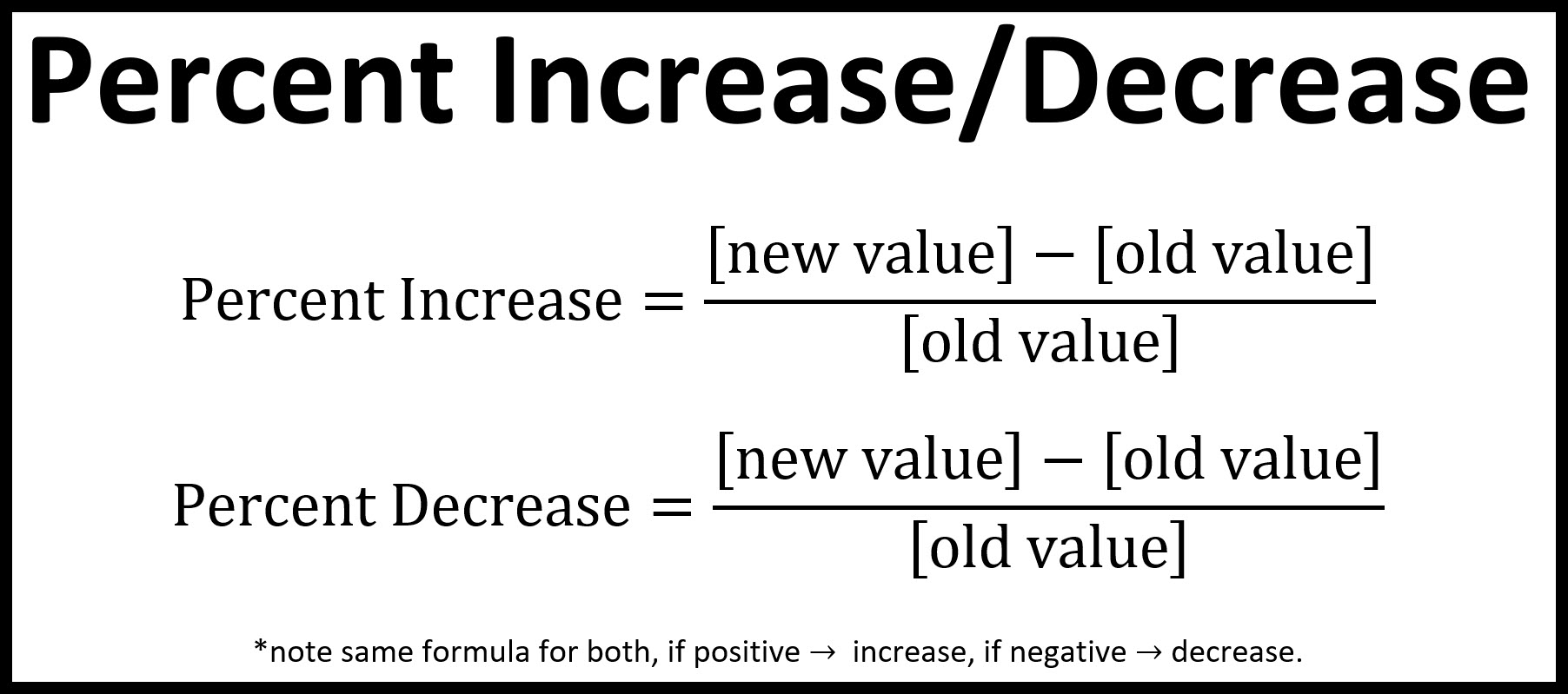
The formula for calculating percentage increase is straightforward:
$$
text{Percentage Increase} = frac{text{(New Value – Old Value)}}{text{Old Value}} times 100%
$$
This formula reveals not just the absolute growth, but its significance relative to the starting point. For instance, a $100 increase from $1,000 is a 10% increase, while a $100 increase from $10,000 is only a 1% increase. This relativity is crucial because it provides context that absolute figures alone cannot. In finance, context is king, helping to differentiate between significant strides and minor adjustments.
Why Relative Growth Matters More Than Absolute Numbers
Imagine your investment portfolio grows by $10,000. On the surface, this sounds impressive. But if your initial investment was $100,000, that’s a 10% increase. If your initial investment was $1,000,000, it’s only a 1% increase. The percentage increase immediately clarifies the true performance, allowing for a standardized comparison regardless of the initial capital involved. This principle applies across all financial domains, from comparing the performance of two different stocks to evaluating the impact of a cost-cutting measure on a company’s bottom line. It allows for apples-to-apples comparisons that drive smarter financial analysis and decision-making.
Common Pitfalls: The Illusion of Base Values
One of the most common mistakes in interpreting percentage increases lies in overlooking the base value. A 50% increase in profits might sound phenomenal, but if the previous profit was only $100, the actual gain is a modest $50. Conversely, a 5% increase on a multi-million-dollar revenue stream represents a far more substantial absolute gain. Advertisements often exploit this by highlighting impressive percentage gains from a low base, creating an illusion of grandeur. Savvy financial consumers and professionals always question the starting point, understanding that a small base can inflate percentage figures, while a large base can make significant absolute gains appear modest in percentage terms. Recognizing this pitfall is crucial for accurate financial assessment and avoiding misleading information.
Everyday Applications in Personal Finance and Investing
The concept of percentage increase is woven into the fabric of daily financial life, impacting decisions from our paychecks to our retirement accounts. Understanding these applications empowers individuals to manage their money more effectively and build wealth over time.
Navigating Salary Increases and Cost of Living Adjustments (COLAs)
When discussing a raise, the initial focus is almost always on the percentage increase. A 3% raise on a $60,000 salary is a $1,800 annual bump. But this figure must also be weighed against the cost of living. If inflation, essentially the percentage increase in general price levels, is higher than your raise, your purchasing power has effectively decreased, even with a nominal increase in pay. Understanding the interplay between your salary’s percentage increase and the inflation rate (often measured by the Consumer Price Index, or CPI, which tracks the percentage increase in consumer prices) is vital for assessing your true economic standing and negotiating fair compensation.
Tracking Investment Growth: Portfolio Performance and Returns
For investors, percentage increase is the primary metric for evaluating portfolio performance.
Annualized returns, compound annual growth rate (CAGR), and return on investment (ROI) are all expressions of percentage increase over various periods. An investment that yielded a 15% increase year-over-year is performing significantly better than one that grew by 5%. Understanding these percentages helps investors make informed decisions about asset allocation, rebalancing, and comparing the performance of different investment vehicles like stocks, bonds, mutual funds, or real estate. It’s the language of investment success and risk assessment.
Deconstructing Interest Rates: Savings, Loans, and Credit
Interest rates, whether on savings accounts, mortgages, or credit cards, are themselves percentage increases (or decreases, in the case of declining balances). A savings account offering a 2% annual percentage yield (APY) means your principal will increase by 2% over a year. Conversely, a credit card with a 20% annual percentage rate (APR) means your outstanding balance will increase by 20% over a year if not paid off. Comprehending these percentage increases is critical for maximizing savings, minimizing debt costs, and making responsible borrowing decisions. The power of compounding interest, where previous interest also earns interest, makes these percentages particularly impactful over time.
Budgeting and Expense Analysis: Identifying Financial Leakage
In personal budgeting, analyzing percentage increases in various spending categories can reveal crucial insights. If your grocery bill increased by 15% last quarter, while your income only increased by 3%, that’s a red flag warranting closer examination. Tracking percentage changes in discretionary spending versus essential expenses helps individuals identify areas where costs are escalating unexpectedly, allowing them to adjust their habits and maintain financial control. It’s an active way to monitor financial health and prevent overspending.
Strategic Importance in Business Finance and Economic Analysis
Beyond personal finance, percentage increases are fundamental tools in business strategy, economic analysis, and market valuation. They provide the narrative for growth, efficiency, and competitiveness.
Analyzing Business Growth: Revenue, Profit, and Market Share
For businesses, percentage increases are indicators of vitality and success. A company’s quarter-over-quarter or year-over-year revenue increase signals its ability to grow its top line. A healthy percentage increase in profit margins indicates operational efficiency and cost management. Furthermore, tracking the percentage increase in market share against competitors provides insight into competitive advantage and strategic positioning. Analysts, investors, and stakeholders heavily rely on these percentage metrics to gauge a company’s health, trajectory, and potential.
Evaluating Investment Performance: ROI and CAGR
When evaluating a business or investment opportunity, two key percentage metrics come to the forefront: Return on Investment (ROI) and Compound Annual Growth Rate (CAGR). ROI calculates the percentage gain or loss relative to the initial investment, providing a snapshot of overall efficiency. CAGR, on the other hand, measures the mean annual growth rate of an investment over a specified period longer than one year, assuming the profits are reinvested. This smooths out volatility and provides a more realistic picture of sustained growth. Both are crucial for comparing different investment opportunities and understanding their potential for wealth creation.
Inflation and Purchasing Power: The Hidden Erosion
Inflation, a broad increase in prices and fall in the purchasing value of money, is inherently a percentage increase. When inflation rises by 4%, it means the cost of goods and services has, on average, increased by 4%. If your assets or income don’t keep pace with this percentage increase, your purchasing power diminishes. Understanding this relationship is critical for long-term financial planning, as it highlights the necessity for investments and income growth that outperform the rate of inflation to maintain or increase real wealth. It’s the silent force that dictates the true value of your money over time.
Mastering Calculation and Communication for Impact
Knowing how to calculate percentage increase is one thing; effectively utilizing and communicating that information is another. In the financial world, clear, contextualized presentation can be as important as the calculation itself.
Leveraging Tools for Precision and Efficiency
While manual calculation is possible, modern financial management benefits greatly from digital tools. Spreadsheets like Microsoft Excel or Google Sheets excel at calculating percentage increases across large datasets, allowing for rapid analysis of financial trends. Dedicated financial calculators, budgeting apps, and investment platforms often automate these calculations, presenting users with clear percentage metrics for their accounts. Mastering these tools streamlines financial analysis, reduces errors, and frees up time for strategic thinking.
Presenting Data Clearly: Contextualizing the Numbers
The way a percentage increase is communicated significantly impacts its reception. Simply stating “profits increased by 20%” might be accurate, but adding context such as “despite a challenging market, profits increased by 20% due to successful cost-cutting measures, exceeding industry averages” provides a far richer and more actionable insight. Visual aids like charts and graphs that depict growth curves or compare percentage changes across different categories can make complex financial data more accessible and engaging, allowing audiences to quickly grasp the significance of the numbers. Effective communication ensures that the insights derived from percentage increases are understood and acted upon.
Beyond Simple Percentages: Compound Growth and Annualized Returns
While simple percentage increase is foundational, sophisticated financial analysis often requires deeper metrics. Compound Annual Growth Rate (CAGR), as mentioned earlier, accounts for the compounding effect over multiple periods, providing a more realistic average growth rate for investments. Annualized returns normalize performance over different timeframes, allowing for comparisons of investments held for varying durations. Understanding these advanced applications of percentage increase allows for a more nuanced and accurate assessment of long-term financial performance and potential, moving beyond superficial year-over-year comparisons to reveal the underlying momentum of financial assets.
Leveraging Percentages for Smarter Financial Decisions
Ultimately, the power of answering “what percent increase is this?” lies in its ability to inform and empower smarter financial decisions. It provides the quantitative basis for setting goals, identifying opportunities, and mitigating risks.
Setting Quantifiable Financial Goals and Tracking Progress
Whether it’s aiming for a 15% increase in your emergency fund balance, a 10% increase in your investment portfolio value, or a 5% reduction in discretionary spending, setting goals in percentage terms provides clear, measurable targets. Regularly tracking the percentage increase (or decrease) towards these goals allows for transparent progress monitoring, enabling timely adjustments to strategies and fostering a sense of accomplishment. It transforms abstract desires into concrete, achievable financial objectives.
Identifying Opportunities and Mitigating Risks
By diligently analyzing percentage increases, individuals and businesses can spot emerging trends and potential pitfalls. A consistently high percentage increase in a specific investment sector might signal a growth opportunity. Conversely, a sudden and unexplained percentage increase in operating expenses could indicate an efficiency problem or even fraud. The keen eye that observes and interprets these shifts is better positioned to capitalize on favorable conditions and proactively address adverse ones, thereby optimizing financial outcomes and safeguarding assets.
The Cumulative Power of Small, Consistent Increases
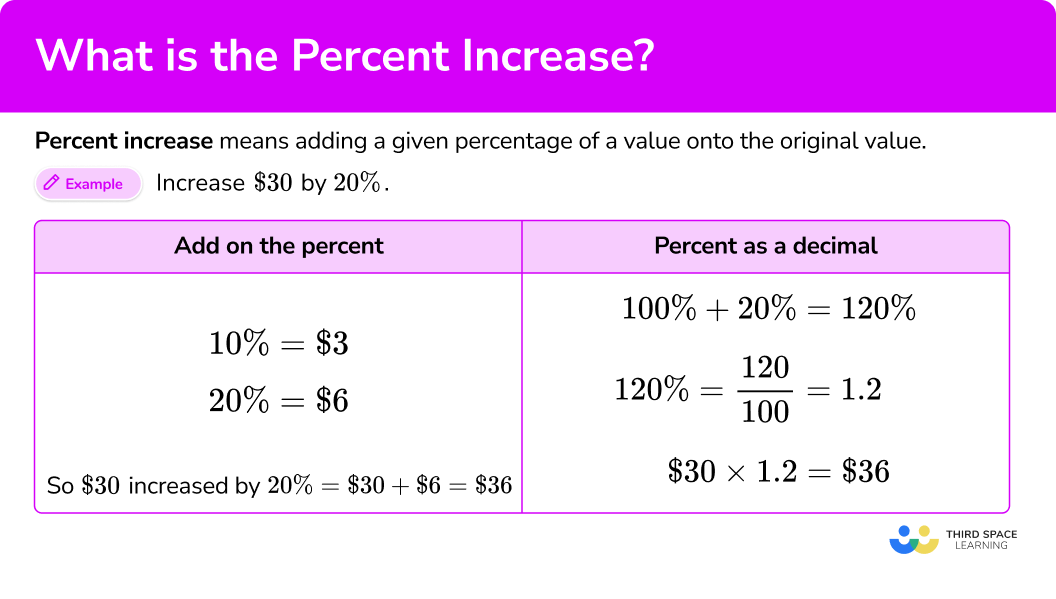
Perhaps the most profound insight derived from understanding percentage increase is the remarkable power of compounding. Small, consistent percentage increases, whether in savings interest, investment returns, or income growth, can accumulate into substantial wealth over long periods. The “rule of 72,” for example, uses percentage rates to estimate how long it takes for an investment to double. This principle underscores the importance of starting early, staying consistent, and leveraging even modest percentage gains to build significant financial security and independence over a lifetime.
In conclusion, “what percent increase is this?” is far more than a mathematical query; it is a gateway to financial fluency. It equips us with the tools to dissect financial data, evaluate performance, and make strategic choices that shape our economic future. By mastering its calculation, understanding its diverse applications in personal finance and business, and leveraging its insights, we transform from passive observers of our financial lives into active, informed participants capable of steering our money towards growth and prosperity.
aViewFromTheCave is a participant in the Amazon Services LLC Associates Program, an affiliate advertising program designed to provide a means for sites to earn advertising fees by advertising and linking to Amazon.com. Amazon, the Amazon logo, AmazonSupply, and the AmazonSupply logo are trademarks of Amazon.com, Inc. or its affiliates. As an Amazon Associate we earn affiliate commissions from qualifying purchases.