
In the intricate world of finance, numbers tell a story. But raw figures alone often lack the context required for truly insightful analysis and informed decision-making. This is where percentages come into play. Understanding “how to calculate percentage of total” isn’t merely a mathematical exercise; it’s a foundational skill that empowers individuals and businesses to decode financial data, assess performance, and plan for the future with greater precision. From personal budgeting to complex investment strategies and corporate financial reporting, the ability to express a part as a proportion of a whole unlocks a deeper understanding of economic realities.

This guide delves into the essential methodology of calculating percentages of a total, anchoring each explanation in practical financial applications. We’ll break down the core formula, walk through step-by-step examples, and explore the myriad ways this fundamental concept shapes our financial literacy and strategic planning. Whether you’re managing household expenses, evaluating investment opportunities, or analyzing business profitability, mastering this calculation is an indispensable tool in your financial arsenal.
The Indispensable Role of Percentages in Financial Acumen
Finance is inherently about comparisons and relative values. While absolute numbers provide a baseline, it’s their relationship to a total or another figure that often reveals their true significance. Percentages serve as a universal language for these comparisons, standardizing data and making it digestible across various financial scenarios.
Why Percentages Matter for Financial Literacy
For the average individual, financial literacy begins with understanding how money is earned, spent, saved, and invested. Percentages provide a critical framework for this understanding. For instance, knowing you spent $500 on dining out last month is one thing; knowing that $500 represents 25% of your total discretionary income provides a far more impactful insight into your spending habits. This contextualization allows for more effective budgeting, identifying areas for potential savings, and setting realistic financial goals.
Similarly, when evaluating loan offers, knowing the interest rate (a percentage) allows for a direct comparison of the true cost of borrowing across different lenders, regardless of the principal amount. When assessing investment performance, a 10% annual return is universally understood as positive growth, allowing investors to compare diverse asset classes on an equitable footing. Without percentages, financial data would remain largely opaque, making informed decisions difficult, if not impossible. They democratize financial information, making it accessible and actionable for everyone.
Beyond Simple Numbers: Contextualizing Financial Data
In business finance, percentages are even more critical for performance evaluation and strategic planning. A company’s revenue might be in the millions, but its profitability is often expressed as a net profit margin – a percentage of total revenue. This allows for benchmarking against industry averages, competitor performance, and historical trends. A large revenue number might seem impressive, but if the profit margin is low, it suggests inefficiencies.
Consider sales growth. Saying a company added $1 million in sales sounds good, but if its previous sales were $100 million, that’s a 1% growth. If its previous sales were $5 million, that’s a 20% growth. The percentage provides the necessary context to understand the magnitude and impact of the change. Similarly, market share, discount rates, tax rates, and asset allocation percentages are all vital metrics that rely on expressing a part as a proportion of a whole, enabling meaningful comparisons and strategic adjustments.
Mastering the Basic Formula: Percentage of Total
At its core, calculating a percentage of a total is a straightforward mathematical operation. However, its simplicity belies its powerful utility in financial analysis. Understanding this fundamental formula is the gateway to unlocking deeper financial insights.
Deconstructing the Formula: Part / Whole * 100
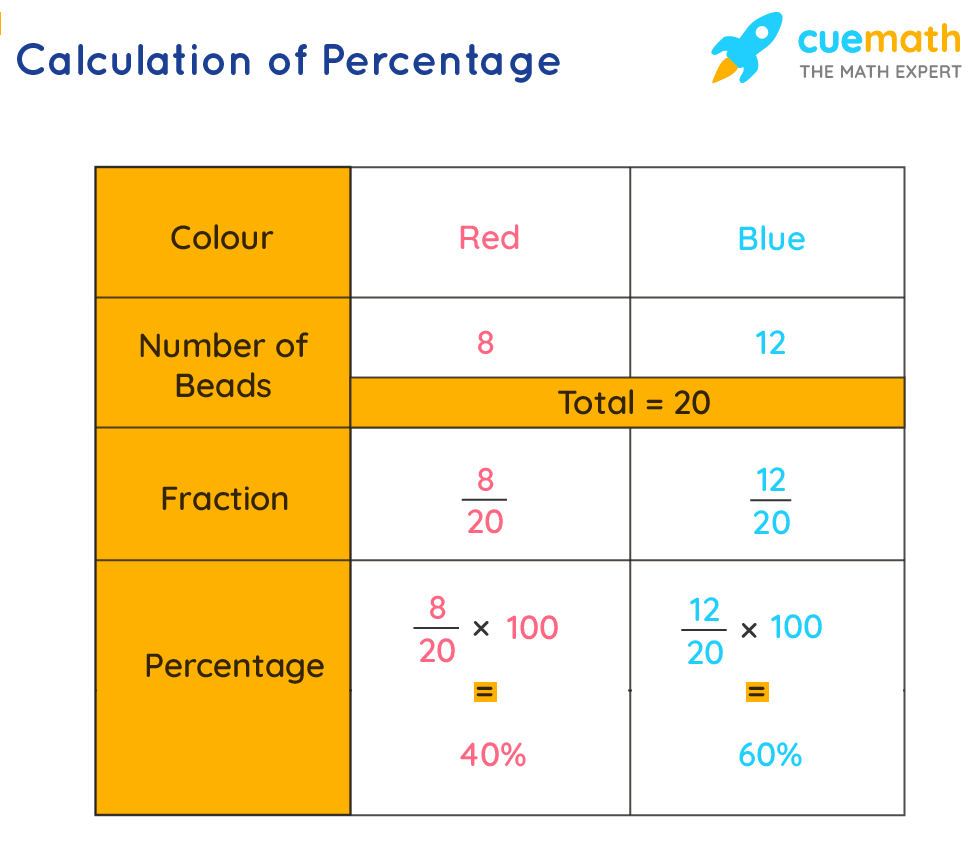
The universal formula for calculating a percentage of a total is:
Percentage = (Part / Whole) * 100
Let’s break down each component:
- Part: This refers to the specific amount or quantity you are interested in, which constitutes a portion of the larger total.
- Whole: This is the total amount, the grand sum, or the entire quantity against which the “part” is being measured.
- 100: Multiplying by 100 converts the resulting decimal or fraction into a percentage, making it easier to read and interpret. For example, 0.25 is equivalent to 25%.
This formula works across all scenarios, from calculating a tip to determining your household’s saving rate. The key is accurately identifying what constitutes the “part” and what represents the “whole” in any given financial situation.
Step-by-Step Calculation Guide
Let’s walk through an example to illustrate the process:
Scenario: You earned $4,000 this month, and you spent $800 on rent. You want to know what percentage of your income goes to rent.
- Identify the “Part”: Your rent expense, which is $800.
- Identify the “Whole”: Your total income, which is $4,000.
- Perform the Division (Part / Whole): $800 / $4,000 = 0.20
- This result, 0.20, is the decimal equivalent of the percentage. It signifies that your rent is 0.20 of your total income.
- Multiply by 100 to Convert to Percentage: 0.20 * 100 = 20%
Conclusion: 20% of your monthly income is allocated to rent.
This structured approach ensures accuracy and clarity in your calculations, making the results actionable for financial planning.
Common Pitfalls to Avoid
While the formula is simple, certain mistakes can lead to incorrect results:
- Misidentifying Part and Whole: The most common error is accidentally swapping the part and the whole. Always ensure the numerator (part) is genuinely a component of the denominator (whole).
- Calculation Errors: Basic arithmetic mistakes, especially when dealing with larger numbers or multiple steps, can skew results. Double-check your division and multiplication.
- Forgetting to Multiply by 100: If you stop after the division step (e.g., getting 0.20), you have a decimal, not a percentage. Always remember the final multiplication by 100 to express the result in the desired format.
- Rounding Issues: Be mindful of rounding too early in complex calculations, which can introduce inaccuracies. Round only at the final step, or carry sufficient decimal places throughout.
Real-World Financial Applications of Percentage Calculations
The power of percentage calculations truly shines when applied to practical financial scenarios. This fundamental skill underpins a vast array of financial analyses, impacting personal finance, investment strategies, and business operations.
Personal Budgeting and Expense Analysis
For individuals, percentages are indispensable for effective budgeting. They allow you to:
- Categorize Spending: Determine what percentage of your total income goes to housing, food, transportation, entertainment, and savings. For example, if you earn $5,000 a month and spend $1,500 on housing, that’s 30% of your income dedicated to housing.
- Track Progress Towards Goals: If your goal is to save 15% of your income, calculating the actual percentage saved each month immediately tells you if you’re on track.
- Identify Overspending: If your “eating out” category consistently consumes 20% of your discretionary budget, and your target was 10%, percentages instantly highlight areas needing adjustment.
- Assess Debt-to-Income Ratio: Lenders often use this ratio (total monthly debt payments as a percentage of gross monthly income) to assess creditworthiness. Knowing your own helps you manage your financial health.
By converting raw spending figures into percentages, individuals gain a clearer, comparative view of their financial habits, empowering them to make more informed decisions about resource allocation.
Understanding Investment Returns and Portfolio Allocation
In the realm of investments, percentages are the lingua franca for measuring performance and managing risk:
- Return on Investment (ROI): This is perhaps the most common application. If you invest $10,000 and it grows to $11,000, your return is ($1,000 profit / $10,000 initial investment) * 100 = 10%. This percentage allows you to compare the profitability of different investments over varying periods.
- Portfolio Allocation: Investors strategically divide their capital among different asset classes (stocks, bonds, real estate, cash). Expressing this division as percentages (e.g., 60% stocks, 30% bonds, 10% cash) helps maintain a desired risk profile and ensures diversification.
- Dividend Yield: For income-focused investors, dividend yield (annual dividends per share / share price * 100) indicates the percentage return from dividends relative to the stock’s price.
- Expense Ratios: Mutual funds and ETFs charge annual fees, expressed as expense ratios (percentages), which directly impact an investor’s net returns.
These percentage-based metrics are crucial for evaluating investment choices, assessing risk, and optimizing portfolio performance.
Business Finance: Profit Margins, Discounts, and Growth Rates
For businesses, percentages are vital for operational analysis, strategic planning, and financial reporting:
- Profit Margins: Businesses calculate various profit margins:
- Gross Profit Margin: (Gross Profit / Revenue) * 100. Shows the percentage of revenue remaining after deducting the cost of goods sold.
- Operating Profit Margin: (Operating Income / Revenue) * 100. Indicates the percentage of revenue left after paying for variable costs and fixed operating expenses.
- Net Profit Margin: (Net Income / Revenue) * 100. Reveals the percentage of revenue that translates into actual profit for the business after all expenses and taxes.
- Discounts and Markups: Retailers frequently apply discounts (e.g., 20% off) or markups (e.g., 50% markup on cost) to pricing. Calculating these percentages is fundamental to pricing strategies and profitability.
- Sales Growth Rate: Comparing current period sales to previous period sales and expressing the change as a percentage helps businesses understand their growth trajectory and market penetration.
- Market Share: A company’s market share is its sales as a percentage of the total sales in its industry, a key indicator of competitive position.
- Variance Analysis: Comparing actual financial results to budgeted amounts and expressing the difference as a percentage helps identify where performance deviated from expectations.
These applications demonstrate how percentages transform raw business data into actionable insights for management, investors, and other stakeholders.
Debt Management and Loan Repayments
Managing debt effectively relies heavily on understanding percentages:
- Interest Rates: The interest rate on a loan (e.g., 5% APR) dictates the cost of borrowing. Calculating the interest paid as a percentage of the principal helps borrowers grasp the true financial burden.
- Loan-to-Value (LTV) Ratio: For mortgages, the LTV ratio (loan amount / property value * 100) is crucial for lenders to assess risk and for borrowers to understand their equity.
- Debt Repayment Progress: If you’ve paid off $10,000 of a $50,000 loan, you’ve paid off 20% of your debt, providing a clear metric of progress.
Percentages enable individuals and businesses to make informed decisions about taking on new debt, managing existing debt, and planning for repayment.
Leveraging Tools for Efficient Percentage Calculation
While manual calculation is essential for understanding the underlying principles, modern financial management often benefits from efficient tools that can automate and streamline percentage calculations.
The Power of Spreadsheets (Excel/Google Sheets)
Spreadsheet software like Microsoft Excel or Google Sheets is arguably the most powerful and versatile tool for financial calculations, including percentages.
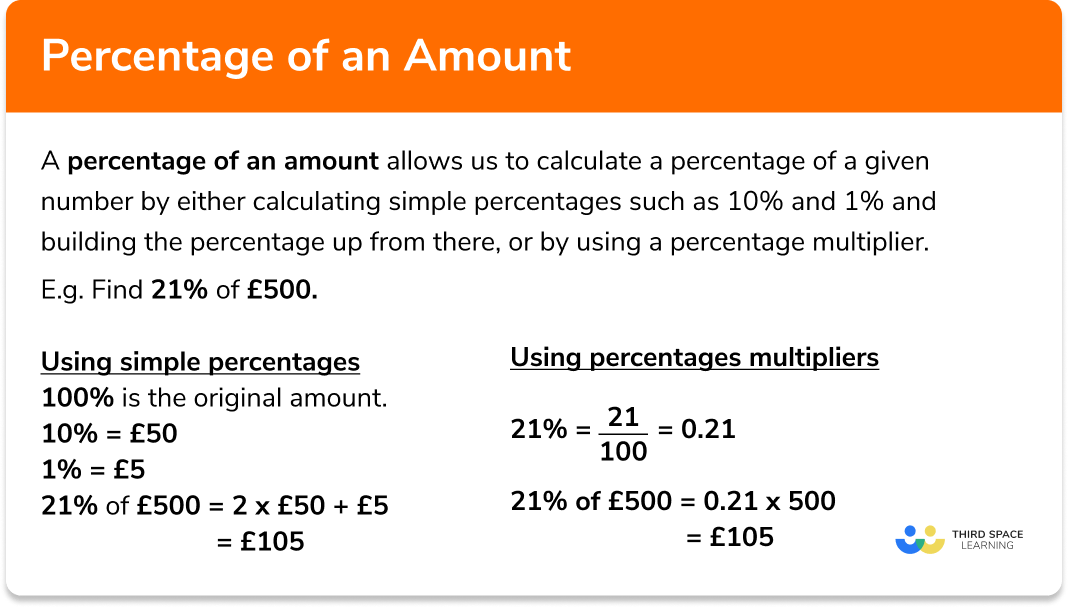
- Formulas: You can directly input the percentage formula
=(Part/Whole)*100into a cell, referencing other cells for the “part” and “whole” values. - Automation: Once a formula is set up, it automatically updates if the underlying values change, making it invaluable for dynamic budgets, financial models, and performance tracking.
- Formatting: Spreadsheets allow you to format cells to display numbers directly as percentages, often rounding to a specified number of decimal places, enhancing readability.
- Data Analysis: Beyond simple calculations, spreadsheets can aggregate data, create charts and graphs showing percentage distributions (e.g., pie charts for budget allocation), and perform complex what-if scenarios.
For anyone serious about financial management, proficiency in spreadsheets for percentage calculations is a non-negotiable skill.
Financial Calculators and Online Tools
For quick, standalone calculations, dedicated financial calculators or online percentage calculators are incredibly useful.
- Dedicated Financial Calculators: Devices like the HP 12c or TI BA II Plus are designed for complex financial functions, including percentages, compound interest, and loan amortization. They are standard tools for finance professionals.
- Online Percentage Calculators: Numerous websites offer free, simple interfaces to calculate percentages. You input the part and the whole, and it instantly provides the percentage. These are excellent for quick checks or when you don’t need the extensive features of a spreadsheet.
- Mortgage/Loan Calculators: Many online tools specialize in calculating loan repayments, interest paid over time, and the percentage of principal versus interest in each payment.
These tools offer convenience and speed, especially for repetitive or isolated percentage calculations.
Mobile Apps for On-the-Go Analysis
The proliferation of smartphones has brought powerful financial tools to our fingertips. Many budgeting apps, banking apps, and general calculator apps incorporate percentage functions.
- Budgeting Apps (e.g., YNAB, Mint): These apps automatically categorize spending and present your financial data, including expense breakdowns, as percentages of your income or budget categories.
- Investment Apps: Many brokerage apps display investment returns as percentages and allow users to view their portfolio allocation by asset class or sector in percentage terms.
- Calculator Apps: Most standard smartphone calculator apps have a percentage button (%) that simplifies calculations like adding sales tax or applying discounts.
Mobile apps provide instant access to financial insights, allowing users to make informed decisions and track their financial health anytime, anywhere.
In conclusion, understanding “how to calculate percentage of total” is more than just arithmetic; it’s a fundamental pillar of financial literacy and strategic decision-making. Whether you’re navigating personal finances, optimizing investment portfolios, or managing a business, percentages offer a clear, comparative lens through which to view financial data. By mastering the core formula and leveraging the right tools, you can transform raw numbers into actionable insights, empowering you to achieve your financial goals with greater confidence and precision.
aViewFromTheCave is a participant in the Amazon Services LLC Associates Program, an affiliate advertising program designed to provide a means for sites to earn advertising fees by advertising and linking to Amazon.com. Amazon, the Amazon logo, AmazonSupply, and the AmazonSupply logo are trademarks of Amazon.com, Inc. or its affiliates. As an Amazon Associate we earn affiliate commissions from qualifying purchases.