
In the intricate world of finance, where every dollar counts and every decision can have significant repercussions, understanding percentages is not just a useful skill—it’s an absolute necessity. From managing your personal budget and evaluating investment returns to understanding loan interest and analyzing business performance, percentages provide a universal language for comparison, growth, and decline. They transform raw numbers into understandable proportions, allowing for clearer insights and more informed decision-making. This article will demystify percentage calculations in financial contexts, empowering you with the knowledge to navigate your financial landscape with confidence and precision.
The Indispensable Role of Percentages in Financial Acumen
Percentages are more than just mathematical constructs; they are the bedrock upon which sound financial understanding is built. They offer a standardized way to compare different financial figures, regardless of their absolute values, making complex data digestible and actionable.
Why Percentages Matter for Everyone
Whether you’re a seasoned investor, a small business owner, or someone simply trying to make ends meet, percentages are omnipresent in your financial life. They help you gauge the impact of price changes, understand the true cost of borrowing, and measure the effectiveness of your financial strategies. Without a solid grasp of how to calculate and interpret them, you risk making suboptimal decisions that could cost you money or miss out on opportunities for financial growth. For instance, knowing that a stock rose by 10% is far more informative than knowing it increased by $50, especially if you don’t know the initial price. This relative measure allows for meaningful comparisons across different assets or periods.
Common Financial Scenarios Requiring Percentages
Consider these everyday financial situations where percentages are crucial:
- Discounts and Sales: How much are you truly saving on that discounted item?
- Taxes: Calculating sales tax, income tax, or property tax involves percentages.
- Tips: Deciding on an appropriate gratuity.
- Loan Interest: Understanding the cost of borrowing for mortgages, car loans, or credit cards.
- Investment Returns: Measuring the gain or loss on your investments.
- Budgeting: Allocating portions of your income to different spending categories.
- Inflation: Understanding how much your purchasing power is eroding over time.
- Credit Score: A significant factor is your credit utilization ratio, which is a percentage.
These examples highlight that percentages aren’t abstract concepts reserved for mathematicians; they are practical tools essential for daily financial navigation.
Mastering Basic Percentage Calculations for Financial Health
Before delving into complex financial applications, it’s vital to solidify the fundamental methods of calculating percentages. These core operations form the basis for almost all financial percentage analyses.
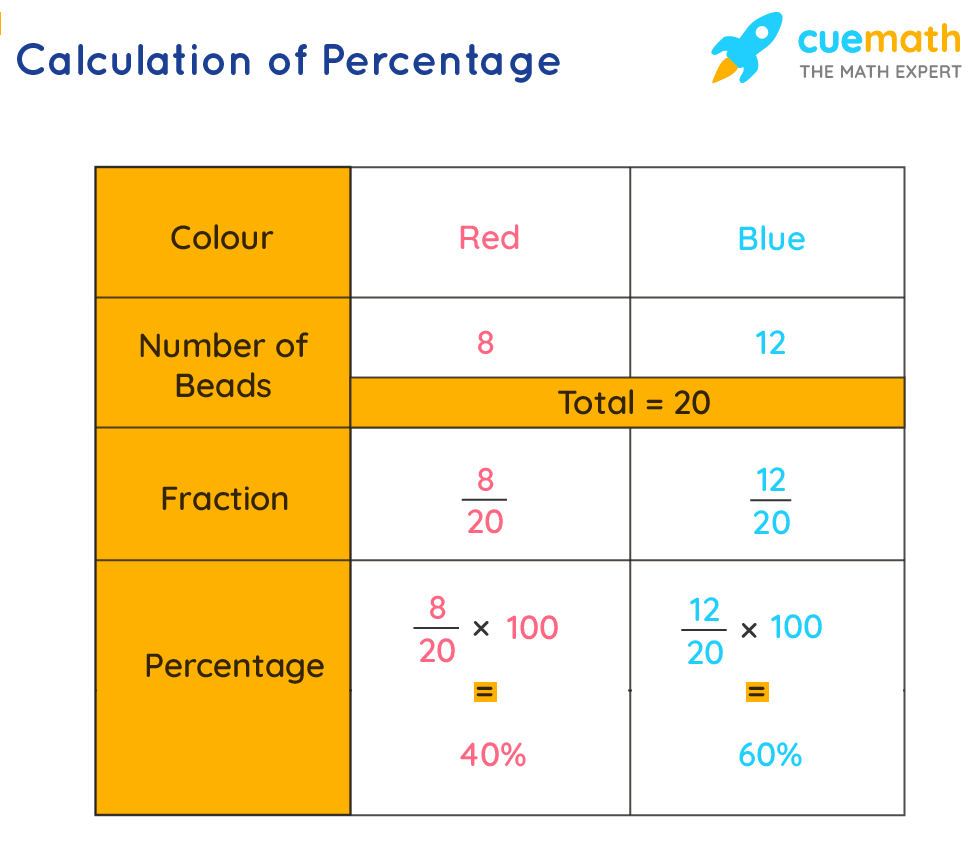
Calculating a Percentage of a Number (Finding a Part)
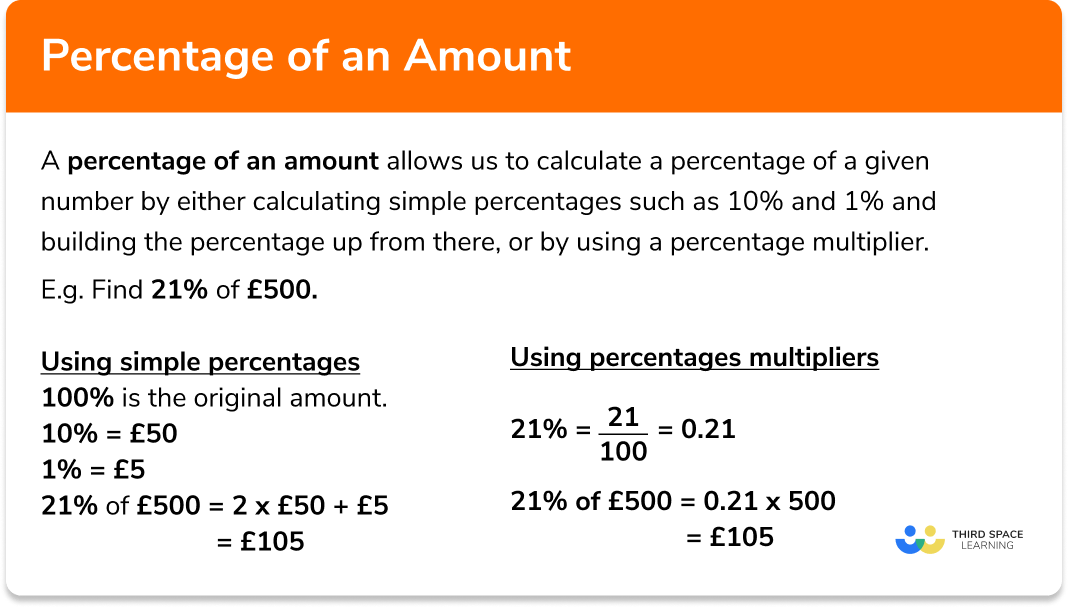
This is perhaps the most common percentage calculation. You want to find out what a certain percentage of a total amount is.
Formula: Part = (Percentage / 100) * Whole
Example: You want to calculate a 15% tip on a $60 dinner bill.
Tip = (15 / 100) * 60 = 0.15 * 60 = $9
So, your tip would be $9.
Calculating a Number from a Percentage (Finding the Whole)
Sometimes, you know a part of an amount and what percentage it represents, and you need to find the total original amount.
Formula: Whole = Part / (Percentage / 100)
Example: You received a $25 discount on a shirt, which was advertised as 20% off. What was the original price of the shirt?
Original Price = 25 / (20 / 100) = 25 / 0.20 = $125
The original price of the shirt was $125.
Calculating Percentage Change (Increase or Decrease)
This calculation is fundamental for understanding growth, decline, and volatility in finances, from stock prices to inflation rates.
Formula: Percentage Change = ((New Value - Old Value) / Old Value) * 100
A positive result indicates a percentage increase, while a negative result indicates a percentage decrease.
Example 1 (Increase): Your investment grew from $1,000 to $1,200.
Percentage Increase = ((1200 - 1000) / 1000) * 100 = (200 / 1000) * 100 = 0.20 * 100 = 20%
Your investment increased by 20%.
Example 2 (Decrease): A stock you own dropped from $50 per share to $45 per share.
Percentage Decrease = ((45 - 50) / 50) * 100 = (-5 / 50) * 100 = -0.10 * 100 = -10%
The stock decreased by 10%.
Practical Examples: Discounts, Taxes, Tips
Let’s integrate these basics into a common scenario:
You buy an item for $80. It’s on sale for 25% off, and there’s a 7% sales tax applied after the discount.
- Calculate the discount amount:
Discount = (25 / 100) * 80 = 0.25 * 80 = $20 - Calculate the price after discount:
Price After Discount = 80 - 20 = $60 - Calculate the sales tax amount:
Sales Tax = (7 / 100) * 60 = 0.07 * 60 = $4.20 - Calculate the final price:
Final Price = 60 + 4.20 = $64.20
These step-by-step calculations demonstrate how foundational percentage knowledge directly translates into managing everyday financial transactions.
Advanced Applications of Percentages in Personal Finance
Beyond basic transactions, percentages are critical tools for strategic personal financial planning, helping individuals make astute decisions about savings, investments, and debt.
Understanding Interest Rates (Simple vs. Compound)
Interest rates are almost universally expressed as percentages.
- Simple Interest: Calculated only on the principal amount.
Simple Interest = Principal * Rate * Time
If you borrow $1,000 at 5% simple interest for 3 years:
Interest = 1000 * 0.05 * 3 = $150 - Compound Interest: The “eighth wonder of the world,” where interest is calculated on the principal and on the accumulated interest from previous periods. This is how most loans (mortgages, credit cards) and investments (savings accounts, retirement funds) work.
A = P(1 + r/n)^(nt)
Where A = the future value of the investment/loan, P = the principal investment amount, r = the annual interest rate (as a decimal), n = the number of times that interest is compounded per year, t = the number of years the money is invested or borrowed for.
Understanding the difference is crucial; compounding can significantly increase your returns or the cost of your debt over time.
Analyzing Investment Returns (ROI)
Return on Investment (ROI) is a key metric for evaluating the profitability of an investment, expressed as a percentage.
Formula: ROI = ((Current Value of Investment - Original Cost of Investment) / Original Cost of Investment) * 100
Example: You invested $5,000 in a stock, and it’s now worth $6,500.
ROI = ((6500 - 5000) / 5000) * 100 = (1500 / 5000) * 100 = 0.30 * 100 = 30%
Your investment yielded a 30% return. Comparing ROIs allows investors to assess which investments are performing best.
Budgeting and Expense Tracking (Percentage of Income)
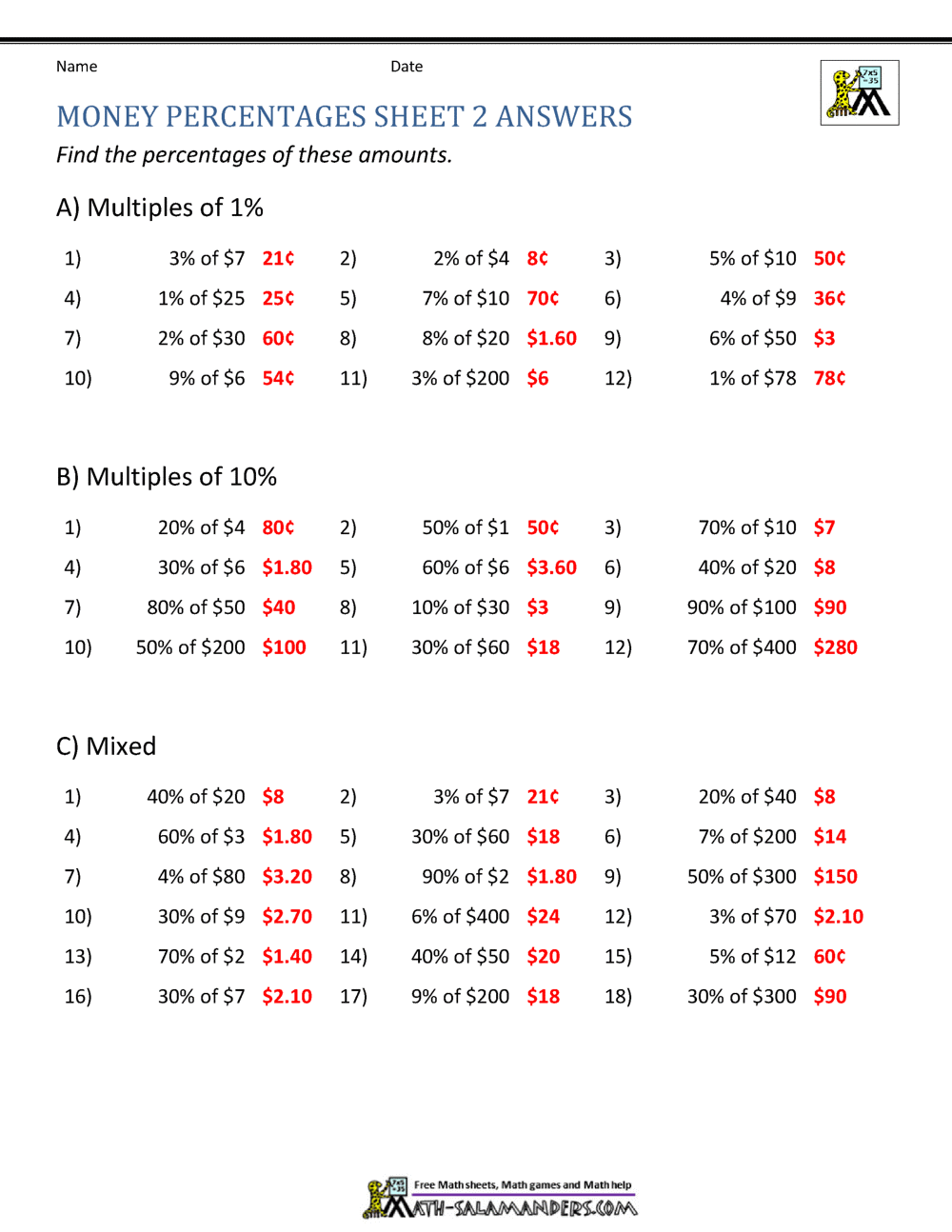
Effective budgeting often involves allocating a certain percentage of your income to various categories (e.g., 50% needs, 30% wants, 20% savings). This method helps maintain financial discipline and ensures you’re on track to meet your financial goals.
Example: If your monthly take-home income is $4,000, and you aim to save 20%:
Savings = 0.20 * 4000 = $800
Tracking your actual spending as a percentage of your budget categories reveals where your money is truly going and helps identify areas for adjustment.
Debt Management and Credit Utilization
When managing debt, the credit utilization ratio is a critical percentage. It’s the amount of credit you’re using compared to your total available credit, and it significantly impacts your credit score.
Formula: Credit Utilization Ratio = (Total Credit Used / Total Credit Limit) * 100
Example: You have a credit card with a $10,000 limit and currently owe $3,000.
Credit Utilization = (3000 / 10000) * 100 = 30%
Financial experts generally recommend keeping this ratio below 30% for a healthy credit score.
Business Finance and Strategic Percentage Use
For businesses, percentages are vital for measuring performance, making strategic decisions, and communicating financial health to stakeholders.
Profit Margins and Markups
- Gross Profit Margin:
(Gross Profit / Revenue) * 100– Indicates the percentage of revenue left after deducting the cost of goods sold. - Operating Profit Margin:
(Operating Profit / Revenue) * 100– Shows the percentage of revenue remaining after covering operating expenses. - Net Profit Margin:
(Net Profit / Revenue) * 100– Represents the percentage of revenue left after all expenses, including taxes and interest.
These margins are crucial for assessing a company’s efficiency and profitability. - Markup:
((Selling Price - Cost) / Cost) * 100– The percentage added to a product’s cost to determine its selling price. Businesses use markups to ensure they cover costs and achieve desired profit levels.
Sales Growth and Market Share Analysis
- Sales Growth Rate:
((Current Period Sales - Previous Period Sales) / Previous Period Sales) * 100– Measures the percentage increase or decrease in sales over a period, indicating market demand and business expansion. - Market Share:
(Company Sales / Total Market Sales) * 100– Shows a company’s percentage of total sales within its industry. A growing market share indicates increased competitiveness and market penetration.
Cost Analysis and Overhead Percentages
Businesses constantly analyze costs as a percentage of revenue or total expenses to identify areas for efficiency and cost reduction.
- Overhead as a Percentage of Revenue:
(Total Overhead Costs / Total Revenue) * 100– Helps assess how much non-direct costs are eating into sales. - Labor Costs as a Percentage of Revenue: Crucial for service-based businesses to manage staffing levels effectively.
Financial Ratios for Business Health
Many critical financial ratios are expressed as percentages, offering quick insights into a company’s liquidity, solvency, efficiency, and profitability.
- Debt-to-Equity Ratio:
(Total Debt / Shareholder Equity) * 100– While often a direct ratio, it can be interpreted as the percentage of financing coming from debt versus equity. - Current Ratio:
(Current Assets / Current Liabilities)– While not a percentage, its interpretation often involves comparing it to a benchmark percentage or ideal range. - Return on Assets (ROA):
(Net Income / Total Assets) * 100– Measures how efficiently a company uses its assets to generate earnings. - Return on Equity (ROE):
(Net Income / Shareholder Equity) * 100– Indicates how much profit a company generates for each dollar of shareholder equity.
These ratios are invaluable for business owners, investors, and creditors to gauge a company’s financial stability and performance relative to industry benchmarks.
Tools and Tips for Accurate Percentage Calculations
While the underlying math is straightforward, accuracy and understanding the context are paramount.
Leveraging Calculators and Spreadsheets
For complex calculations or managing large datasets, relying on tools is essential:
- Basic Calculators: Sufficient for simple, one-off calculations.
- Scientific/Financial Calculators: Offer specialized functions for compound interest, present/future value, and more.
- Spreadsheets (e.g., Excel, Google Sheets): Invaluable for recurring calculations, budgeting, investment tracking, and scenario analysis. They allow you to set up formulas once and apply them to numerous data points, minimizing manual errors.
Common Pitfalls to Avoid
- Order of Operations: Ensure you perform calculations in the correct sequence, especially with discounts and taxes.
- Decimal vs. Percentage: Remember that 5% is 0.05 when used in calculations (divided by 100).
- Base Value Errors: Always be clear about what constitutes the “whole” or “old value” in your calculations. A percentage increase from 10 to 20 is 100%, but a decrease from 20 to 10 is 50%, not 100%.
- Compounding Misconceptions: Don’t confuse simple interest with compound interest, as the financial implications are vastly different.
Developing Financial Literacy
Consistent practice and a genuine curiosity to understand your money are the best ways to master percentage calculations. Read financial news, analyze your own statements, and use online calculators to verify your understanding. The more you apply these concepts, the more intuitive they will become.
Conclusion
The ability to calculate money in percentage is a cornerstone of financial literacy, providing clarity and confidence whether you’re managing personal finances or steering a business. From the simple act of calculating a tip to the sophisticated analysis of investment returns and profit margins, percentages are the indispensable tools that translate raw financial data into meaningful insights. By mastering these fundamental calculations and understanding their diverse applications, you empower yourself to make more informed decisions, optimize your financial strategies, and ultimately achieve greater financial well-being. Embrace the power of percentages, and unlock a clearer, more controlled financial future.
aViewFromTheCave is a participant in the Amazon Services LLC Associates Program, an affiliate advertising program designed to provide a means for sites to earn advertising fees by advertising and linking to Amazon.com. Amazon, the Amazon logo, AmazonSupply, and the AmazonSupply logo are trademarks of Amazon.com, Inc. or its affiliates. As an Amazon Associate we earn affiliate commissions from qualifying purchases.