
In the dynamic world of finance, from personal budgeting to corporate strategy, understanding change is paramount. Whether you’re tracking the growth of your investments, analyzing a company’s sales figures, or evaluating your own income progression, the concept of percentage increase is an indispensable tool. It provides a standardized, relative measure of growth or change, allowing for meaningful comparisons and informed decision-making. Far more insightful than a simple absolute number, a percentage increase contextualizes change against an initial value, revealing the true magnitude of progress or setback. This guide will demystify the process, demonstrating how to calculate percentage increase and illustrating its profound utility across various financial scenarios.
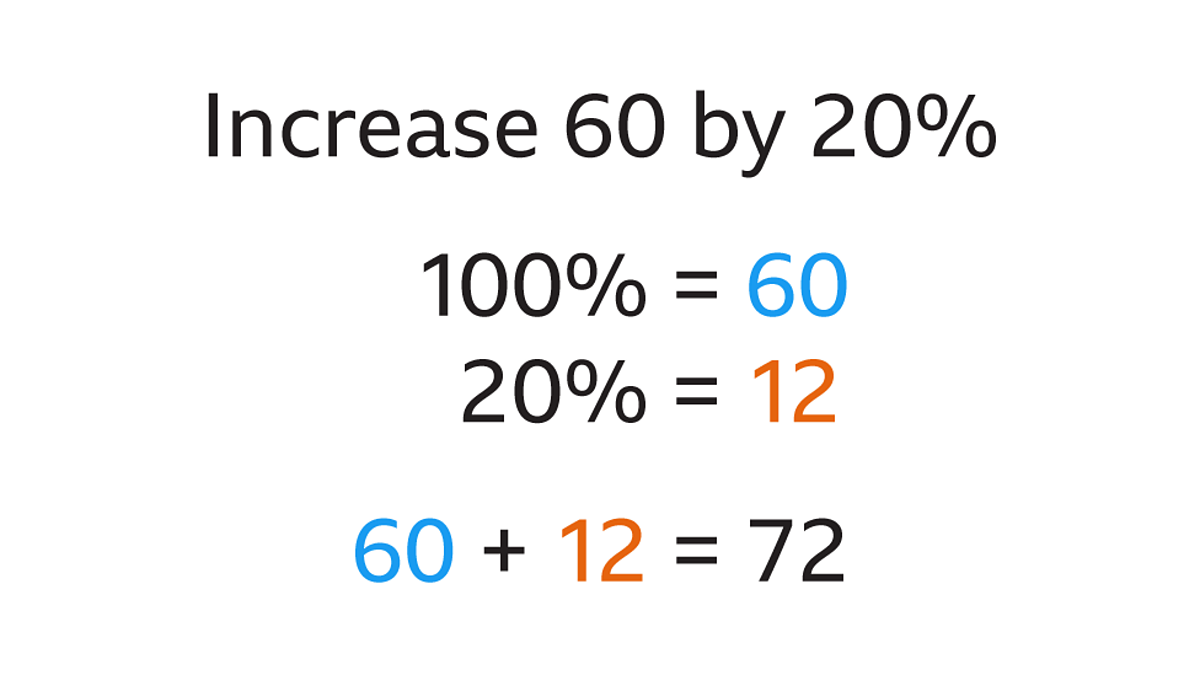
The Fundamental Formula: Unlocking Financial Growth
At its core, calculating percentage increase is a straightforward mathematical process. However, its simplicity belies its power when applied to financial data. Mastering this basic formula is the first step towards a deeper understanding of financial trends and performance.
Understanding the Core Components
Before diving into the calculation, it’s crucial to identify the three key components involved:
- Original Value (or Starting Value): This is the baseline number from which the change is measured. In finance, this could be your initial investment, last year’s sales, or your previous salary.
- New Value (or Ending Value): This is the number after the change has occurred. It could be the current value of your investment, this year’s sales, or your updated salary.
- Difference: This is the absolute change between the new value and the original value. It’s simply
New Value - Original Value. This tells you how much something has increased in absolute terms.
Step-by-Step Calculation Guide
Once you have identified these components, the calculation proceeds logically:
- Find the Difference: Subtract the Original Value from the New Value.
Difference = New Value - Original Value
- Divide the Difference by the Original Value: This gives you the change as a decimal.
Decimal Change = Difference / Original Value
- Multiply by 100: Convert the decimal to a percentage.
Percentage Increase = Decimal Change * 100
The Percentage Increase Formula Explained
Combining these steps, the complete formula for percentage increase is:
$$ text{Percentage Increase} = left( frac{text{New Value} – text{Original Value}}{text{Original Value}} right) times 100 $$
Example:
Suppose your investment portfolio was worth $50,000 at the beginning of the year and grew to $57,500 by the end of the year.
- Original Value: $50,000
- New Value: $57,500
- Difference: $57,500 – $50,000 = $7,500
- Divide by Original Value: $7,500 / $50,000 = 0.15
- Multiply by 100: 0.15 * 100 = 15%
Therefore, your investment portfolio saw a 15% increase.
Practical Applications in Personal Finance
For individuals managing their own money, percentage increase is far from an abstract concept. It’s a vital metric for assessing financial health, planning for the future, and understanding the real impact of economic forces.
Tracking Investment Returns and Portfolio Growth
One of the most common and crucial applications of percentage increase in personal finance is evaluating investment performance. It allows investors to gauge the effectiveness of their strategies and compare the returns of different assets.
Scenario: You invested $10,000 in a mutual fund, and after 3 years, its value stands at $12,300.
- Original Value = $10,000
- New Value = $12,300
- Percentage Increase = (($12,300 – $10,000) / $10,000) * 100 = (2,300 / 10,000) * 100 = 0.23 * 100 = 23%
This tells you your investment has grown by 23% over the three years. For annual returns, you would need to compound or annualize this figure, which is a further step, but the base percentage increase is essential.
Analyzing Income Growth and Salary Raises
Understanding how your income changes over time is fundamental to personal financial planning. Percentage increase helps you quantify salary raises and assess your purchasing power.
Scenario: Your annual salary was $60,000 last year, and this year, it increased to $63,000.
- Original Value = $60,000
- New Value = $63,000
- Percentage Increase = (($63,000 – $60,000) / $60,000) * 100 = (3,000 / 60,000) * 100 = 0.05 * 100 = 5%
You received a 5% raise. This figure can then be compared to inflation rates to determine if your real income (purchasing power) has increased.
Understanding the Impact of Inflation
Inflation, the rate at which the general level of prices for goods and services is rising, can erode the purchasing power of money. Calculating percentage increase helps you understand its impact.
Scenario: A basket of goods that cost $100 last year now costs $103.50 due to inflation.
- Original Value = $100
- New Value = $103.50
- Percentage Increase = (($103.50 – $100) / $100) * 100 = (3.50 / 100) * 100 = 0.035 * 100 = 3.5%
The inflation rate for that period was 3.5%. This means your money can buy 3.5% less of those goods than it could before.
Essential for Business Finance and Investment Analysis
Beyond personal finance, percentage increase is a cornerstone of business analysis, financial reporting, and investment due diligence. It enables businesses to track performance, set targets, and communicate growth effectively.
Measuring Sales Growth and Revenue Expansion

For any business, monitoring sales and revenue growth is critical for assessing market penetration, product success, and overall financial health.
Scenario: A company’s quarterly sales grew from $250,000 last quarter to $300,000 this quarter.
- Original Value = $250,000
- New Value = $300,000
- Percentage Increase = (($300,000 – $250,000) / $250,000) * 100 = (50,000 / 250,000) * 100 = 0.20 * 100 = 20%
The company achieved a 20% increase in sales, a significant metric for investors and stakeholders.
Evaluating Profit Margins and Cost Increases
Businesses also use percentage increase to analyze profitability and control expenditures. It helps in understanding the relative change in profits and the impact of rising costs.
Scenario 1 (Profit Increase): A company’s net profit increased from $50,000 to $65,000 year-over-year.
- Original Value = $50,000
- New Value = $65,000
- Percentage Increase = (($65,000 – $50,000) / $50,000) * 100 = (15,000 / 50,000) * 100 = 0.30 * 100 = 30%
The net profit grew by 30%, indicating improved efficiency or increased revenue.
Scenario 2 (Cost Increase): The cost of raw materials for a product rose from $10 per unit to $10.75 per unit.
- Original Value = $10
- New Value = $10.75
- Percentage Increase = (($10.75 – $10) / $10) * 100 = (0.75 / 10) * 100 = 0.075 * 100 = 7.5%
This 7.5% increase in raw material costs directly impacts the company’s gross profit margin and may necessitate price adjustments or efficiency improvements.
Assessing Market Share and Competitive Advantage
In a competitive landscape, percentage increase can be used to track changes in market share, providing insights into a company’s standing relative to its rivals.
Scenario: A company’s market share in a specific product category grew from 12% to 15%.
- Original Value = 12%
- New Value = 15%
- Percentage Increase = ((15 – 12) / 12) * 100 = (3 / 12) * 100 = 0.25 * 100 = 25%
This indicates a 25% increase in its market share, not a 3% increase (which would be a percentage point increase, discussed below). This is a crucial distinction. The company has significantly strengthened its position.
Beyond the Basics: Advanced Considerations and Common Pitfalls
While the calculation of percentage increase is straightforward, its interpretation and application require a nuanced understanding, especially in financial contexts.
The Power of Compound Growth
Many financial metrics, particularly investments, don’t just grow linearly; they compound. While a single percentage increase calculation gives you the growth over a specific period, understanding compound annual growth rate (CAGR) is essential for multi-period analysis. CAGR tells you the average annual growth rate of an investment over a specified period longer than one year, assuming the profits are reinvested.
Example: If an investment grows by 10% in year 1 and then by 10% again in year 2 on the new, larger sum, the total percentage increase over two years will be more than 20% due to compounding.
Year 1: $100 -> $110 (10% increase)
Year 2: $110 -> $121 (10% increase on $110)
Total increase: (($121 – $100) / $100) * 100 = 21%
Differentiating from Percentage Point Increase
A common mistake is confusing a percentage increase with a percentage point increase.
- Percentage Increase: Measures the proportional change relative to the original value, as discussed throughout this article.
- Percentage Point Increase: Measures the absolute difference between two percentages.
Example: If a company’s profit margin increased from 10% to 15%.
- Percentage Point Increase: 15% – 10% = 5 percentage points.
- Percentage Increase: ((15 – 10) / 10) * 100 = (5 / 10) * 100 = 50%.
The profit margin increased by 5 percentage points, but the increase itself was a whopping 50% relative to the original margin. This distinction is critical for accurate financial reporting and analysis.
Avoiding Misinterpretation of Data
Always consider the context and the base value when interpreting percentage increases. A 100% increase on a very small base number might look impressive but represent a negligible absolute change. Conversely, a seemingly small percentage increase on a very large base can signify massive absolute growth. For example, an increase from $1 to $2 is a 100% increase, while an increase from $1 billion to $1.01 billion is only a 1% increase, but the latter represents $10 million in absolute terms. Critical thinking about both the relative and absolute changes is key.
Tools and Technologies for Effortless Calculation
While the manual calculation is simple, financial professionals and individuals alike often leverage technology for speed and accuracy, especially with large datasets.
Spreadsheet Software (Excel, Google Sheets)
Spreadsheets are perhaps the most ubiquitous tools for financial calculations. Formulas can be easily set up to calculate percentage increase across rows or columns of data.
For example, if your original value is in cell A2 and your new value is in B2, the formula =((B2-A2)/A2)*100 would give you the percentage increase.
Online Calculators and Financial Apps
Numerous online tools and dedicated financial apps offer percentage increase calculators, making quick computations easy for ad-hoc analysis. These are particularly useful for personal finance scenarios or quick checks without needing to open a spreadsheet.
The Role of Financial Modeling
In more complex business or investment scenarios, percentage increase is integrated into sophisticated financial models. These models use percentage growth rates to project future revenues, expenses, and profits, enabling scenario analysis and strategic planning.

Conclusion
The ability to accurately calculate and interpret percentage increase is a fundamental skill in the realm of money. From the individual managing a household budget and growing an investment portfolio to the executive analyzing quarterly earnings and charting corporate strategy, this simple formula provides invaluable insight into change and growth. By understanding its components, applying it correctly in various financial contexts, and being mindful of common pitfalls like confusing it with percentage points, you empower yourself to make more informed decisions, articulate financial performance with greater precision, and navigate the complexities of personal and business finance with confidence. Embrace this powerful metric, and unlock a deeper understanding of financial dynamics.
aViewFromTheCave is a participant in the Amazon Services LLC Associates Program, an affiliate advertising program designed to provide a means for sites to earn advertising fees by advertising and linking to Amazon.com. Amazon, the Amazon logo, AmazonSupply, and the AmazonSupply logo are trademarks of Amazon.com, Inc. or its affiliates. As an Amazon Associate we earn affiliate commissions from qualifying purchases.