
In the intricate tapestry of personal finance, investing, and business management, few mathematical concepts are as pervasive and critical as the percentage. Far from being a mere academic exercise, understanding how to calculate and interpret percentages is a foundational skill that empowers individuals and entrepreneurs alike to make informed decisions, track progress, and navigate the complex financial landscape with confidence. Whether you’re dissecting a loan’s interest rate, analyzing investment returns, allocating your budget, or evaluating a business’s profitability, percentages are the universal language that translates raw numbers into actionable insights. This article delves into the core mechanics of percentage calculation and explores its indispensable role across various financial domains, equipping you with the knowledge to harness its power for smarter money management.
The Core Mechanics: Understanding the Basics of Percentage Calculation
At its heart, a percentage is a standardized way to express a proportion of a whole as a fraction of 100. It provides a common ground for comparison, simplifying complex data into easily digestible figures. Mastering this fundamental concept is the first step toward financial literacy.
What is a Percentage? Defining the Foundation
A percentage, denoted by the symbol “%,” literally means “per hundred” or “out of one hundred.” When we say “25 percent,” we mean 25 parts out of every 100. This concept allows us to compare different quantities relative to their respective wholes, regardless of the absolute size of those wholes.
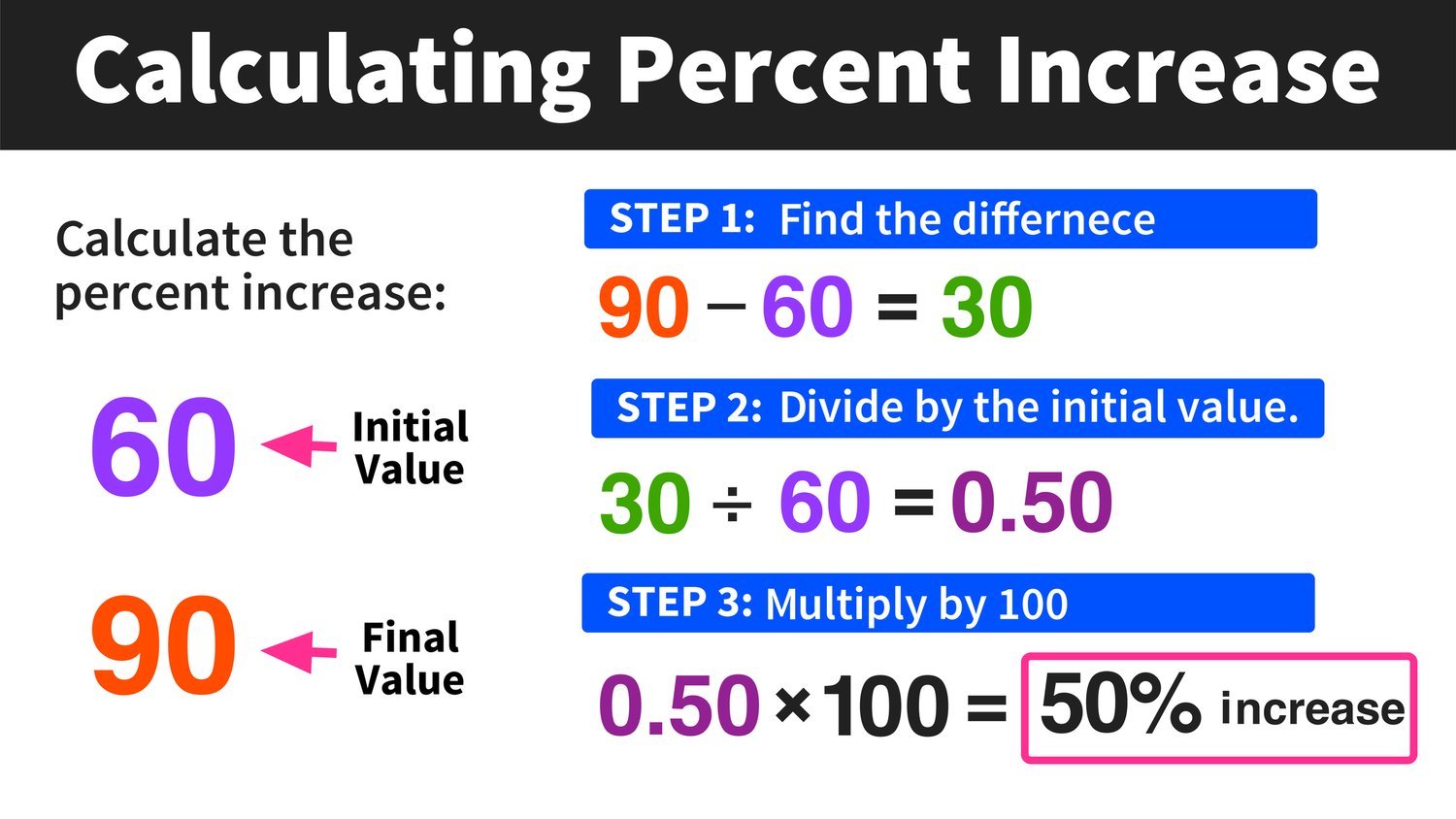
The most basic formula for calculating a percentage is:
Percentage = (Part / Whole) × 100
For example, if you have 10 apples out of a total of 40 apples, the percentage of apples you have is (10 / 40) × 100 = 0.25 × 100 = 25%. This simplicity belies its profound utility across financial applications.
Converting Between Decimals, Fractions, and Percentages
Financial calculations often require switching between these three forms, and fluency in conversion is crucial.
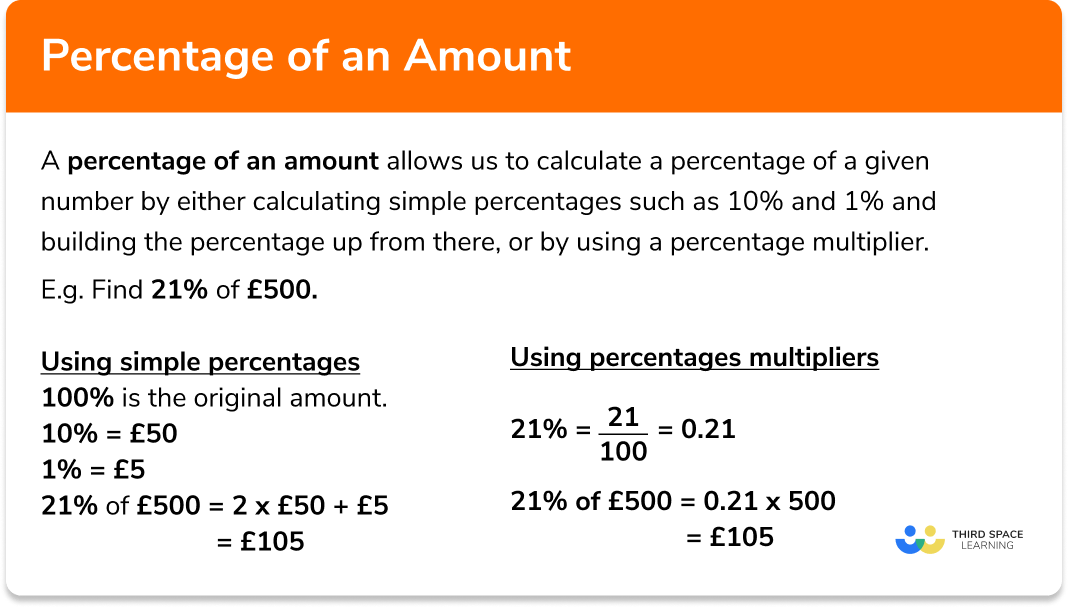
- Decimal to Percentage: Multiply the decimal by 100. For instance, an interest rate of 0.05 as a decimal is 0.05 × 100 = 5%.
- Percentage to Decimal: Divide the percentage by 100. To use 15% in a calculation, you’d convert it to 15 / 100 = 0.15.
- Fraction to Percentage: Convert the fraction to a decimal first by dividing the numerator by the denominator, then multiply by 100. For example, 3/4 becomes 0.75, which is 75%.
- Percentage to Fraction: Place the percentage over 100 and simplify the fraction. 20% becomes 20/100, which simplifies to 1/5.
These conversions are commonplace when dealing with interest calculations, discounts, and growth rates, ensuring accuracy in your financial modeling.
Practical Examples: Simple Discounts and Markups
Let’s illustrate with common scenarios:
- Calculating a Discount: If an item costs $200 and is on sale for 15% off, the discount amount is $200 × 0.15 = $30. The final price is $200 – $30 = $170. Alternatively, you can calculate the remaining percentage (100% – 15% = 85%) and multiply: $200 × 0.85 = $170.
- Calculating a Markup: A business buys a product for $50 and wants to apply a 40% markup. The markup amount is $50 × 0.40 = $20. The selling price is $50 + $20 = $70. Understanding these calculations is vital for consumers seeking deals and businesses setting prices strategically.
Percentages in Personal Finance: Mastering Your Money
For individuals, percentages are not just theoretical concepts; they are the bedrock of effective personal financial management, influencing everything from daily spending habits to long-term financial security.
Budgeting and Expense Allocation
Budgeting, the cornerstone of personal finance, relies heavily on percentages to categorize and control spending. A popular approach is the 50/30/20 rule:
- 50% of your after-tax income for Needs (housing, utilities, groceries, transportation).
- 30% for Wants (dining out, entertainment, hobbies).
- 20% for Savings & Debt Repayment (emergency fund, retirement, extra principal payments).
To apply this, you’d calculate:
- Needs budget: Your net income × 0.50
- Wants budget: Your net income × 0.30
- Savings budget: Your net income × 0.20
This percentage-based framework offers a clear, scalable way to allocate funds and track how much of your income is going towards different categories, helping you identify areas for adjustment and optimize your spending habits.
Debt Management and Interest Rates
Understanding interest rates, almost universally expressed as percentages, is paramount for anyone dealing with loans or credit.
- Annual Percentage Rate (APR): This represents the annual cost of borrowing, including interest and other fees, expressed as a percentage. When you take out a loan (e.g., mortgage, car loan, credit card), the APR dictates how much extra you’ll pay over the principal. If you borrow $10,000 at an APR of 8%, you’d calculate 8% of the outstanding balance each year (or a fraction thereof monthly) to determine the interest owed.
- Annual Percentage Yield (APY): This is the effective annual rate of return earned on an investment, taking into account the effect of compounding interest. APY is often higher than the stated interest rate because it includes the interest earned on previously accumulated interest. When comparing savings accounts or CDs, looking at the APY gives you a more accurate picture of your potential earnings.
Accurate calculation of interest is vital for understanding the true cost of debt and the real return on savings, informing decisions about borrowing, saving, and debt reduction strategies.
Savings Goals and Financial Growth
Setting and tracking savings goals also benefits immensely from percentage understanding. If your goal is to save $50,000 for a down payment and you’ve already accumulated $15,000, you can track your progress as: ($15,000 / $50,000) × 100 = 30%. This percentage offers a clear, motivating indicator of how far you’ve come and how much further you need to go. Similarly, calculating the percentage of your income you save each month or year is a key performance indicator for your financial health, helping you assess if you are on track to meet future financial milestones like retirement or major purchases.
Percentages in Investing: Decoding Returns and Risks
In the world of investing, percentages are the primary language for evaluating performance, managing risk, and allocating assets. Without a grasp of these calculations, investors are essentially flying blind.
Calculating Investment Returns (ROI)
The most common application of percentages in investing is determining the Return on Investment (ROI). ROI measures the profitability of an investment relative to its cost.
ROI = [(Current Value of Investment – Original Cost of Investment) / Original Cost of Investment] × 100

For example, if you bought shares for $1,000 and sold them for $1,200, your ROI would be [($1,200 – $1,000) / $1,000] × 100 = ($200 / $1,000) × 100 = 20%. This metric allows investors to compare the efficiency of different investments.
While simple ROI is useful, understanding concepts like Compound Annual Growth Rate (CAGR), which reflects the annual growth rate of an investment over a specified period longer than one year, is crucial for assessing long-term performance. These calculations help investors understand not just if an investment grew, but by how much, over what timeframe, and what that means for future potential.
Portfolio Allocation and Diversification
Diversification, a core principle of risk management in investing, involves spreading investments across various asset classes (stocks, bonds, real estate, commodities, etc.) to minimize risk. This is done by allocating a specific percentage of your total portfolio to each asset class.
For instance, a common allocation might be 60% stocks and 40% bonds. As market values fluctuate, these percentages will shift. Regularly rebalancing your portfolio means adjusting your holdings back to your target percentages (e.g., selling some stocks if they’ve grown to 65% and buying more bonds to bring them back to 40%). This percentage-driven strategy helps maintain your desired risk profile and keeps your investment strategy aligned with your long-term goals.
Understanding Investment Fees and Their Impact
Even seemingly small percentage-based fees can have a devastating impact on long-term investment returns. A mutual fund with an expense ratio of 1% might seem negligible, but over decades, that 1% can erode tens, if not hundreds, of thousands of dollars from your potential gains due to the power of compounding. Calculating the actual dollar amount of these fees (e.g., a 1% fee on a $100,000 portfolio is $1,000 per year) and projecting their long-term effect is critical for choosing cost-effective investment vehicles and maximizing your net returns.
Percentages in Business and Online Income: Driving Profitability
For entrepreneurs, small business owners, and those generating online income, percentages are indispensable tools for measuring performance, optimizing strategies, and ensuring financial viability.
Profit Margins and Business Health
Profit margins are critical indicators of a business’s financial health, always expressed as percentages.
- Gross Profit Margin: (Gross Profit / Revenue) × 100. Gross profit is revenue minus the cost of goods sold (COGS). This percentage tells you how much profit a company makes from each sale after accounting for the direct costs of producing its goods or services.
- Net Profit Margin: (Net Profit / Revenue) × 100. Net profit is what remains after all expenses (COGS, operating expenses, interest, taxes) have been deducted from revenue. This percentage reveals the ultimate profitability of the business.
Monitoring these margins over time and comparing them to industry averages helps businesses identify inefficiencies, adjust pricing strategies, and make informed decisions to improve overall profitability.
Sales Growth and Market Share
Businesses constantly track growth, and percentages are the standard metric.
- Sales Growth Rate: [(Current Period Sales – Previous Period Sales) / Previous Period Sales] × 100. This percentage indicates how much a company’s sales have increased or decreased over a specific period, crucial for assessing business expansion and effectiveness of sales strategies.
- Market Share: (Company’s Sales / Total Market Sales) × 100. This percentage reveals a company’s proportion of the total sales in its industry or market, providing insight into its competitive standing and dominance.
These percentage metrics are vital for strategic planning, investor relations, and competitive analysis.
Conversion Rates and Marketing Effectiveness
In the realm of online income and digital marketing, conversion rates are paramount.
- Website Conversion Rate: (Number of Conversions / Number of Website Visitors) × 100. A conversion could be a purchase, a sign-up, or a download. This percentage is a direct measure of how effectively your website turns visitors into desired actions.
- Email Open Rate: (Number of Emails Opened / Number of Emails Sent) × 100.
- Click-Through Rate (CTR): (Number of Clicks / Number of Impressions) × 100.
These percentages help marketers evaluate the effectiveness of their campaigns, refine their messaging, and optimize their online funnels to maximize revenue and return on investment (ROI) from marketing spend.
Beyond the Calculator: Developing Percentage Fluency
While understanding the formulas is essential, developing an intuitive “percentage fluency” goes a long way in making quick financial assessments and interpreting data effectively.
Mental Math Shortcuts and Estimations
You don’t always need a calculator for quick percentage checks.
- To find 10%: Move the decimal one place to the left (e.g., 10% of $150 is $15).
- To find 1%: Move the decimal two places to the left (e.g., 1% of $150 is $1.50).
- To find 5%: Find 10% and halve it (e.g., 5% of $150 is $15 / 2 = $7.50).
- To find 20%: Find 10% and double it.
These shortcuts allow for rapid estimations, useful for checking restaurant bills, quick budget checks, or approximating potential savings or costs on the fly.
Utilizing Financial Tools and Software
For more complex or recurring percentage calculations, leverage technology.
- Spreadsheets (Excel, Google Sheets): Ideal for creating detailed budgets, investment tracking, and business financial models. Formulas make percentage calculations automatic and dynamic.
- Online Calculators: Numerous websites offer specialized calculators for mortgage payments, compound interest, loan interest, retirement savings, and more, all driven by percentage logic.
- Budgeting Apps: Many personal finance apps automatically categorize spending and display it as percentages of your income or budget, providing instant insights.
These tools streamline the process, reduce errors, and allow you to focus on the strategic implications of the percentages.
The Power of Context: Interpreting Percentage Data
Calculating a percentage is only half the battle; interpreting what it truly signifies within its financial context is the other. A 10% return on investment sounds good, but if it took five years to achieve, the annual return is significantly lower. A 20% increase in sales is excellent, but if the overall market grew by 50%, the company lost market share. Always consider:
- The base value: What is the percentage of? A 1% fee on $1 million is vastly different from 1% on $1,000.
- The timeframe: Is the percentage annual, monthly, or quarterly?
- The comparison group: How does this percentage compare to historical data, industry averages, or competitors?
Understanding these nuances helps avoid misinterpretations and leads to more robust financial analysis and decision-making.
Conclusion
The ability to figure out percentages is far more than a basic math skill; it is a fundamental pillar of financial literacy and empowerment. From managing your daily expenditures and evaluating investment opportunities to driving business growth and assessing marketing effectiveness, percentages provide the indispensable framework for understanding, measuring, and optimizing financial outcomes. By mastering the mechanics, applying them across personal and business finance, and developing an intuitive understanding of their implications, you unlock a powerful tool that enables informed decisions, fosters greater financial control, and ultimately paves the way for smarter, more secure money management in all facets of your life. Embrace the power of percentages, and take command of your financial future.
aViewFromTheCave is a participant in the Amazon Services LLC Associates Program, an affiliate advertising program designed to provide a means for sites to earn advertising fees by advertising and linking to Amazon.com. Amazon, the Amazon logo, AmazonSupply, and the AmazonSupply logo are trademarks of Amazon.com, Inc. or its affiliates. As an Amazon Associate we earn affiliate commissions from qualifying purchases.