
For both novice and seasoned investors, understanding the operational hours of the share market is far more than a trivial detail; it’s a foundational piece of knowledge that underpins effective trading strategies, risk management, and overall market participation. The simple question, “When does the share market open?” unravels a complex tapestry of global financial systems, time zones, market dynamics, and strategic considerations. It’s not merely about knowing a specific clock time, but about grasping the rhythms that govern the world’s most influential financial exchanges.
At its core, the share market, or stock market, refers to the collection of markets and exchanges where the issuing and trading of publicly held company stocks take place. These markets are not open 24/7 like some other digital platforms, but operate within specific windows designed to facilitate orderly trading, ensure liquidity, and provide market participants with predictable periods for execution and analysis. This article will delve into the nuances of market opening hours, exploring not just the standard times but also the extended trading sessions, the global variations, and the strategic implications for investors worldwide.
The Rationale Behind Fixed Market Hours
The concept of fixed trading hours might seem restrictive in an increasingly always-on digital world. However, these specific timeframes are critical for maintaining the integrity, efficiency, and fairness of financial markets. There are several compelling reasons why stock exchanges adhere to structured schedules.
Ensuring Liquidity and Price Discovery
Concentrating trading activity within defined hours helps to aggregate a vast majority of buyers and sellers. This concentration is vital for maintaining robust liquidity, meaning there are always sufficient participants to ensure that assets can be bought and sold quickly without significant price disruption. When an asset is liquid, its price more accurately reflects the collective wisdom of the market – a process known as price discovery. If trading were spread out over 24 hours, liquidity could become fragmented, leading to wider bid-ask spreads and less efficient pricing. Fixed hours ensure a more robust and reliable price discovery mechanism, which is essential for fair valuation.
Facilitating Orderly Market Operations
Market operations involve a vast infrastructure of brokers, clearing houses, regulators, and exchanges. Defined trading hours allow these critical components to efficiently process trades, settle transactions, and manage potential risks. The period outside trading hours is often used for crucial back-office functions, system maintenance, and regulatory checks, all of which contribute to the smooth functioning and stability of the market. Without these breaks, the logistical challenges of maintaining an orderly market would be significantly magnified, increasing the potential for errors and systemic risks.
Providing Time for Market Participants
Beyond the institutional perspective, fixed hours also benefit individual and institutional investors. The closure of markets provides a necessary period for reflection, research, and strategy development. Traders and portfolio managers use this time to analyze market movements, absorb news, adjust their positions, and prepare for the next trading session. This downtime prevents burnout and allows for more considered decision-making, rather than impulsive reactions driven by continuous, high-intensity trading. It also gives companies time to release earnings reports and other significant announcements outside of trading hours, allowing the market to digest the information before trading resumes.
Standard Trading Hours Across Major Global Markets
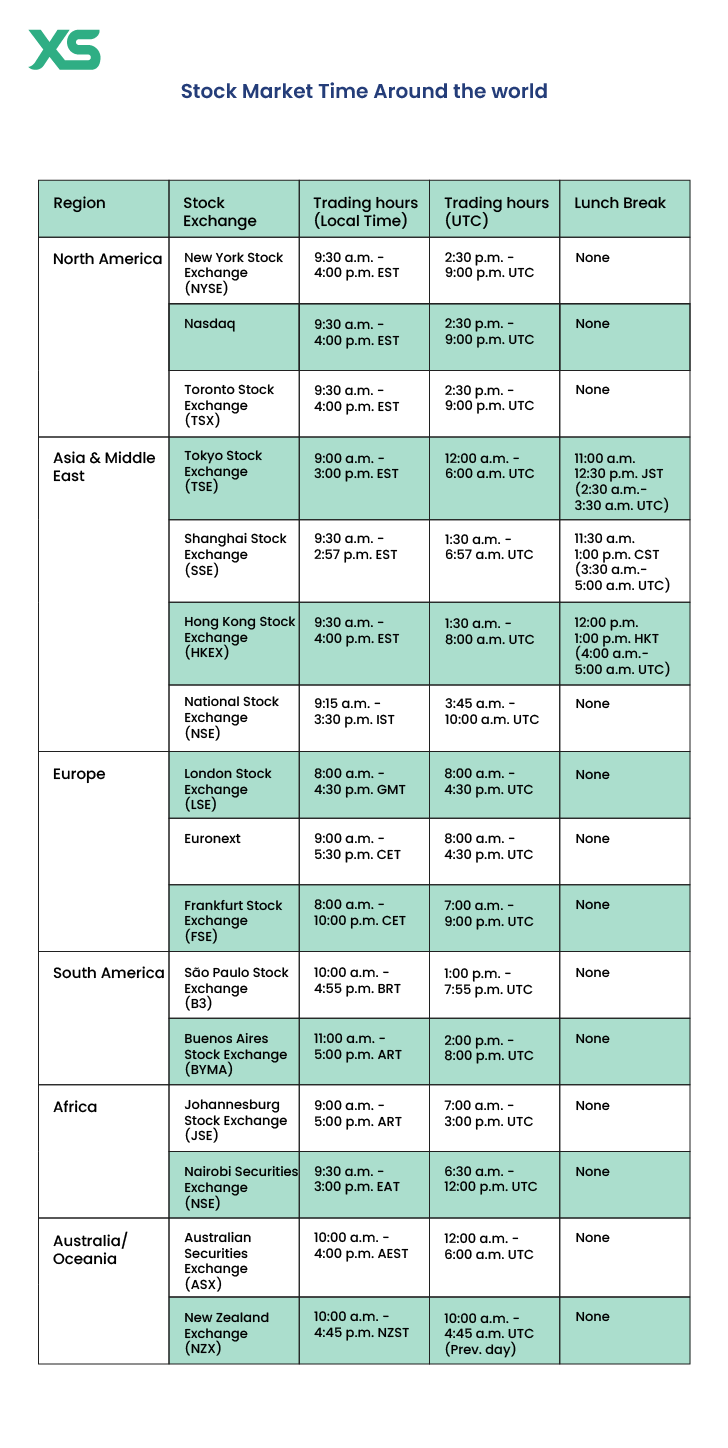
While the fundamental reasons for fixed hours are universal, the specific times vary significantly depending on the exchange and its geographical location. Understanding these differences is crucial for investors with global portfolios or those interested in specific international markets.
North American Exchanges (NYSE, NASDAQ)
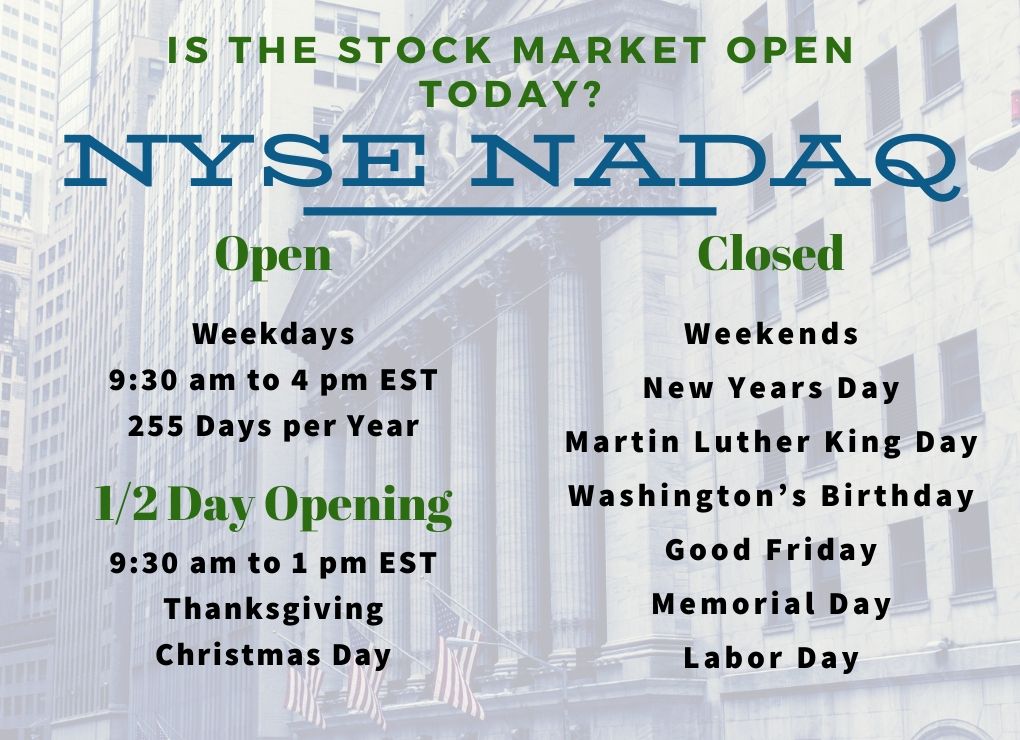
The two largest stock exchanges in the United States, the New York Stock Exchange (NYSE) and the NASDAQ Stock Market, follow highly similar trading schedules. The standard trading hours for both exchanges are from 9:30 AM to 4:00 PM Eastern Time (ET), Monday through Friday. This seven-and-a-half-hour window is often referred to as “regular trading hours.” These markets are closed on weekends and observed national holidays, such as New Year’s Day, Martin Luther King, Jr. Day, Presidents’ Day, Good Friday, Memorial Day, Juneteenth National Independence Day, Independence Day, Labor Day, Thanksgiving Day, and Christmas Day. Sometimes, markets may have shortened trading days around holidays, closing earlier than 4:00 PM ET.
European Markets (LSE, Euronext, Deutsche Börse)
Europe’s financial landscape is characterized by several prominent exchanges, each with its own local time zone and trading hours.
- London Stock Exchange (LSE): Located in London, UK, the LSE operates from 8:00 AM to 4:30 PM Greenwich Mean Time (GMT), Monday to Friday.
- Euronext: This pan-European exchange, with operations in Paris, Amsterdam, Brussels, Lisbon, Oslo, and Dublin, generally opens around 9:00 AM Central European Time (CET) and closes around 5:30 PM CET, with slight variations by specific market segment.
- Deutsche Börse (Frankfurt Stock Exchange): In Germany, the Xetra trading system (the electronic trading system for the Frankfurt Stock Exchange) typically runs from 9:00 AM to 5:30 PM CET.
The interconnectedness of European markets means that activity often ramps up as one market opens and influences others.
Asian Markets (TSE, SSE, HKEX)
Asia’s financial markets kick off the global trading day, with a significant impact on sentiment and trends that ripple across subsequent time zones.
- Tokyo Stock Exchange (TSE): Japan’s primary exchange has a unique split session. It operates from 9:00 AM to 11:30 AM Japan Standard Time (JST), breaks for lunch, and then reopens from 12:30 PM to 3:00 PM JST, Monday to Friday.
- Shanghai Stock Exchange (SSE) & Shenzhen Stock Exchange (SZSE): Mainland China’s exchanges also follow a split session, typically from 9:30 AM to 11:30 AM China Standard Time (CST), followed by a lunch break, and then from 1:00 PM to 3:00 PM CST.
- Hong Kong Stock Exchange (HKEX): Similar to Japan and mainland China, HKEX operates with a morning session from 9:30 AM to 12:00 PM Hong Kong Time (HKT) and an afternoon session from 1:00 PM to 4:00 PM HKT.
Key Takeaways for Global Investors
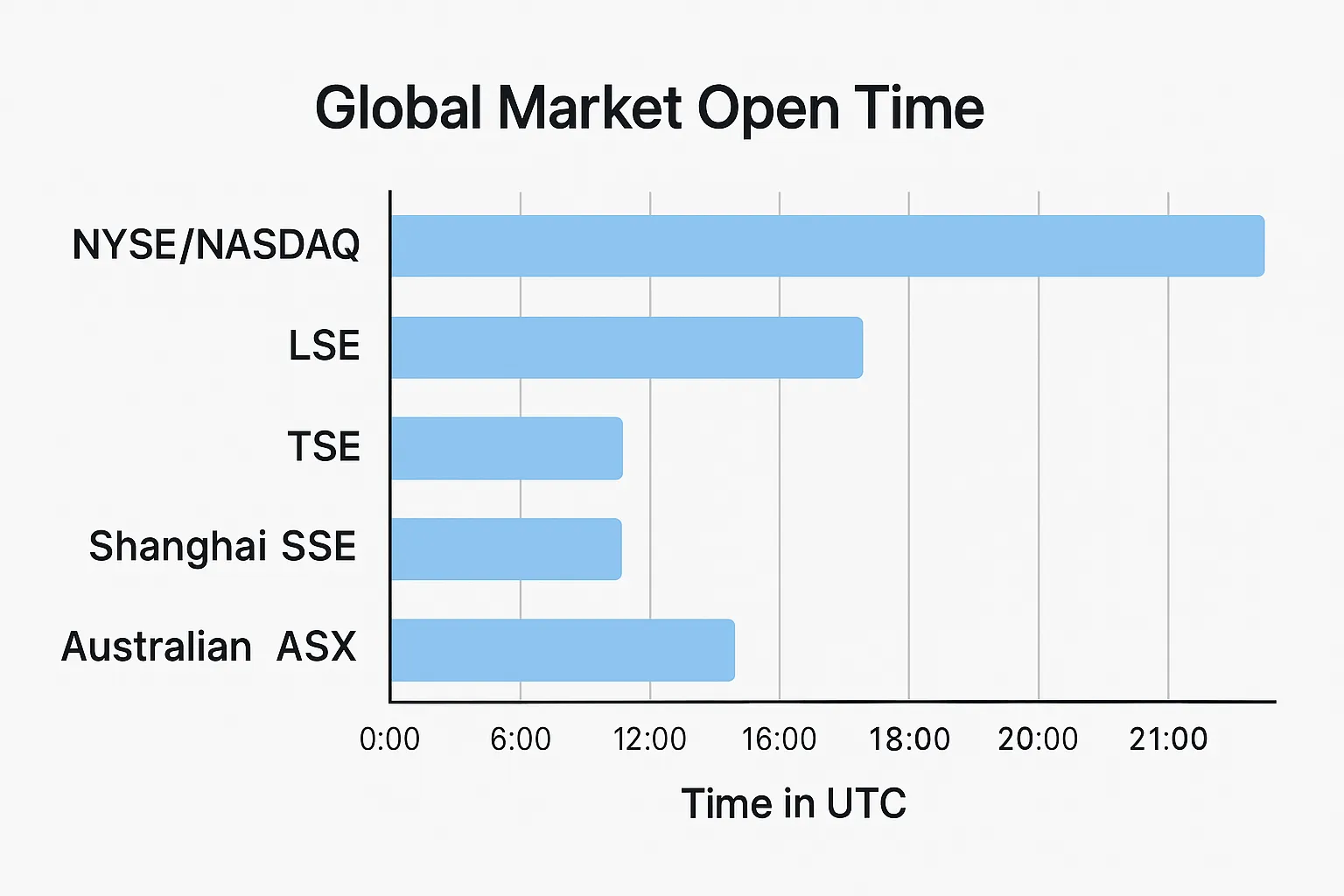
For investors looking at a global portfolio, the continuous rotation of market openings creates a near 24-hour trading cycle across different time zones. When the markets in Asia are closing, European markets are typically in full swing, and as Europe winds down, North American markets are entering their peak trading hours. This staggered schedule allows for continuous price discovery and reaction to global news, but also demands careful management of time zones and a clear understanding of when each relevant market is active.
Exploring Trading Beyond Regular Hours
The traditional 9:30 AM to 4:00 PM ET window for U.S. markets, or similar standard hours elsewhere, isn’t the entire picture. Modern electronic trading systems have introduced the possibility of trading outside these conventional times, through what are known as pre-market and after-hours sessions.
Understanding Pre-Market Trading
Pre-market trading refers to the period before the official opening bell of an exchange. For U.S. markets, this typically runs from around 4:00 AM ET to 9:30 AM ET. During this session, investors can place buy and sell orders that are executed before the regular trading day begins. Activity during pre-market hours is often influenced by news releases, earnings reports published overnight or early in the morning, and movements in international markets that have already opened.
The Dynamics of After-Hours Trading
Conversely, after-hours trading occurs after the official closing bell. For U.S. markets, this usually extends from 4:00 PM ET to 8:00 PM ET. Similar to pre-market, after-hours trading is often driven by news events, such as quarterly earnings announcements or major corporate developments that occur once regular trading concludes. This provides a window for investors to react to information that emerges outside of the standard trading window.
Risks and Opportunities in Extended-Hours Sessions
While extended-hours trading offers flexibility and the chance to react quickly to news, it comes with specific risks. The most significant concern is lower liquidity. Fewer participants typically trade during pre-market and after-hours sessions, which can lead to:
- Wider bid-ask spreads: The difference between the highest price a buyer is willing to pay and the lowest price a seller is willing to accept can be substantially larger, increasing trading costs.
- Higher volatility: With fewer orders in the market, a single large order can have a disproportionate impact on a stock’s price, leading to rapid and significant price swings.
- Difficulty executing large orders: Due to lower liquidity, it can be challenging to buy or sell large blocks of shares without moving the market price against you.
Despite these risks, opportunities exist for savvy investors to capitalize on immediate reactions to news or to adjust positions quickly. However, it demands a keen understanding of market dynamics and a higher tolerance for risk.
How Market Holidays and Events Impact Trading Schedules
Beyond the standard weekly routine, share markets are subject to various interruptions and special schedules that investors must be aware of. These can range from predictable national holidays to unforeseen market-specific events.
National and Exchange-Specific Holidays
Almost all stock exchanges observe national holidays of their respective countries. For instance, the NYSE and NASDAQ close for U.S. federal holidays. Similarly, the LSE closes for UK bank holidays, and the TSE observes Japanese national holidays. These closures are well-publicized in advance, allowing investors to plan accordingly. It’s crucial for global investors to keep track of these holidays across all markets relevant to their portfolio, as a holiday in one region might coincide with a normal trading day elsewhere.
Shortened Trading Days and Special Closures
Sometimes, markets may operate on a shortened schedule, closing earlier than usual. This often occurs on days preceding or following major holidays, or for specific logistical reasons. For example, U.S. markets frequently close early on the day before Christmas or the day after Thanksgiving. In rare cases, unforeseen circumstances like extreme weather events, technical failures, or significant national crises can lead to unscheduled market closures or delayed openings. While less common, these events highlight the importance of staying informed through reliable financial news sources.
Impact of Geopolitical and Economic Announcements
While not directly altering market hours, major geopolitical events (e.g., wars, political instability) or significant economic data releases (e.g., central bank interest rate decisions, inflation reports, unemployment figures) can profoundly impact market sentiment and volatility, especially when they occur close to market open or close. Investors often watch these announcements closely, as they can set the tone for the trading day or cause rapid price movements immediately following their release. This interplay between news and market timing reinforces the need for investors to be aware of the market calendar and economic indicators.
Strategic Considerations for Investors
Understanding when the share market opens and its various trading phases is not just an academic exercise; it has practical implications for developing and executing effective investment strategies.
Time Zone Management for International Trading
For investors managing global portfolios, reconciling different time zones is paramount. Failing to account for time differences can lead to missed opportunities, misjudged market reactions, or even accidental trades outside desired hours. Tools like global time zone converters and synchronized calendars are invaluable. Furthermore, recognizing that major news impacting a stock might break when its primary market is closed requires a strategy for how to react when that market reopens.
Volatility and Liquidity During Different Trading Segments
As discussed, liquidity and volatility differ significantly between regular hours and extended sessions. Investors interested in rapid, news-driven movements might find opportunities in pre-market or after-hours trading, but must do so with heightened awareness of the associated risks and potential for less favorable execution prices. Conversely, those seeking consistent execution and lower volatility for larger trades will likely prefer regular market hours. Understanding these characteristics allows investors to tailor their order types and timing to their objectives and risk tolerance.
Aligning Trading Strategy with Market Hours
Different trading strategies lend themselves better to specific market phases.
- Day Traders: These individuals heavily rely on the regular market hours, often seeking to capitalize on intra-day price movements and close all positions before the market closes to avoid overnight risk. They pay close attention to opening and closing dynamics.
- Swing Traders: Holding positions for a few days to several weeks, swing traders still monitor market openings and closings, especially for gap openings (where a stock opens significantly higher or lower than its previous close due to overnight news) or after-hours news that could impact their positions.
- Long-Term Investors: While less concerned with minute-by-minute market movements, long-term investors still benefit from understanding market hours, particularly for placing limit orders, reacting to major corporate announcements, or rebalancing portfolios during periods of high liquidity.
Ultimately, whether you are a high-frequency trader or a buy-and-hold investor, knowing when the share market opens, its extended hours, and the factors that influence its schedule is a cornerstone of informed and strategic financial decision-making. It enables better planning, risk mitigation, and a deeper appreciation for the structured environment within which global capital markets operate.
aViewFromTheCave is a participant in the Amazon Services LLC Associates Program, an affiliate advertising program designed to provide a means for sites to earn advertising fees by advertising and linking to Amazon.com. Amazon, the Amazon logo, AmazonSupply, and the AmazonSupply logo are trademarks of Amazon.com, Inc. or its affiliates. As an Amazon Associate we earn affiliate commissions from qualifying purchases.