
For anyone involved in the financial world – from seasoned institutional investors to budding retail traders – the concept of “market hours” is fundamental. It refers to the specific periods when financial exchanges are open for trading, allowing participants to buy and sell assets. While seemingly straightforward, understanding market hours is far more nuanced than simply knowing when a bell rings. It encompasses a complex interplay of global time zones, asset classes, regulatory frameworks, and technological advancements that profoundly impact trading strategies, risk management, and overall market dynamics.
Ignoring market hours is akin to navigating a city without a map; while you might eventually reach your destination, the journey will be inefficient, fraught with unexpected obstacles, and potentially costly. This comprehensive guide will demystify market hours, exploring their origins, variations across different asset classes, strategic implications, and the evolving landscape shaped by technology.
The Core Concept: Understanding Exchange Operating Times
At its heart, market hours define the temporal boundaries within which an exchange facilitates transactions. These boundaries are not arbitrary; they are the product of historical precedent, operational necessity, and regulatory considerations designed to maintain orderly and fair markets.
Why Do Markets Have Hours?
The notion of fixed market hours stems from a time when trading was primarily a physical activity conducted on bustling exchange floors. Brokers and traders needed specific times to gather, exchange information, and execute trades. While physical trading floors are largely a relic for many markets, the concept of defined hours persists for several critical reasons:
- Operational Efficiency: Market hours allow for the batch processing of trades, clearing, and settlement. This systematic approach ensures that transactions are recorded accurately, funds are transferred, and ownership changes are formalized efficiently, often overnight.
- Preventing Information Overload and Manipulation: Defined hours create a more structured environment for information dissemination. During off-hours, regulators and exchanges have time to process news, corporate announcements, and economic data without immediate, potentially erratic, market reactions. This also helps to mitigate the risk of market manipulation during periods of thin liquidity.
- Regulatory Oversight: Market hours provide a framework for regulators to oversee trading activities, identify anomalies, and enforce rules. It allows for a concentrated period of surveillance and intervention if necessary.
- Human Factor: Despite technological advancements, human oversight, analysis, and decision-making remain crucial. Defined hours help manage the workload for market participants, analysts, and support staff.
Key Components of Market Hours
Beyond the basic open and close, market hours often include specific phases:
- Opening and Closing Bells: These symbolic events mark the official start and end of the standard trading day for many equity exchanges. The periods immediately following these bells are often characterized by heightened volatility and liquidity as orders accumulated overnight or during the day are executed.
- Pre-Market Trading: For many exchanges, particularly in equities, electronic trading can commence before the official market open. This allows market participants to react to overnight news or announcements and place orders, which can often set the tone for the regular trading session.
- After-Hours Trading: Similarly, trading may continue electronically after the official close. This allows for reactions to late-breaking news, earnings reports, or macroeconomic data. Both pre-market and after-hours trading typically have lower liquidity and wider bid-ask spreads, making them riskier.
- Trading Halts/Pauses: In exceptional circumstances, exchanges may implement trading halts or circuit breakers. These are temporary suspensions of trading, usually triggered by extreme volatility (e.g., a rapid, significant percentage drop in a major index) or pending material news, designed to prevent panic selling or buying and allow market participants to absorb information.
Impact of Time Zones
The global nature of financial markets means that “market hours” are constantly shifting across the world’s time zones. When the New York Stock Exchange is closing, markets in Asia are preparing to open, and London might be halfway through its trading day. Understanding these time zone differences is crucial for anyone with international investments or an interest in global economic trends. This interconnectedness means that while individual exchanges have specific hours, the global financial system itself operates on an almost continuous cycle.
Diving Deeper: Market Hours Across Asset Classes
The concept of market hours is not monolithic; it varies significantly depending on the asset class being traded. Each market type has evolved distinct operating hours influenced by its history, participant base, and the nature of the underlying assets.
Stock Market Hours (Equities)
Equities markets are perhaps the most commonly referenced when discussing “market hours.” Major global stock exchanges adhere to specific trading schedules:
- United States: The New York Stock Exchange (NYSE) and NASDAQ typically operate from 9:30 AM to 4:00 PM Eastern Time (ET), Monday through Friday. They observe public holidays, leading to closures or shortened trading days. Pre-market trading can begin as early as 4:00 AM ET, and after-hours trading can extend until 8:00 PM ET.
- Europe: The London Stock Exchange (LSE) trades from 8:00 AM to 4:30 PM GMT. Euronext exchanges (Paris, Amsterdam, Brussels, Lisbon) generally run from 9:00 AM to 5:30 PM CET.
- Asia: The Tokyo Stock Exchange (TSE) has a split session, from 9:00 AM to 11:30 AM JST and 12:30 PM to 3:00 PM JST. The Shanghai Stock Exchange (SSE) also follows a similar split, 9:30 AM to 11:30 AM CST and 1:00 PM to 3:00 PM CST.
These hours are critical for investors to manage their portfolios, react to company news, and execute trades.
Forex Market Hours (Currencies)
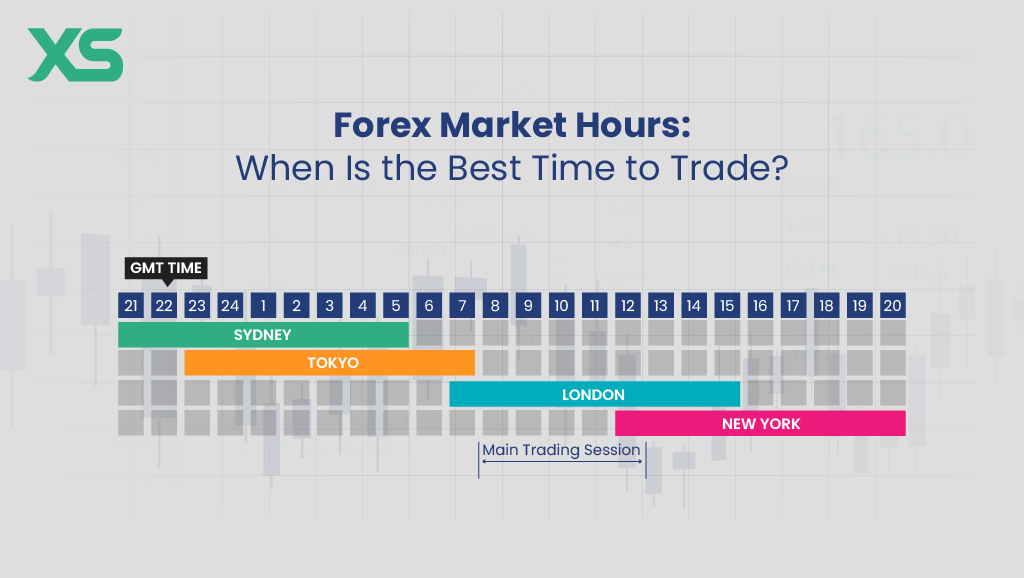
The foreign exchange (Forex) market stands apart as the most truly global and “24-hour” market, operating five days a week, from Sunday evening ET to Friday evening ET. This continuous operation is due to its decentralized nature and the overlapping trading sessions of major financial centers worldwide:
- Sydney Session: Opens first (e.g., 5:00 PM ET Sunday).
- Tokyo Session: Overlaps with Sydney.
- London Session: Overlaps with Tokyo and Sydney.
- New York Session: Overlaps with London.
The highest liquidity and volatility often occur during the overlaps of these major sessions, particularly the London-New York overlap, as more participants are active.
Commodity Market Hours (Futures & Options)
Commodities like oil, gold, natural gas, and agricultural products are traded on various exchanges globally, primarily through futures and options contracts. Their hours often involve extended electronic trading sessions due to their global demand and supply chains.
- CME Group (e.g., NYMEX, COMEX): Many futures contracts (e.g., crude oil, gold) trade electronically for nearly 24 hours a day, Sunday evening through Friday afternoon ET, with short daily maintenance breaks. Agricultural commodities might have more specific, shorter trading windows.
- ICE (Intercontinental Exchange): Similar to CME, ICE offers extensive electronic trading hours for energy and other commodity futures.

These extended hours are vital for producers, consumers, and speculators to hedge risks and speculate on price movements influenced by global events at any time.
Bond Market Hours (Fixed Income)
The bond market, particularly for government bonds and corporate debt, is largely an Over-the-Counter (OTC) market, meaning trades are conducted directly between financial institutions rather than on a centralized exchange. While there are electronic trading platforms for bonds, their “hours” are less rigidly defined. Generally, bond market activity aligns with traditional banking and business hours in major financial centers (e.g., 8:00 AM to 5:00 PM ET in the US), with significant activity concentrated during these periods. However, large institutional trades can occur outside these hours.
Cryptocurrency Market Hours (Digital Assets)
The newest significant asset class, cryptocurrencies, operates on a genuinely 24/7/365 basis. Given their decentralized, blockchain-based nature and global exchanges, there are no “market hours” in the traditional sense. Trading never stops, allowing investors to react instantly to news or price movements at any time of day or night. This continuous trading environment contributes to the often-high volatility observed in the crypto space, as there are no pauses to absorb information or reset sentiment.
Strategic Implications for Investors and Traders
Understanding market hours is not merely an academic exercise; it has profound strategic implications for anyone engaging with financial markets. Neglecting these timeframes can lead to missed opportunities or, worse, significant financial losses.
Volatility and Liquidity during Market Hours
- Opening and Closing Volatility: The first and last hour of a standard trading session are often the most volatile. This is due to the influx of orders accumulated overnight or executed before the close, creating sharp price movements. Traders looking for quick gains or losses often target these periods.
- Peak Liquidity: The middle hours of a standard session typically offer the highest liquidity, especially when major international markets overlap (e.g., London and New York forex sessions). High liquidity means tighter bid-ask spreads and easier execution of large orders without significantly moving the price.
- Thin Markets: Conversely, pre-market, after-hours, and holiday trading often feature “thin” markets with low liquidity. This can lead to wider spreads, higher price volatility on small trades, and difficulty executing orders at desired prices.
Risk Management and Trading Strategies
- Adjusting Strategies: Traders must adapt their strategies to different market phases. Day traders focus on intraday volatility, while swing traders might look for opportunities arising from after-hours news. Long-term investors, however, might be less concerned with intraday movements and more focused on fundamental shifts.
- News Releases: Economic data, corporate earnings, and geopolitical news releases are often timed to specific market hours. Understanding when these announcements occur can inform trading decisions and help prepare for potential market reactions.
- Managing Overnight Risk: For assets with fixed market hours, holding positions overnight (or over a weekend/holiday) exposes investors to “gap risk” – the possibility that the market will open significantly higher or lower due to news or events that occurred when the market was closed.
The Psychology of Market Hours
The constant operation of some markets (like crypto and forex) can have psychological impacts. The pressure to constantly monitor positions or the fear of missing out (FOMO) can lead to impulsive decisions or burnout. Conversely, the structured nature of traditional market hours can help impose discipline and allow for periods of rest and reflection, reducing emotional trading.
Technological Advancements and the Future of Market Hours
Technology has been the primary driver of the evolution of market hours, transforming them from strictly physical gatherings to expansive electronic networks. This evolution continues to push the boundaries of when and how financial assets are traded.
Electronic Trading Platforms
The advent of electronic trading platforms revolutionized markets, largely replacing physical trading floors. This shift enabled:
- Extended Access: Traders no longer need to be physically present; they can participate from anywhere with an internet connection, often outside traditional market hours.
- Algorithmic Trading: The ability to execute trades programmatically, 24/7, has given rise to sophisticated algorithmic and high-frequency trading strategies, which can operate continuously, monitoring and reacting to market conditions.
- Increased Efficiency: Electronic systems significantly reduce transaction times and costs, making markets more accessible and efficient.
The Push for Extended and 24/7 Trading
The success of 24/7 crypto markets and the increasing globalization of investment portfolios have fueled calls for extending traditional market hours or moving towards continuous trading for more asset classes.
- Investor Demand: Retail investors, in particular, often express a desire to trade outside the traditional 9-to-5 window, driven by personal schedules, international news, or the desire to react quickly to events.
- Regulatory Considerations: Extending hours raises complex regulatory challenges concerning market surveillance, investor protection, and systemic risk management. How would clearing and settlement operate in a truly 24/7 environment for all assets?
- Lessons from Crypto: The crypto market demonstrates that 24/7 trading is technologically feasible. However, it also highlights the potential for heightened volatility and the continuous mental demands on participants.
Global Harmonization and Fragmentation
While technology connects markets globally, regulatory differences and varying cultural norms mean that a fully harmonized, single set of “global market hours” remains a distant prospect. Instead, we see a dynamic interplay of fragmentation (multiple exchanges, distinct rules) and interconnectedness (instantaneous data flow, cross-border trading). The future may involve more widespread adoption of extended electronic trading periods for traditional assets, but a complete abandonment of defined hours for all assets seems unlikely due to the practicalities of settlement, oversight, and market stability.

Conclusion
Understanding “what are market hours” is far more than knowing when an exchange opens and closes; it’s about grasping the fundamental operating rhythm of global finance. These hours are deeply intertwined with liquidity, volatility, risk, and strategy, influencing every facet of trading and investing. From the fixed hours of stock exchanges to the 24/5 cycle of forex and the always-on nature of cryptocurrency, each asset class presents unique temporal considerations.
As technology continues to evolve, the concept of market hours will undoubtedly continue to adapt. However, the core principles of understanding when markets are active, what drives their movements during those times, and how to manage the associated risks will remain paramount for anyone seeking to navigate the complex yet rewarding world of financial markets. Informed decision-making begins with knowing when the game is played.
aViewFromTheCave is a participant in the Amazon Services LLC Associates Program, an affiliate advertising program designed to provide a means for sites to earn advertising fees by advertising and linking to Amazon.com. Amazon, the Amazon logo, AmazonSupply, and the AmazonSupply logo are trademarks of Amazon.com, Inc. or its affiliates. As an Amazon Associate we earn affiliate commissions from qualifying purchases.