
The share market, often perceived as a complex and intimidating arena, is in reality one of the most powerful engines for wealth creation available to the average individual. For centuries, smart investors have leveraged the growth potential of companies to build substantial personal fortunes, achieve financial independence, and secure their future. While the allure of quick gains can be tempting, successful share market investing is a marathon, not a sprint, demanding patience, knowledge, and a disciplined approach.
This guide is designed to demystify the process, providing a comprehensive roadmap for beginners eager to embark on their investment journey. By understanding the fundamentals, setting realistic expectations, and adopting sound strategies, you too can harness the power of the share market to achieve your financial aspirations.
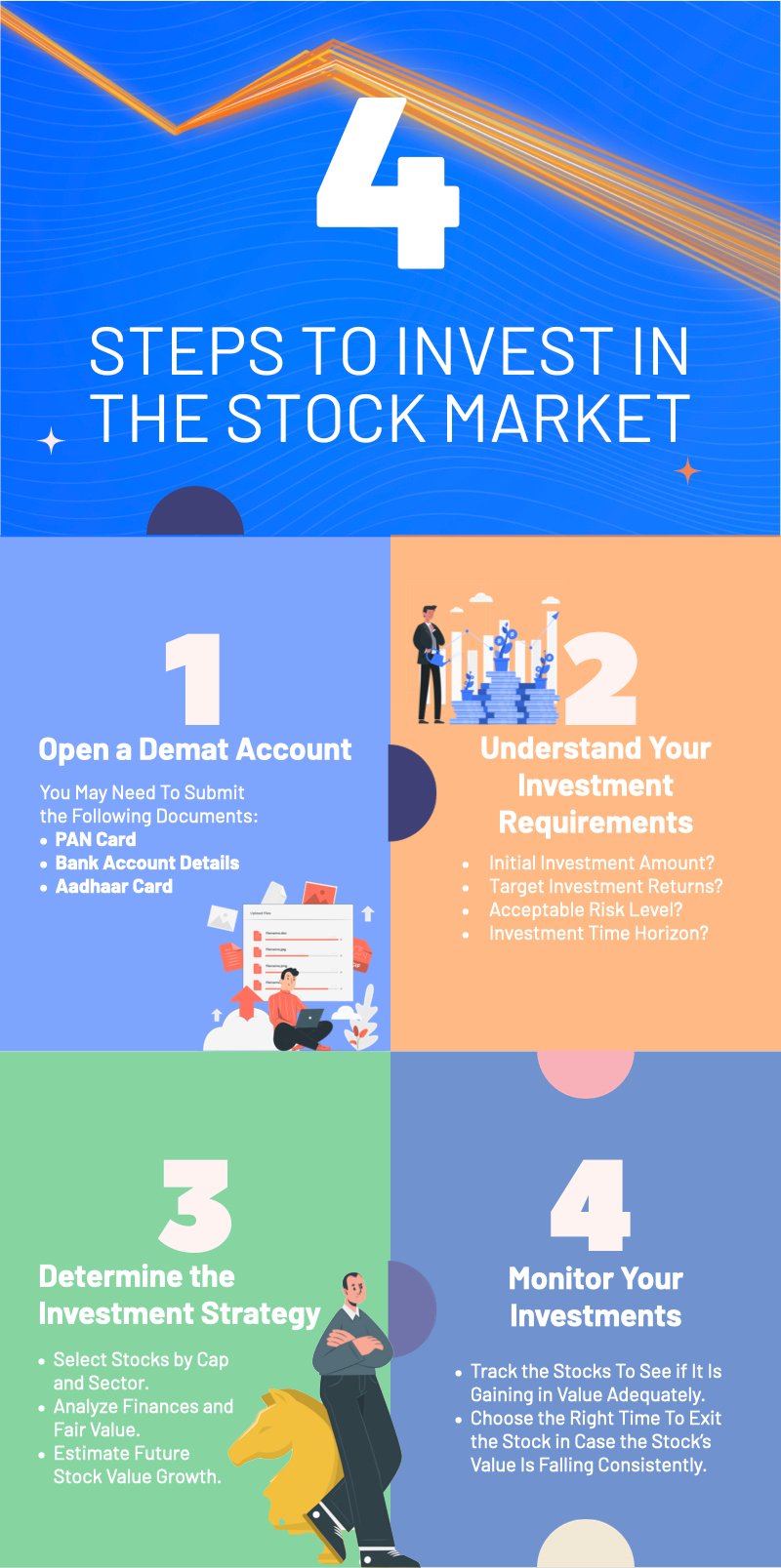
1. Understanding the Fundamentals of Share Market Investing
Before you commit your hard-earned capital, it’s crucial to grasp the foundational concepts that underpin the share market. Without a solid understanding, you risk making uninformed decisions that could jeopardize your financial well-being.
What is the Share Market?
At its core, the share market (also known as the stock market or equity market) is a global marketplace where public companies issue shares of ownership, and investors buy and sell these shares. When you buy a share, you are essentially purchasing a tiny fraction of ownership in that company. This makes you a shareholder, with potential rights to vote on company matters and a claim on a portion of its assets and earnings. The primary goal for most investors is to buy shares at a lower price and sell them at a higher price, realizing a capital gain.
Why Invest in Shares?
Investing in the share market offers several compelling benefits that make it an attractive option for long-term wealth accumulation:
- Wealth Creation: Historically, equities have outperformed most other asset classes over the long term, offering superior returns that help your money grow significantly.
- Inflation Hedge: The returns from well-chosen stocks often outpace inflation, protecting your purchasing power over time, unlike simply holding cash.
- Dividends: Many profitable companies distribute a portion of their earnings to shareholders in the form of dividends, providing a regular income stream.
- Capital Appreciation: As a company grows and becomes more profitable, the value of its shares typically increases, leading to capital gains when you sell them.
Key Terminology to Know
Navigating the share market requires familiarity with specific jargon. Here are a few essential terms:
- Shares/Stocks/Equities: Units of ownership in a company.
- IPO (Initial Public Offering): The first time a private company offers shares to the public.
- Dividend: A distribution of a portion of a company’s earnings to its shareholders.
- Capital Gain/Loss: The profit or loss made from selling an investment for more or less than its purchase price.
- Bull Market: A period when stock prices are generally rising.
- Bear Market: A period when stock prices are generally falling.
- Market Capitalization (Market Cap): The total value of a company’s outstanding shares (share price multiplied by the number of shares).
- Volatility: The degree of variation of a trading price over time.
- Liquidity: How easily an asset can be converted into cash without affecting its market price.
2. Preparing for Your Investment Journey
Successful investing is less about luck and more about preparation and discipline. Before diving into buying shares, ensure your personal finances are in order and you have a clear understanding of your investment goals.
Define Your Financial Goals and Risk Tolerance
Every investment decision should align with your broader financial objectives. Are you saving for retirement, a down payment on a house, your child’s education, or simply long-term wealth growth?
- Short-term vs. Long-term: Your investment horizon dictates the level of risk you can comfortably take. Short-term goals generally require less risky investments, while long-term goals allow for higher-risk, higher-reward strategies.
- Risk Tolerance: How comfortable are you with the potential for your investments to fluctuate in value, even significantly? An honest assessment of your risk tolerance will guide your choice of investments and help you avoid panic selling during market downturns.
Build an Emergency Fund
Before you consider investing in the share market, ensure you have a robust emergency fund. This typically means having 3-6 months’ worth of living expenses saved in an easily accessible account (like a high-yield savings account). This fund acts as a financial safety net, preventing you from being forced to sell your investments at an inopportune time should unexpected expenses arise.
Educate Yourself Continuously
The investment landscape is dynamic. Commit to lifelong learning. Read reputable financial books, follow trusted financial news sources, attend webinars, and utilize online courses. Understanding economic cycles, company valuations, and market trends will empower you to make more informed decisions. Remember, knowledge is your most powerful asset in the market.
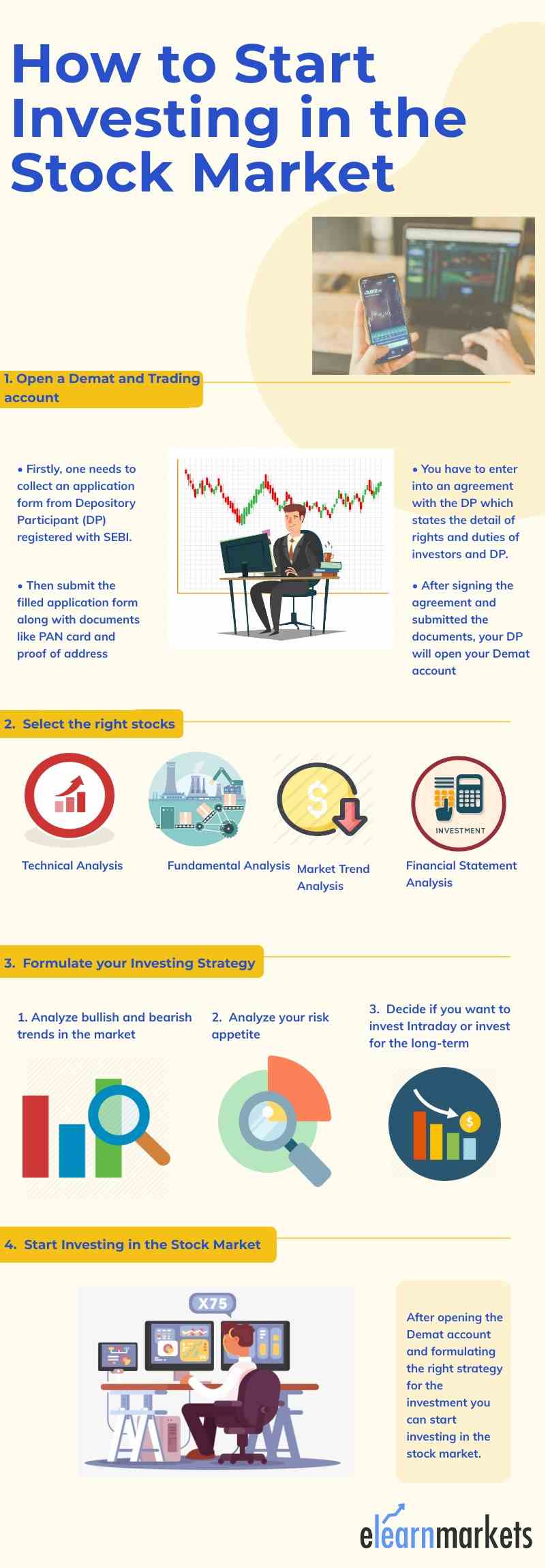
Open a Demat and Trading Account
To invest in the share market, you’ll need two accounts:
- Demat Account: This account holds your shares in electronic form, much like a bank account holds your money.
- Trading Account: This account allows you to place buy and sell orders in the market.
Most brokers offer a combined Demat and trading account. When choosing a broker, consider their fees, platform usability, research tools, customer service, and regulatory compliance. You can opt for a full-service broker (offering advice and research) or a discount broker (lower fees, self-directed investing).
3. Choosing Your Investment Strategy
With your foundation laid, the next step is to formulate an investment strategy that aligns with your goals, risk tolerance, and time horizon. There’s no one-size-fits-all approach; successful investors often blend elements of different strategies.
Value Investing vs. Growth Investing
These are two primary approaches to stock picking:
- Value Investing: Pioneered by Benjamin Graham and famously adopted by Warren Buffett, this strategy involves buying stocks that appear to be trading for less than their intrinsic (true) value. Value investors look for established companies with strong fundamentals, good management, and a track record of profitability, often when they are temporarily out of favor or undervalued by the market.
- Growth Investing: This strategy focuses on companies that are expected to grow at an above-average rate compared to other companies in the market. Growth stocks typically reinvest their earnings back into the business for expansion, rather than paying dividends. They often have high P/E ratios and can be more volatile, but offer significant upside potential.

Dividend Investing
For investors seeking regular income, dividend investing is an attractive option. This strategy focuses on purchasing shares of companies that consistently pay out a portion of their profits as dividends to shareholders. These are often mature, stable companies with predictable cash flows. Dividend income can be reinvested to buy more shares, further accelerating wealth growth through compounding.
Index Funds and ETFs: The Power of Diversification
For beginners or those who prefer a less hands-on approach, index funds and Exchange Traded Funds (ETFs) are excellent choices.
- Index Funds: These are mutual funds or ETFs that aim to replicate the performance of a specific market index, such as the S&P 500. They offer instant diversification across numerous stocks within that index, reducing the risk associated with individual stock picking.
- ETFs: Similar to index funds, ETFs track an index, commodity, bond, or basket of assets. However, they trade like individual stocks on exchanges throughout the day, offering greater flexibility. Both options are typically low-cost and provide broad market exposure, making them ideal for long-term passive investing.
Direct Stock Picking vs. Mutual Funds
- Direct Stock Picking: This involves individually researching and selecting specific company shares to invest in. It requires significant time, effort, and analytical skills but offers the potential for higher returns if successful. It also carries higher risk due to lack of diversification if not managed carefully.
- Mutual Funds: These are professionally managed funds that pool money from multiple investors to invest in a diversified portfolio of stocks, bonds, or other securities. They are suitable for investors who lack the time or expertise for direct stock picking, offering professional management and diversification for a fee (expense ratio).
Systematic Investment Plan (SIP)
An SIP involves investing a fixed amount of money at regular intervals (e.g., monthly) into a chosen mutual fund or stock. This strategy leverages “rupee cost averaging,” where you buy more units when prices are low and fewer when prices are high, averaging out your purchase price over time. SIPs are powerful tools for disciplined, long-term wealth creation, especially for new investors.
4. Executing and Managing Your Investments
Once you have a strategy, it’s time for execution and ongoing management. Remember that investing is an active process that requires periodic review and adjustments.
Researching Companies
If you choose to pick individual stocks, thorough research is paramount. Look beyond headlines and delve into a company’s fundamentals:
- Financial Statements: Analyze balance sheets, income statements, and cash flow statements to assess financial health.
- Industry Analysis: Understand the company’s competitive landscape, market position, and growth prospects within its industry.
- Management Team: Evaluate the competence and integrity of the company’s leadership.
- Competitive Advantage (Moat): Look for companies with sustainable competitive advantages that protect their market share and profitability.
Diversification is Key
Never put all your eggs in one basket. Diversification is a fundamental principle of risk management. Spread your investments across:
- Different Companies: Don’t rely on just a few stocks.
- Different Industries: Avoid concentrating too heavily in one sector.
- Different Asset Classes: While this article focuses on shares, consider adding bonds, real estate, or other assets for broader diversification as your portfolio grows.
- Different Geographies: Investing in global markets can further reduce risk.
Monitor and Rebalance Your Portfolio
Investing is not a “set it and forget it” activity. Regularly (e.g., annually) review your portfolio to ensure it still aligns with your goals and risk tolerance.
- Monitor: Keep an eye on the performance of your investments, but avoid obsessively checking daily fluctuations.
- Rebalance: Over time, some investments may grow significantly, causing your portfolio allocation to drift from your target. Rebalancing involves selling some of your outperforming assets and buying more of your underperforming ones to restore your desired asset allocation.
Don’t Succumb to Emotional Trading
One of the biggest enemies of an investor is their own emotions. Fear and greed often lead to poor decisions: buying when everyone else is euphoric (and prices are high) and selling when everyone else is panicking (and prices are low). Develop a disciplined approach, stick to your strategy, and make decisions based on research and logic, not fleeting market sentiment.
Understanding Taxation on Investments
Be aware of the tax implications of your share market investments. Capital gains (profits from selling shares) and dividends are typically subject to taxation, which can vary based on your country and investment horizon (short-term vs. long-term capital gains). Consult a tax advisor to understand your specific obligations.
5. Common Pitfalls to Avoid and Best Practices
As you navigate the share market, being aware of common mistakes can save you from significant losses and enhance your chances of success.
Avoiding Common Mistakes
- Market Timing: Trying to predict market tops and bottoms is notoriously difficult and often leads to missing out on significant gains. Time in the market is more important than timing the market.
- FOMO (Fear Of Missing Out): Don’t chase hot stocks or jump into investments just because everyone else is. Do your research and stick to your strategy.
- Over-diversification/Under-diversification: Too few stocks can expose you to high individual company risk; too many can dilute your returns and make monitoring difficult. Find a balance.
- Investing Borrowed Money: Never invest money you can’t afford to lose, and especially avoid using loans for speculative investments.
- Ignoring Fees: High brokerage fees, expense ratios, or hidden charges can significantly erode your returns over time. Be vigilant.
Embracing a Long-Term Perspective
The true power of investing, particularly in equities, lies in compounding. By staying invested over many years, your returns generate further returns, leading to exponential growth. Ignore short-term market noise and focus on your long-term objectives. The share market has historically rewarded patient, disciplined investors.
Seeking Professional Advice When Needed
While self-education is crucial, don’t hesitate to seek guidance from a qualified financial advisor, especially as your portfolio grows or your financial situation becomes more complex. A good advisor can help you refine your goals, assess risk, build a suitable portfolio, and navigate complex tax implications.
Starting your investment journey in the share market is a significant step towards financial empowerment. By laying a strong foundation of knowledge, setting clear goals, adopting a disciplined strategy, and committing to continuous learning, you can confidently participate in the market and work towards building a prosperous financial future. Remember, every expert investor was once a beginner; the key is to start smart and stay persistent.
aViewFromTheCave is a participant in the Amazon Services LLC Associates Program, an affiliate advertising program designed to provide a means for sites to earn advertising fees by advertising and linking to Amazon.com. Amazon, the Amazon logo, AmazonSupply, and the AmazonSupply logo are trademarks of Amazon.com, Inc. or its affiliates. As an Amazon Associate we earn affiliate commissions from qualifying purchases.