
In the fast-paced world of global finance, few phrases carry as much weight as “What’s the Dow doing?” For over a century, the Dow Jones Industrial Average (DJIA) has served as the definitive shorthand for the health of the American economy and, by extension, the global financial markets. Whether you are a seasoned day trader, a long-term retirement planner, or someone simply curious about the evening news headlines, the movements of these thirty blue-chip stocks provide a critical snapshot of investor sentiment.
Right now, the Dow Jones is navigating a complex landscape defined by shifting interest rate expectations, a transitioning labor market, and the persistent shadow of inflationary pressures. To understand what the Dow is doing at this very moment, one must look beyond the flashing red or green numbers on a screen and delve into the underlying economic engines driving the index.

Decoding the Current Pulse: The Mechanics of the Dow’s Movement
The Dow Jones Industrial Average is unique among major indices because of its price-weighted structure. Unlike the S&P 500 or the Nasdaq, which are market-capitalization-weighted, the Dow is influenced by the absolute share price of its thirty constituent companies. This means that a stock with a high share price, such as UnitedHealth Group or Goldman Sachs, has a significantly larger impact on the index’s daily movement than a company with a lower share price, like Verizon or Coca-Cola, regardless of their total market value.
The Significance of the “Dow Divisor”
To understand what the Dow is doing right now, you have to understand the “Dow Divisor.” Since the index is an average of prices, any corporate action like a stock split or a change in the index’s components would normally skew the data. The divisor is a mathematical constant used to maintain continuity. When a company in the Dow undergoes a shift, the divisor is adjusted. Currently, this ensures that the index reflects a continuous narrative of American industry rather than just a simple arithmetic mean.
Sector Concentration and Blue-Chip Stability
The Dow is often criticized for being “too small” with only thirty stocks, yet these thirty companies represent the pillars of the global economy. Right now, the Dow is reflecting a tug-of-war between defensive sectors and growth-oriented components. When the Dow outperforms the tech-heavy Nasdaq, it usually signals a “flight to quality,” where investors move capital into stable, dividend-paying companies like Procter & Gamble or Johnson & Johnson. Monitoring the Dow’s current movement provides insight into whether the market is in a “risk-on” or “risk-off” mood.
Macroeconomic Drivers: Why the Dow is Moving Today
The Dow Jones does not move in a vacuum. Its current trajectory is a direct response to the broader macroeconomic environment, primarily dictated by the Federal Reserve’s monetary policy and the health of the American consumer.
The Federal Reserve and Interest Rate Volatility
Perhaps the most significant factor influencing what the Dow is doing right now is the outlook on interest rates. The Federal Reserve’s dual mandate—to manage inflation and maintain full employment—acts as the primary lever for market movement. When the Fed signals a “hawkish” stance (maintaining or raising rates to fight inflation), the Dow often faces downward pressure as borrowing costs for these industrial giants increase. Conversely, a “dovish” pivot toward rate cuts tends to send the Dow upward, as cheaper capital fuels corporate expansion and stock buybacks.
Inflation and Corporate Earnings Reports
We are currently in an era where “good news” for the economy can sometimes be “bad news” for the Dow. If jobs reports come in too strong, investors fear the Fed will keep rates higher for longer. However, the true litmus test for the Dow is the quarterly earnings season. Because the Dow consists of established leaders, their ability to maintain profit margins in the face of rising input costs is a major signal. When Dow components report strong “top-line” revenue growth and “bottom-line” earnings per share (EPS), the index often finds a solid floor, regardless of broader volatility.
Global Geopolitics and Supply Chain Resilience
As a collection of multinational corporations, the Dow is highly sensitive to international relations and trade stability. Current fluctuations in the Dow often reflect tensions in global energy markets or shifts in manufacturing hubs. Companies like Caterpillar and Boeing, which are staples of the index, serve as barometers for global infrastructure spending and international trade health. If the Dow is sliding while other indices are stable, it may point to specific international headwinds affecting these global behemoths.
Market Sentiment and Technical Resistance Levels
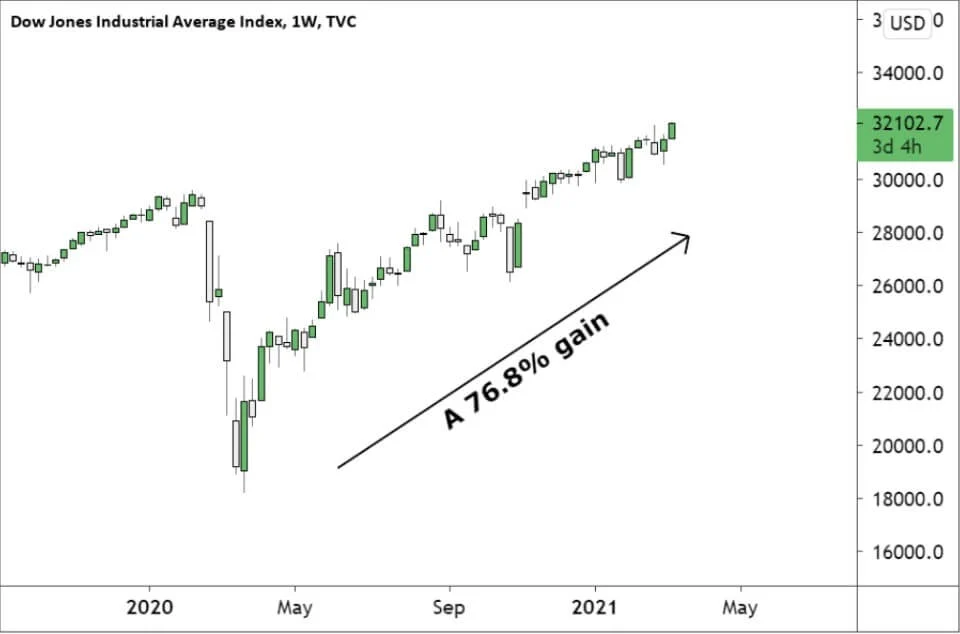
Financial markets are driven by a combination of hard data and human psychology. When asking what the Dow is doing right now, one must consider the “psychological levels” that traders watch with eagle eyes.
Psychological Milestones: The Power of Round Numbers
In the world of investing, numbers like 35,000 or 40,000 are more than just digits; they are psychological barriers. When the Dow approaches a major round-number milestone, it often encounters “resistance.” Investors may choose to sell and take profits at these levels, leading to a temporary pullback. Conversely, once the Dow decisively breaks through a major level, that level often becomes a new “support” floor. Understanding the current proximity to these milestones helps explain the intraday volatility we see in the index.
The Fear and Greed Index
The Dow’s current behavior is also a reflection of investor sentiment, often measured by the Volatility Index (VIX). While the VIX is more closely tied to the S&P 500, the Dow’s movement often mirrors the “Fear and Greed” spectrum. When the Dow moves sideways with low volume, it suggests a “wait-and-see” approach from institutional investors. A sharp, high-volume drop indicates panic, while a steady, “climbing the wall of worry” ascent suggests a cautious but resilient bullish sentiment.
Institutional vs. Retail Activity
Right now, the Dow is seeing a fascinating interplay between institutional “smart money” and retail investors. While retail investors might flock to high-growth tech stocks, institutional portfolios—such as pension funds and insurance companies—heavily favor the Dow for its stability and dividends. Current trends show that when there is uncertainty in the “Magnificent Seven” tech stocks, there is often a rotation back into the Dow’s more value-oriented components, providing a stabilizing force for the broader market.
Navigating the Dow: Investment Strategies for the Current Climate
Understanding what the Dow is doing is only half the battle; the second half is knowing how to use that information to manage your personal finances and investment portfolio.
The Role of Dividends in a Volatile Market
One of the primary reasons investors look to the Dow Jones right now is for income. Many of the thirty components are “Dividend Aristocrats” or “Dividend Achievers”—companies that have a long history of paying and increasing dividends. In a market where capital gains may be stagnant, the 2% to 4% dividend yield offered by many Dow stocks provides a crucial total return component. For an investor, the Dow’s current movement is often less important than the reliability of the cash flow these companies provide.
Index Funds vs. Individual Components
For most personal investors, “playing” the Dow doesn’t mean buying all thirty stocks individually. It means using Exchange-Traded Funds (ETFs) like the DIA (often called “Diamonds”). These funds allow for instant diversification across the industrial, financial, and consumer sectors. If you see the Dow is trending upward due to a recovery in the banking sector, an index fund allows you to capture that growth without the risk of betting on a single bank’s balance sheet.
Risk Management and Rebalancing
When the Dow experiences a significant run-up or a sharp correction, it serves as a signal for investors to rebalance their portfolios. If your portfolio was designed to be 60% stocks and 40% bonds, a major surge in the Dow might leave you “overweight” in equities. By observing what the Dow is doing right now, you can make informed decisions about trimming winners and reallocating to underperforming areas, adhering to the timeless investment adage of “buying low and selling high.”
The Long-Term Outlook: Why the Dow Still Matters
Despite the rise of specialized indices focusing on AI, green energy, or crypto-assets, the Dow Jones Industrial Average remains the “North Star” of the financial world. It represents the “Old Economy” that makes the “New Economy” possible.
The Evolution of the Thirty
The Dow is not a static list; it is an evolving portrait of American business. Over the years, smoke-stack industrials have been replaced by tech giants and healthcare providers. The current composition of the Dow—including companies like Apple, Microsoft, and Salesforce—proves that the index is adapting to the digital age. When we look at what the Dow is doing today, we are looking at the combined output of the world’s most successful and resilient corporate entities.
Looking Beyond the Daily Noise
Ultimately, the Dow’s current movement is a single chapter in a very long book. Historically, the Dow has trended upward over the long term, surviving depressions, wars, and pandemics. For the modern investor, the key is to use the current movement of the Dow as a data point, not a distraction. By understanding the macro drivers, the technical levels, and the fundamental strength of the blue-chip components, you can navigate the “right now” with an eye toward a prosperous “later.”
As the closing bell approaches each day, the Dow Jones tells a story of where we have been and where we are going. Whether it is up 500 points or down 200, its value lies in its ability to condense the infinite complexity of the global economy into a single, understandable pulse. Understanding that pulse is the first step toward financial literacy and long-term investment success.
aViewFromTheCave is a participant in the Amazon Services LLC Associates Program, an affiliate advertising program designed to provide a means for sites to earn advertising fees by advertising and linking to Amazon.com. Amazon, the Amazon logo, AmazonSupply, and the AmazonSupply logo are trademarks of Amazon.com, Inc. or its affiliates. As an Amazon Associate we earn affiliate commissions from qualifying purchases.