
In the dynamic landscape of business finance, quarterly tax obligations stand as a pillar of compliance and operational integrity. For most U.S. employers, Form 941, Employer’s QUARTERLY Federal Tax Return, is a critical document, reporting federal income tax, Social Security tax, and Medicare tax withheld from employee wages, as well as the employer’s share of Social Security and Medicare tax. While the traditional paper filing method remains an option, the shift towards digital solutions has made filing Form 941 online not just a convenience, but often a strategic advantage for businesses of all sizes. This guide delves into the nuances of online Form 941 filing, offering insights into its benefits, the step-by-step process, and best practices to ensure accuracy and compliance in your financial operations. Embracing digital financial tools for tax reporting streamlines processes, reduces errors, and keeps your business on sound financial footing.

Understanding Form 941: Your Employer’s Quarterly Tax Responsibility
Form 941 is more than just a piece of paper; it’s a statement of your financial commitment to federal tax regulations, directly impacting your employees’ tax liabilities and the nation’s social security system. Employers use this form to report wages paid, tips reported, federal income tax withheld, and both employee and employer shares of social security and Medicare taxes. Understanding its components and requirements is the first step towards accurate and timely compliance, especially when leveraging online financial tools.
Who Needs to File?
Virtually all employers who pay wages subject to federal income tax withholding, Social Security, and Medicare taxes must file Form 941 quarterly. There are a few exceptions, such as seasonal employers who don’t pay wages during certain quarters (they can indicate this on the form), or employers of household employees. Additionally, agricultural employers file Form 943 annually, and employers of a very small number of employees with specific tax liabilities might file Form 944 annually. However, for the vast majority of businesses, Form 941 is a recurring quarterly responsibility. Misinterpreting this obligation can lead to severe financial penalties, underscoring the importance of clarity in business finance.
What Does Form 941 Report?
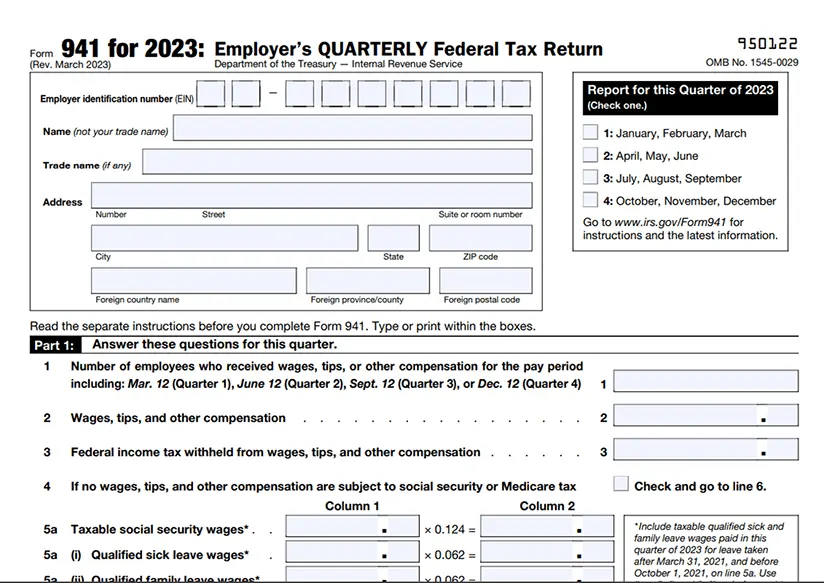
Form 941 provides a detailed summary of your payroll tax activities for the quarter. Key data points include:
- Number of employees who received wages, tips, or other compensation during the quarter.
- Total wages, tips, and other compensation subject to income tax withholding.
- Total federal income tax withheld from wages, tips, and other compensation.
- Taxable Social Security wages and tips, along with their respective tax amounts (employee and employer shares).
- Taxable Medicare wages and tips, along with their respective tax amounts (employee and employer shares).
- Adjustments for sick pay, tips, or group-term life insurance.
- Total taxes due for the quarter, reflecting deposits made and any balance due or overpayment.
This comprehensive reporting ensures that employers accurately account for and remit the funds collected from and owed on behalf of their employees, maintaining the integrity of the U.S. tax system. Accurate financial record-keeping is paramount for this process.
Key Deadlines and Penalties
Adhering to the deadlines for Form 941 is crucial for financial compliance. The form is due by the last day of the month following the end of each calendar quarter:
- Quarter 1 (January 1 – March 31): Due April 30
- Quarter 2 (April 1 – June 30): Due July 31
- Quarter 3 (July 1 – September 30): Due October 31
- Quarter 4 (October 1 – December 31): Due January 31 of the following year
If a due date falls on a weekend or holiday, the deadline shifts to the next business day. Failure to file on time or pay the taxes due can result in substantial penalties, including a failure-to-file penalty (5% of the unpaid taxes for each month or part of a month the return is late, up to 25%) and a failure-to-pay penalty (0.5% of the unpaid taxes for each month or part of a month the taxes remain unpaid, up to 25%). These penalties underscore the critical role of timely financial management and the benefits of online financial tools that can help track deadlines.
Why File Form 941 Online? Advantages and Considerations
The decision to file Form 941 online is often driven by a desire for efficiency, accuracy, and enhanced security in financial reporting. Leveraging digital financial tools for tax compliance offers a myriad of benefits that can significantly improve a business’s operational workflow and financial health.
Efficiency and Accuracy Benefits
Online filing platforms streamline the entire process, from data entry to submission. Many systems integrate directly with payroll software, automatically populating relevant fields and reducing the need for manual data input. This integration minimizes the risk of human error, which is a common pitfall in paper-based filing. Furthermore, online platforms often include built-in validation checks that flag potential mistakes before submission, ensuring greater accuracy. The ability to quickly review, edit, and transmit forms without the delays associated with mail services significantly boosts efficiency, allowing finance teams to allocate their time to more strategic tasks. This immediate feedback and reduction in manual intervention make online filing a superior method for financial operations.
Enhanced Security Features
When dealing with sensitive financial information, security is paramount. IRS-approved online filing platforms employ robust encryption and data protection measures, safeguarding your business’s and employees’ financial data from unauthorized access. Unlike physical mail, which can be lost or intercepted, digital submissions offer a more secure transmission channel directly to the IRS. Many platforms also offer multi-factor authentication and secure data storage, adding layers of protection to your financial records. This digital security is a crucial consideration for any business managing sensitive financial data.
Record-Keeping and Accessibility
Online filing simplifies record-keeping dramatically. Once submitted, digital copies of your Form 941 are securely stored within the platform, making them easily accessible for future reference, audits, or amendments. This eliminates the need for physical storage space and reduces the risk of misplacing important documents. Instant access to historical filings allows businesses to quickly retrieve information for financial analysis, strategic planning, or responding to IRS inquiries, promoting transparency and agility in financial management. This digital archive of financial documents is a significant advantage over traditional paper filing.
Step-by-Step Guide to Online Form 941 Filing
Navigating the online filing process for Form 941 can seem daunting initially, but with a clear roadmap, it becomes a manageable and efficient financial task. The key is preparation and methodical execution, utilizing the capabilities of online financial tools.
Gather Necessary Information
Before you begin, ensure you have all the required financial data at hand. This typically includes:
- Employer Identification Number (EIN): Your unique federal tax ID.
- Payroll Records: Comprehensive records for the quarter, detailing wages paid, tips reported, federal income tax withheld, Social Security wages and tax, and Medicare wages and tax for all employees.
- Prior Quarter’s Form 941 (if applicable): For reference or to ensure continuity.
- Information on any adjustments: Such as adjustments for fractions of cents, uncollected employee Social Security or Medicare tax on tips, or group-term life insurance.
- Deposit Information: Details of all federal tax deposits made for the quarter, including dates and amounts.
Having this information organized and readily available will make the data entry phase quick and accurate, reinforcing good business finance practices.
Select Your Filing Method: IRS e-File for Business vs. Third-Party Software
You have two primary options for online filing:
- IRS e-File for Business: The IRS offers its own electronic filing system, which can be accessed through approved software providers or directly through certain payroll services. This method is often robust but may require specific software compatibility or a tax professional’s assistance if your business operations are complex.
- Approved Third-Party Software Providers: Many reputable payroll services and tax software companies are approved by the IRS to offer electronic filing for Form 941. These platforms often provide user-friendly interfaces, integration with existing payroll systems, and additional features like automated calculations and error checking. Choosing a reliable provider is crucial for seamless financial operations.
Consider your business’s size, complexity, and existing financial tools when making this choice.
Inputting Data and Reviewing
Once you’ve selected your platform, you’ll proceed to input the gathered information into the designated fields.
- Enter General Business Information: Your EIN, business name, and address.
- Fill in Line Items: Carefully transfer data from your payroll records to the corresponding lines on the digital Form 941. Pay close attention to sections covering total wages, federal income tax withheld, and Social Security/Medicare taxes.
- Review for Accuracy: This is a critical step. Before submission, thoroughly review all entered data. Most online platforms highlight discrepancies or potential errors, but a manual check against your source documents is essential. Ensure all figures match your payroll reports precisely. Discrepancies can trigger IRS inquiries or penalties, emphasizing the need for meticulous financial management.
Payment Submission
If your Form 941 indicates a balance due, you’ll typically remit payment electronically through the Electronic Federal Tax Payment System (EFTPS).
- EFTPS Enrollment: If you haven’t already, enroll in EFTPS well in advance. This free service allows you to make federal tax payments securely online or by phone.
- Schedule Payment: Schedule your payment to be withdrawn from your bank account on or before the due date. Most online filing platforms can integrate or provide direct links to EFTPS.
- Confirm Payment: Always ensure your payment has been successfully scheduled and confirmed within EFTPS to avoid late payment penalties.
Effective payment management is an integral part of responsible business finance.
Confirmation and Record Keeping
After submitting your Form 941 electronically, you should receive a confirmation from the IRS (usually within 24-48 hours) acknowledging receipt.
- Save Confirmation: Download and save this confirmation for your records. It serves as proof of timely filing.
- Maintain Digital and Physical Records: Although online filing offers digital storage, it’s prudent to maintain organized digital copies of your submitted Form 941 and all supporting payroll records. Some businesses also prefer to print a physical copy for their files. This dual approach ensures robust financial record-keeping.
Essential Tips for Accurate and Compliant Online Filing
Beyond the step-by-step process, adopting certain best practices can further enhance the accuracy, efficiency, and compliance of your online Form 941 submissions, contributing to sound business finance.
Maintain Accurate Payroll Records
The foundation of accurate Form 941 filing is impeccable payroll record-keeping. Implement robust payroll systems that accurately track employee wages, tips, withheld taxes, and employer contributions throughout the quarter. Regularly reconcile payroll data to catch errors promptly. Cloud-based payroll solutions often integrate seamlessly with online tax filing platforms, providing a single source of truth for your financial data. This integration is a prime example of leveraging financial tools for better management.
Understand Deposit Schedules
Employers must deposit federal income tax withheld and both the employer and employee share of Social Security and Medicare taxes. Your deposit schedule (either monthly or semi-weekly) is determined by the total tax liability reported on Form 941 during a lookback period. Understanding and adhering to your specific deposit schedule is crucial, as missteps can lead to penalties. Online payroll systems and financial management tools can often help automate and track these deposit requirements, ensuring timely financial transactions.
Stay Updated on Tax Law Changes
Tax laws are not static. The IRS frequently updates regulations, tax rates, and filing requirements. Subscribe to IRS newsletters, consult with tax professionals, and regularly review official IRS publications to stay informed about any changes that might affect Form 941 reporting. Many online tax software providers also issue updates to ensure their platforms comply with the latest regulations, making them invaluable financial tools for compliance.
Double-Check All Entries
Despite the automation offered by online platforms, human oversight remains indispensable. Before hitting the submit button, conduct a final, meticulous review of all figures. Compare the totals on your digital Form 941 against your summarized payroll reports. A small error can cascade into larger financial headaches, making this step non-negotiable for accurate financial reporting.
Plan for Contingencies
While online filing is generally reliable, technical glitches or internet outages can occur. Do not wait until the last minute to file. Aim to complete your submission a few days before the deadline to provide a buffer for any unforeseen issues. Have a backup plan, such as knowing how to contact your software provider’s support or having an alternative internet connection, to ensure uninterrupted financial operations.
Conclusion
Filing Form 941 online represents a significant stride in modern business finance, offering a potent blend of efficiency, security, and accuracy that traditional paper filing often cannot match. By understanding your obligations, leveraging the right financial tools, and adhering to best practices, you can transform a complex quarterly task into a streamlined process. Embracing online tax filing is not just about compliance; it’s about smart financial management, freeing up valuable resources, and reinforcing your business’s financial integrity in an increasingly digital world. For any employer, mastering the art of online Form 941 submission is a clear indicator of a forward-thinking and financially responsible operation.
aViewFromTheCave is a participant in the Amazon Services LLC Associates Program, an affiliate advertising program designed to provide a means for sites to earn advertising fees by advertising and linking to Amazon.com. Amazon, the Amazon logo, AmazonSupply, and the AmazonSupply logo are trademarks of Amazon.com, Inc. or its affiliates. As an Amazon Associate we earn affiliate commissions from qualifying purchases.