
Navigating the complexities of the Internal Revenue Service (IRS) can often feel like a daunting task. Whether you have a simple tax question, need to resolve an account issue, or are seeking assistance with a complex financial matter, knowing the correct channels to contact the IRS is crucial for efficiency and accuracy. As the primary agency responsible for tax collection and administration in the United States, the IRS offers a variety of communication methods tailored to different taxpayer needs. Understanding these options, and when to use each, is key to managing your financial obligations and securing the information you require. This guide will delve into the most effective ways to reach the IRS, ensuring you can connect with the right department or resource quickly and confidently.

Navigating the IRS: Understanding Your Contact Options
The decision to contact the IRS typically stems from a specific financial or tax-related need. Before picking up the phone or sending an email, it’s beneficial to understand the common reasons taxpayers reach out and why selecting the appropriate contact method can significantly impact the outcome.
Why You Might Need to Contact the IRS
Taxpayers interact with the IRS for a multitude of reasons, all rooted in personal or business finance management. Some of the most frequent scenarios include:
- Tax Questions: Inquiries about tax law, deductions, credits, filing status, or general eligibility for various tax benefits. This often arises during tax preparation or when planning for future financial moves.
- Payment Issues: Discussing payment plans, resolving outstanding tax liabilities, addressing penalties and interest, or confirming tax payments. This is critical for maintaining financial health and avoiding further IRS action.
- Refund Inquiries: Checking the status of a filed refund, understanding delays, or correcting information that might be holding up a payment. Refunds are a significant financial event for many, and timely receipt is important.
- Account Problems: Requesting tax transcripts, understanding a notice received from the IRS (e.g., CP2000, CP2001), or correcting errors on a tax account. These often require direct access to your financial records with the agency.
- Identity Theft Concerns: Reporting suspected tax-related identity theft, requesting an Identity Protection PIN (IP PIN), or resolving issues arising from a stolen identity being used for fraudulent tax filings. This is a critical financial security issue.
- Business Tax Matters: Questions related to employer identification numbers (EINs), payroll taxes, excise taxes, or specific business deductions and credits. Businesses have distinct tax obligations that often require specialized guidance.
- International Tax Issues: Inquiries related to foreign income, foreign tax credits, or tax treaties for individuals and businesses with international financial interests.
The Importance of Choosing the Right Channel
Selecting the correct contact method is paramount for several reasons. Primarily, it ensures your inquiry reaches the appropriate department or individual who can provide accurate assistance, thus improving efficiency and reducing frustration. Moreover, the IRS deals with highly sensitive financial information, making security and privacy critical. Certain channels are designed for secure transmission of data, while others are more suitable for general inquiries. Using the wrong channel can lead to:
- Delays: Your query might be routed incorrectly, requiring additional processing time or necessitating you to re-contact the IRS through another method.
- Incomplete Information: A general contact method might not provide the specific details or tools needed to address a complex account issue.
- Security Risks: Sharing sensitive financial details through unsecured channels could expose you to risks, though the IRS generally maintains secure communication protocols for official channels.
- Frustration: Repeated attempts to get an answer or resolve a problem through an inappropriate channel can be incredibly time-consuming and discouraging.
Therefore, before reaching out, take a moment to identify the nature of your concern and consult the various options available.
Direct Communication Channels for the IRS
For taxpayers seeking direct interaction or requiring specific services, the IRS offers several traditional communication avenues that cater to different levels of urgency and complexity.
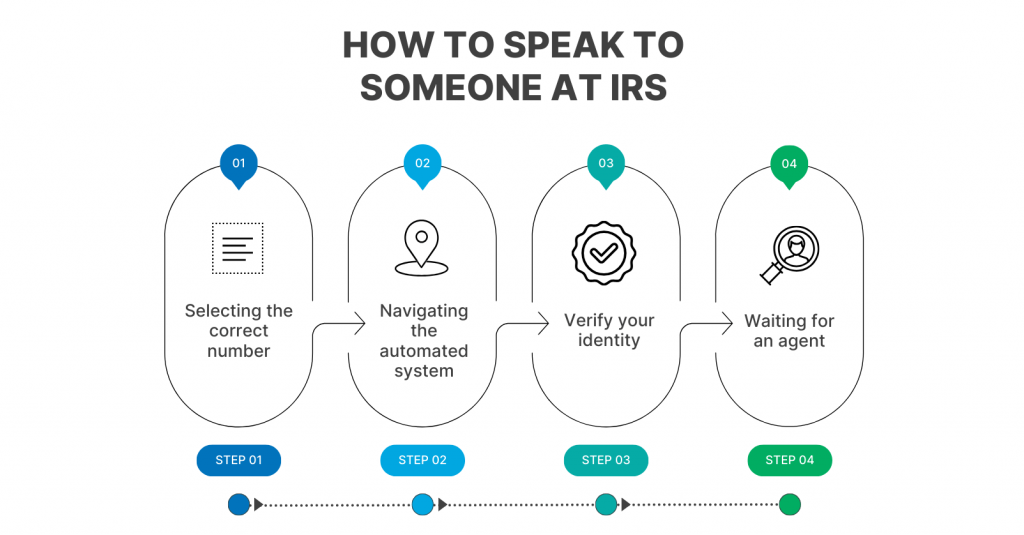
Telephone Assistance: When to Call
Calling the IRS is often the go-to method for many taxpayers seeking immediate answers or personalized guidance. The IRS maintains various phone lines dedicated to specific topics.
- General Inquiries (Individuals): For most personal tax questions, the main hotline is 1-800-829-1040. This line handles a broad range of topics from filing help to refund status (though online tools are often faster for refunds).
- Business Inquiries: Businesses should use 1-800-829-4933 for questions related to employer taxes, EINs, and other business-specific tax matters.
- Specific Departments: There are dedicated lines for more specialized issues, such as identity theft (1-800-908-4490), international tax law (267-941-1000 for overseas callers, or 1-267-941-1000 for callers in the U.S. and U.S. territories), or collection issues. Always verify the correct number on IRS.gov for the most up-to-date information.
- Tips for Calling:
- Best Times: Wait times are typically shorter early in the morning (7 a.m. to 9 a.m. local time) on weekdays, particularly midweek (Tuesday through Thursday). Avoid calling on Mondays or during peak tax season (January-April).
- What to Have Ready: Before calling, gather all relevant documentation: your Social Security Number (SSN) or Employer Identification Number (EIN), previous tax returns (for the last few years), any IRS notices you’ve received, and details of your specific question or issue. This preparation ensures efficiency.
- Persistence: Due to high call volumes, you might experience significant wait times or even be disconnected. Patience and persistence are often necessary.
Written Correspondence: Letters and Forms
For formal requests, responses to IRS notices, or when a paper trail is essential, written communication remains a vital channel.
- Formal Requests: Many official actions, such as requesting specific tax transcripts not available online, appealing an IRS decision, or submitting an Offer in Compromise, require written submissions.
- Responding to IRS Notices: If you receive a letter from the IRS (e.g., CP letter, LTR letter, notice of deficiency), it almost always requires a written response by a specific deadline. The notice itself will usually provide instructions on where to mail your response.
- Filing Amended Returns: If you need to correct a previously filed tax return, you must file Form 1040-X, Amended U.S. Individual Income Tax Return, which is a paper form.
- Sending Payments: While online payment is common, some taxpayers prefer or need to mail a payment, often with a payment voucher (e.g., Form 1040-ES for estimated taxes).
- Important Considerations:
- Certified Mail: Always send important documents and responses via certified mail with return receipt requested. This provides proof that you mailed the document and that the IRS received it.
- Keep Copies: Make and retain copies of everything you send to the IRS, including your original submission, any attachments, and the certified mail receipt. This is critical for your financial records.
- Address Accuracy: Ensure you use the correct mailing address, which can vary based on your location and the type of form or notice you’re responding to. These addresses are typically listed in the form instructions or on the IRS notice itself.
In-Person Assistance: Taxpayer Assistance Centers (TACs)
For taxpayers who need face-to-face help or have issues that are difficult to resolve over the phone or online, Taxpayer Assistance Centers (TACs) offer direct support.
- Services Offered: TACs provide a range of services, including answering account-specific questions, assisting with payments, providing tax forms, and sometimes offering help with tax preparation (though this is limited and often directed to volunteer programs). They can also authenticate identity for specific purposes.
- Appointment Requirements: Most TACs now operate by appointment only. You must call 1-844-545-5640 to schedule an appointment. You cannot just walk in.
- Finding a Local TAC: Use the “Contact Your Local IRS Office” tool on IRS.gov to find the nearest TAC.
- What to Bring: When visiting a TAC, bring two forms of identification (one government-issued photo ID), your Social Security card (or ITIN letter) and those for anyone else on your tax return, all relevant tax documents, and any IRS notices you’ve received.
Digital Resources and Online Tools
In an increasingly digital world, the IRS has significantly expanded its online presence, offering a robust suite of tools and resources that empower taxpayers to manage their financial obligations and access information independently.
The Official IRS Website (IRS.gov): Your Primary Digital Hub
IRS.gov is an invaluable resource, serving as the central online portal for nearly all IRS-related information and services. It should be your first stop for many inquiries.
- Finding Forms and Publications: The website hosts an extensive library of downloadable tax forms, instructions, and publications (e.g., Publication 17, Your Federal Income Tax), accessible 24/7. This is essential for accurate tax preparation and understanding tax law.
- “Where’s My Refund?” and “Where’s My Amended Return?” Tools: These popular tools allow taxpayers to quickly check the status of their federal tax refund or amended return by entering their SSN, filing status, and refund amount. This saves countless phone calls.
- Online Payment Agreement (OPA): If you can’t pay your taxes in full, you may be able to set up a short-term payment plan or an installment agreement directly through OPA. This is a critical financial tool for managing cash flow.
- Get Transcript Tool: Securely access various tax transcripts (e.g., tax return transcript, tax account transcript) online, which are often required for loan applications, student aid, or identity verification.
- Taxpayer Advocate Service (TAS) Information: Find details on how to contact the TAS if you’re experiencing a significant hardship due to IRS actions or delays.
- Identity Protection PIN (IP PIN) Retrieval: If you’ve been issued an IP PIN due to identity theft concerns, you can retrieve it securely through your IRS Online Account.
- Interactive Tax Assistant (ITA): This online tool provides answers to a number of tax law questions, helping taxpayers understand their obligations and eligibility for credits or deductions based on their specific circumstances.
- Security Considerations: Always ensure you are on the official IRS.gov website to avoid phishing scams. The IRS will never initiate contact with you via email, text message, or social media to request personal or financial information.
Secure Online Accounts (IRS Online Account): Managing Your Tax Profile
Beyond general information, the IRS offers secure online accounts for individual taxpayers to access their specific tax information and manage their financial relationship with the agency.
- Viewing Tax History: Access your federal tax account balance, payment history, and key tax data from your most recently filed tax return. This provides an overview of your financial standing with the IRS.
- Payment Options and History: Make payments, view your payment history, and schedule future payments directly from your account.
- Accessing Notices: In some cases, you can view certain digital copies of notices received from the IRS.
- Account Balance: Check the amount you owe, if any, and see any penalties or interest applied.
- Future Expansion of Services: The IRS continues to expand the functionalities of these online accounts, aiming to provide a more comprehensive and personalized digital experience for taxpayers.
- Setup and Security: To set up an IRS Online Account, you will undergo a rigorous identity verification process to protect your financial data. This involves multi-factor authentication and may require a credit check or other personal data verification. Keep your login credentials secure.
Alternative and Specialized Contact Methods
While the main channels cover most taxpayer needs, some situations warrant specialized assistance or third-party intervention. These methods provide additional layers of support for complex cases or specific taxpayer demographics.
Taxpayer Advocate Service (TAS): Your Voice within the IRS
The Taxpayer Advocate Service (TAS) is an independent organization within the IRS that helps taxpayers who are experiencing economic harm, are facing an immediate threat of adverse action, or have been unable to resolve their tax issues through normal IRS channels.
- When to Contact TAS: You should consider contacting TAS if you’re experiencing significant financial hardship due to IRS actions, if you’ve tried repeatedly to resolve an issue with the IRS and haven’t succeeded, or if you believe an IRS procedure is not working as it should.
- Role and Independence: TAS acts as a liaison between taxpayers and the IRS, helping to resolve problems and ensuring that taxpayer rights are respected. They are independent of the IRS examination and collection divisions.
- How to Reach TAS: You can contact your local Taxpayer Advocate office directly (find numbers on IRS.gov) or call the national hotline at 1-877-777-4778.
Low Income Taxpayer Clinics (LITCs): Legal Aid for Tax Issues
Low Income Taxpayer Clinics (LITCs) are independent organizations that provide free or low-cost legal assistance to individuals who have a dispute with the IRS and whose income is below a certain threshold.
- Eligibility Criteria: LITCs typically serve taxpayers with incomes below 250% of the federal poverty level, who need assistance with IRS audits, appeals, or collection disputes. They can also provide information about taxpayer rights and responsibilities in different languages to individuals who speak English as a second language.
- Services Provided: LITCs represent taxpayers in disputes with the IRS, help them respond to IRS notices, and educate them on tax matters. This is crucial financial legal support for vulnerable populations.
- Finding an LITC: A directory of LITCs across the country is available on IRS.gov, providing contact information for clinics in your area.

Qualified Tax Professionals: Accountants, EAs, and CPAs
For complex tax situations, ongoing financial planning, or when dealing with audits or appeals, engaging a qualified tax professional is often the most effective approach.
- When to Hire a Professional: Consider hiring a Certified Public Accountant (CPA), an Enrolled Agent (EA), or a tax attorney if you have significant business income, investments, international tax considerations, are facing an audit, or simply want expert financial guidance and peace of mind.
- Benefits of Professional Representation: Tax professionals can interpret complex tax laws, represent you before the IRS, prepare accurate returns, and provide strategic financial advice to optimize your tax situation. Their expertise can save you money and prevent future issues.
- Power of Attorney (Form 2848): To allow a tax professional to discuss your tax matters with the IRS on your behalf, you must file Form 2848, Power of Attorney and Declaration of Representative. This authorizes the professional to act as your agent.
In conclusion, successfully contacting the IRS is a matter of understanding your specific need and choosing the most appropriate communication channel. Whether through direct phone calls, formal written correspondence, in-person visits to a TAC, leveraging the extensive online resources of IRS.gov, or seeking specialized assistance from TAS or a qualified tax professional, a clear understanding of these options empowers you to manage your financial obligations and resolve tax issues efficiently and securely. Always prioritize accuracy, preparation, and security when interacting with the IRS, ensuring a smooth and successful resolution to your tax-related inquiries.
aViewFromTheCave is a participant in the Amazon Services LLC Associates Program, an affiliate advertising program designed to provide a means for sites to earn advertising fees by advertising and linking to Amazon.com. Amazon, the Amazon logo, AmazonSupply, and the AmazonSupply logo are trademarks of Amazon.com, Inc. or its affiliates. As an Amazon Associate we earn affiliate commissions from qualifying purchases.