
In today’s fast-paced economy, the ability to accept credit card payments is no longer a luxury but a fundamental necessity for nearly any business, regardless of size or industry. From a local coffee shop to a global e-commerce giant, customers expect a seamless, secure, and convenient way to pay. Cash and checks are becoming relics of a bygone era, with plastic and digital wallets dominating transaction volumes. For businesses looking to grow, enhance customer satisfaction, and streamline operations, understanding the intricacies of credit card acceptance is paramount. This guide delves into the various methods, considerations, and best practices for integrating credit card payments into your business model, ensuring you’re equipped to meet modern consumer demands and secure your financial future.
Understanding the Landscape of Credit Card Processing
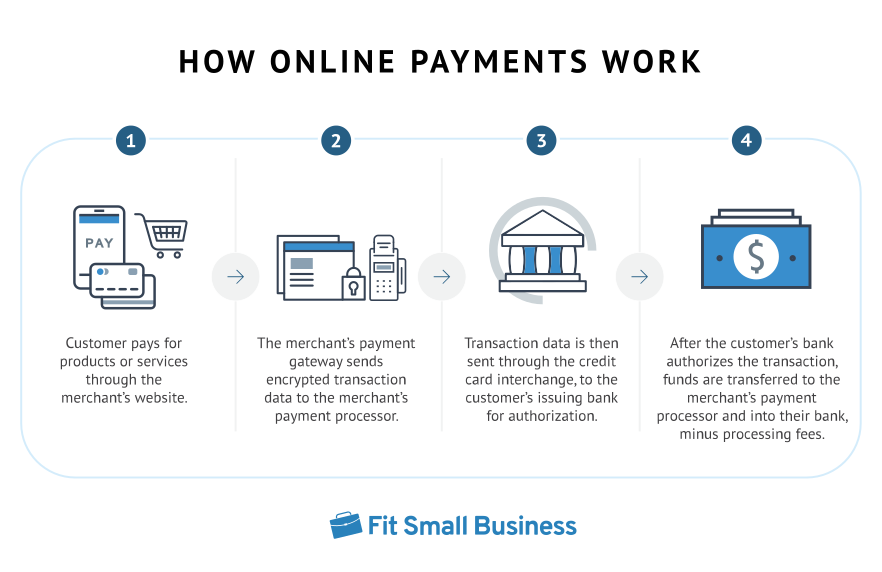
Before diving into specific solutions, it’s crucial to grasp the ecosystem that facilitates credit card transactions. This involves several key players working in concert to ensure payments are processed securely and efficiently.
The Evolving Need for Card Acceptance
The shift away from cash is driven by convenience, security, and the widespread adoption of credit and debit cards. Consumers increasingly rely on cards for everyday purchases, online shopping, and even peer-to-peer transactions. For businesses, accepting cards translates directly into increased sales opportunities, higher average transaction values, and a broader customer base. It also professionalizes your operation, instilling trust and credibility in the eyes of your clientele. Ignoring this trend means potentially alienating a significant portion of your market and falling behind competitors.
Core Components: Merchants, Acquirers, Processors, Networks
A credit card transaction, despite its apparent simplicity, involves a complex dance between multiple entities:
- Merchant: This is your business, the entity accepting the payment.
- Customer: The cardholder initiating the payment.
- Issuing Bank: The bank that issued the credit card to the customer (e.g., Chase, Wells Fargo).
- Acquiring Bank (Acquirer): A financial institution that processes credit or debit card payments on behalf of a merchant. It acts as a go-between for the merchant and the issuing bank.
- Payment Processor: A company that handles the technical aspects of processing credit card transactions, often partnering with acquiring banks. They route transaction data between the merchant, acquirer, and card networks.
- Card Networks: The global financial networks (e.g., Visa, Mastercard, American Express, Discover) that facilitate communication and transfer of funds between issuing and acquiring banks. They set the rules and regulations for transactions.
When a customer swipes or taps their card, data travels from your terminal or website to the processor, then to the card network, the issuing bank for approval, and back again, all within a matter of seconds.
Benefits Beyond Convenience
Beyond simply meeting customer expectations, accepting credit cards offers tangible financial benefits. It can lead to higher average transaction values as customers are not limited by the cash in their wallet. It also reduces the risks associated with handling large amounts of cash, such as theft or errors in counting. Furthermore, card transactions provide digital records, simplifying bookkeeping, reconciliation, and tax preparation, offering invaluable insights into sales trends and customer behavior.
Choosing the Right Payment Solution for Your Business
The method you choose for accepting credit card payments will largely depend on your business model, whether you operate primarily online, in a physical store, or both. Each solution offers distinct advantages and caters to different operational needs.
Point-of-Sale (POS) Systems for Physical Stores
For brick-and-mortar businesses, a modern POS system is the cornerstone of credit card acceptance. These systems integrate hardware (card readers, receipt printers, cash drawers) with software to manage sales, inventory, and customer data. Many POS systems now offer sophisticated features like loyalty programs, employee management, and detailed reporting. Options range from basic mobile POS (mPOS) solutions using smartphones or tablets with attached card readers (ideal for pop-up shops or freelancers) to robust, all-in-one terminal systems for larger retail environments. Popular examples include Square, Clover, and Toast (for restaurants).
Online Payment Gateways for E-commerce
If your business operates online, a payment gateway is essential. This is the virtual equivalent of a physical POS terminal, securely authorizing payments for e-commerce transactions. It encrypts sensitive credit card information and sends it from your website to the payment processor. Most e-commerce platforms (like Shopify, WooCommerce, BigCommerce) have built-in integrations with popular payment gateways. When selecting one, consider factors like transaction fees, supported currencies, integration complexity, and security features. Key players include Stripe, PayPal, Authorize.Net, and Braintree.
Mobile Payment Processors and Apps
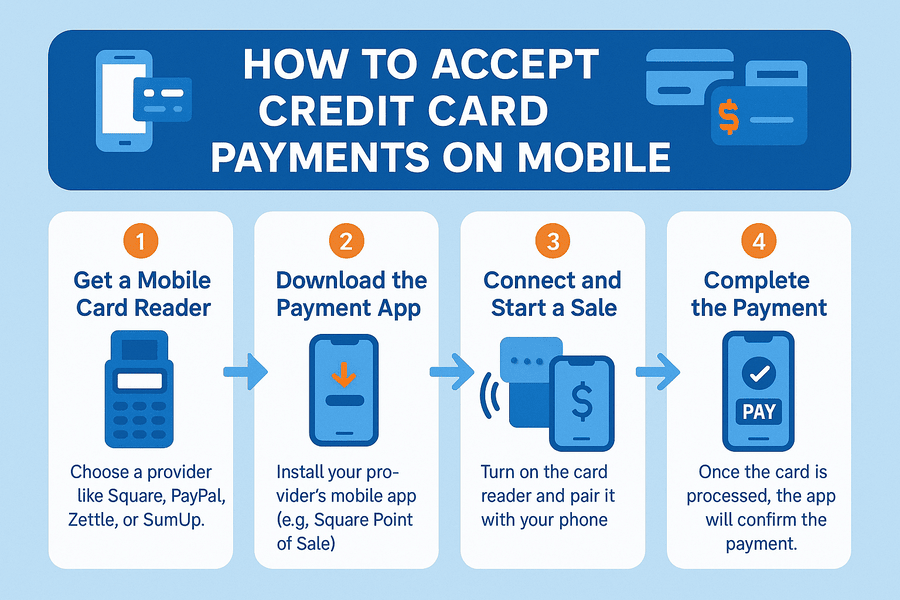
For businesses on the go, independent contractors, or those offering services at various locations, mobile payment processors offer flexibility. These solutions typically involve a small card reader that plugs into a smartphone or tablet, coupled with a dedicated app. They are ideal for food trucks, market vendors, mobile hairdressers, and consultants. Companies like Square, SumUp, and PayPal Here have popularized this method, making credit card acceptance accessible and affordable for micro-businesses and freelancers.
Virtual Terminals for Phone/Mail Orders
A virtual terminal allows you to process credit card payments directly from any internet-connected computer. Instead of a physical card reader, you manually enter the customer’s credit card details into a secure web-based application. This is particularly useful for businesses that take orders over the phone, by mail, or need to process payments from invoices without a direct customer interaction. It provides a secure environment for Card-Not-Present (CNP) transactions, though these often carry higher processing fees due to increased fraud risk.
Integrated Payment Solutions
Many modern business software solutions, such as accounting platforms (e.g., QuickBooks) or customer relationship management (CRM) systems, offer integrated payment processing. This means that payment functionality is built directly into the software, streamlining workflows, reducing manual data entry, and improving reconciliation. While convenient, it’s important to compare the integrated solution’s fees and features against standalone processors to ensure it offers the best value for your specific needs.
Key Considerations Before You Choose
Selecting the right payment processing partner involves more than just picking the cheapest option. A thorough evaluation of costs, security, integration, and support is critical to long-term success and financial health.
Transaction Fees and Pricing Models
Understanding the fee structure is paramount. Payment processors typically use one of three main pricing models:
- Interchange-Plus Pricing: Often considered the most transparent, this model charges you the exact “interchange rate” (set by card networks and issuing banks) plus a fixed markup by the processor. This is generally preferred by businesses with higher transaction volumes.
- Flat-Rate Pricing: Simplifies costs by charging a fixed percentage and a small per-transaction fee (e.g., 2.9% + $0.30) regardless of card type or transaction value. This is popular with small businesses due to its predictability but can be more expensive for high-volume, low-value transactions.
- Tiered Pricing: Groups different interchange rates into “qualified,” “mid-qualified,” and “non-qualified” tiers, each with its own percentage rate. While seemingly straightforward, this model can be opaque, as processors define their own tiers, often pushing transactions into higher-cost tiers. It’s generally the least transparent and potentially most expensive.
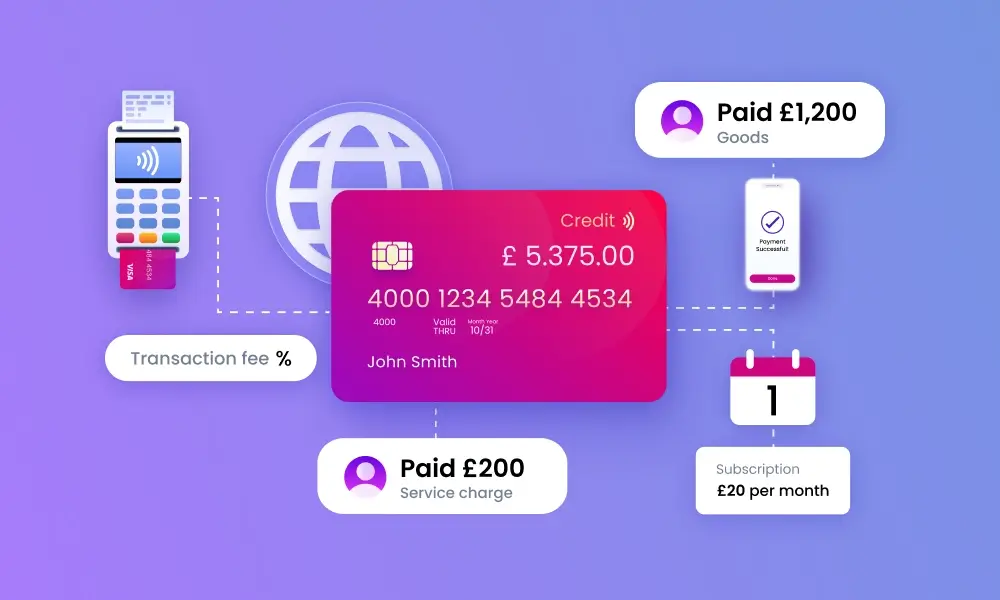
Beyond transaction fees, look out for monthly fees, setup fees, PCI compliance fees, chargeback fees, and early termination fees. Always request a clear, itemized breakdown of all potential costs.
Security and PCI DSS Compliance
Protecting sensitive customer data is non-negotiable. Payment Card Industry Data Security Standard (PCI DSS) compliance is a set of security standards designed to ensure that all companies that process, store, or transmit credit card information maintain a secure environment. Non-compliance can result in hefty fines, damage to your reputation, and loss of the ability to process cards. Ensure your chosen processor and any hardware/software you use are fully PCI compliant. Look for features like end-to-end encryption, tokenization, and fraud prevention tools.
Setup Process and Technical Integration
Consider the ease of setup and integration with your existing systems. Will it require significant technical expertise or can you implement it yourself? For e-commerce, does it integrate seamlessly with your platform? For brick-and-mortar, is the hardware easy to install and use? A complicated setup can lead to delays and increased costs. Assess the required time and resources to get your chosen solution up and running smoothly.
Customer Support and Reliability
When things go wrong – a transaction fails, a reader malfunctions, or you have a billing query – reliable customer support is crucial. Research the provider’s reputation for support: Are they available 24/7? Do they offer phone, email, and chat support? What are their typical response times? A system that is frequently down or has poor support can directly impact your sales and customer satisfaction.
Reporting and Analytics Features
Robust reporting and analytics can provide invaluable insights into your sales performance, transaction trends, and customer behavior. Does the solution offer detailed reports on sales, refunds, chargebacks, and settlement times? Can you easily export data for accounting purposes? Good reporting tools can help you make informed business decisions, identify peak sales periods, and manage your finances more effectively.
Setting Up and Optimizing Your Credit Card Acceptance
Once you’ve chosen a suitable solution, the next steps involve getting it operational and ensuring you’re leveraging its full potential.
Application and Approval Process
Regardless of the solution, you’ll need to complete an application process. This typically involves providing business details, financial information, and often a voided check for bank account verification. The approval process can take anywhere from a few hours for mobile processors to several days or weeks for traditional merchant accounts, depending on your business type and risk profile. Be prepared to provide accurate and complete documentation to avoid delays.
Training Your Staff
For physical businesses, proper staff training is vital. Ensure your team understands how to operate the POS system, process different types of payments (swipe, chip, tap), handle refunds, and troubleshoot common issues. Training should also cover security protocols, such as verifying customer identity for large transactions and understanding chargeback prevention techniques. Well-trained staff contribute to a smooth customer experience and reduce processing errors.
Enhancing Customer Experience
A smooth and pleasant payment experience is part of good customer service. Ensure your payment process is fast, intuitive, and offers multiple options (e.g., contactless payments, digital wallets). Clearly display accepted card logos. For online stores, a streamlined checkout process with minimal steps and transparent pricing reduces cart abandonment rates. Providing digital receipts via email or SMS is also a convenient touch that many customers appreciate.
Monitoring Transactions and Preventing Fraud
Proactive monitoring is key to preventing fraud and minimizing chargebacks. Regularly review your transaction reports for suspicious activity or unusual patterns. Utilize any built-in fraud detection tools offered by your processor. For online businesses, consider implementing additional security measures like AVS (Address Verification Service) and CVV verification. Being vigilant helps protect both your business and your customers from financial losses.
Navigating Fees and Ensuring Compliance
Managing the financial implications and legal requirements of credit card processing is an ongoing responsibility that demands attention to detail.
Deciphering the Cost Structure
Beyond the initial transaction fees, be aware of other potential costs. These can include monthly minimums (if your transaction volume is low), statement fees, PCI compliance fees (sometimes an annual fee), and potentially higher rates for “card-not-present” transactions or international cards. Always review your monthly statements meticulously to identify any unexpected charges and ensure you understand exactly what you’re paying for. Don’t hesitate to contact your processor if something is unclear.
Understanding Chargebacks and How to Mitigate Them
A chargeback occurs when a customer disputes a transaction with their issuing bank, forcing the funds to be returned. Chargebacks can be costly, involving fees, loss of revenue, and potential penalties from card networks if they become excessive. Common reasons include fraud, services not rendered, or billing errors. To mitigate chargebacks:
- Maintain clear records of all transactions.
- Provide excellent customer service to resolve issues before they escalate to a dispute.
- Use clear and recognizable billing descriptors.
- For online orders, use tracking for shipments and require signatures for expensive items.
- Respond promptly and thoroughly to chargeback inquiries with all requested documentation.
Staying PCI DSS Compliant
PCI DSS compliance is not a one-time event; it’s an ongoing process. You must continually assess your security posture, train employees, and maintain secure systems. Many processors offer tools or guidance to help you stay compliant, but ultimately, the responsibility rests with your business. Regularly review your compliance status and address any vulnerabilities promptly to protect your customers’ data and avoid penalties.
Future-Proofing Your Payment Strategy
The payment landscape is constantly evolving. New technologies like cryptocurrency payments, QR code payments, and even more advanced biometrics are emerging. Stay informed about these trends and consider how they might impact your business in the future. A flexible payment solution that can adapt to new technologies and customer preferences will ensure your business remains competitive and poised for growth in an ever-changing financial world. Regularly review your payment processing setup to ensure it continues to meet your business needs and provides the best value.
aViewFromTheCave is a participant in the Amazon Services LLC Associates Program, an affiliate advertising program designed to provide a means for sites to earn advertising fees by advertising and linking to Amazon.com. Amazon, the Amazon logo, AmazonSupply, and the AmazonSupply logo are trademarks of Amazon.com, Inc. or its affiliates. As an Amazon Associate we earn affiliate commissions from qualifying purchases.