
NVIDIA has transcended its origins as a graphics card manufacturer to become a pivotal architect of the artificial intelligence (AI) revolution. Its chips are the bedrock upon which the most sophisticated AI models are built, powering everything from data centers and scientific research to autonomous vehicles and the emerging metaverse. This meteoric rise has captivated investors, prompting the crucial question: what will NVIDIA stock be worth in a decade? Predicting stock prices over such a long horizon is inherently complex, fraught with variables and uncertainties. However, by dissecting NVIDIA’s core strengths, identifying key growth drivers, acknowledging potential risks, and applying sound valuation principles, we can construct a framework to understand its potential trajectory and assess the investment opportunity.
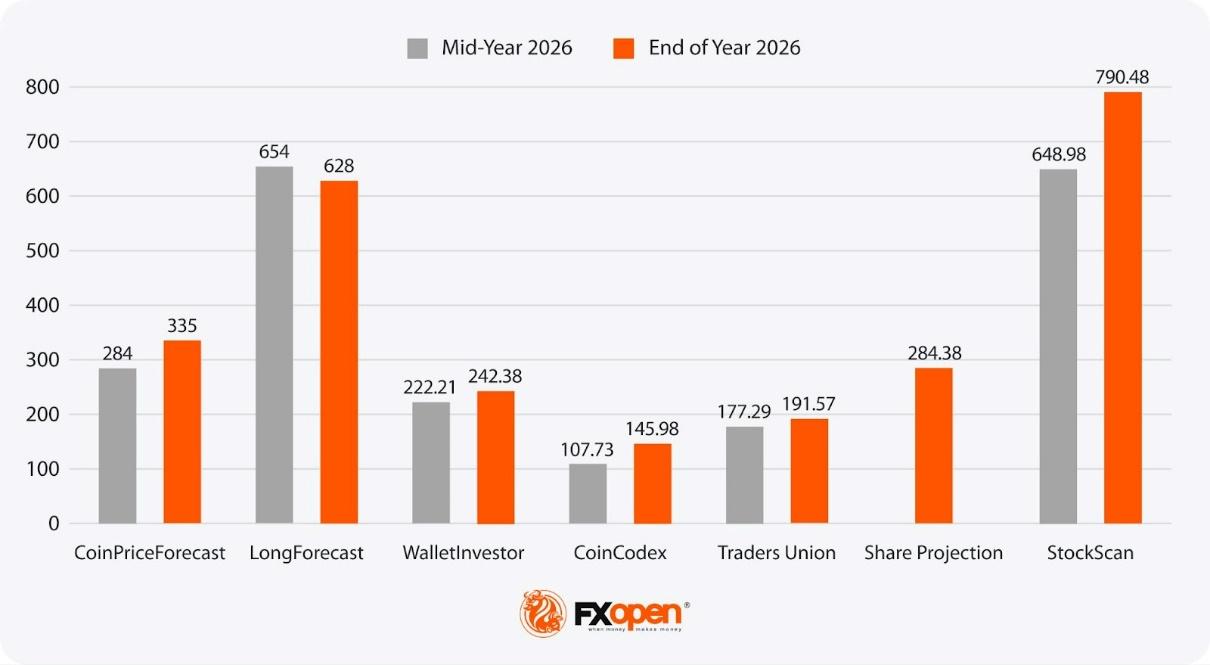
This article delves into the financial prospects of NVIDIA, analyzing the market forces, technological advancements, and economic conditions that could shape its valuation by 2034. It’s an exploration rooted in investment analysis, aiming to provide an insightful perspective rather than a definitive forecast.
The AI Revolution and NVIDIA’s Foundational Dominance
NVIDIA’s current market position is not merely strong; it is foundational to the most significant technological paradigm shift of our era: artificial intelligence. Its comprehensive ecosystem has created a powerful moat that extends far beyond silicon.
NVIDIA’s Current Market Position and AI Infrastructure
At the heart of NVIDIA’s dominance lies its commanding market share in data center graphics processing units (GPUs) tailored for AI workloads. Estimates frequently place its share above 80-90% in this critical segment, making it an indispensable partner for cloud providers, enterprises, and research institutions pushing the boundaries of AI. Its GPUs, like the H100 and upcoming Blackwell series, are engineered specifically for the parallel processing demands of machine learning and deep learning algorithms, offering unparalleled performance and efficiency. This dominance isn’t accidental; it’s the result of decades of strategic investment in R&D and anticipating the computational needs of future technologies. The sheer scale and complexity of training large language models (LLMs) and other generative AI applications mean that the demand for NVIDIA’s specialized hardware is not just robust but accelerating. Companies investing billions in AI infrastructure find NVIDIA’s solutions to be the most reliable and performant path to achieve their goals, cementing its role as the industry standard.
Beyond GPUs: Software and Platform Ecosystem
While hardware prowess is significant, NVIDIA’s true genius lies in its software ecosystem, particularly CUDA (Compute Unified Device Architecture). CUDA is a parallel computing platform and programming model that allows developers to leverage the immense power of NVIDIA GPUs for general-purpose computing. This software layer has created a formidable barrier to entry for competitors. Tens of millions of developers, researchers, and data scientists are proficient in CUDA, and countless applications, libraries, and frameworks are built on it. This deep integration means switching to alternative hardware would entail substantial re-tooling, re-training, and re-coding efforts, creating significant switching costs. Furthermore, NVIDIA has expanded its software stack with tools like cuDNN for deep neural networks, TensorRT for inference optimization, and its Omniverse platform for 3D simulation and collaboration. These software offerings transform NVIDIA from a mere chip supplier into a full-stack platform provider, creating a sticky, high-margin revenue stream that enhances its value proposition exponentially.
Competitive Landscape and Moats
NVIDIA does not operate in a vacuum. Competitors such as AMD and Intel are actively developing their own AI acceleration chips and software platforms. Hyperscalers like Google (with TPUs) and Amazon (with Trainium/Inferentia) are also designing custom ASICs (Application-Specific Integrated Circuits) to optimize their own cloud infrastructure. However, NVIDIA’s moats remain incredibly robust. Its first-mover advantage, coupled with continuous innovation, a vast intellectual property portfolio, and the deeply entrenched CUDA ecosystem, provides a substantial lead. The sheer performance gap often means that even with competitive offerings, NVIDIA’s chips deliver superior efficiency and speed for cutting-edge AI workloads. Moreover, NVIDIA’s investment in foundational research and its ability to rapidly iterate and bring new architectures to market ensure it stays ahead of the curve, making it a very difficult target for rivals to dislodge from its prime position.
Key Growth Drivers for the Next Decade
NVIDIA’s trajectory over the next ten years will be fueled by several powerful, interconnected growth drivers that extend its reach across various industries and technological frontiers.
Data Centers and Enterprise AI Adoption
The insatiable demand for computing power to train and deploy AI models will remain NVIDIA’s primary growth engine. Data centers globally are undergoing a massive transformation, shifting from general-purpose CPUs to specialized accelerators. This transition is not merely about scaling existing AI; it’s about enabling entirely new applications across every enterprise sector. From advanced analytics and predictive maintenance in manufacturing to drug discovery in pharmaceuticals and personalized customer experiences in retail, AI is becoming indispensable. NVIDIA’s role here is multifaceted: providing the raw computational power, offering networking solutions (Infiniband and Spectrum Ethernet), and developing platforms like DGX systems for turnkey AI infrastructure. As AI permeates every facet of business operations, the spending on NVIDIA’s products is projected to surge, representing a long runway for sustained revenue growth.
Autonomous Vehicles and Robotics
Autonomous driving and robotics represent another colossal market opportunity. NVIDIA’s DRIVE platform is a leading solution for developing and deploying self-driving systems, with partnerships spanning major automakers and robotaxi companies. The computational demands of processing real-time sensor data, performing complex decision-making, and ensuring safety in autonomous systems are immense, requiring specialized AI processors. As regulatory frameworks evolve and the technology matures, the adoption of autonomous vehicles—from passenger cars to logistics trucks—will accelerate, creating a significant, recurring revenue stream for NVIDIA. Similarly, in industrial and service robotics, NVIDIA’s Jetson platform provides the edge AI computing power needed for robots to perceive, reason, and act intelligently in unstructured environments, driving automation across industries.
Metaverse, Gaming, and Professional Visualization
While AI is the headline, NVIDIA’s traditional strengths in graphics and visualization continue to offer substantial growth. The metaverse, envisioned as a persistent, interconnected virtual world, will require unprecedented levels of graphical fidelity and real-time rendering, a domain where NVIDIA excels with technologies like ray tracing and DLSS (Deep Learning Super Sampling). Its Omniverse platform is positioning NVIDIA as a foundational builder for industrial metaverse applications, enabling digital twins for complex simulations and collaborative design. Gaming, NVIDIA’s historical core, continues to expand, with new generations of GPUs driving higher fidelity experiences. Professional visualization, powering workstations for architects, designers, and filmmakers, also benefits from NVIDIA’s advanced GPUs and software, ensuring a robust, if less explosive, revenue segment.
New Markets: Healthcare, Industrial AI, and Edge Computing
Beyond the major sectors, NVIDIA is strategically expanding into numerous specialized markets. In healthcare, its platforms are accelerating genomics sequencing, medical imaging analysis, and drug discovery. In industrial AI, its solutions are enabling predictive maintenance, quality control, and optimized factory operations. Edge computing, where AI processing happens closer to the data source rather than in the cloud, is another burgeoning area. NVIDIA’s Jetson and Orin platforms are perfectly suited for these distributed AI applications, addressing latency, bandwidth, and privacy concerns. As AI becomes ubiquitous, NVIDIA’s foundational technology will find applications in almost every industry, continuously opening new revenue streams.
Potential Challenges and Risks
No investment, regardless of its current success, is without risk. NVIDIA’s journey over the next decade will undoubtedly face headwinds that could impact its valuation.
Geopolitical Tensions and Supply Chain Vulnerabilities
NVIDIA’s reliance on advanced semiconductor manufacturing, primarily from TSMC in Taiwan, exposes it to significant geopolitical risks. Tensions between the US and China, particularly concerning Taiwan, could disrupt supply chains, impact production capacity, and lead to trade restrictions that limit NVIDIA’s access to crucial markets or manufacturing capabilities. US export controls targeting advanced AI chips to China have already impacted NVIDIA’s revenue in that region, forcing it to create modified, less powerful versions of its chips. Escalation of these tensions could have a profound effect on NVIDIA’s ability to operate globally and secure its necessary components.
Intense Competition from Hyperscalers and Startups
While NVIDIA currently enjoys a dominant position, the AI chip market is becoming increasingly competitive. Hyperscale cloud providers like Google, Amazon, and Microsoft are investing heavily in developing their own custom AI ASICs to reduce reliance on third-party suppliers and optimize costs within their massive data centers. Startups are also emerging with innovative architectures and specialized chips targeting specific AI workloads. While these may not directly challenge NVIDIA across the board, they could chip away at market share in niche areas or put pressure on pricing, potentially impacting NVIDIA’s long-term profitability and growth rates.
Regulatory Scrutiny and Anti-Trust Concerns
NVIDIA’s unparalleled market dominance in AI hardware could attract increased regulatory scrutiny. Governments around the world are increasingly concerned about monopolies and market concentration in critical technology sectors. Anti-trust investigations could lead to limitations on mergers and acquisitions, forced licensing of intellectual property, or even structural changes to the company, all of which could negatively impact its strategic flexibility and profitability. The ARM acquisition attempt, which ultimately failed due to regulatory objections, serves as a stark reminder of these challenges.
Market Volatility and Valuation Risks
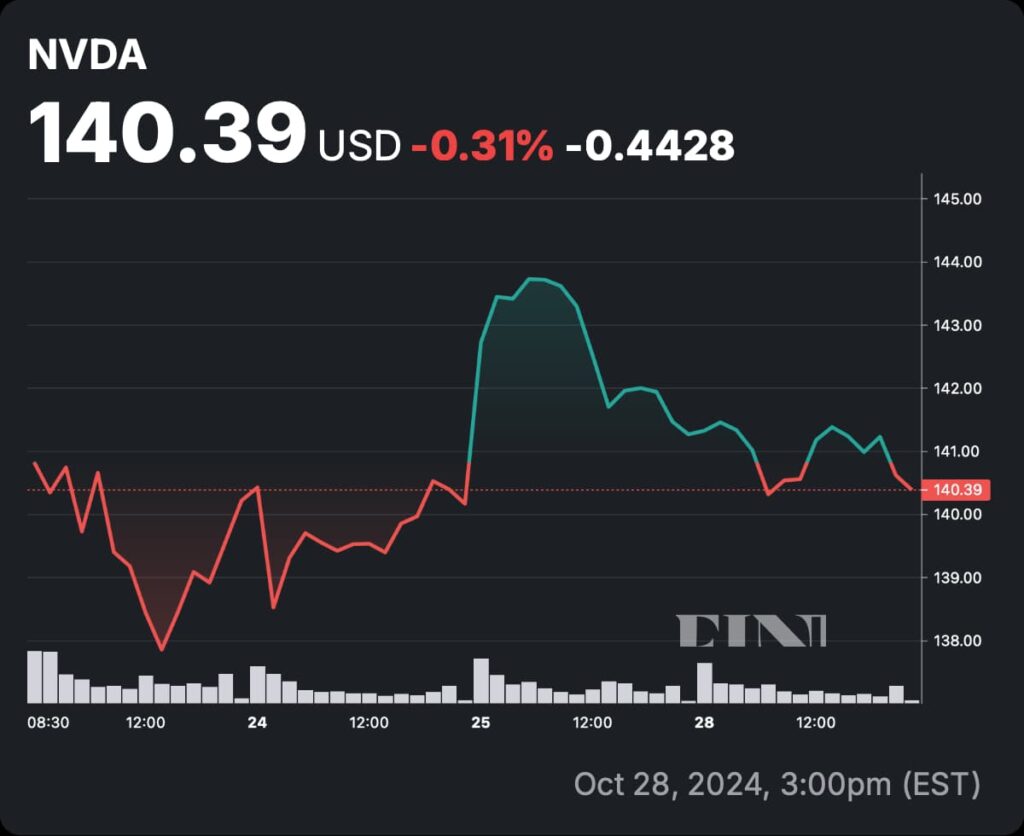
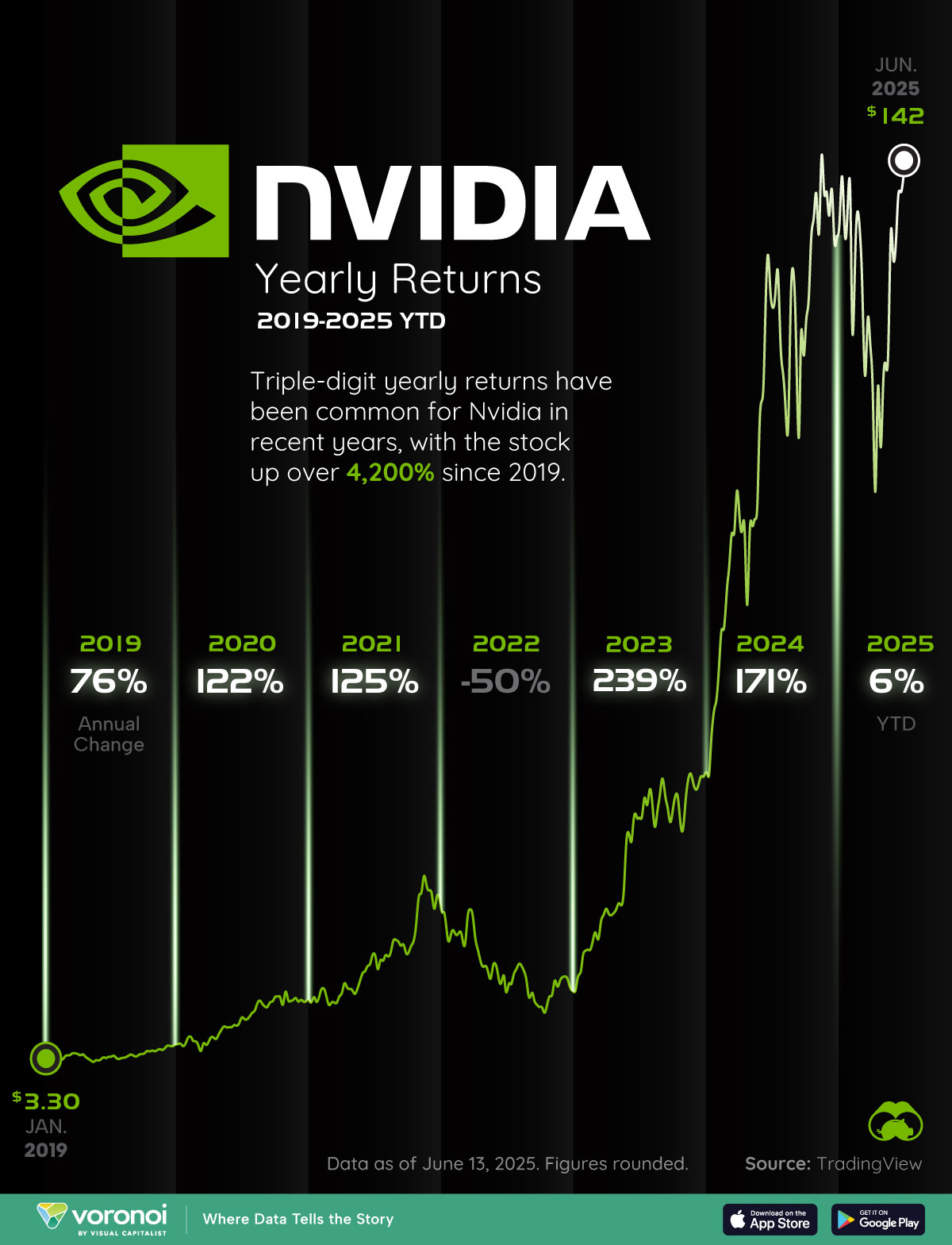
NVIDIA’s stock has experienced periods of significant volatility, and its current valuation reflects extremely high growth expectations. The market capitalization often reaches levels that are many multiples of its earnings and revenue, indicating that investors are pricing in a decade or more of substantial growth. Any slowdown in AI adoption, increased competition, or broader economic downturn could lead to a significant correction in its stock price. Furthermore, rising interest rates tend to penalize growth stocks with high valuations, as future earnings are discounted more heavily. Investors must consider whether the current price adequately accounts for the inherent risks and uncertainties of such a long-term projection.
Valuation Methodologies for Long-Term Projections
Estimating NVIDIA’s worth in 10 years requires more than just identifying growth trends; it demands a structured approach to valuation, acknowledging the inherent uncertainties.
Discounted Cash Flow (DCF) Analysis
A Discounted Cash Flow (DCF) analysis is a fundamental valuation method that projects a company’s future free cash flows (FCF) and then discounts them back to their present value using a weighted average cost of capital (WACC). For a long-term projection like 10 years, DCF is particularly useful because it focuses on a company’s intrinsic value based on its ability to generate cash. The challenge with NVIDIA lies in accurately forecasting its revenue growth, profit margins, capital expenditures, and working capital needs over such an extended period, given the rapid evolution of AI technology. Small changes in these assumptions, especially the long-term growth rate and the terminal value (representing cash flows beyond the explicit forecast period), can significantly alter the final valuation. Therefore, a DCF for NVIDIA requires a deep understanding of market trends and a conservative approach to growth assumptions.
Price-to-Earnings (P/E) Multiples and Growth Rates
Another common approach involves using Price-to-Earnings (P/E) multiples. This method compares NVIDIA’s projected earnings per share (EPS) in 10 years to a future P/E multiple. The P/E multiple itself is a reflection of market sentiment, perceived growth prospects, and industry averages. For a company like NVIDIA, which is expected to continue growing at a high rate, a higher P/E multiple might be justified compared to a mature, slow-growth company. Investors might consider a PEG ratio (P/E to Growth ratio) to gauge whether the stock is overvalued relative to its expected growth. Projecting NVIDIA’s EPS in 2034 requires making educated guesses about its market share, profit margins, and share count, which can be highly speculative. The choice of the future P/E multiple is also critical; will NVIDIA maintain its premium valuation, or will it normalize as the company matures and faces increased competition?
Sensitivity Analysis and Scenario Planning
Given the high degree of uncertainty in a 10-year forecast, performing sensitivity analysis and scenario planning is crucial. Instead of presenting a single point estimate for NVIDIA’s future stock price, it’s far more insightful to outline a range of potential outcomes. This involves running the DCF or P/E model under different assumptions for key variables:
- Bull Case: Assumes NVIDIA maintains its AI dominance, expands successfully into new markets (e.g., autonomous robotics, industrial metaverse), faces limited competition, and achieves higher-than-expected revenue growth and profit margins.
- Base Case: Assumes strong, but moderating, growth as the AI market matures, some degree of increased competition, and continued innovation within established segments.
- Bear Case: Assumes significant competitive pressures, major geopolitical disruptions, slower-than-expected AI adoption, or regulatory challenges that severely impact market share and profitability.
This approach provides investors with a more realistic understanding of the potential upside and downside risks, enabling a more robust investment decision.
Projecting NVIDIA’s Value in 2034
Synthesizing the growth drivers, risks, and valuation methodologies allows us to frame potential scenarios for NVIDIA’s worth in 2034. It is essential to reiterate that these are analytical scenarios, not guarantees.
Bull Case: Sustained Hypergrowth and Market Expansion
In a bull case scenario, NVIDIA maintains its near-monopoly in core AI infrastructure, particularly for advanced training workloads, and successfully penetrates emerging markets like autonomous robotics and the industrial metaverse at scale. The CUDA ecosystem remains robust and expands, making it even harder for competitors to gain significant traction. Geopolitical risks are managed, and supply chains remain resilient. Under this scenario, NVIDIA continues to achieve significant revenue growth, potentially averaging 20-30% annually for much of the decade, albeit with some deceleration towards the latter half. Its profit margins remain high due to its platform leadership and high-value software offerings. The market continues to award NVIDIA a premium valuation (high P/E multiple) due to its sustained innovation and critical role in the global economy. In this optimistic outlook, NVIDIA’s market capitalization could conceivably be several multiples of its current value, translating to substantial stock price appreciation, potentially reaching a valuation that is difficult to fathom by today’s standards, possibly in the multi-trillion dollar range, resulting in a stock price that could be 5-10 times its current levels or even more, depending on future stock splits and share dilution.
Base Case: Strong, but Moderating Growth
The base case scenario posits that NVIDIA continues to grow strongly, but faces increasing competition and some market maturation. While it retains its leadership in high-end AI training, specialized chips from hyperscalers and rivals might capture a larger share of inference and more commodity AI workloads. Revenue growth might average 12-20% annually over the decade, with margins experiencing some pressure due to increased competition and the need for continuous, costly R&D. NVIDIA successfully diversifies its revenue streams, with significant contributions from autonomous vehicles and enterprise software, but these might not entirely offset a slower growth trajectory in its core data center GPU business. In this scenario, NVIDIA’s P/E multiple might normalize somewhat compared to its current peak, reflecting a still excellent but less stratospheric growth profile. Even with moderating growth and P/E contraction, a company of NVIDIA’s caliber could still see its stock price multiply significantly over 10 years, perhaps 2-4x its current value, fueled by consistent earnings growth and share repurchases.
Bear Case: Significant Headwinds and Competition
In a bear case, NVIDIA encounters substantial challenges that significantly impede its growth. This could involve severe geopolitical disruptions (e.g., a complete cutoff from crucial manufacturing or major market access), a sudden breakthrough by a competitor that erodes its CUDA moat, or a global economic downturn that sharply curtails enterprise AI spending. Regulatory interventions could also limit its operational flexibility or mandate changes that impact profitability. Under this pessimistic outlook, NVIDIA’s revenue growth could slow dramatically, perhaps to single digits or even experience contractions in certain periods. Profit margins would likely compress under competitive pressure, and the market would re-rate its valuation to a much lower P/E multiple, reflecting its diminished growth prospects and increased risks. In such a scenario, NVIDIA’s stock price could stagnate, fall, or underperform the broader market, possibly returning to levels seen a few years prior or experiencing only modest gains over the decade.
The Importance of a Long-Term Investment Horizon
For investors, understanding NVIDIA’s potential in 10 years requires recognizing that such a long horizon introduces both immense opportunity and significant uncertainty. The power of compounding makes even moderate annual returns substantial over a decade. However, technological shifts, economic cycles, and geopolitical events can dramatically alter a company’s fortunes. Investing in NVIDIA for the long term means having conviction in the continued growth of AI, NVIDIA’s ability to innovate and adapt, and its strategic management of competition and risks. It necessitates a willingness to weather short-term volatility in pursuit of long-term capital appreciation, backed by continuous monitoring of the company’s performance and the evolving market landscape.
In conclusion, while precisely quantifying NVIDIA’s stock worth in 2034 is impossible, the analytical framework suggests a strong likelihood of significant value creation, primarily driven by its indispensable role in the AI revolution. Investors seeking to capitalize on this megatrend must weigh the company’s formidable strengths against the inherent risks and position their portfolios with a clear understanding of the range of potential outcomes over the next decade.
aViewFromTheCave is a participant in the Amazon Services LLC Associates Program, an affiliate advertising program designed to provide a means for sites to earn advertising fees by advertising and linking to Amazon.com. Amazon, the Amazon logo, AmazonSupply, and the AmazonSupply logo are trademarks of Amazon.com, Inc. or its affiliates. As an Amazon Associate we earn affiliate commissions from qualifying purchases.