
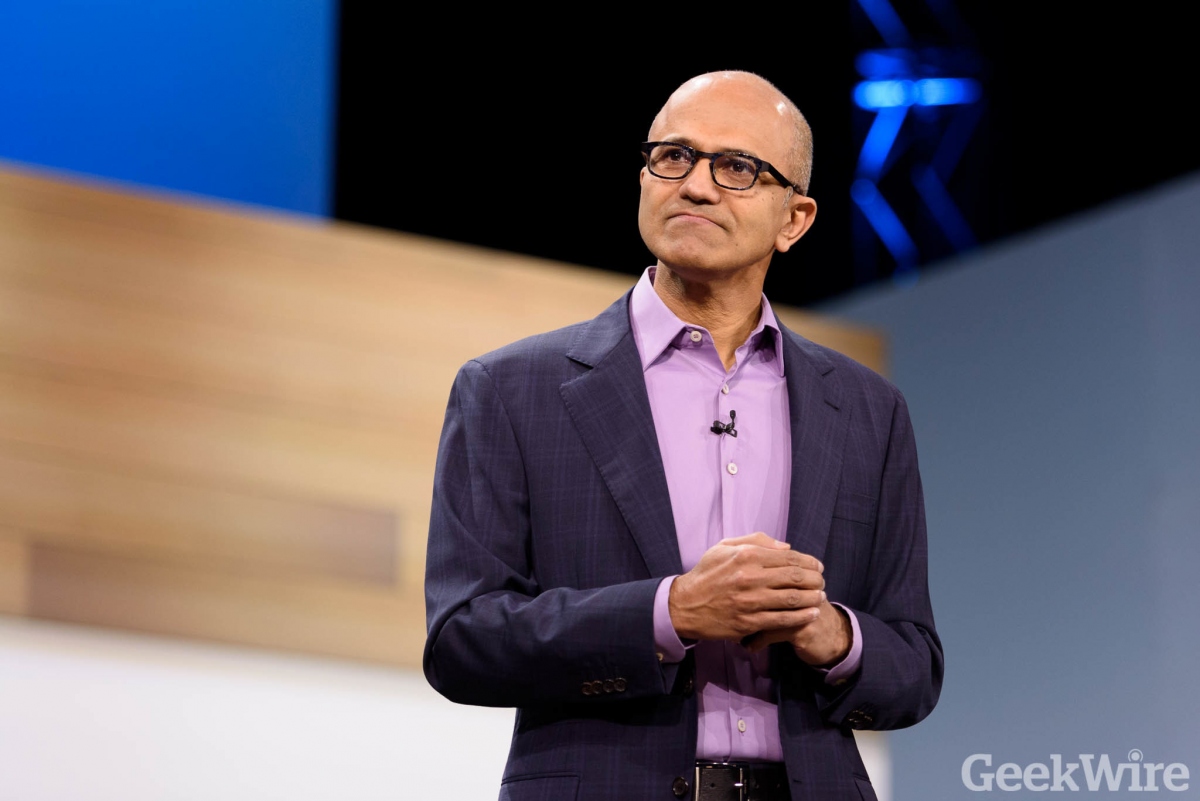
In the vast and rapidly evolving landscape of global technology, the leadership at the helm of an industry titan like Microsoft is not merely a figurehead position; it is a critical role that dictates strategic direction, technological innovation, market positioning, and ultimately, the company’s impact on billions of users worldwide. The individual currently holding this pivotal role, steering the Redmond-based software giant into new eras of computing, artificial intelligence, and cloud services, is Satya Nadella.
Nadella’s tenure as CEO, which began in February 2014, marked a profound inflection point for Microsoft. Coming from a background steeped in engineering and having led the company’s Cloud and Enterprise group, he was uniquely positioned to navigate Microsoft through the seismic shifts occurring in the tech world. His leadership has been characterized by a strategic pivot that reinvigorated the company, transforming it from a hardware and Windows-centric entity into a dominant force in cloud computing, artificial intelligence, and a more open, collaborative technology ecosystem. Understanding Nadella’s vision and execution is essential to comprehending the technological trajectory of one of the world’s most influential companies.

The Architect of Microsoft’s Cloud Transformation
When Satya Nadella took the reins, Microsoft was at a crossroads. While still immensely profitable, it faced significant challenges in the burgeoning mobile market and was perceived by many as having lost some of its innovative edge. Nadella’s most impactful strategic decision, which fundamentally reshaped Microsoft’s technological identity, was an aggressive and unwavering focus on cloud computing.
Shifting from a Device-Centric to Cloud-First Mindset: Azure’s Ascendancy
Nadella inherited a Microsoft heavily invested in traditional software licenses and a nascent but promising cloud platform, Azure. His brilliance lay in recognizing that the future of computing wasn’t solely about the device in one’s hand or the operating system on a desktop, but about the ubiquitous, scalable, and intelligent services delivered from the cloud. He championed a “cloud-first, mobile-first” strategy, even though Microsoft’s mobile endeavors largely faltered. The emphasis, however, was on the “cloud-first” part, making Azure the company’s undisputed technical and strategic priority.
Under his leadership, Azure transformed from a distant competitor to Amazon Web Services (AWS) into a formidable second player, and in many sectors, a preferred choice for enterprises. This involved massive investments in global data center infrastructure, a relentless pursuit of new services (from Infrastructure as a Service to Platform as a Service and Software as a Service offerings), and a deep integration with Microsoft’s enterprise software suite. Azure’s growth has not only buoyed Microsoft’s revenue but, more importantly, has positioned the company as a foundational technology provider for countless businesses and applications across the globe, powering everything from small startups to Fortune 500 companies and critical government infrastructure. This strategic pivot was a technological gamble that paid off handsomely, ensuring Microsoft’s relevance and growth in the digital age.
Open Source Embrace: A Paradigm Shift in Microsoft’s Tech Philosophy
Perhaps one of the most astonishing shifts under Nadella’s leadership, from a purely technological standpoint, was Microsoft’s dramatic embrace of open-source software. For decades, Microsoft was synonymous with proprietary software, often viewed with skepticism, if not outright hostility, by the open-source community. Nadella shattered this perception.
He famously declared “Microsoft loves Linux” and backed it with actions. Azure became a welcoming home for Linux distributions and open-source technologies. The company acquired GitHub, the world’s largest platform for open-source software development, signaling a deep commitment rather than mere lip service. Furthermore, Microsoft began open-sourcing significant portions of its own code, from .NET to TypeScript, and actively contributed to various open-source projects. This strategic shift was not just about goodwill; it was a pragmatic technological move. It allowed Microsoft to attract a broader developer base, integrate with a wider array of innovative tools and platforms, and ensure its services and technologies remained interoperable and attractive in a world increasingly powered by open standards and collaborative development. This philosophical overhaul had a profound impact on Microsoft’s technological roadmap, fostering a more inclusive and innovative environment.
Spearheading Innovation in the AI Era
The rapid advancements in Artificial Intelligence (AI) have become the defining technological trend of the 21st century, and under Nadella, Microsoft has positioned itself at the forefront of this revolution. His vision has been to infuse AI into every layer of Microsoft’s offerings, making it an ambient, intelligent layer that enhances productivity, creativity, and enterprise solutions.
Strategic Investments and Partnerships: OpenAI and Beyond
Nadella’s most significant AI-related move was the multi-billion dollar investment and deep partnership with OpenAI, the creator of ChatGPT and DALL-E. This was a masterstroke, granting Microsoft exclusive access to OpenAI’s cutting-edge large language models (LLMs) and advanced AI research. This partnership allowed Microsoft to leapfrog many competitors in the generative AI race, embedding state-of-the-art AI capabilities directly into its products at an unprecedented pace.
Beyond OpenAI, Microsoft has also made substantial investments in internal AI research, acquiring smaller AI startups, and fostering a culture of AI innovation across its various divisions. This strategy reflects an understanding that AI is not a single product but a foundational technology that will redefine how all software is built and consumed.
AI Integration Across Microsoft’s Product Ecosystem: Copilot and Dynamics
The fruits of Microsoft’s AI strategy are most visible in the pervasive integration of AI across its vast product ecosystem. The most prominent example is Microsoft Copilot, an AI assistant designed to enhance productivity across Microsoft 365 applications (Word, Excel, PowerPoint, Outlook, Teams), Windows, and even the Edge browser. Copilot leverages LLMs to generate text, summarize documents, create presentations, analyze data, and much more, aiming to transform how people work and interact with their computers.
Similarly, Microsoft’s Dynamics 365, its suite of enterprise resource planning (ERP) and customer relationship management (CRM) applications, has seen significant AI infusion, offering predictive analytics, intelligent automation, and personalized customer insights. Even in its gaming division, Xbox, AI is being explored for game development, player experiences, and content creation. Nadella’s approach has been to democratize AI, making its powerful capabilities accessible to a broad user base through familiar tools, rather than confining it to specialized applications.

Ethical AI Development and Responsible Innovation
Recognizing the profound societal implications of advanced AI, Nadella has consistently emphasized the importance of ethical AI development and responsible innovation. Microsoft has established principles for responsible AI, focusing on fairness, reliability and safety, privacy and security, inclusiveness, transparency, and accountability.
The company has invested in tools and research to mitigate AI biases, ensure transparency in AI decision-making, and protect user data. This commitment to responsible AI is not just a moral stance but a strategic imperative, building trust with users and regulators, and ensuring that Microsoft’s AI technologies are developed and deployed in ways that benefit humanity without inadvertently causing harm. It’s a crucial aspect of their long-term technological leadership in this sensitive domain.
Expanding the Tech Horizon: Gaming, Mixed Reality, and Quantum Computing
Beyond cloud and AI, Nadella has also overseen significant advancements and strategic plays in other frontier technology areas, demonstrating Microsoft’s continued commitment to innovation across diverse sectors.
Reinvigorating Xbox and the Gaming Cloud
Under Nadella, Microsoft’s Xbox division has seen a strategic shift from a pure console focus to a broader gaming ecosystem that embraces cloud gaming. The launch of Xbox Game Pass, a subscription service often dubbed “the Netflix of gaming,” offers a vast library of titles accessible across consoles, PCs, and even mobile devices via cloud streaming. This reflects a tech-forward approach to entertainment, leveraging Microsoft’s Azure infrastructure to deliver high-fidelity gaming experiences without the need for expensive hardware on the user’s end. The acquisition of Activision Blizzard, a monumental deal, further cements Microsoft’s ambition to be a leading player in the gaming content and platform space, integrating a massive IP library into its cloud-driven gaming strategy.
The Future of Interaction: HoloLens and Mixed Reality Applications
Microsoft has also been a pioneer in mixed reality with its HoloLens device. While still a niche product primarily targeted at enterprise and industrial applications, HoloLens showcases Microsoft’s long-term vision for human-computer interaction beyond traditional screens. Under Nadella, the company has continued to invest in the underlying technologies, exploring how spatial computing and augmented reality can transform fields like manufacturing, healthcare, and defense. This is a deliberate, long-term bet on a future where digital information seamlessly blends with the physical world, driven by sophisticated sensors, AI, and cloud processing.
Pioneering Quantum Computing Research
Looking even further into the future, Microsoft is a serious contender in the race for quantum computing. While still in its nascent stages, quantum computing promises to solve problems currently intractable for even the most powerful supercomputers. Microsoft has invested heavily in quantum research, developing its own topological qubit architecture and a comprehensive quantum development kit, Q#. This futuristic endeavor positions Microsoft as a potential leader in the next generation of computing, demonstrating Nadella’s willingness to invest in groundbreaking, long-term technological moonshots that could redefine the entire industry.
Cultivating a Culture of Innovation and Adaptability
A critical, albeit less tangible, aspect of Nadella’s impact on Microsoft’s technology strategy has been his focus on cultural transformation. He understood that for a massive organization to innovate and adapt effectively, its internal culture needed to evolve.
Empowering Engineers and Fostering Cross-Collaboration
Nadella moved away from internal rivalries that had sometimes stifled innovation at Microsoft. He fostered a culture that prioritized collaboration, both internally across divisions and externally with competitors and open-source communities. This shift empowered engineers, encouraging them to experiment, take calculated risks, and contribute to projects beyond their immediate teams. By breaking down silos, Microsoft has been able to leverage its vast intellectual capital more effectively, accelerating development cycles and integrating technologies seamlessly across its diverse product portfolio.
A Growth Mindset for a Rapidly Evolving Tech Landscape
Central to Nadella’s cultural overhaul was the promotion of a “growth mindset” – an idea popularized by Stanford psychologist Carol Dweck. This philosophy encourages continuous learning, resilience in the face of failure, and the belief that abilities can be developed through dedication and hard work. For a technology company operating in an environment of constant disruption, a growth mindset is indispensable. It enables Microsoft to pivot quickly, embrace new technologies, and adapt its strategies in response to market changes and emerging trends, ensuring that the company remains nimble and forward-thinking despite its immense size.
Conclusion
Satya Nadella’s leadership as CEO has been nothing short of transformative for Microsoft. Through strategic foresight, a willingness to embrace new paradigms, and a profound understanding of the technological landscape, he has not only revitalized a tech giant but also reshaped its core identity. His aggressive pivot to cloud computing, the embrace of open source, and the foundational integration of AI across all products have firmly re-established Microsoft as a leading innovator. Furthermore, his exploration of mixed reality, quantum computing, and the reinvention of its gaming division demonstrate a consistent commitment to pushing the boundaries of what’s technologically possible.
Nadella’s legacy is one of strategic clarity and cultural evolution, proving that even the largest technology companies can reinvent themselves under visionary leadership. As Microsoft continues to navigate the complexities of an increasingly digital and AI-driven world, its technological direction will undoubtedly remain deeply intertwined with the forward-thinking strategies laid out by its influential CEO, Satya Nadella.
aViewFromTheCave is a participant in the Amazon Services LLC Associates Program, an affiliate advertising program designed to provide a means for sites to earn advertising fees by advertising and linking to Amazon.com. Amazon, the Amazon logo, AmazonSupply, and the AmazonSupply logo are trademarks of Amazon.com, Inc. or its affiliates. As an Amazon Associate we earn affiliate commissions from qualifying purchases.