
The journey through higher education often involves navigating a complex landscape of financial aid, scholarships, grants, and loans. Among the myriad documents and agreements that prospective students encounter, the Master Promissory Note (MPN) stands as a foundational and critical component for those seeking federal student financial aid. Far more than just a signature on a dotted line, the MPN is a legally binding contract that outlines the terms and conditions under which you agree to borrow and repay federal student loans. Understanding its intricacies is not just a procedural step; it’s an essential part of responsible financial planning for your education.
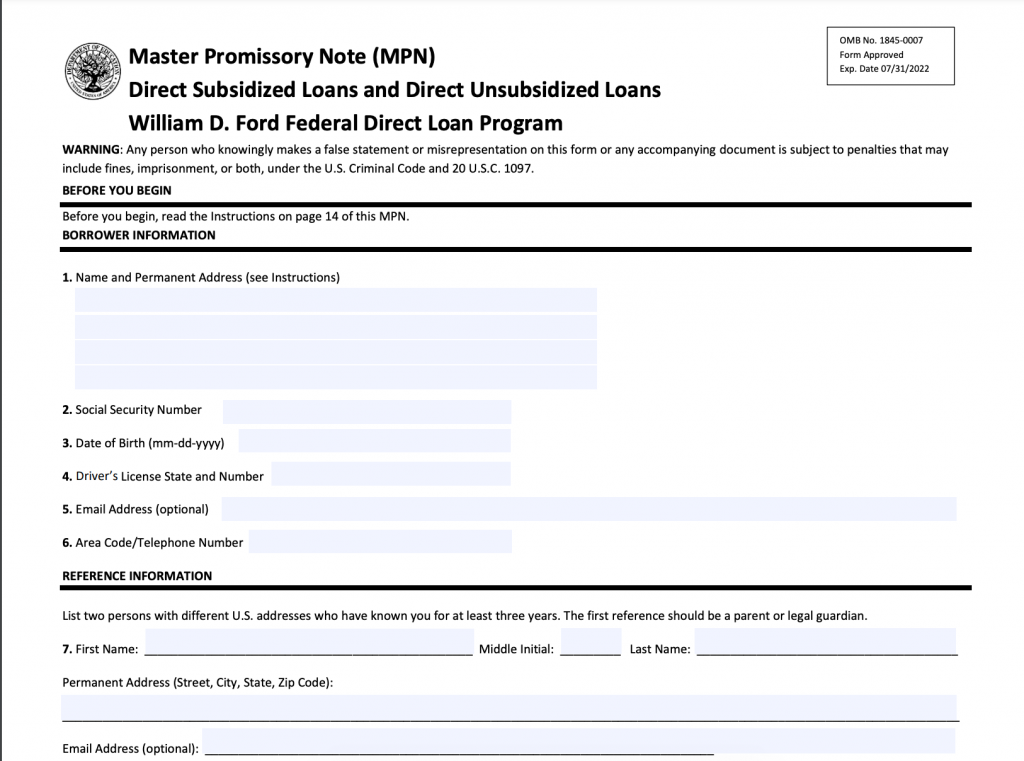
This document serves as the cornerstone of your federal student loan commitment, paving the way for financial assistance that can make higher education accessible. However, its importance extends beyond simply securing funds; it’s your primary source of information regarding your rights, responsibilities, and the mechanics of your loan repayment. For anyone considering or currently utilizing federal student loans, a comprehensive grasp of the MPN is indispensable for managing their financial future effectively.
Unpacking the Master Promissory Note: A Crucial Financial Agreement
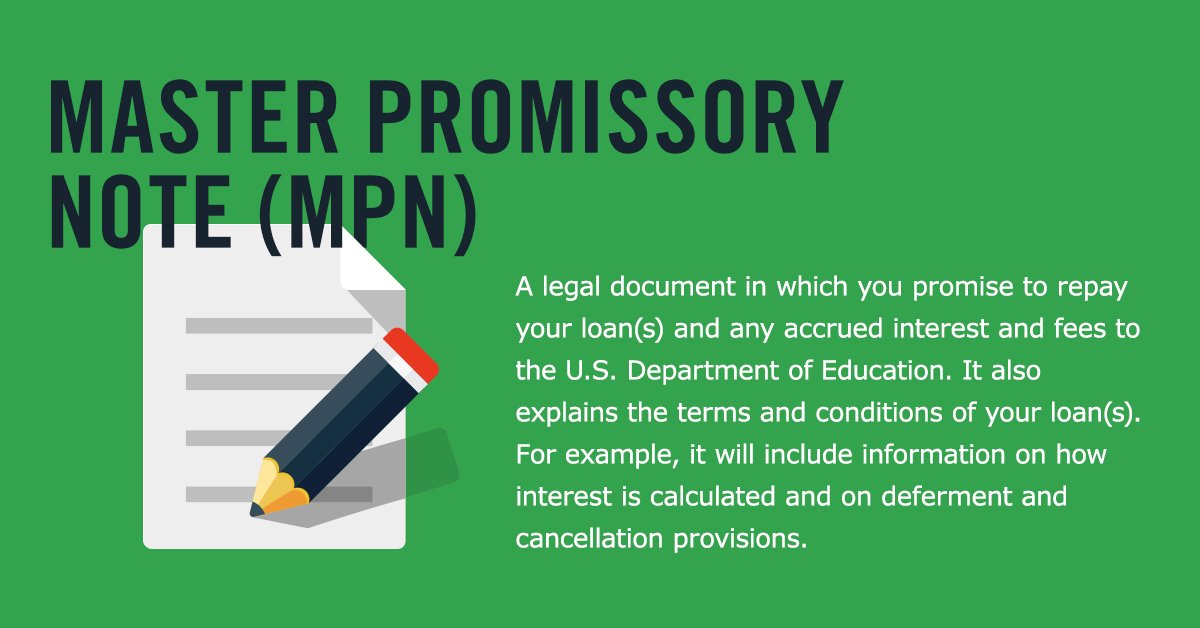
At its core, the Master Promissory Note is a solemn promise. It’s a promise you make to repay your federal student loans, along with any accrued interest and fees, to the U.S. Department of Education. This single document establishes a framework for multiple loans over several academic years, making it a streamlined yet powerful tool in the federal student aid system.
Defining the MPN and Its Purpose
A Master Promissory Note is a legal contract through which a borrower agrees to the terms and conditions of a loan. In the context of federal student aid, specifically for Direct Subsidized Loans, Direct Unsubsidized Loans, and Direct PLUS Loans, the MPN serves as the overarching agreement. It details critical information such as the maximum amount you can borrow, the interest rates, repayment options, and the conditions under which you might be able to defer payment or have your loans forgiven.
The primary purpose of the MPN is to formalize the borrowing agreement between you (the student borrower or parent borrower for PLUS loans) and the U.S. Department of Education. By signing it, you acknowledge your understanding of your financial obligation and your commitment to uphold the terms stipulated within the document. It’s a prerequisite for the disbursement of federal student loan funds, ensuring that borrowers are aware of their responsibilities before receiving aid.
The “Master” Aspect: Efficiency and Continuity
What makes the MPN “master” is its ability to cover multiple loans over a period of up to 10 years. Unlike traditional promissory notes that might require a new signature for each individual loan or disbursement, a single, signed MPN can be used for subsequent Direct Subsidized Loans and Direct Unsubsidized Loans for up to 10 years from the date you signed it, provided certain conditions are met and your school is authorized to use an existing MPN. This streamlines the borrowing process significantly, reducing paperwork and administrative hurdles for both students and educational institutions.
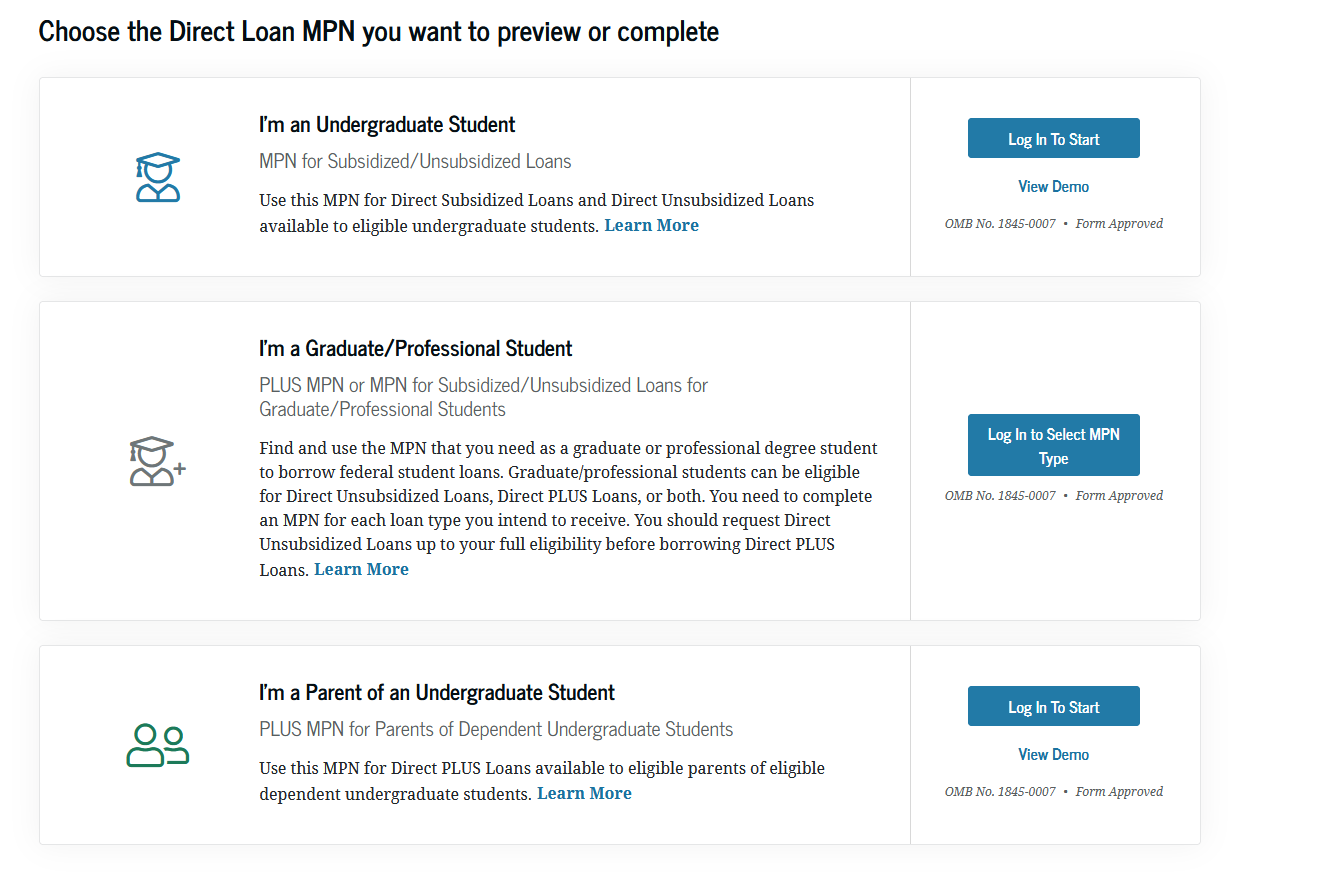
For Direct PLUS Loans, a separate MPN is generally required for each new academic year. However, even these MPNs contribute to the “master” concept by documenting the terms for a specific loan program within the broader federal aid framework. This continuity allows students to focus more on their studies and less on repetitive loan application processes, while still ensuring that all parties are bound by clear, consistent terms.
Key Components and Borrower Responsibilities Outlined in the MPN
The strength of the MPN lies in its comprehensiveness. It details not just your agreement to repay, but also the fundamental elements of your loans, empowering you with the knowledge to manage your debt responsibly. Dissecting these components is crucial for any borrower.
Understanding Loan Terms: Interest Rates, Fees, and Limits
The MPN explicitly states the various financial parameters of your federal student loans. This includes:
- Interest Rates: While the MPN itself doesn’t typically list the specific interest rate for each loan you’ll receive (as rates are often set annually by Congress), it explains how these rates are determined (e.g., fixed or variable) and that they will be communicated to you annually through a disclosure statement. For federal loans, interest rates are usually fixed for the life of the loan.
- Loan Fees: Federal student loans often come with an origination fee, a small percentage of the loan amount deducted before the funds are disbursed. The MPN explains the existence and nature of these fees.
- Aggregate Loan Limits: The MPN will reference the maximum amount of federal student loans (both subsidized and unsubsidized) you can borrow over your academic career, known as aggregate limits. It’s vital to be aware of these limits to manage your borrowing appropriately and avoid exceeding them.
- Disbursement Information: The document outlines how and when your loan funds will be disbursed to your school, typically in at least two installments, and applied to your tuition, fees, and other charges.
Navigating Repayment Plans, Grace Periods, and Deferment Options
A significant portion of the MPN is dedicated to explaining your repayment obligations and the flexibility available to you:
- Repayment Plans: The MPN introduces the various repayment plans offered by the U.S. Department of Education, including the Standard Repayment Plan (10 years), Graduated Repayment Plan, Extended Repayment Plan, and several Income-Driven Repayment (IDR) plans. It emphasizes your right to choose the plan that best fits your financial situation post-graduation.
- Grace Period: For most federal student loans, you’re granted a grace period (typically six months after you leave school or drop below half-time enrollment) before you must begin making payments. The MPN clarifies the duration and conditions of this period.
- Deferment and Forbearance: These options allow you to temporarily postpone or reduce your loan payments under specific circumstances, such as economic hardship, unemployment, or military service. The MPN outlines the eligibility criteria and implications of utilizing these provisions, stressing that interest may still accrue during forbearance and for unsubsidized loans during deferment.
Your Rights and Obligations as a Federal Student Loan Borrower
Beyond the financial mechanics, the MPN serves as a crucial legal document that delineates your rights as a borrower and the obligations you assume.
Your Rights include:
- Receiving a disclosure statement before your loan is disbursed, detailing the loan amount, interest rate, and fees.
- Access to information about repayment plans, deferment, and forbearance options.
- The right to prepay your loan without penalty at any time.
- Information on loan consolidation and forgiveness programs.
Your Obligations include:
- Repaying your loan according to the terms of the MPN, even if you don’t complete your education or are dissatisfied with your school.
- Notifying your loan servicer of any changes to your name, address, phone number, enrollment status, or financial situation.
- Completing entrance and exit counseling.
- Understanding the consequences of default, which can include wage garnishment, tax refund offset, and damaged credit.
By signing the MPN, you confirm that you have read, understood, and agree to these rights and obligations.
The MPN Journey: From Application to Repayment Management
The process of obtaining federal student loans, beginning with the MPN, is structured to ensure borrowers are informed at every step. It’s a journey that starts before funds are disbursed and extends well into your post-academic life.
The Signing Process: What to Expect and How to Prepare
The MPN is typically completed electronically through the Federal Student Aid website (StudentAid.gov) using your FSA ID. Before signing, you’ll need to provide personal information, including your Social Security number, driver’s license number, and two references who have different addresses and are not your spouse. It’s crucial to read the entire document carefully, rather than just clicking through, as this is your legally binding agreement.
The system will also guide you through Entrance Counseling, which is a mandatory online session designed to help you understand the terms and conditions of your loans and your rights and responsibilities. This counseling covers topics like what a loan is, managing your education expenses, and understanding default.
The Role of Loan Servicers and Fund Disbursement
Once your MPN is signed and approved, and your school certifies your eligibility, the loan funds are generally disbursed directly to your school. Your school then applies the funds to your tuition, fees, and other charges, and refunds any remaining balance to you to cover living expenses or other educational costs.
Crucially, after your loan is disbursed, your relationship shifts from the Department of Education to a loan servicer. The loan servicer is a company that manages the billing, payments, and other administrative tasks related to your federal student loans. They are your primary point of contact for questions about your loan balance, interest, repayment options, and any issues you might encounter. Your MPN will explain the role of the servicer and that the Department of Education will assign one to you. It’s vital to identify your servicer and keep their contact information handy.
Essential Post-Signing Steps: Entrance & Exit Counseling
Beyond the initial signing and disbursement, there are two counseling sessions integral to the MPN process:
- Entrance Counseling: As mentioned, this is completed before your first loan disbursement and ensures you understand your financial obligations before receiving funds.
- Exit Counseling: This mandatory session is completed when you graduate, leave school, or drop below half-time enrollment. It reviews your loan amounts, interest rates, repayment options, and the consequences of defaulting. It’s designed to prepare you for repayment and help you make informed decisions about managing your student debt. Both counseling sessions reinforce the information initially presented in the MPN.
Beyond the Signature: Strategic Loan Management and Avoiding Pitfalls
Signing the MPN is just the beginning. Effective student loan management requires continuous engagement and strategic decision-making throughout the life of your loans. Understanding the nuances and potential pitfalls can save you significant financial stress and cost.
Distinguishing Federal MPNs from Private Loan Agreements
It’s crucial to differentiate between the federal MPN and agreements for private student loans. While both are financial contracts, they operate under fundamentally different frameworks:
- Federal Loans (via MPN): Offer a wide range of borrower protections, including fixed interest rates, income-driven repayment plans, deferment and forbearance options, and potential for forgiveness programs (like Public Service Loan Forgiveness). They typically do not require a co-signer and have a grace period.
- Private Loans: Issued by banks, credit unions, or state agencies, often have variable interest rates, fewer repayment flexibilities, and limited borrower protections. They frequently require a co-signer, and deferment/forbearance options are less generous or non-existent. The terms for private loans are outlined in their specific loan agreements, which are distinct from the federal MPN.
Understanding these differences is paramount when considering your borrowing options and managing your debt.
Proactive Strategies for Successful Student Loan Repayment
Effective management of your federal student loans, post-MPN, involves several proactive steps:
- Track Your Loans: Keep records of your MPN, disclosure statements, and communications with your loan servicer.
- Know Your Servicer: Understand who your loan servicer is and how to contact them. Your servicer is your go-to resource for all repayment-related questions.
- Explore Repayment Options Early: Don’t wait until repayment begins. Familiarize yourself with all available repayment plans, especially income-driven options, to find one that fits your post-graduation budget.
- Consider Consolidation: If you have multiple federal loans, Direct Loan Consolidation can simplify repayment by combining them into one loan with a single monthly payment.
- Utilize Deferment/Forbearance Wisely: While helpful in times of hardship, remember that interest may still accrue. Use these options strategically and only when necessary.
- Make Extra Payments: If financially possible, making extra payments can significantly reduce the total interest paid and shorten your repayment period.
Common Mistakes and How to Safeguard Your Financial Future
Many borrowers make preventable mistakes that can lead to financial distress:
- Not Reading the MPN Thoroughly: This is the most fundamental error. Treating it as just another form prevents you from understanding your obligations and rights.
- Ignoring Loan Servicer Communications: These communications often contain vital information about your loan status, repayment options, and important deadlines.
- Missing Payments or Defaulting: This can severely damage your credit, lead to wage garnishment, and make it difficult to secure future loans or housing.
- Over-borrowing: Only borrow what you absolutely need. Every dollar borrowed must be repaid with interest.
- Not Completing Exit Counseling: This final step before repayment offers critical information and resources that many borrowers overlook.
By being informed, proactive, and diligently managing your loans, you can navigate your student debt responsibly and protect your financial future.
Conclusion: Empowering Your Financial Future with the MPN
The Master Promissory Note is far more than a bureaucratic hurdle; it is a powerful tool and a comprehensive guide that lays out the terms of your federal student loan journey. From the initial agreement to the intricacies of repayment, every aspect of your federal student aid is touched upon or referenced within this document.
By thoroughly understanding the MPN, you empower yourself with knowledge – knowledge of your rights, your responsibilities, the financial implications of your borrowing, and the pathways available for managing your debt effectively. This understanding is the foundation for making informed financial decisions, avoiding common pitfalls, and ultimately, achieving your educational and financial goals without undue burden. Approach the MPN not as a formality, but as an essential first step in a responsible and successful financial future.
aViewFromTheCave is a participant in the Amazon Services LLC Associates Program, an affiliate advertising program designed to provide a means for sites to earn advertising fees by advertising and linking to Amazon.com. Amazon, the Amazon logo, AmazonSupply, and the AmazonSupply logo are trademarks of Amazon.com, Inc. or its affiliates. As an Amazon Associate we earn affiliate commissions from qualifying purchases.