
For millions of prospective homeowners and those looking to refinance, the question of “what is a 30-year mortgage rate today?” is more than just a passing curiosity; it’s a critical inquiry that can dictate affordability, monthly budgets, and long-term financial stability. A 30-year fixed-rate mortgage is the most popular home loan product in the United States, prized for its stability and predictable monthly payments. However, the exact rate you might secure on any given day is a dynamic figure, a confluence of broad economic forces, Federal Reserve policies, bond market movements, and even your individual financial profile.

Understanding what drives these rates, how to interpret them, and the strategic implications of securing a particular rate is paramount for anyone navigating the complex world of home financing. This article will delve into the mechanics of the 30-year fixed mortgage, explore the multifaceted factors that influence its daily fluctuations, and provide actionable insights for borrowers aiming to make informed decisions in a constantly evolving financial landscape. We will uncover why simply knowing “the rate” isn’t enough, and how a deeper understanding can empower you to optimize one of the most significant financial commitments of your life.
Understanding the 30-Year Fixed-Rate Mortgage
The 30-year fixed-rate mortgage stands as a bedrock of American homeownership, offering a predictable payment schedule over an extended period. This stability is a primary driver of its popularity, particularly for first-time homebuyers or those seeking long-term financial certainty.
The Stability of a Fixed Rate
The defining characteristic of a fixed-rate mortgage is that the interest rate remains constant throughout the entire loan term, regardless of market fluctuations. This means your principal and interest payment will be the same every month for all 360 payments. This predictability is a significant advantage, allowing homeowners to budget with confidence, knowing precisely what their housing expense will be for the next three decades. In times of economic uncertainty or rising interest rates, the fixed-rate mortgage acts as a financial anchor, shielding borrowers from payment shocks that can arise with adjustable-rate products. This steady payment allows for long-term financial planning, making it easier to manage other financial goals like saving for retirement or a child’s education.
The Long-Term Commitment: Pros and Cons
While the stability is undeniable, a 30-year mortgage is a significant long-term commitment with distinct advantages and disadvantages.
Pros:
- Lower Monthly Payments: Spreading the loan principal over 30 years results in lower monthly payments compared to shorter-term loans (e.g., a 15-year mortgage) for the same loan amount. This enhances affordability and frees up cash flow for other expenses or investments.
- Budget Predictability: As noted, fixed payments simplify budgeting and reduce financial stress.
- Flexibility: The lower monthly payment can provide more financial flexibility. Should your income increase or other financial priorities shift, you have the option to make extra principal payments to pay off the loan faster, effectively converting it into a shorter-term mortgage without being locked into a higher mandatory payment.
- Inflation Hedge: Over 30 years, inflation tends to erode the real value of money. Your fixed mortgage payment, in inflation-adjusted terms, effectively becomes cheaper over time as wages and other costs rise.
Cons:
- Higher Total Interest Paid: Because the loan is stretched over a longer period, you will pay significantly more in total interest over the life of a 30-year mortgage compared to a 15-year mortgage with the same principal and interest rate.
- Slower Equity Build-Up (Initially): In the early years of a 30-year mortgage, a larger portion of your monthly payment goes towards interest, meaning equity builds more slowly than with a shorter-term loan.
- Higher Interest Rate (Often): Lenders typically charge a slightly higher interest rate for a 30-year fixed mortgage than for a 15-year fixed mortgage, reflecting the increased risk they bear over a longer period.
How It Compares to Other Mortgage Products
To truly appreciate the 30-year fixed-rate mortgage, it’s useful to contrast it with its common alternatives:
- 15-Year Fixed-Rate Mortgage: Offers a lower total interest paid and faster equity build-up, but comes with significantly higher monthly payments. It’s suitable for borrowers with higher incomes and a desire to pay off their home sooner.
- Adjustable-Rate Mortgage (ARM): Typically starts with a lower interest rate for an introductory period (e.g., 5, 7, or 10 years), after which the rate adjusts periodically based on a benchmark index. While offering lower initial payments, ARMs introduce payment uncertainty and risk if rates rise significantly. They can be attractive for those planning to sell or refinance before the adjustment period, or in a declining rate environment.
The 30-year fixed-rate mortgage strikes a balance, offering long-term stability and affordability, making it the preferred choice for a broad spectrum of homebuyers.
Key Factors Influencing Today’s Mortgage Rates
Understanding what a 30-year mortgage rate is today requires looking beyond a single number and recognizing the intricate web of economic forces and market dynamics that shape it. Mortgage rates are not set in a vacuum; they are a response to a complex interplay of global and domestic factors.
Economic Indicators
Broad economic health significantly impacts mortgage rates. Key indicators that lenders and investors watch closely include:
- Inflation (Consumer Price Index – CPI): High inflation erodes the purchasing power of money, leading investors to demand higher returns on fixed-income investments like mortgage-backed securities (MBS). This generally pushes mortgage rates up. The Federal Reserve’s primary mandate is to control inflation, and its actions directly influence rates.
- Employment Reports: Strong job growth and low unemployment signal a robust economy, which can lead to inflationary pressures and higher rates. Conversely, a weakening job market may prompt the Fed to consider lowering rates to stimulate economic activity.
- Gross Domestic Product (GDP) Growth: A growing economy typically leads to higher demand for credit, which can put upward pressure on interest rates.
- Retail Sales: Strong consumer spending indicates economic vitality and potential inflation, influencing rates similarly to GDP.
Federal Reserve Policy & Interest Rates
While the Federal Reserve does not directly set mortgage rates, its monetary policy decisions have a profound indirect impact.
- Federal Funds Rate: The Fed sets a target range for the federal funds rate, which is the interest rate banks charge each other for overnight lending. Changes to this rate ripple through the financial system, influencing short-term interest rates and indirectly affecting longer-term rates like mortgages. When the Fed raises the federal funds rate to combat inflation, it typically signals a broader increase in borrowing costs.
- Quantitative Easing/Tightening: During economic downturns, the Fed might engage in quantitative easing (QE) by buying large quantities of Treasury bonds and MBS. This increases demand for these assets, driving their prices up and yields (which track mortgage rates) down. Conversely, quantitative tightening (QT) involves selling or allowing these assets to mature without reinvesting, which puts upward pressure on yields and mortgage rates.
Bond Market Activity (10-Year Treasury Yield)
The 10-year Treasury yield is widely considered the most significant benchmark for 30-year fixed mortgage rates. Mortgage rates tend to move in tandem with this yield. Here’s why:
- Investor Competition: Mortgage-backed securities (MBS) compete with U.S. Treasury bonds for investor attention. If Treasury yields rise, investors demand higher yields from MBS to make them an equally attractive investment, which translates to higher mortgage rates for consumers.
- Risk-Free Rate: The 10-year Treasury bond is often seen as a proxy for the “risk-free” rate of return. Mortgage rates are priced as a spread above this risk-free rate, reflecting the additional credit and prepayment risks associated with home loans.
Lender-Specific Factors
Beyond macroeconomic forces, several factors unique to your financial situation and the specific loan product will influence the rate you are offered:
- Credit Score: Borrowers with higher credit scores (generally 740 and above) are perceived as lower risk and typically qualify for the lowest available rates. Lower scores indicate higher risk and result in higher rates.
- Debt-to-Income (DTI) Ratio: This ratio compares your monthly debt payments to your gross monthly income. A lower DTI indicates you can comfortably manage your debts, leading to better rates.
- Loan-to-Value (LTV) Ratio / Down Payment Size: A larger down payment results in a lower LTV, signifying less risk for the lender. Loans with LTVs below 80% generally secure better rates and avoid private mortgage insurance (PMI).
- Loan Type: Conventional, FHA, VA, and USDA loans each have different risk profiles and government backing, which can affect the interest rate.
- Property Type: Multi-unit properties, investment properties, or certain unique property types might carry slightly higher rates due to perceived higher risk.
Market Competition and Demand
The competitive landscape among mortgage lenders also plays a role. In a highly competitive market with many lenders vying for business, rates may be pushed slightly lower. Conversely, if demand for mortgages is very high, lenders might have less incentive to offer the absolute lowest rates.
Interpreting “Today’s” Rate and Its Implications
When you see a reported “30-year mortgage rate today,” it’s crucial to understand that this is often an average, a snapshot that doesn’t fully capture the personalized cost of borrowing or its long-term impact. The true cost extends beyond the simple interest percentage.
The Significance of Small Fluctuations
Even seemingly minor changes in the interest rate can have substantial implications over three decades. For example, on a $300,000 mortgage:
- A 5.00% rate would result in a principal & interest payment of approximately $1,610.
- A 5.25% rate would result in a payment of approximately $1,659.
- A 5.50% rate would result in a payment of approximately $1,703.
That quarter-point difference (5.00% vs. 5.25%) equates to an extra $49 per month, or nearly $17,640 over the life of the loan. A half-point difference (5.00% vs. 5.50%) means an additional $93 per month, totaling over $33,480 more over 30 years. These figures highlight why even fractional movements in rates warrant close attention.
Rate vs. APR: A Crucial Distinction
One of the most important concepts to grasp is the difference between the interest rate and the Annual Percentage Rate (APR).
- Interest Rate: This is the percentage of the loan principal that you pay each year for borrowing the money. It’s the rate used to calculate your monthly principal and interest payment.
- APR: This represents the total cost of borrowing money over the life of the loan, expressed as an annual percentage. It includes the interest rate plus other costs and fees associated with the loan, such as origination fees, discount points, mortgage insurance, and other closing costs.
The APR is generally a more comprehensive and accurate measure of the true cost of a loan because it incorporates these additional charges. When comparing loan offers from different lenders, always compare the APRs, not just the interest rates, to get an apples-to-apples comparison of the overall cost. A loan with a slightly lower interest rate but significantly higher fees could end up having a higher APR and thus be more expensive overall.
The Role of Discount Points and Closing Costs
Lenders offer borrowers the option to “buy down” their interest rate by paying discount points at closing.
- Discount Point: One discount point typically costs 1% of the loan amount (e.g., $3,000 on a $300,000 loan) and can reduce the interest rate by a certain fraction (e.g., 0.125% to 0.25%).
The decision to pay points depends on your financial situation and how long you plan to stay in the home. If you keep the mortgage for many years, the savings from the lower interest rate can outweigh the upfront cost of the points. Conversely, if you plan to move or refinance within a few years, paying points may not be cost-effective.
Closing costs encompass all the various fees incurred during the loan origination and property transfer process. Beyond discount points, these can include:
- Lender fees (origination fee, underwriting fee, processing fee)
- Third-party fees (appraisal, credit report, title insurance, recording fees, attorney fees)
- Escrow fees (property taxes, homeowner’s insurance)
These costs can add up to 2-5% of the loan amount and significantly impact the overall cost of the mortgage, which is reflected in the APR.
When is a “Good” Rate?
Defining a “good” rate is subjective and depends on historical context and individual financial goals.
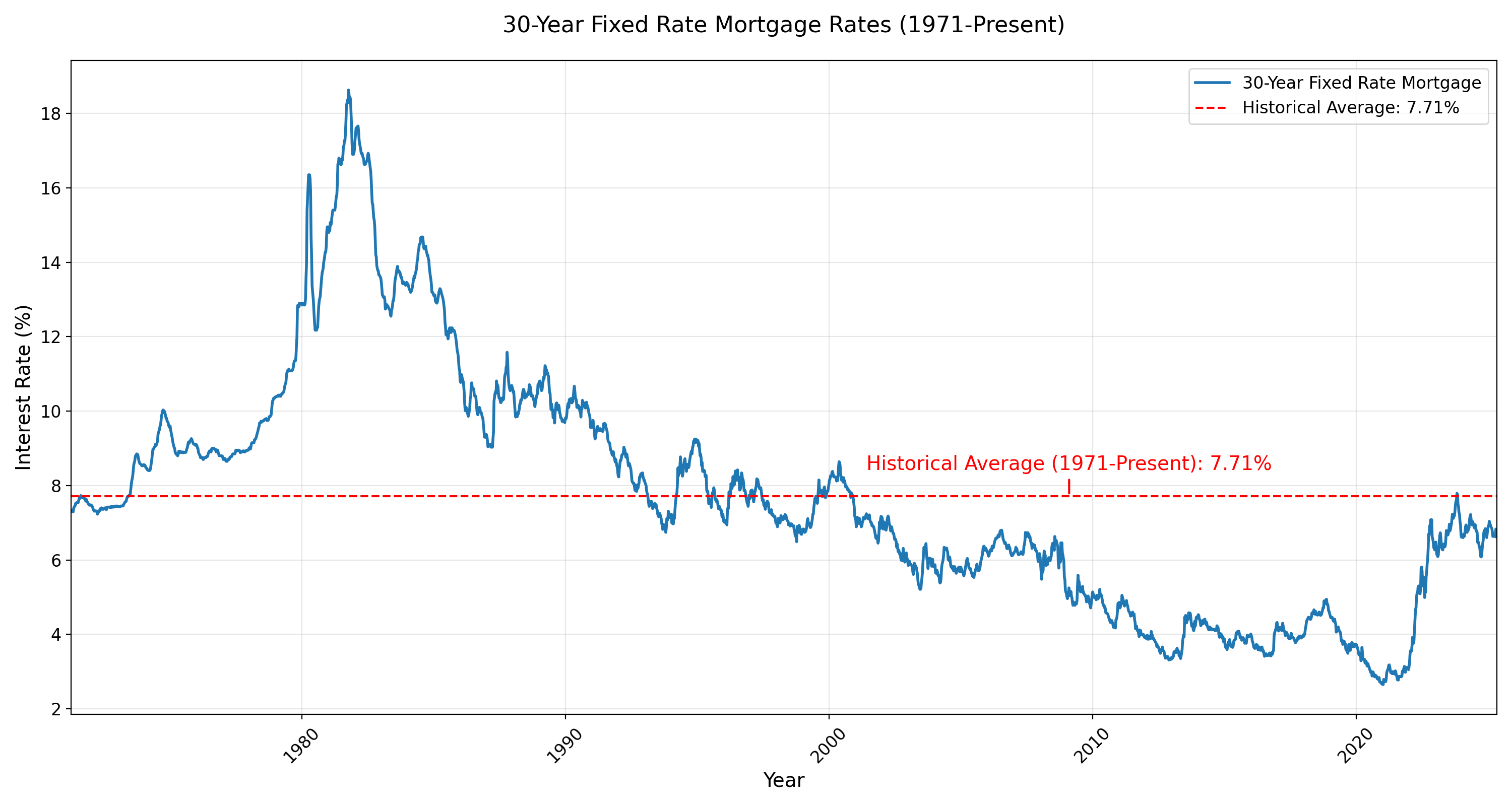
- Historical Context: Mortgage rates have fluctuated dramatically over decades. What was considered low in the 1980s (e.g., 12-18%) would be astronomical today. What was historically low in the 2010s (e.g., 3-4%) might be challenging to achieve in a different economic environment. Understanding where current rates stand relative to recent history can provide perspective.
- Individual Financial Goals: A “good” rate is ultimately one that aligns with your budget, cash flow needs, and long-term financial strategy. If a rate allows you to comfortably afford your monthly payments, meet your other financial obligations, and build equity towards your financial future, then it can be considered good for you, even if it’s not the lowest rate ever recorded. For some, the stability of a fixed rate is more valuable than chasing the absolute lowest possible rate on an ARM.
Navigating the Mortgage Market: Practical Steps for Borrowers
Securing a competitive 30-year mortgage rate requires proactive effort and a strategic approach. It’s not enough to simply ask “what is the rate today?” but to position yourself to receive the best possible rate given market conditions and your financial profile.
Monitor Market Trends
While you shouldn’t obsess over daily fluctuations, it’s wise to keep an eye on broader market trends a few months before you plan to apply for a mortgage or refinance.
- Financial News Outlets: Reputable financial news sources regularly report on mortgage rate movements and the economic factors driving them.
- Mortgage Rate Trackers: Many financial websites offer tools that display average daily mortgage rates and provide historical context.
- Economist Forecasts: Be aware of general economic outlooks from leading economists regarding inflation and potential Federal Reserve actions. This will give you a sense of whether rates are expected to rise, fall, or remain stable.
This monitoring helps you gauge whether it’s a generally favorable time to borrow and can inform your timing.
Improve Your Financial Profile
Before you even speak to a lender, taking steps to strengthen your financial standing can significantly improve the rates you’re offered.
- Boost Your Credit Score: Pay bills on time, reduce credit card balances, and avoid opening new credit accounts. A higher credit score signals lower risk to lenders. Aim for a score of 740 or above for the most favorable rates.
- Reduce Your Debt-to-Income (DTI) Ratio: Pay down existing debts (car loans, student loans, credit cards) to lower your monthly debt obligations. A DTI below 36% is generally preferred by lenders, though some will go higher. A lower DTI indicates you have more disposable income to handle your mortgage payments.
- Increase Your Down Payment: A larger down payment reduces your loan-to-value (LTV) ratio, making you a less risky borrower. This can lead to lower interest rates and helps you avoid private mortgage insurance (PMI) if your LTV is below 80%.
Shop Around and Compare Offers
This is perhaps the single most impactful step you can take. Do not accept the first offer you receive.
- Multiple Lenders: Contact at least 3-5 different lenders – including large banks, credit unions, and independent mortgage brokers. Each lender has different overheads, risk tolerances, and product offerings, which can result in varying rates and fees.
- Simultaneous Applications: Apply for pre-approval with multiple lenders within a short window (typically 14-45 days, depending on the credit scoring model). This allows credit bureaus to treat multiple inquiries for the same type of loan as a single inquiry, minimizing the impact on your credit score.
- Compare Loan Estimates: Once you have offers, lenders are legally required to provide a standardized “Loan Estimate” form within three business days of application. This form clearly outlines the interest rate, APR, closing costs, and other loan terms, making it easy to compare offers side-by-side. Focus on comparing the APR and the “Cash to Close” amount.
Understand the Loan Estimate
The Loan Estimate is your most valuable tool for comparison. Pay close attention to:
- Section A: Origination Charges: These are lender fees. Compare these carefully.
- Section B: Services You Cannot Shop For: These are third-party fees, often for appraisals and credit reports, where the lender selects the provider.
- Section C: Services You Can Shop For: These include title insurance, surveys, and pest inspections. You can often save money by comparing providers for these services.
- Estimated Cash to Close: This figure provides an estimate of the total funds you’ll need at closing, including your down payment and all closing costs.
- Comparison Section: This section summarizes key financial aspects like the APR, total interest paid, and cash to close, helping you make an informed decision.
Consider a Rate Lock
Once you’ve found a favorable rate and chosen a lender, inquire about a rate lock.
- What it is: A rate lock is an agreement with your lender to guarantee a specific interest rate for a set period (e.g., 30, 45, or 60 days) while your loan application is processed.
- Why it’s beneficial: It protects you from rate increases between the time you apply and your closing date. If rates go up, you’re locked into the lower rate.
- Considerations: Longer lock periods might come with a fee or a slightly higher rate. Understand the lock’s expiration date and what happens if rates fall significantly after you’ve locked (some lenders offer “float-down” options for a fee).
The Long-Term Financial Impact and Strategic Considerations
A 30-year mortgage is more than just a monthly payment; it’s a foundational element of your long-term financial plan. Understanding its broader implications and adopting strategic approaches can significantly enhance your financial well-being.
Building Home Equity
One of the most significant benefits of a 30-year fixed-rate mortgage is its role in building home equity. With each payment, you reduce your loan principal, and as property values appreciate, the gap between your home’s market value and your outstanding mortgage balance widens. Equity represents your ownership stake in the home and is a powerful wealth-building tool.
- Source of Funds: Equity can be tapped later through a home equity loan or line of credit (HELOC) for significant expenses, or it contributes to your net worth upon selling the property.
- Financial Security: A substantial equity position provides a buffer against market downturns and offers financial security in retirement.
Refinancing Opportunities
The stability of a fixed rate is great, but market conditions change. A 30-year mortgage doesn’t mean you’re stuck with that rate forever.
- Lower Rates: If mortgage rates drop significantly after you’ve secured your original loan, refinancing can be an excellent strategy to reduce your monthly payments or lower the total interest paid over the remaining term.
- Change Loan Term: You might refinance a 30-year loan into a 15-year loan if your income increases and you want to pay off the mortgage faster, or vice-versa if you need to lower payments.
- Cash-Out Refinance: This allows you to borrow more than your current mortgage balance, taking the difference as cash, often to fund home improvements, pay off high-interest debt, or cover other large expenses.
- Loan Type Change: You might switch from an FHA loan (which often carries mandatory mortgage insurance for the life of the loan) to a conventional loan to eliminate PMI once you have sufficient equity.
Always calculate the break-even point for refinancing costs versus monthly savings to ensure it’s a financially sound decision.
Accelerated Payments
While a 30-year term offers lower mandatory payments, you’re not obligated to stick strictly to the amortization schedule. Making extra principal payments can dramatically reduce the total interest paid and shorten the loan term.
- Bi-Weekly Payments: Paying half of your monthly payment every two weeks results in 26 half-payments, or 13 full payments per year, effectively shaving years off your mortgage.
- Round Up Payments: Simply rounding up your monthly payment (e.g., paying $1,700 instead of $1,650) can make a difference over time.
- Lump-Sum Payments: Applying tax refunds, bonuses, or other windfalls directly to the principal can accelerate payoff.
These strategies can save tens of thousands of dollars in interest and build equity faster without the higher mandatory payments of a 15-year loan.
Financial Planning and Budgeting
Integrating your mortgage payment into a broader financial strategy is essential.
- Emergency Fund: Ensure you have a robust emergency fund (3-6 months of living expenses) separate from your mortgage payments. This prevents you from falling behind on payments if unexpected financial setbacks occur.
- Retirement Savings: While paying off a mortgage is a noble goal, it shouldn’t come at the expense of retirement savings, especially if you have access to employer-matched contributions. Balance accelerated mortgage payments with other long-term investment goals.
- Opportunity Cost: Consider the opportunity cost of putting extra money into your mortgage versus investing it. In a low-interest-rate environment, investing might yield higher returns than the interest saved on the mortgage. Conversely, with higher rates, paying down the mortgage faster offers a guaranteed return equal to the interest rate.

Conclusion
Understanding “what is a 30-year mortgage rate today” is far more nuanced than merely looking up a number. It involves appreciating the long-term commitment of this popular loan product, recognizing the complex interplay of economic indicators and personal financial health that determines the rate you’ll receive, and strategically navigating the market to secure the best possible terms.
From the stability offered by its fixed payments to its crucial role in building home equity, the 30-year mortgage is a cornerstone of personal finance for many. By diligently monitoring market trends, optimizing your financial profile, and diligently shopping for the best offer, you can transform a complex financial decision into an informed strategic move. Ultimately, the “best” mortgage rate is one that aligns with your individual financial goals, offers sustainable affordability, and contributes positively to your long-term wealth accumulation. Approaching home financing with knowledge and foresight will empower you to make one of the most significant financial decisions of your life with confidence and clarity.
aViewFromTheCave is a participant in the Amazon Services LLC Associates Program, an affiliate advertising program designed to provide a means for sites to earn advertising fees by advertising and linking to Amazon.com. Amazon, the Amazon logo, AmazonSupply, and the AmazonSupply logo are trademarks of Amazon.com, Inc. or its affiliates. As an Amazon Associate we earn affiliate commissions from qualifying purchases.