
The question “how many people own 1 Bitcoin” is more than just a statistical curiosity; it’s a window into the evolving landscape of digital wealth, personal finance strategies, and the global distribution of a revolutionary asset. In a world increasingly interested in decentralized finance and alternative investments, Bitcoin stands as a prominent, yet often misunderstood, force. For many, owning a “wholecoin” – a full Bitcoin – represents a significant financial milestone, a symbol of long-term vision in the volatile cryptocurrency market. This article delves into the financial implications, the challenges in assessing ownership, and the broader context of what it means to be a Bitcoin wholecoiner in today’s economy.
The Elusive “Wholecoiner”: Understanding Ownership Distribution
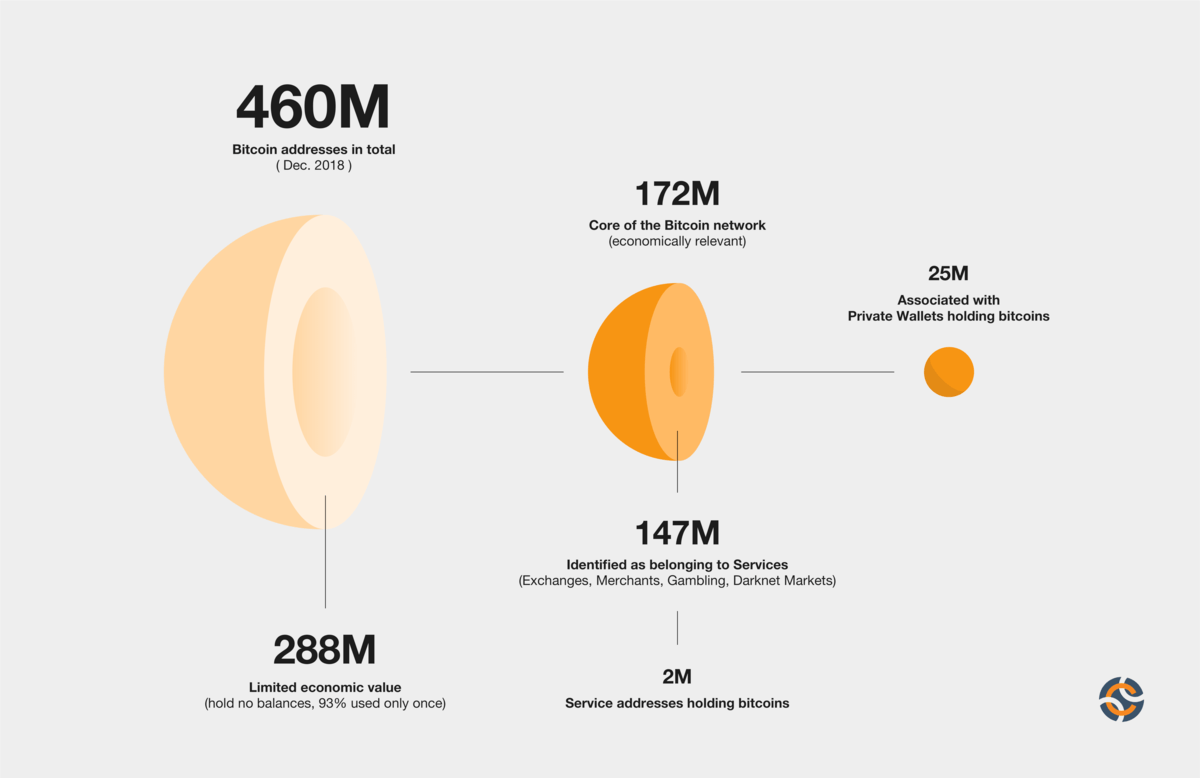
Pinpointing the exact number of individuals who own at least one full Bitcoin is a complex endeavor, primarily due to the pseudonymous nature of the Bitcoin network. Unlike traditional financial systems where accounts are tied to verifiable identities, Bitcoin addresses are strings of alphanumeric characters. While on-chain analytics can track the number of addresses holding a certain amount of Bitcoin, these addresses don’t directly correlate to individual people. One person might control multiple addresses, or a single address might represent the holdings of an exchange, a custodian, or a group of individuals through a multi-signature wallet.
Challenges in Quantifying Ownership
The primary hurdle in accurately counting Bitcoin owners lies in the architecture of the blockchain itself. Each transaction and address is public, but the identities behind them are not. This design choice, fundamental to Bitcoin’s decentralized ethos, paradoxically makes precise demographic analysis challenging.
- Pseudonymity: A user can generate an unlimited number of Bitcoin addresses, making it difficult to discern if multiple addresses belong to the same individual or entity.
- Custodial Services: A significant portion of Bitcoin is held by centralized exchanges (like Binance, Coinbase, Kraken), institutional custodians, or wrapped BTC providers. A single address belonging to such an entity could represent the holdings of millions of users. While these users “own” Bitcoin, they don’t directly control the keys to a full Bitcoin in a non-custodial wallet.
- Lost Bitcoins: An estimated 15-20% of all Bitcoins ever mined are considered lost, residing in inaccessible wallets due to lost private keys or forgotten passphrases. These lost coins distort ownership figures as they are technically “held” but not “owned” in a usable sense.
- Privacy Tools: Advanced users might employ coin mixing services or privacy-enhancing wallets, further obscuring the link between addresses and owners.
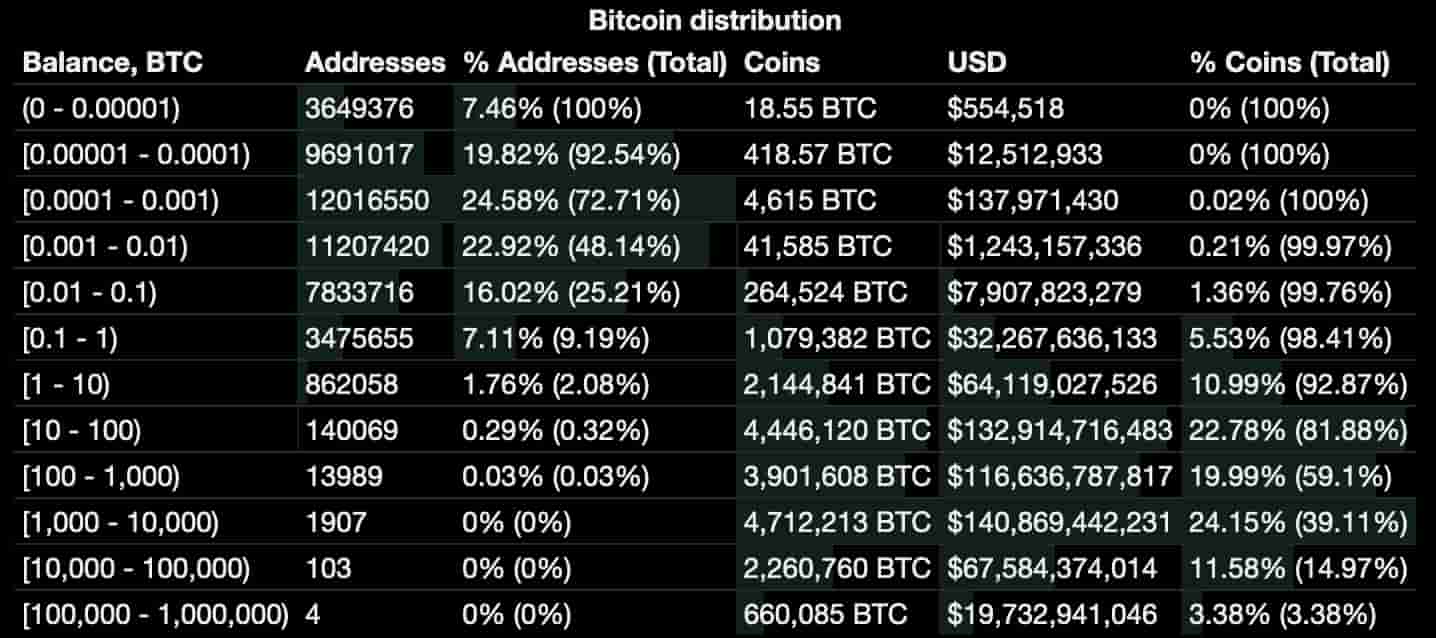
Despite these challenges, on-chain analytics firms and researchers use sophisticated methodologies to estimate ownership distribution. They analyze address clusters, transaction patterns, and known entity addresses (like exchanges) to derive more meaningful insights. These estimates consistently show that while the number of addresses holding any amount of Bitcoin is in the hundreds of millions, the number of addresses holding 1 BTC or more is significantly smaller.
Estimates and Trends of Wholecoiners
Based on publicly available blockchain data and advanced analytics, estimates typically suggest that the number of unique addresses holding 1 BTC or more hovers around the 1 million to 1.5 million mark, though this number fluctuates with market conditions and accumulation trends. When considering the consolidation of funds by exchanges and institutions, the number of individual “wholecoiners” (people actually controlling their private keys for at least 1 BTC) is likely lower.
Over time, this number has generally trended upwards, reflecting growing adoption and accumulation. However, periods of significant price increases often see a portion of wholecoiners selling off fractions of their holdings, reducing the total count temporarily. Conversely, bear markets or periods of consolidation often see an increase in wholecoiners as investors “buy the dip” or patiently accumulate their way to a full coin. This dynamic interplay between market sentiment and accumulation strategies paints a picture of a dedicated, albeit still niche, group of investors committed to Bitcoin as a long-term asset.
The Significance of Owning a Full Bitcoin (BTC)
For many in the cryptocurrency space, owning a full Bitcoin is not just an arbitrary number; it carries substantial financial and psychological weight. It signifies a certain level of commitment, belief, and often, a considerable financial investment. In the context of Bitcoin’s fixed supply and growing global adoption, reaching wholecoiner status is increasingly viewed as a benchmark of financial foresight and a strategic move in portfolio management.
Bitcoin as a Scarce Asset and Store of Value
Bitcoin’s appeal fundamentally stems from its scarcity. Capped at a maximum of 21 million coins, its supply is mathematically fixed, contrasting sharply with fiat currencies, which can be printed at will by central banks. This hard cap, combined with its programmatic halving events (which reduce the supply of new Bitcoin entering circulation every four years), underpins its narrative as “digital gold” – a decentralized, censorship-resistant store of value.
Owning 1 BTC means possessing a defined share of this finite digital resource. As global wealth increasingly seeks safe havens from inflation and geopolitical instability, Bitcoin’s role as an alternative store of value becomes more pronounced. For a wholecoiner, their 1 BTC represents not just a current monetary value, but a potential hedge against the devaluation of traditional currencies and a claim on a slice of what many believe will be a foundational asset of the future digital economy.
Financial Implications and Investment Strategy
Accumulating a full Bitcoin requires a significant investment, especially as its price appreciates. This typically places wholecoiners in a particular bracket of committed investors who are often characterized by a long-term, conviction-based investment strategy.
- Long-Term Horizon: Many wholecoiners are “HODLers” (a deliberate misspelling of “hold”), meaning they intend to hold their Bitcoin for many years, often decades, viewing short-term price fluctuations as noise. Their goal is capital appreciation over the long run, often aiming to pass it down as generational wealth.
- Portfolio Diversification: For some, Bitcoin represents a crucial diversification away from traditional assets like stocks, bonds, and real estate. It offers a non-correlated asset class that can potentially mitigate risks associated with conventional financial markets, though it introduces its own set of unique volatility risks.
- Strategic Accumulation: Reaching 1 BTC isn’t always a one-time purchase. Many wholecoiners employ a strategy known as “stacking sats” – consistently buying small amounts of Bitcoin (satoshis, the smallest unit of Bitcoin) over time, often through dollar-cost averaging. This disciplined approach helps mitigate the impact of price volatility and allows individuals to gradually build their holdings without needing a large lump sum upfront.
- Risk and Reward: While the potential for significant returns is a major draw, owning a full Bitcoin also entails substantial risk. Its price can be highly volatile, subject to rapid swings based on market sentiment, regulatory news, and macroeconomic factors. Wholecoiners are generally individuals who have assessed these risks and are comfortable with the potential for substantial gains or losses.
The Journey to Becoming a Wholecoiner
The path to owning 1 Bitcoin is becoming increasingly challenging as its price rises, making the prospect seem daunting for many new investors. However, strategic financial planning and a clear understanding of the market can make this goal more attainable over time. It’s a journey that often involves patience, discipline, and a commitment to understanding the underlying technology and economics.
Price Barriers and Accessibility
When Bitcoin was first introduced, acquiring a full coin was relatively easy and inexpensive. Early adopters could mine them on personal computers or purchase them for pennies. Today, with Bitcoin often trading in the tens of thousands of dollars, the capital required to buy 1 BTC outright is substantial, creating a significant entry barrier for the average individual.
This price barrier has led to a shift in how people view Bitcoin ownership. Instead of aiming for a full coin immediately, many focus on accumulating fractions of a Bitcoin. The smallest unit of Bitcoin, a satoshi, allows for micro-investments, making it accessible to virtually anyone regardless of their budget. This concept of “stacking sats” has democratized Bitcoin ownership, even if the dream of a “wholecoin” remains aspirational for many.
Custodial vs. Non-Custodial Ownership
A critical distinction in Bitcoin ownership, particularly for wholecoiners, is the choice between custodial and non-custodial holding.
- Custodial Ownership: This is when a third party, typically a cryptocurrency exchange or a financial institution, holds the private keys to your Bitcoin. While convenient for trading and accessible for beginners, it comes with risks. Users do not truly control their assets; they trust the custodian to secure them and honor withdrawal requests. If the exchange is hacked, goes bankrupt, or freezes accounts, users could lose their funds.
- Non-Custodial Ownership: This involves holding Bitcoin in a wallet where only the owner possesses the private keys (e.g., a hardware wallet or a software wallet where the user controls the seed phrase). This is often advocated for by the Bitcoin community with the mantra “not your keys, not your coins.” For wholecoiners, especially those with significant holdings, non-custodial ownership is often preferred due to the enhanced security and sovereignty it offers. However, it places the full responsibility of security on the individual, requiring meticulous care in managing private keys and seed phrases.
Navigating these choices is part of the wholecoiner’s journey, balancing ease of access with the fundamental principle of self-sovereignty that Bitcoin offers.
The Future of Bitcoin Ownership and Wealth Distribution
As Bitcoin matures and potentially integrates further into the global financial system, the dynamics of ownership and wealth distribution are poised for significant evolution. The question of “how many people own 1 Bitcoin” will continue to be a crucial indicator of mainstream adoption and the broader impact of decentralized finance.
Mass Adoption Scenarios and Impact on Traditional Finance
If Bitcoin continues its trajectory towards becoming a globally recognized store of value and medium of exchange, the number of wholecoiners will likely increase, but its relative scarcity will also make a single Bitcoin increasingly valuable. This could lead to a situation where owning a full Bitcoin is akin to owning a significant piece of real estate or a substantial stock portfolio today – a hallmark of considerable wealth.
Bitcoin’s increasing adoption, driven by institutional interest, regulatory clarity, and technological advancements (like the Lightning Network for faster, cheaper transactions), could shift global wealth distribution. It offers an alternative pathway to accumulate and preserve wealth outside traditional banking systems, potentially empowering individuals in regions with unstable economies or restrictive financial policies. However, it also raises questions about concentration of wealth if early adopters and large institutions continue to accumulate a disproportionate share.
The Halving’s Role and Long-Term Scarcity
Every four years, the rate at which new Bitcoins are introduced into circulation is cut in half – an event known as “the halving.” This programmatic scarcity mechanism is central to Bitcoin’s economic model and its long-term value proposition. As the supply rate diminishes and demand potentially grows, the incentive to accumulate and hold Bitcoin, particularly full coins, strengthens.
The cumulative effect of halving events means that Bitcoin will become increasingly scarce over time, making each unit, especially a full Bitcoin, more valuable in relative terms against other assets. This long-term scarcity narrative fuels the desire among many investors to become wholecoiners, seeing it as a strategic position for future economic shifts. The journey to 1 Bitcoin is therefore not just about current market value but about securing a piece of an asset designed for enduring scarcity in a world of abundant fiat.
In conclusion, while the precise count of individuals owning 1 Bitcoin remains somewhat obscured by the network’s design, on-chain data offers valuable insights into this elite group of investors. Being a wholecoiner represents a significant financial commitment and a belief in Bitcoin’s long-term potential as a scarce asset and store of value. As the financial world continues to evolve, understanding the dynamics of Bitcoin ownership, especially at the wholecoin level, provides a unique lens through which to view the ongoing transformation of global wealth and personal finance strategies.
aViewFromTheCave is a participant in the Amazon Services LLC Associates Program, an affiliate advertising program designed to provide a means for sites to earn advertising fees by advertising and linking to Amazon.com. Amazon, the Amazon logo, AmazonSupply, and the AmazonSupply logo are trademarks of Amazon.com, Inc. or its affiliates. As an Amazon Associate we earn affiliate commissions from qualifying purchases.