
For millions of independent contractors, freelancers, gig workers, and individuals receiving various types of non-employment income, the arrival of IRS Form 1099 marks a crucial step in the annual tax season ritual. Unlike W-2 employees, whose income and withholdings are neatly summarized by their employer, those who receive 1099s are responsible for managing their own taxes, making the timely receipt of these forms absolutely critical. A 1099 isn’t just a piece of paper; it’s a formal notification to both you and the IRS about income you’ve received, serving as the backbone for accurately reporting your earnings and calculating your tax obligations.
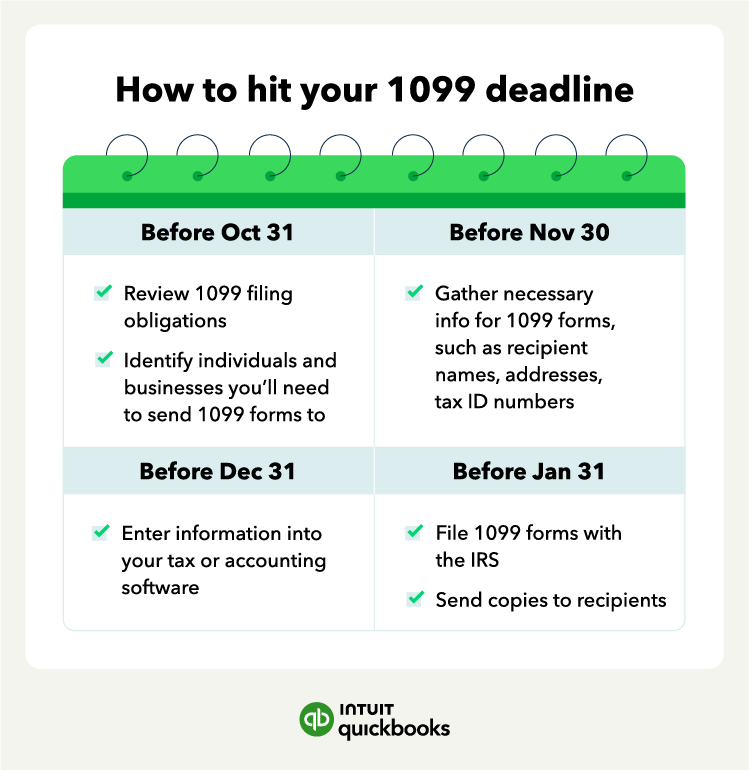
The question, “When will I get my 1099?” is often tinged with a mix of anticipation and anxiety. Receiving it promptly allows ample time for careful review, reconciliation with personal records, and thoughtful tax planning. Delays or missing forms, however, can introduce significant stress and potential complications, from filing extensions to re-submitting amended returns. This article will demystify the 1099 process, outlining the various types of forms, the standard deadlines for their issuance, and, crucially, what steps you can take if your forms are late or incorrect. We’ll also explore proactive strategies to streamline your tax preparation, ensuring you’re well-equipped to navigate the complexities of 1099 income.
Demystifying the 1099 Tax Form
Understanding the different facets of the 1099 form is the first step toward effective tax preparation. It’s not a single document but a family of forms, each designed to report specific types of non-employment income to the IRS.
What Exactly is a 1099?
At its core, a 1099 form is an “Information Return” used by various payers to report certain types of income paid to individuals or entities that are not employees. This includes payments for services rendered by independent contractors, rental income, dividends, interest, certain government payments, and proceeds from real estate transactions, among others. The payer sends one copy to the recipient (you) and another to the IRS, ensuring both parties have a record of the reported income. For the recipient, the 1099 serves as official documentation that must be used to accurately declare income on their federal and, in many cases, state tax returns. Failing to report income listed on a 1099 can lead to penalties and audits, as the IRS receives its own copy and will expect to see that income reflected in your filing.
Key Types of 1099s You Might Receive
While there are numerous variations, a few 1099 forms are particularly common for individuals and small business owners:
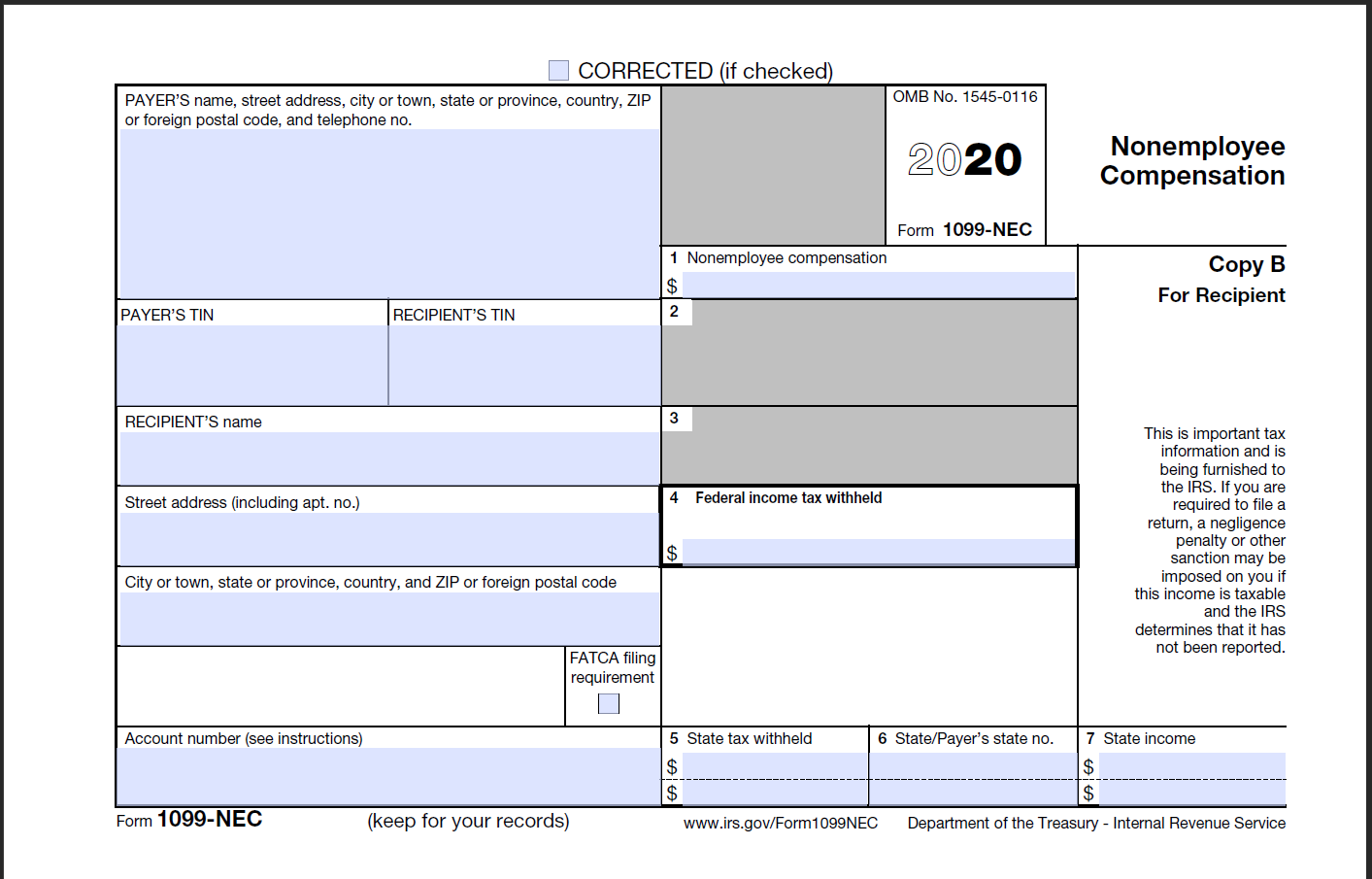
- Form 1099-NEC (Nonemployee Compensation): This is arguably the most common 1099 for freelancers and independent contractors. It reports payments of $600 or more made to non-employees for services performed in the course of the payer’s trade or business. If you work as a consultant, designer, writer, or any other independent professional, this is the form you’ll most likely receive.
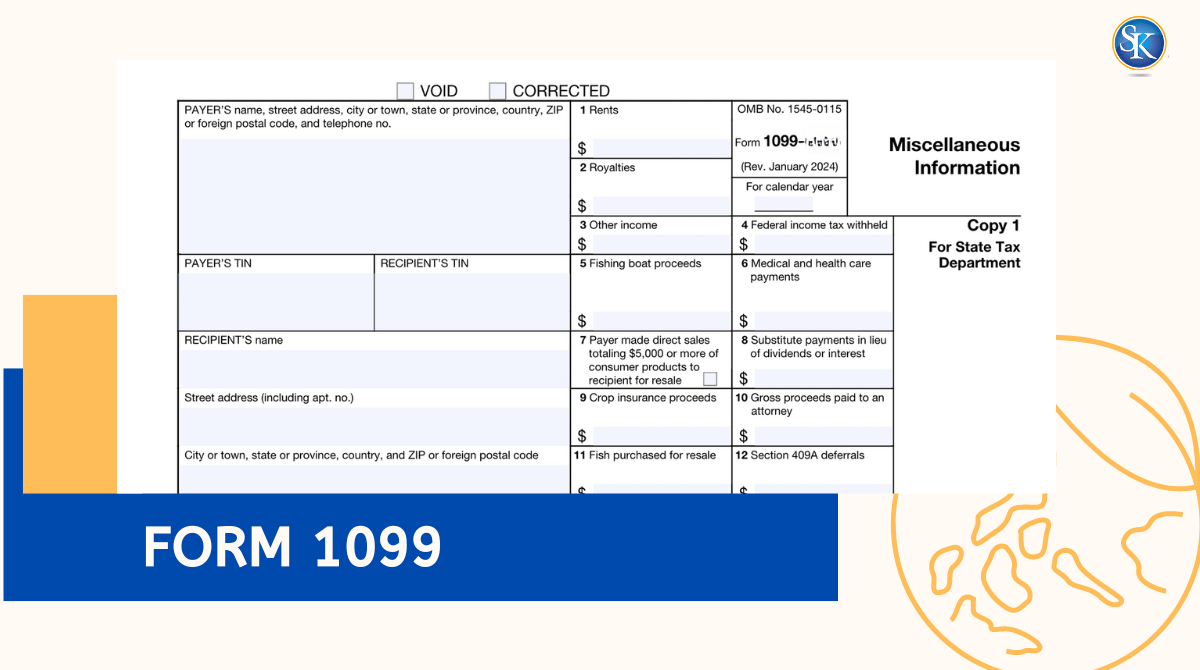
- Form 1099-MISC (Miscellaneous Information): Prior to 2020, this form was used for nonemployee compensation. Now, it reports a wider range of miscellaneous income, such as rents ($600 or more), prizes and awards, medical and health care payments, and other income payments that don’t fit into other 1099 categories.
- Form 1099-INT (Interest Income): Reports interest income of $10 or more from banks, brokerage firms, and other financial institutions.
- Form 1099-DIV (Dividends and Distributions): Reports dividends and other distributions (e.g., from stocks or mutual funds) of $10 or more.
- Form 1099-K (Payment Card and Third-Party Network Transactions): Reports gross payments processed through third-party payment networks (e.g., PayPal, Stripe, Square) or payment cards. The reporting thresholds for this form have been subject to change, so it’s vital to check current IRS guidelines.
- Form 1099-B (Proceeds From Broker and Barter Exchange Transactions): Reports proceeds from sales of stocks, bonds, mutual funds, and other securities.
Understanding which forms apply to your income streams is crucial for anticipating their arrival and organizing your financial documents.
Who Issues a 1099 and Why?
Any individual, business, or financial institution that makes certain types of payments to non-employees is generally required to issue a 1099 form. This obligation arises when the payment meets specific criteria, most commonly exceeding a threshold of $600 in a calendar year for services, rents, or other miscellaneous income, or $10 for interest and dividends. The primary reason for issuing these forms is to ensure transparency and compliance with tax laws. By reporting these payments to the IRS, the government can cross-reference the income reported by the payer with the income reported by the recipient, helping to prevent underreporting of income and maintain the integrity of the tax system. For the payer, issuing 1099s accurately and on time is a legal requirement that, if neglected, can result in penalties.
Critical Deadlines for 1099 Issuance
Timely receipt of your 1099 forms is paramount for a smooth tax season. Both payers and recipients operate within a strict calendar set by the IRS, designed to facilitate efficient tax filing for all parties.
The Standard January 31st Deadline
For most common 1099 forms, particularly Form 1099-NEC (Nonemployee Compensation) and Form 1099-MISC (Miscellaneous Information), the payer is required to send copies to the recipient and the IRS by January 31st of the year following the tax year in which the income was earned. For example, income earned in 2023 must have its corresponding 1099-NEC or 1099-MISC sent by January 31, 2024. This deadline provides recipients with a reasonable window to receive their forms, gather all necessary documentation, and begin preparing their tax returns before the April filing deadline.
It’s important to note that if January 31st falls on a weekend or a holiday, the deadline is typically shifted to the next business day. While most payers aim to meet this deadline, some may send forms earlier in January, or even in late December for the previous tax year, especially if they have efficient accounting systems in place.
Important Exceptions and Later Dates
While January 31st is the golden rule for many, several 1099 forms have different, sometimes later, deadlines:
- Form 1099-B (Proceeds From Broker and Barter Exchange Transactions): Brokers often have until February 15th to send out 1099-B forms, as these can involve complex calculations related to stock sales and other securities.
- Form 1099-S (Proceeds From Real Estate Transactions): The deadline for this form is also typically February 15th.
- Form 1099-K (Payment Card and Third-Party Network Transactions): The deadline for Form 1099-K is also January 31st.
It’s crucial for recipients of these specific income types to be aware of these extended deadlines and adjust their expectations accordingly. Regardless of the form, it’s always wise to start organizing your income records well before the end of the year, so you’re not solely reliant on the timely arrival of these documents.
The Impact of Missing or Delayed Forms
A missing or delayed 1099 can create a ripple effect, potentially causing stress and complications during tax season. For the recipient, without the official form, accurately reporting income becomes a more challenging task, often requiring reliance on personal records like invoices, bank statements, and payment confirmations. While the IRS states that you are still obligated to report all income, even if you don’t receive a 1099, the absence of the form can delay your ability to file your taxes or lead to potential discrepancies if your personal records don’t perfectly align with what the payer eventually reports.
For the payer, failure to issue 1099s by the deadline can result in penalties from the IRS. These penalties vary based on how late the forms are and the size of the business, but they can quickly add up, making timely issuance a priority for responsible businesses. Therefore, both parties have a vested interest in ensuring these forms are issued and received promptly.
Navigating Missing or Incorrect 1099s
Even with strict deadlines, sometimes a 1099 doesn’t arrive as expected, or the information it contains is inaccurate. Knowing how to react in these situations can save you significant time and stress.
Initial Steps When Your 1099 Is Late
If January 31st (or the relevant extended deadline) passes and you haven’t received a 1099 you were expecting, don’t panic. Here’s a structured approach:
- Check Your Records: First, verify that you actually meet the reporting threshold ($600 for most services, $10 for interest/dividends) for that specific payer. Small payments may not generate a 1099. Also, confirm the address the payer has on file for you.
- Contact the Payer Directly: This is your immediate next step. Reach out to the person or company that paid you. Often, a form might have been lost in the mail, sent to an old address, or simply overlooked in their system. Politely request that they issue and send the form to you as soon as possible. Keep a record of your communication (dates, names, what was discussed).
- Allow Reasonable Time: After contacting the payer, give them a reasonable amount of time (e.g., 7-10 business days) to send the form. Mail delays, especially during peak tax season, are common.
What to Do If You Can’t Get Your Form
If you’ve contacted the payer multiple times and still haven’t received your 1099, or if they are unresponsive, you have further recourse:
- Use Your Own Records: The IRS emphasizes that you are legally required to report all income, whether or not you receive a 1099. Use your meticulous record-keeping – invoices, bank statements, payment confirmations, and contracts – to calculate the income you received from that payer.
- Contact the IRS: If you have made a good faith effort to obtain the form from the payer and failed, you can contact the IRS for assistance. You can call the IRS at 800-829-1040. Have the payer’s name, address, and phone number, the type of income involved, and an estimate of the amount of income you received. The IRS may then contact the payer on your behalf.
- Form 4852 (Substitute for Form W-2, Wage and Tax Statement): While primarily for W-2 forms, if you absolutely cannot get a 1099, you would still use your own records to report the income. Some tax professionals might suggest including an explanatory statement with your return detailing your efforts to obtain the form. It’s critical to note that the Form 4852 is not directly for 1099s, but the principle of using your own records stands.
Handling Corrected 1099s
Occasionally, you might receive a “corrected” 1099 after you’ve already received the original. This means the payer initially sent a form with incorrect information and has now issued a revised version.
- Review Carefully: Compare the corrected form with the original and your own records to understand the changes.
- Amend Your Return (If Necessary): If you’ve already filed your tax return using the incorrect information, you will need to file an amended return (Form 1040-X) to reflect the corrected income. This is crucial to avoid potential penalties or issues with the IRS.
- Wait to File (If Possible): If you receive a corrected 1099 before filing, use the corrected version to prepare your return. If you suspect an error on an original 1099 but haven’t received a correction yet, it might be prudent to wait a bit longer to file, if the filing deadline allows.
Filing Your Taxes Without a 1099
Even if a 1099 never materializes, or if the income threshold for issuance wasn’t met, you are still responsible for reporting all taxable income. This requires diligent personal record-keeping. Organize your invoices, bank statements, and payment logs to accurately calculate your total income for the year. This information will be reported on Schedule C (Profit or Loss From Business) if you are a sole proprietor or independent contractor, or on other schedules depending on the type of income. The key takeaway is: no 1099 does not mean no tax obligation.
Proactive Strategies for 1099 Recipients
Managing 1099 income effectively goes beyond simply waiting for forms to arrive. Proactive planning and meticulous organization are cornerstones of financial health for independent workers and business owners.
The Power of Meticulous Record-Keeping
For anyone receiving 1099 income, impeccable record-keeping is your best defense and offense during tax season. This isn’t just about income; it’s about tracking every relevant financial transaction.
- Track All Income: Maintain detailed records of every payment received, including the date, amount, payer, and purpose of the payment. This allows you to reconcile against any 1099s you receive and accurately report income even if a 1099 is missing.
- Document All Expenses: As a 1099 recipient, you’re likely eligible for numerous business deductions. Keep receipts, invoices, and bank statements for all business-related expenses, such as office supplies, software subscriptions, professional development, travel, and home office costs. Categorize these expenses throughout the year to simplify tax preparation.
- Maintain Digital and Physical Copies: Create a system for storing documents, whether it’s a dedicated folder on your computer, cloud storage, or a physical filing cabinet. Redundancy is key in case of data loss.
- Separate Business and Personal Finances: Using a separate bank account and credit card for business transactions makes tracking income and expenses infinitely easier and provides a clear audit trail.
Understanding and Planning for Self-Employment Taxes
One of the most significant differences for 1099 recipients compared to W-2 employees is the responsibility for self-employment taxes. This combines Social Security and Medicare taxes, which are typically split between an employer and employee. As a self-employed individual, you pay both halves, totaling 15.3% on your net earnings (up to a certain income limit for Social Security).
- Estimate Your Taxes: Since taxes aren’t withheld from your 1099 income, you’ll likely need to pay estimated taxes quarterly. The IRS requires you to pay income tax as you earn or receive income throughout the year. Use your income and expense records to project your net income and calculate your estimated tax liability for the year.
- Make Quarterly Payments: Estimated taxes are typically due on April 15, June 15, September 15, and January 15 of the following year. Missing these payments can result in penalties.
- Set Aside Funds: A common strategy is to set aside a percentage of every payment you receive into a separate savings account specifically for taxes. Many financial advisors recommend saving 25-35% or more, depending on your income level and state tax obligations.
Identifying Key Deductions to Maximize Savings
Maximizing your legitimate business deductions can significantly reduce your taxable income and, consequently, your tax bill. Understanding what you can deduct is crucial:
- Home Office Deduction: If you use a part of your home exclusively and regularly for your business, you may be able to deduct a portion of your rent/mortgage, utilities, insurance, and other home expenses.
- Business Expenses: This broadly covers anything “ordinary and necessary” for your business, including supplies, software, professional fees, advertising, and training.
- Health Insurance Premiums: If you’re self-employed and not eligible to participate in an employer-sponsored health plan, you can often deduct your health insurance premiums.
- Retirement Contributions: Contributions to self-employment retirement plans like a SEP IRA or Solo 401(k) are tax-deductible and a powerful way to save for your future while reducing current taxable income.
- Vehicle Expenses: If you use your personal vehicle for business purposes, you can deduct actual expenses (gas, oil, repairs, insurance) or use the standard mileage rate.
Consulting with a tax professional is highly recommended to ensure you’re taking advantage of all eligible deductions and complying with IRS rules.
Leveraging Financial Tools for Streamlined Tax Prep
In today’s digital age, numerous tools can simplify the financial management and tax preparation process for 1099 recipients:
- Accounting Software: Programs like QuickBooks Self-Employed, FreshBooks, or Xero can help you track income and expenses, categorize transactions, generate invoices, and even estimate quarterly taxes. Many integrate with bank accounts and offer robust reporting features.
- Budgeting and Expense Tracking Apps: Apps like Mint, YNAB (You Need A Budget), or Expensify can help you monitor spending, create budgets, and capture receipts on the go.
- Tax Preparation Software: Services like TurboTax Self-Employed, H&R Block Premium, or TaxAct can guide you through the filing process, assist with Schedule C, and help identify common deductions.
By integrating these tools into your financial routine, you can transform the daunting task of year-end tax preparation into a more manageable, less stressful process. They provide real-time insights into your financial health, helping you make informed decisions throughout the year and ensuring you’re ready when those 1099s arrive.
The journey of receiving and processing 1099s is an integral part of being an independent earner. By understanding the forms, deadlines, and proactive strategies, you can move from anxiously asking “When will I get my 1099?” to confidently managing your financial obligations and maximizing your tax efficiency.
aViewFromTheCave is a participant in the Amazon Services LLC Associates Program, an affiliate advertising program designed to provide a means for sites to earn advertising fees by advertising and linking to Amazon.com. Amazon, the Amazon logo, AmazonSupply, and the AmazonSupply logo are trademarks of Amazon.com, Inc. or its affiliates. As an Amazon Associate we earn affiliate commissions from qualifying purchases.