
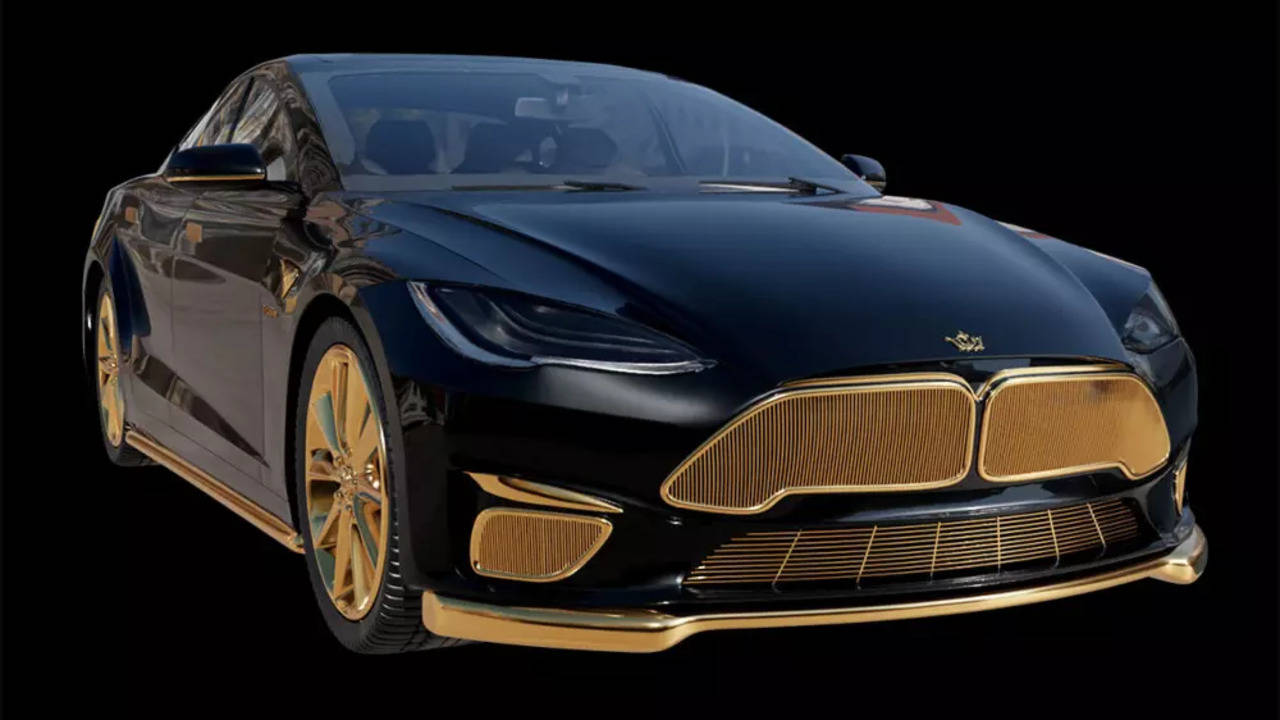
When discussing the upper echelons of the electric vehicle (EV) market, Tesla remains the benchmark for the intersection of technology and luxury. However, from a financial perspective, determining “the most expensive Tesla” is not as simple as looking at a single sticker price. The answer fluctuates based on configuration, software additions, historical rarity, and upcoming releases that push the boundaries of consumer investment. For the high-net-worth individual, the corporate fleet manager, or the savvy investor, understanding the price architecture of Tesla’s top-tier offerings is essential for calculating total cost of ownership and potential asset appreciation.

The Current Market Leaders: Analyzing the Plaid Series Costs
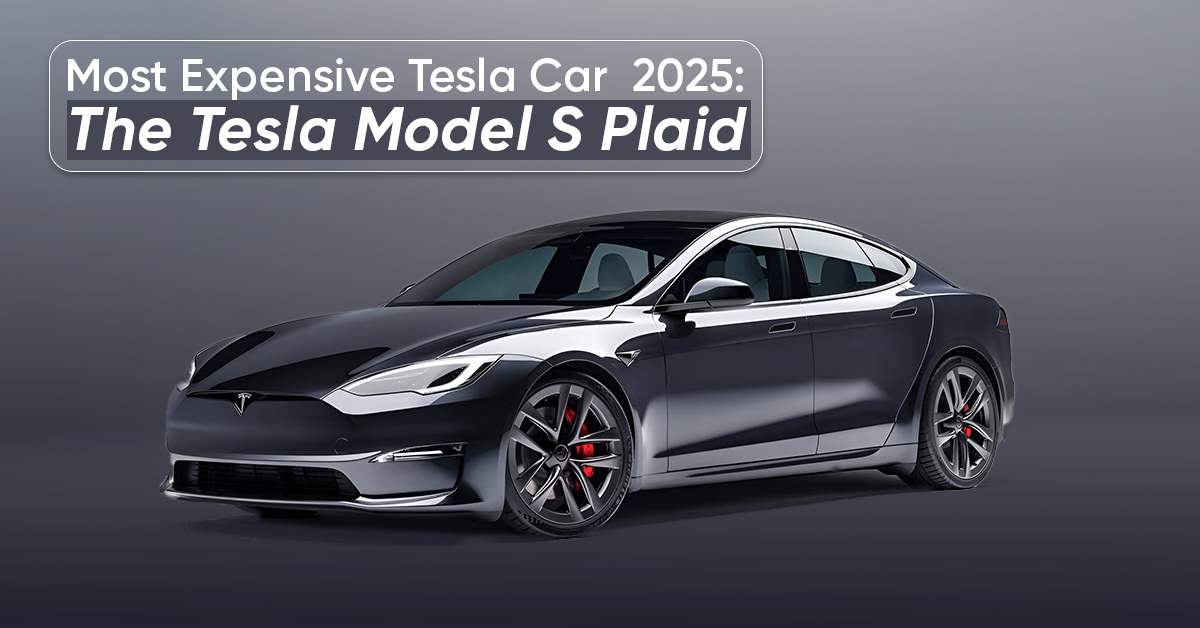
As of the current market cycle, the “most expensive” titles for production vehicles are held by the “Plaid” variants of the Model S and Model X. These vehicles represent the pinnacle of Tesla’s current engineering, but their financial footprint extends far beyond the base MSRP.
The Base Price vs. The “Fully Loaded” Reality
The Model X Plaid currently serves as the highest-priced vehicle in the standard Tesla lineup. While the base price often hovers around the $95,000 to $105,000 mark depending on market adjustments, a “fully loaded” version quickly escalates the financial commitment. Choosing premium paint colors (like Ultra Red), the 22-inch Turbine wheels, and the premium interior configurations can add upwards of $15,000 to the initial cost.
Furthermore, the seating configuration is a significant financial lever. The six-seat interior, which offers the most luxurious “captain’s chair” experience, comes at a significant premium over the standard five-seat layout. For a buyer, these choices aren’t merely aesthetic; they represent a calculated investment in comfort and future resale value.
Software as a Capital Asset: The Full Self-Driving Factor
One of the most unique aspects of Tesla’s pricing strategy is the decoupling of hardware and software. To truly own the most expensive Tesla currently on the road, one must include the Full Self-Driving (FSD) capability. At various points in its lifecycle, this software suite has cost between $8,000 and $15,000.
From a financial standpoint, FSD is an intangible asset. Unlike a physical spoiler or leather seats, the software can theoretically increase in value or functionality over time through over-the-air updates. However, it also presents a risk: its value on the secondary market has historically been lower than its initial purchase price, a crucial factor for those calculating the car’s depreciation curve.
Historical and Future High-End Investments: From Roadsters to Prototypes
While the Model X Plaid is the most expensive car you can drive home today, the broader financial history of Tesla includes vehicles that command much higher prices as collectible assets or future-dated contracts.
The Roadster Heritage: A Collector’s Financial Asset
The original Tesla Roadster, produced between 2008 and 2012, has transitioned from a used electric car to a legitimate blue-chip investment. Originally sold for roughly $109,000, “Signature 100” editions and well-preserved low-mileage units now frequently fetch between $150,000 and $250,000 at specialized auctions.
For the money-minded enthusiast, the original Roadster represents a rare case of an EV that has escaped the traditional depreciation curve. As the vehicle that launched the brand, its historical significance provides a floor for its valuation, making it arguably the most “expensive” Tesla when adjusted for its status as a collector’s item rather than a daily utility vehicle.
The Upcoming Roadster 2.0: Predicting the $250,000 Milestone
The true ceiling for Tesla pricing lies in the upcoming second-generation Roadster. Tesla began taking reservations for the “Founders Series” Roadster with a required deposit of $250,000—the full price of the car paid upfront.
This represents a unique financial instrument: an interest-free loan from the consumer to the manufacturer in exchange for a priority spot in the production line of a hyper-car. With a projected 0-60 mph time of under two seconds and a range of 600 miles, the Roadster 2.0 is positioned not just as a car, but as a high-performance asset intended to compete with Ferraris and Lamborghinis, both in terms of speed and price tag.
The Total Cost of Ownership (TCO) of a Luxury EV
For the pragmatic investor, the most expensive Tesla is defined not just by the purchase price, but by the Total Cost of Ownership (TCO). A $100,000 Model X Plaid has a vastly different financial profile than a $100,000 internal combustion engine (ICE) luxury SUV.
Depreciation Curves and Resale Value
Depreciation is the single largest “expense” of any luxury vehicle. Historically, Teslas held their value better than almost any other brand due to high demand and frequent software updates that kept older models feeling modern. However, as the EV market has matured and Tesla has implemented aggressive price cuts on new models, the secondary market has seen increased volatility.
Investors must look at “residual value”—the estimated value of the car at the end of a lease or finance term. A high-end Model S may lose 40-50% of its value over three years, which, on a $110,000 vehicle, equates to a $55,000 cost. Navigating this requires timing the market and understanding how Tesla’s price adjustments affect the equity in currently owned vehicles.
Insurance, Maintenance, and the Hidden Premium Costs
The “expensive” nature of a high-end Tesla extends to insurance premiums. Because models like the Plaid feature carbon-sleeved rotors and high-performance tri-motor setups, insurance companies categorize them as high-risk performance vehicles. Premiums can be 20% to 50% higher than a standard Model 3.
Conversely, the maintenance costs of a $100,000 Tesla are remarkably low compared to a Mercedes-Benz S-Class or a BMW 7 Series. With no oil changes, spark plugs, or complex transmission systems to service, the long-term operational costs provide a financial “offset” to the high initial entry price. For a business owner, this predictable cost structure is often more attractive than the volatile maintenance schedules of traditional luxury cars.
Tesla as a Financial Tool: Tax Incentives and Business Branding
For many, the most expensive Tesla is purchased not as a personal luxury, but as a strategic business asset. The tax implications of these vehicles can significantly alter their “real” cost.
Section 179 Deductions and Luxury Vehicle Caps
In the United States, the IRS Section 179 deduction allows businesses to deduct the purchase price of certain equipment. Because the Tesla Model X has a Gross Vehicle Weight Rating (GVWR) of over 6,000 pounds, it has historically qualified for more generous depreciation write-offs than lighter passenger cars.
A business owner purchasing a $110,000 Model X Plaid may be able to deduct a significant portion of that purchase price in the first year of ownership. When factoring in the tax savings (depending on the business’s tax bracket), the “most expensive” Tesla might actually net out to be a more sound financial decision than a cheaper vehicle that does not qualify for such aggressive depreciation.
The ROI of Brand Perception
Finally, we must consider the Return on Investment (ROI) of branding. For consultants, real estate agents, and tech entrepreneurs, the vehicle they drive is a component of their professional identity. A top-of-the-line Tesla signals a commitment to innovation, sustainability, and success.
While it is difficult to quantify the exact dollar value of “brand perception,” the most expensive Tesla often pays for itself through the doors it opens in high-level networking and the message it sends to clients. In this context, the high price tag is an investment in professional “signaling,” a concept well-documented in behavioral economics.
Conclusion: Value vs. Price
What is the most expensive Tesla? From a showroom perspective, it is a fully optioned Model X Plaid, reaching toward the $120,000 range. From a collector’s perspective, it is a low-mileage original Roadster. And from a future-looking perspective, it is the $250,000 Founders Series Roadster 2.0.
However, for the sophisticated buyer, the “price” is only the beginning of the story. By analyzing depreciation, tax incentives, and the low cost of maintenance, the most expensive Tesla often reveals itself to be a complex financial instrument. It is a vehicle that challenges the traditional notions of luxury spending, proving that at the highest levels of the market, the most expensive asset can also be the most strategically sound investment.
aViewFromTheCave is a participant in the Amazon Services LLC Associates Program, an affiliate advertising program designed to provide a means for sites to earn advertising fees by advertising and linking to Amazon.com. Amazon, the Amazon logo, AmazonSupply, and the AmazonSupply logo are trademarks of Amazon.com, Inc. or its affiliates. As an Amazon Associate we earn affiliate commissions from qualifying purchases.