
The Dow Jones Industrial Average (DJIA) is one of the most widely cited and recognized stock market indices in the world. Its daily fluctuations are often the headline news for financial markets, serving as a quick barometer for the health of the American economy and corporate sector. But for all its fame, a fundamental question often arises for new investors and curious onlookers alike: exactly how many stocks make up this influential index? The answer is both simple and rich with historical context and methodological nuances that are crucial for any discerning investor to understand.

This article delves into the precise number of components in the DJIA, exploring its unique construction, the criteria for inclusion, and how it measures up against other major market benchmarks. We will unpack its historical significance, shed light on its distinctive price-weighted methodology, and discuss what its composition means for investors looking to understand or gain exposure to the U.S. stock market.
The Dow Jones Industrial Average: An Enduring Market Bellwether
Before we address the specific number of stocks, it’s essential to appreciate the Dow’s enduring legacy and its continued relevance in today’s complex financial landscape. Conceived in the late 19th century, the DJIA has witnessed over a century of economic booms, busts, technological revolutions, and global shifts, consistently offering a snapshot of the industrial backbone of the United States.
A Legacy of Industrial Strength
The Dow Jones Industrial Average was first introduced by Charles Dow, co-founder of Dow Jones & Company, on May 26, 1896. Initially, it comprised just 12 industrial stocks, primarily representing heavy industries like railroads, sugar, tobacco, and oil – the titans of that era. Its creation was an attempt to provide a clear, simple measure of the market’s performance, a critical innovation in a time when financial information was far less accessible than it is today. The “Industrial” in its name perfectly reflected its original focus on manufacturing and production companies that powered the burgeoning American economy.
Over the decades, as the U.S. economy diversified and evolved, so too did the Dow. Companies came and went, reflecting the shifting landscape of economic dominance. The index expanded to 20 stocks in 1916 and then to its current number in 1928, just before the onset of the Great Depression. This history of adaptation has allowed the Dow to remain a relevant indicator, even as its component companies have changed dramatically from the original cohort.
Why the DJIA Remains Relevant Today
Despite the emergence of more comprehensive market indices, the DJIA continues to command significant attention. Its longevity imbues it with a certain prestige and historical comparison value. When economists and analysts speak of “the market” moving up or down, the Dow is often the first index that comes to mind for the general public.
Its relevance stems from several factors:
- Historical Context: The Dow provides a long-term historical perspective on market performance, allowing for comparisons across generations.
- Simplicity and Visibility: With a relatively small number of highly recognizable companies, the Dow is easy to understand and follow. The large movements in its point value often make for compelling headlines.
- Blue-Chip Representation: The companies selected for the Dow are typically large, well-established, and financially sound corporations, often referred to as “blue-chip” stocks. Their performance tends to be indicative of the broader economic health of leading U.S. companies.
- Benchmark for ETFs and Funds: Many investment products, particularly Exchange Traded Funds (ETFs) and mutual funds, track the performance of the DJIA, offering investors a straightforward way to gain exposure to its constituent companies.
While its methodology has its critics, the Dow’s enduring presence and cultural significance ensure its place as a key market indicator.
The Core Question: The Number of Companies in the DJIA
Now, let’s address the central question: how many stocks are in the DJIA? The answer is a fixed, albeit periodically updated, number that has been consistent for nearly a century.
The Magic Number: 30
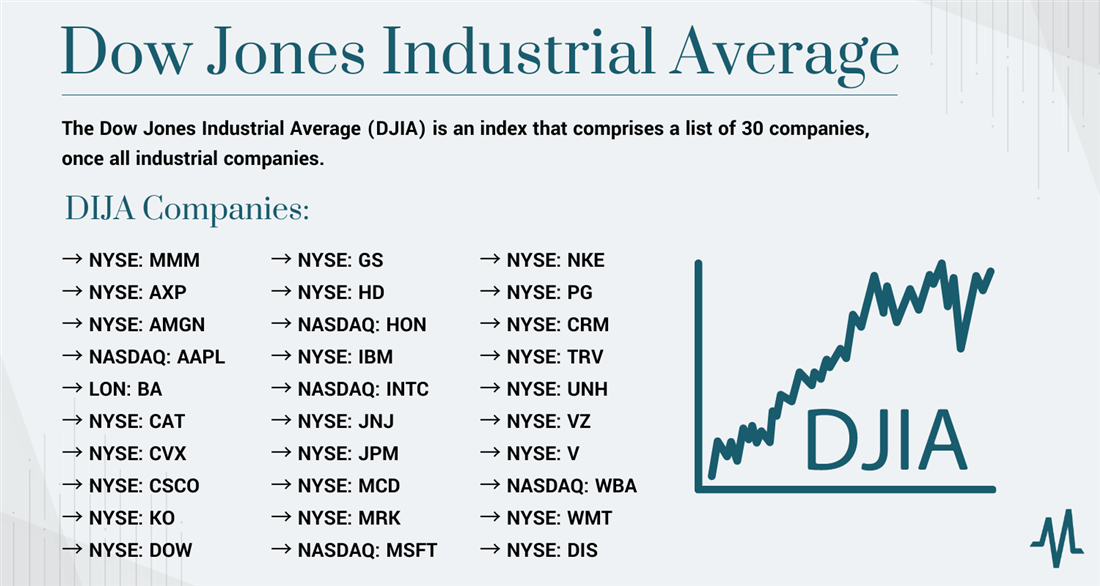
The Dow Jones Industrial Average is composed of 30 distinct companies. This number has remained constant since 1928, despite countless changes to the actual companies that comprise the index over that period. This relatively small number of companies is a defining characteristic of the DJIA, setting it apart from broader market indices that track hundreds or even thousands of stocks.
These 30 companies are carefully chosen to represent a significant portion of the U.S. market and economy. While the “Industrial” moniker remains, the index today is far from solely industrial. It encompasses a diverse array of sectors, reflecting the modern economy’s evolution beyond manufacturing to include technology, healthcare, finance, consumer services, and more.
Evolution of Composition: From Heavy Industry to Tech Giants
The journey of the Dow’s composition is a fascinating reflection of economic history. The original 12 companies were indeed industrial powerhouses. However, over time, the S&P Dow Jones Indices committee, which manages the index, has consistently updated its components to ensure it remains a relevant indicator of the U.S. economy.
For example, companies like General Electric, one of the original 12, was eventually removed in 2018 after over a century of continuous inclusion, making way for Walgreens Boots Alliance. More recently, Salesforce.com, Amgen, and Honeywell were added in 2020, replacing Exxon Mobil, Pfizer, and Raytheon Technologies, demonstrating a clear shift towards technology, healthcare, and diversified industrials, and away from traditional energy and pharmaceuticals. These changes are not arbitrary; they reflect deep structural shifts in the American corporate landscape and the global economy. The current list of 30 includes household names like Apple, Microsoft, Coca-Cola, Disney, Johnson & Johnson, and Goldman Sachs, showcasing the breadth and impact of its components.
The Selection Process: More Than Just Market Cap
The selection of the 30 companies is not governed by a rigid, public formula like some other indices. Instead, it is determined by an Averages Committee at S&P Dow Jones Indices. While the precise criteria are somewhat opaque, several key factors are generally understood to influence their decisions:
- Reputation and History: The committee generally seeks companies with excellent reputations, sustained growth, and investor interest. They look for “blue-chip” companies.
- Sector Representation: While not striving for perfect sector balance, the committee aims to have a reasonable representation of the broad sectors of the U.S. economy to make the Dow a useful economic indicator.
- Size and Influence: The companies are typically large-cap stocks, leading their respective industries. Their performance has a significant impact on the overall market sentiment.
- Liquidity: Component companies must have a substantial trading volume to ensure liquidity and ease of trading.
- “Industrial” Fit: Despite the broad diversification, the committee still considers the company’s “industrial” character, broadly interpreting it as a company that has a significant and direct impact on the U.S. economy.
Changes to the Dow’s composition are infrequent and made only when deemed necessary to maintain its relevance as an adequate measure of the stock market. These changes often make significant news and can impact the stock prices of both the incoming and outgoing companies.
Deconstructing the DJIA’s Unique Methodology
Beyond knowing the number of stocks, understanding how the DJIA is calculated is paramount. The Dow employs a distinctive methodology that sets it apart from most other major indices, influencing how changes in its component stocks affect the overall index value.

Price-Weighting: A Distinctive Calculation
Unlike market-capitalization-weighted indices (like the S&P 500, where companies with higher market values have a greater impact), the DJIA is a price-weighted index. This means that stocks with higher share prices have a greater influence on the index’s value than stocks with lower share prices, regardless of their total market capitalization.
For example, if Company A has a share price of $300 and Company B has a share price of $100, a $1 increase in Company A’s share price will have three times the impact on the Dow’s value as a $1 increase in Company B’s share price, even if Company B has a much larger market capitalization due to having more outstanding shares. This method is a direct legacy of Charles Dow’s original calculation, which simply added up the prices of the stocks and divided by the number of components.
The Dow Divisor: Maintaining Consistency
Due to its price-weighted nature, corporate actions like stock splits, dividends, or changes in the index components would drastically alter the index’s value if not accounted for. To prevent such distortions and maintain historical continuity, the S&P Dow Jones Indices committee uses a figure called the Dow Divisor.
The Dow Divisor is a dynamic number that is adjusted whenever there’s a stock split, a component change, or a large special dividend. Its purpose is to ensure that the index’s value remains comparable before and after such events. For instance, if a stock in the Dow undergoes a 2-for-1 stock split, its share price is halved. To prevent the Dow’s overall value from dropping instantly by half of that stock’s price, the Divisor is reduced proportionally. By dividing the sum of the 30 stock prices by this Divisor, the index’s value reflects true market movements rather than artificial price changes. The Divisor is typically a number less than one.
Critiques and Strengths of the DJIA’s Structure
The Dow’s price-weighted methodology has its critics. The main criticism is that it gives disproportionate weight to higher-priced stocks, which may not always be the largest or most economically significant companies. This can sometimes lead to a less accurate representation of the broader market’ compared to market-cap-weighted indices. Another critique is its small number of components, which some argue makes it less representative of the entire U.S. stock market.
However, the Dow’s strengths lie in its simplicity and historical continuity. It provides a straightforward, easy-to-understand benchmark. Its focus on established blue-chip companies ensures that it tracks a stable and significant segment of the economy. For many, it acts as a reliable, if limited, proxy for the overall market sentiment among large, mature businesses.
DJIA in the Broader Investment Landscape
While the DJIA is undeniably important, it’s crucial for investors to understand its position relative to other key market indices. A holistic view of the market requires considering more than just the Dow.
Comparing the Dow to the S&P 500 and NASDAQ
- S&P 500: The S&P 500 is often considered a more comprehensive and accurate representation of the U.S. equity market. It tracks 500 large-cap U.S. companies and is a market-capitalization-weighted index. This means companies like Apple or Microsoft, due to their immense market value, have a much greater influence on the S&P 500 than they do on the Dow, reflecting their true economic weight. Many professional money managers use the S&P 500 as their primary benchmark.
- NASDAQ Composite: The NASDAQ Composite Index includes over 3,000 stocks listed on the NASDAQ exchange, with a strong concentration in technology and growth-oriented companies. It is also market-capitalization-weighted. While it provides excellent insight into the tech sector, its heavy weighting towards a specific industry makes it less representative of the broad economy than the S&P 500 or even the more diversified DJIA.
What the Dow Tells Us (and What It Doesn’t)
The Dow excels at providing a quick, easily digestible gauge of the performance of 30 leading American companies. Its movements can signal broad investor confidence or concern in the blue-chip segment of the market.
However, what the Dow doesn’t tell us is equally important:
- Mid-Cap and Small-Cap Performance: It offers no insight into the performance of smaller companies, which can sometimes outperform large caps and are vital to a diversified economy.
- Specific Sector Performance: While diversified, its small number of components means it cannot provide detailed insights into the performance of individual sectors or industries outside its 30 components.
- “True” Market Weighting: Due to its price-weighted nature, it doesn’t accurately reflect the proportionate economic impact of its constituent companies based on their total market value.
Strategic Implications for Investors
For investors, understanding these differences is key. Relying solely on the Dow for market analysis can lead to a skewed perspective. A more robust understanding comes from considering the Dow alongside other indices to get a fuller picture of market breadth and depth. The Dow’s movements are often correlated with the S&P 500, but there can be significant divergences depending on which specific sectors are driving market performance.
Investing with the DJIA in Mind
For those looking to gain exposure to the companies within the Dow Jones Industrial Average, there are several practical approaches, keeping in mind the index’s unique characteristics.
Gaining Exposure Through ETFs and Index Funds
The most common and efficient way for individual investors to invest in the DJIA is through exchange-traded funds (ETFs) or mutual funds that track the index.
- ETFs (Exchange Traded Funds): Products like the SPDR Dow Jones Industrial Average ETF Trust (ticker: DIA), often referred to as “Diamonds,” aim to replicate the price and yield performance of the DJIA. These ETFs are publicly traded on stock exchanges, offering liquidity and the ability to buy and sell throughout the day.
- Index Funds: Various mutual funds also aim to track the DJIA. These funds offer professional management and diversification across the 30 components, albeit typically with slightly higher expense ratios than ETFs.
These instruments allow investors to own a piece of all 30 Dow components without having to purchase each stock individually, providing instant diversification across these blue-chip companies.
Understanding Sector Representation
When considering an investment tied to the DJIA, it’s important to understand the current sector representation. While the Dow has diversified significantly, certain sectors may still have a larger influence due to the share prices of their constituent companies. Regularly reviewing the current list of 30 companies and their respective industries will provide a clearer picture of what an investment in a Dow-tracking fund entails. For instance, if technology stocks within the Dow are performing exceptionally well and have high share prices, they will exert a stronger pull on the index’s performance.
The Dow as a Piece of a Diversified Portfolio
While the DJIA represents a strong collection of blue-chip companies, it should ideally be just one component of a well-diversified investment portfolio. Given its limited number of stocks and specific weighting methodology, relying solely on the Dow might not provide adequate diversification across all market capitalizations (small, mid, large), geographies (international stocks), or asset classes (bonds, real estate). Investors should consider combining Dow-related investments with funds tracking broader indices like the S&P 500, international market ETFs, and fixed-income investments to achieve a truly diversified and resilient portfolio aligned with their financial goals and risk tolerance.
In conclusion, the Dow Jones Industrial Average is composed of 30 carefully selected, leading American companies. This small yet influential group, alongside the index’s unique price-weighted methodology, has cemented its place as a historical and often-cited barometer of the U.S. stock market. Understanding its composition, calculation, and limitations is vital for any investor seeking to navigate the complexities of financial markets and build a robust investment strategy. While not a complete picture of the entire economy, the DJIA remains a powerful indicator of the health and direction of America’s corporate giants.
aViewFromTheCave is a participant in the Amazon Services LLC Associates Program, an affiliate advertising program designed to provide a means for sites to earn advertising fees by advertising and linking to Amazon.com. Amazon, the Amazon logo, AmazonSupply, and the AmazonSupply logo are trademarks of Amazon.com, Inc. or its affiliates. As an Amazon Associate we earn affiliate commissions from qualifying purchases.