
The Dow Jones Industrial Average (DJIA), often simply referred to as “the Dow,” is arguably the most recognized stock market index in the world. For over a century, it has served as a critical barometer for the health and direction of the U.S. economy and its stock market. Yet, despite its pervasive presence in financial news and everyday conversations, many investors and casual observers hold misconceptions about what the Dow actually represents and, more specifically, which stocks constitute this iconic index. It’s not simply a collection of the 30 largest companies by market capitalization, nor is it a static list. Rather, it’s a carefully curated selection designed to reflect the breadth and vitality of American industry and innovation. Understanding its components, the methodology behind their selection, and the nuances of how the index is calculated offers invaluable insight into its role in the financial world and its utility for investors.

Understanding the Dow Jones Industrial Average (DJIA)
To truly appreciate the composition of the Dow, one must first grasp its fundamental nature and historical context. Far from being a mere list, it is a dynamic index with a specific purpose and calculation methodology that sets it apart from many other market indicators.
A Historical Perspective
Conceived by Charles Dow, editor of The Wall Street Journal and co-founder of Dow Jones & Company, the DJIA was first published on May 26, 1896. Initially comprising just 12 predominantly industrial companies—ranging from American Cotton Oil to U.S. Rubber—its creation aimed to provide a clear, concise measure of the market’s performance. In an era before widespread access to real-time market data, the Dow served as an indispensable tool for gauging economic trends. Over time, as the U.S. economy diversified and evolved beyond its heavy industrial roots, so too did the Dow. It expanded to 30 stocks in 1928, a number it has maintained ever since, and its constituents have continually adapted to reflect new economic realities, from the rise of consumer goods to the dominance of technology and healthcare. This constant evolution ensures its relevance, even if its “industrial” moniker is now largely an anachronism.
How the Dow is Calculated
One of the most distinguishing features of the DJIA is its calculation method: it is a price-weighted index. This means that companies with higher stock prices have a greater influence on the index’s value, regardless of their total market capitalization (the total value of all their outstanding shares). This stands in stark contrast to market-capitalization-weighted indices like the S&P 500, where larger companies by market value inherently carry more weight.
To calculate the Dow, the sum of the prices of the 30 component stocks is divided by a special number known as the Dow Divisor. This divisor is a crucial element because it is adjusted periodically to account for stock splits, mergers, spin-offs, and changes in the index’s composition. Without the divisor, such events would artificially distort the index’s value. For example, if a company in the Dow undergoes a 2-for-1 stock split, its share price effectively halves. To ensure that this administrative change doesn’t cause the Dow’s value to drop dramatically, the divisor is adjusted downwards. This intricate system ensures that the Dow’s movement accurately reflects changes in the actual value of its component stocks, rather than being skewed by corporate actions. While simpler to understand conceptually than market-cap weighting, the price-weighted nature has significant implications for how different companies impact the index.
Why 30 Stocks?
The choice of 30 stocks, maintained since 1928, is a deliberate one. The original intent was to create a manageable, yet representative, snapshot of the broader market. While 30 companies might seem a small sample compared to the thousands listed on U.S. exchanges, the selection committee aims for these 30 to be large, well-established, and highly influential “blue-chip” companies whose performance broadly reflects the health and trends of the American economy. The limited number allows for a focused analysis without being overwhelmed by the sheer volume of companies in the market. It presumes that these leading enterprises, due to their scale and market presence, often serve as bellwethers for their respective industries and the economy as a whole. This selective approach maintains the Dow’s historical role as a readily digestible gauge of market sentiment and economic vigor.
The Selection Process: More Than Just Size
The companies comprising the Dow are not chosen by algorithm or purely quantitative metrics. Instead, their inclusion is the result of a deliberate, qualitative process undertaken by the Averages Committee at S&P Dow Jones Indices. This committee adheres to a set of guiding principles to ensure the index remains relevant and representative.
Criteria for Inclusion
Unlike indices that rigidly adhere to market capitalization or specific sector allocations, the Dow’s selection process is more nuanced and discretionary. While size and market leadership are undoubtedly important, they are not the sole determinants. Key criteria include:
- Reputation and Sustained Growth: Companies considered for inclusion must have an excellent reputation, demonstrate sustained growth, and be of interest to a large number of investors. They should be leaders in their industry and have a history of generating significant revenue and profits.
- Broad Representation of the Economy: The committee strives for the index to reflect the diverse sectors of the U.S. economy. This means balancing representation across technology, finance, healthcare, consumer goods, industrials, and more. A purely industrial focus, as in its early days, would no longer be relevant.
- Influence on Stock Market Values: The company’s stock should contribute meaningfully to the Dow’s average. This often implies companies with high trading volumes and significant market impact.
- U.S. Incorporation and Listing: All companies must be based in the United States and listed on either the New York Stock Exchange (NYSE) or Nasdaq.
Crucially, the committee avoids making changes too frequently, opting for stability. Adjustments are typically made when a company’s business has fundamentally changed, its market relevance has diminished, or a merger/acquisition significantly alters its structure. For instance, General Electric, an original Dow component, was removed in 2018 after over a century due to its shrinking market presence and shift away from its diversified industrial roots.
Representing the Broader Economy
The name “Industrial Average” is largely a historical artifact. Today, the Dow actively seeks to represent a much broader cross-section of the American economy than merely heavy industry. This is evident in the inclusion of major technology firms, financial institutions, healthcare giants, and consumer staples companies. The committee’s ongoing challenge is to ensure the index accurately reflects the dominant economic forces of the time. For example, the addition of companies like Apple and Salesforce in recent years highlights the shift towards a service- and technology-driven economy, replacing older industrial mainstays. This continuous re-evaluation ensures the Dow remains a relevant gauge, even as the economic landscape transforms. The goal is to select companies that are not just large, but also indicative of the economic trends and sectors that drive national prosperity and innovation.
Notable Additions and Removals
Changes to the Dow, while infrequent, are highly scrutinized events. They typically reflect profound shifts in corporate fortunes or broader economic narratives. For example, the addition of Apple in 2015 was a landmark moment, reflecting the undeniable dominance of technology. Salesforce, a leader in cloud-based software, was added in 2020, signaling the growing importance of enterprise software and the digital transformation economy. On the other hand, the removal of General Electric in 2018 marked the end of an era, symbolizing the decline of a conglomerate model that once defined American industry. Similarly, pharmaceutical giant Pfizer and oil major ExxonMobil were also removed in 2020 to make way for more contemporary economic leaders, demonstrating the committee’s proactive approach to maintaining the index’s relevance. These shifts are not just procedural adjustments; they are symbolic acknowledgments of evolving economic powerhouses.
The Current Landscape: A Glimpse at the Dow’s Components
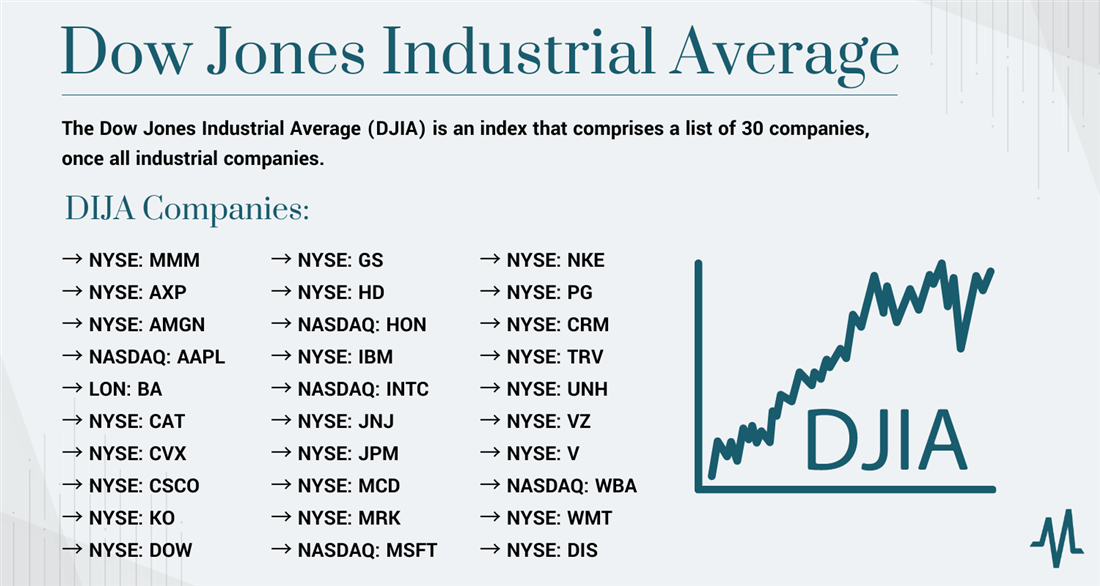
As of the latest updates, the 30 companies in the Dow Jones Industrial Average represent a diverse array of sectors, each a leader in its respective field. While the exact list can shift, the composition typically includes firms that are household names, global giants, and innovators driving economic growth.
Diverse Sectors, Leading Companies

The current Dow embodies a deliberate strategy to include companies from various sectors, ensuring it captures a wide spectrum of economic activity. This diversity is crucial for the index to serve as a meaningful barometer of the overall market, rather than being overly dependent on the performance of a single industry. The selection committee aims for a blend of stability provided by established companies and growth potential offered by innovative leaders.
Tech Giants
Technology companies now form a significant and influential part of the Dow. Firms like Apple Inc. (AAPL), a global leader in consumer electronics and software, and Microsoft Corp. (MSFT), a dominant force in software, cloud computing, and gaming, exemplify the digital age’s impact. Their massive market capitalizations and widespread consumer and enterprise adoption mean their performance heavily influences the index. Also present is Salesforce.com Inc. (CRM), a pioneer in cloud-based customer relationship management (CRM) software, underscoring the shift towards enterprise cloud solutions. These companies are not just tech leaders but economic powerhouses driving innovation across various industries.
Financial Powerhouses
The financial sector remains a cornerstone of the U.S. economy, and the Dow reflects this with key players. JPMorgan Chase & Co. (JPM) and Goldman Sachs Group Inc. (GS) represent major banking and investment services, providing a pulse on the health of global finance. Visa Inc. (V), a global payments technology company, highlights the massive scale of electronic transactions and consumer spending. These institutions are critical to capital flow, lending, and market stability.
Healthcare Innovators
The healthcare sector, with its continuous innovation and significant economic footprint, is well-represented. Companies like Johnson & Johnson (JNJ), a diversified healthcare giant spanning pharmaceuticals, medical devices, and consumer health, and Merck & Co. Inc. (MRK), a leading pharmaceutical company, are mainstays. The inclusion of Amgen Inc. (AMGN), a biotechnology pioneer, further diversifies the healthcare presence, showcasing advanced medical research and development. These firms are at the forefront of medical advancements and global well-being.
Consumer Staples & Discretionary
Companies that cater directly to consumers are vital indicators of economic health. Coca-Cola Co. (KO), a perennial leader in beverages, and Walmart Inc. (WMT), the world’s largest retailer, represent consumer staples—products people buy regardless of economic conditions. Meanwhile, Home Depot Inc. (HD), a major home improvement retailer, and Nike Inc. (NKE), a global athletic apparel and footwear giant, fall into the consumer discretionary category, reflecting spending on non-essential goods and services which often fluctuates with economic confidence. These companies provide insight into purchasing power and consumer sentiment.
Industrial Mainstays
While the “industrial” name might be anachronistic, key industrial players still hold a place. Companies like Boeing Co. (BA), a global aerospace and defense leader, and Caterpillar Inc. (CAT), a manufacturer of construction and mining equipment, represent heavy industry and global trade. 3M Co. (MMM), a diversified technology company producing a wide range of products from abrasives to healthcare solutions, showcases industrial innovation. These companies are crucial for infrastructure development, manufacturing, and global supply chains.
It is important to remember that this list provides illustrative examples and the specific components can change over time. The fundamental characteristic, however, remains: the Dow comprises influential, leading companies across a spectrum of industries that are integral to the U.S. economy.
Implications for Investors and Market Watchers
The Dow Jones Industrial Average, with its specific composition and calculation method, offers unique insights but also comes with certain limitations that informed investors should be aware of.
The Dow as a Barometer
For many, the Dow remains the quintessential market barometer. Its daily fluctuations are often cited as the primary indicator of whether the market is up or down, reflecting prevailing investor sentiment and immediate reactions to economic news, geopolitical events, and corporate earnings. Its long history gives it a certain gravitas, making it a natural reference point for understanding market trends across generations. A rising Dow generally signals economic optimism and robust corporate profits, while a falling Dow can indicate economic concerns or market uncertainty. Its simplicity and ubiquity make it an accessible tool for both seasoned professionals and casual observers to gauge the pulse of the market quickly.
Limitations of the DJIA
Despite its prominence, the Dow has several notable limitations that can affect its utility for a comprehensive investment analysis:
- Price-Weighted Bias: As a price-weighted index, a company with a high stock price has a disproportionately larger impact on the Dow’s movement than a company with a lower stock price, even if the latter has a much larger market capitalization. This can distort its representation of the overall market, as a move in a high-priced stock like UnitedHealth Group (which historically has a high share price) can swing the index more than an equally significant percentage move in a lower-priced, but potentially larger market-cap, company.
- Small Sample Size: With only 30 stocks, the Dow represents a very narrow slice of the thousands of publicly traded companies in the U.S. economy. While these companies are large and influential, they cannot fully capture the nuances and diversity of the entire market. Broader indices like the S&P 500 (500 companies) or the Russell 3000 (3,000 companies) offer a more comprehensive view.
- “Industrial” Misnomer: The name is misleading. The index is no longer purely industrial, and its composition aims for broad economic representation. However, the name itself can lead to misconceptions about its true focus.
- Discretionary Selection: While the committee’s qualitative approach allows for flexibility and relevance, it also introduces an element of subjectivity compared to purely quantitative indices.
For these reasons, many financial professionals prefer to use broader, market-capitalization-weighted indices like the S&P 500 as a more accurate benchmark for the overall U.S. stock market.
Investing in the Dow
For investors interested in gaining exposure to the companies within the Dow, direct investment in all 30 individual stocks can be cumbersome and costly, especially for smaller portfolios. A more practical and common approach is to invest in exchange-traded funds (ETFs) or index funds that track the DJIA. The most well-known of these is the SPDR Dow Jones Industrial Average ETF Trust (DIA), often referred to as “Diamonds.” This ETF holds shares of all 30 companies in the same proportions as their influence on the Dow, allowing investors to effectively buy a piece of the entire index with a single transaction. Investing in such a fund provides instant diversification across these blue-chip companies, aligning with a strategy that seeks stable growth from established market leaders.
Conclusion
The Dow Jones Industrial Average remains an enduring and potent symbol of the American stock market and economy. Far from being a simple, static list, it is a dynamic, carefully curated index of 30 leading U.S. companies chosen for their reputation, sustained growth, and ability to represent the broader economic landscape. While its price-weighted methodology and limited component count present certain limitations compared to broader market-cap-weighted indices, the Dow’s historical significance, its role as a quick market barometer, and the caliber of its constituent companies ensure its continued relevance. Understanding “what stocks are in the Dow Jones Industrial Average” is not just about knowing a list of names; it’s about appreciating the criteria that define economic leadership and the intricate mechanisms that govern one of the world’s most watched financial benchmarks. For investors, the Dow offers a unique lens through which to view blue-chip performance and provides accessible avenues for investment through dedicated index funds.
aViewFromTheCave is a participant in the Amazon Services LLC Associates Program, an affiliate advertising program designed to provide a means for sites to earn advertising fees by advertising and linking to Amazon.com. Amazon, the Amazon logo, AmazonSupply, and the AmazonSupply logo are trademarks of Amazon.com, Inc. or its affiliates. As an Amazon Associate we earn affiliate commissions from qualifying purchases.