
In the modern digital economy, data is often described as the new oil. However, raw data, much like crude oil, is of little value until it is refined into actionable intelligence. This is the domain of MicroStrategy, a foundational titan in the world of enterprise software. While many today recognize the name through the lens of corporate treasury strategies, at its core, MicroStrategy remains one of the most sophisticated Business Intelligence (BI) and data analytics platforms in existence.
For over three decades, the company has provided the technological scaffolding that allows global corporations to process petabytes of information, enabling executives to make data-driven decisions with precision. As we transition into the era of Artificial Intelligence (AI), MicroStrategy has evolved from a traditional reporting tool into a comprehensive AI-powered analytics ecosystem.
The Architectural Foundation of MicroStrategy
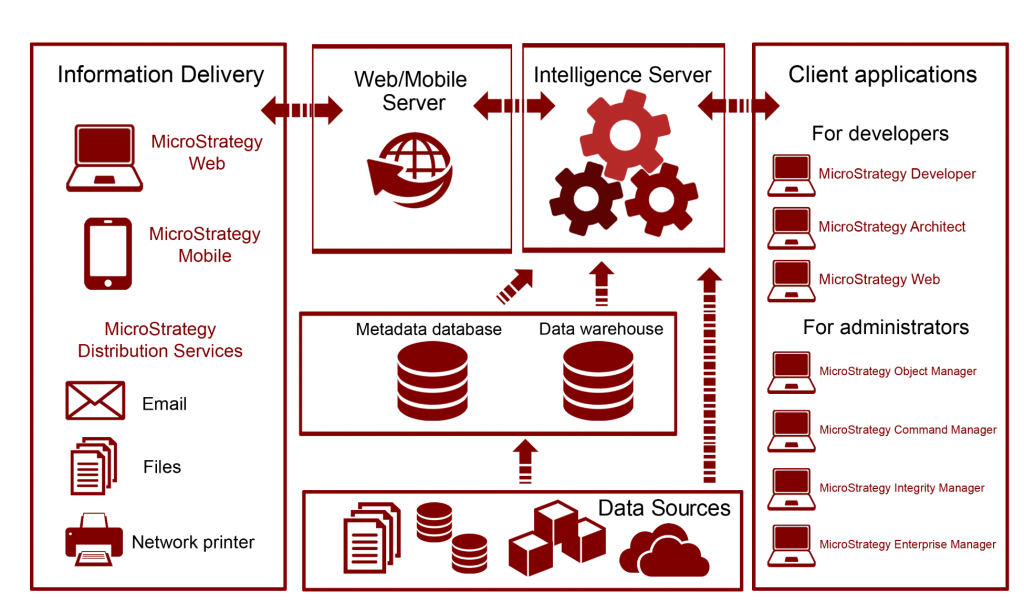
To understand what MicroStrategy is, one must first understand its architecture. Unlike many competitors that grew through fragmented acquisitions, MicroStrategy was built on a single, organic code base. This unified architecture ensures that the platform is exceptionally stable and scalable, capable of serving thousands of users simultaneously without compromising performance.
The Semantic Graph: The Heart of Data Integrity
The “Semantic Graph” is perhaps MicroStrategy’s most significant technological contribution to the software world. In most analytics environments, different departments might define a metric like “Gross Profit” differently, leading to conflicting reports. MicroStrategy solves this by using a centralized metadata layer.
The Semantic Graph acts as a universal translator. It maps complex data sources into familiar business terms. When a user queries the system, they are not interacting with raw SQL; they are interacting with the Semantic Graph. This ensures “one version of the truth” across the entire organization, a critical requirement for enterprise-level security and compliance.
Multi-Tenant Cloud Scalability
As the tech industry shifted toward the cloud, MicroStrategy transitioned its entire suite to a cloud-first model. MicroStrategy Cloud allows organizations to deploy powerful analytics environments on AWS or Azure in minutes. This infrastructure supports multi-tenancy, meaning large conglomerates can host separate, secure environments for various subsidiaries while maintaining a centralized management hub. This scalability is why the platform is favored by government agencies and Fortune 500 companies that manage data at an immense scale.
High-Performance Object-Oriented Engine
The platform’s engine is designed for high-performance data processing. It utilizes advanced caching mechanisms and in-memory data processing (the “Prime” engine) to deliver sub-second response times. Even when dealing with billions of rows of data, MicroStrategy’s tech stack minimizes latency, allowing for real-time data exploration rather than static, day-old reports.
Core Features and the Modern User Experience
For a long time, enterprise software was criticized for being clunky and difficult to navigate. MicroStrategy has spent the last decade reinventing its user interface to compete with modern, agile apps while retaining its underlying power.
Dossiers: Interactive Storytelling
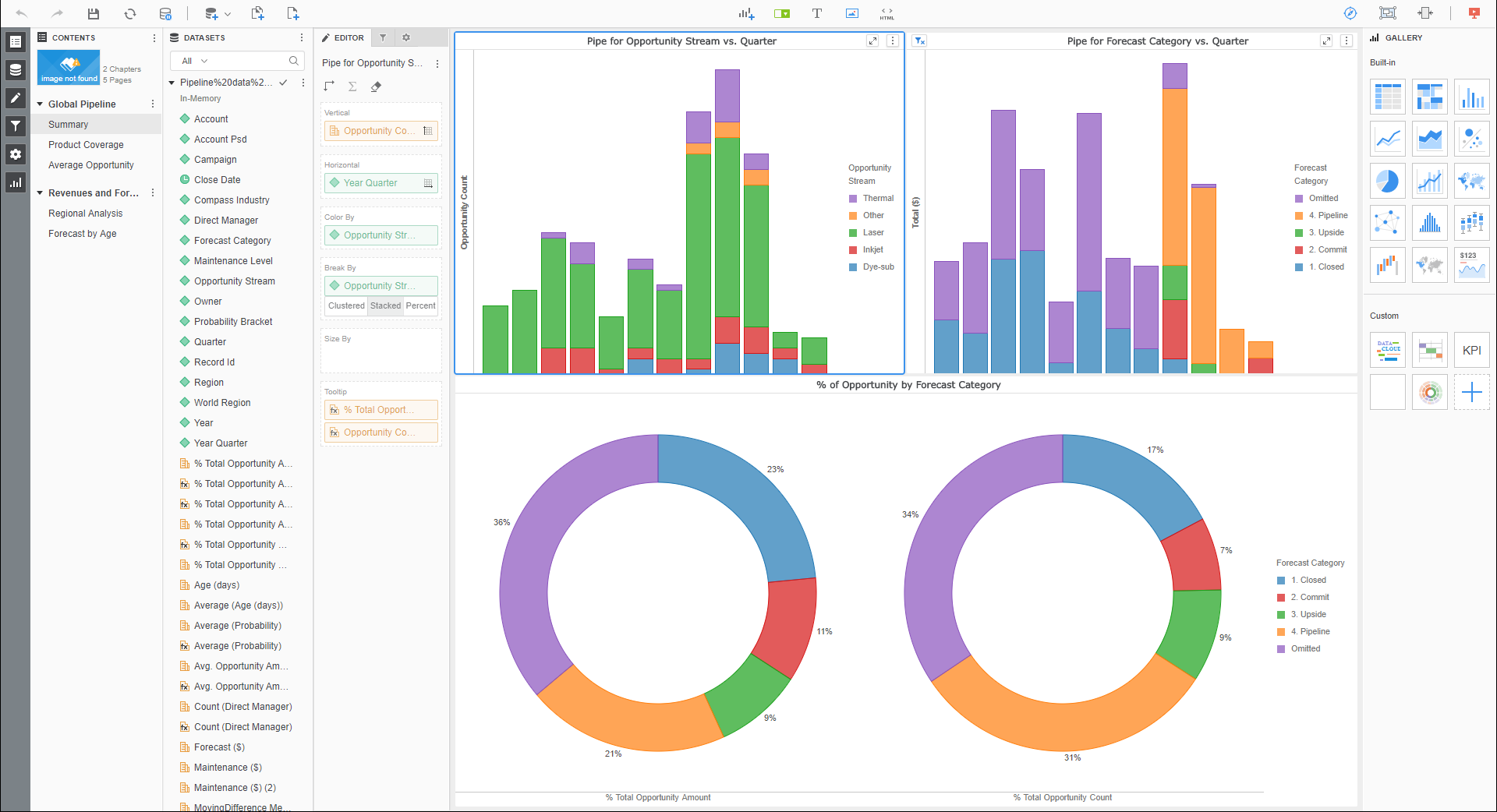
MicroStrategy replaced traditional “reports” with “Dossiers.” A Dossier is more than a dashboard; it is an interactive data story. Using a drag-and-drop interface, users can create visually stunning representations of their data. Dossiers are responsive by design, meaning a visualization created on a desktop will automatically optimize itself for an iPhone or a tablet. This mobility ensures that field agents and traveling executives have access to the same insights as those in the home office.
HyperIntelligence: Zero-Click Analytics
One of the most innovative tech trends introduced by MicroStrategy is HyperIntelligence. Traditional analytics require a user to stop what they are doing, open a BI tool, and search for data. HyperIntelligence flips this workflow. It injects insights directly into a user’s existing applications—such as Outlook, Salesforce, or Google Chrome—via “hyper-cards.”
When a user hovers their mouse over a keyword (like a customer name or a product ID), a card pops up showing real-time KPIs. This “zero-click” philosophy brings the data to the user, drastically increasing the adoption of data-driven habits across a workforce that might otherwise avoid complex software.
Federated Analytics
Recognizing that many organizations use a variety of tools, MicroStrategy developed a “Federated Analytics” strategy. This allows users of other software, such as Tableau, Power BI, or Excel, to connect to the MicroStrategy Semantic Graph. This ensures that even if a data scientist prefers to work in a different environment, they are still using the governed, secure data definitions provided by the MicroStrategy backbone.
The AI Revolution: MicroStrategy AI and Generative Insights
The integration of Artificial Intelligence represents the most significant shift in MicroStrategy’s history. With the launch of MicroStrategy AI, the company has moved beyond descriptive analytics (what happened?) into the realm of generative and predictive analytics (what will happen, and how can I fix it?).
Natural Language Processing and Auto-Answers
MicroStrategy AI leverages Large Language Models (LLMs) to allow users to “talk” to their data. Through a feature called “Auto-Answers,” a user can type a question like, “Which region had the highest turnover in Q3, and what was the primary cause?” The AI parses the request, queries the Semantic Graph, and returns a natural language explanation accompanied by a visualization. This democratizes data, allowing non-technical employees to perform complex analysis without knowing how to write code or build filters.
Auto-Dashboard and Auto-SQL
For developers and power users, the AI tools act as a co-pilot. “Auto-Dashboard” can take a raw dataset and automatically generate a fully formatted Dossier based on the most relevant trends it identifies. Meanwhile, “Auto-SQL” helps data engineers translate business logic into optimized database queries, significantly reducing the time required to build out new data pipelines.
AI Governance and Ethics
A major hurdle for AI in the enterprise is security and “hallucinations” (where AI makes up false data). MicroStrategy tackles this by anchoring its AI in the Semantic Graph. Because the AI is restricted to the pre-defined rules and metrics of the metadata layer, the risk of inaccurate data is virtually eliminated. Furthermore, the platform ensures that sensitive data is never used to train public LLMs, maintaining the rigorous security standards required by digital security protocols.
Integration, Security, and the Digital Ecosystem
In the tech world, no software is an island. MicroStrategy’s value is magnified by its ability to integrate with the modern data stack and provide a secure environment for sensitive information.
Security-First Architecture
MicroStrategy offers some of the most granular security settings in the software industry. Administrators can control access down to the individual row or cell level. For example, a regional manager might be able to see the total sales for their district, but be blocked from seeing the individual salaries of employees within that data set. This level of control is essential for industries like healthcare (HIPAA compliance) and finance (GDPR and SOX compliance).
Seamless API Integration
Through a robust set of REST APIs, MicroStrategy can be embedded into other software products. This is known as “Embedded Analytics.” Many SaaS companies actually use MicroStrategy’s engine to power the “Analytics” tab within their own apps, white-labeling the technology to provide their customers with high-end reporting capabilities without having to build them from scratch.
The Move to MicroStrategy ONE
To simplify its offering, the company recently consolidated its various tools into a single platform known as “MicroStrategy ONE.” This rebranding reflects the shift toward an all-in-one intelligence center that handles data preparation, distribution, visualization, and AI-driven automation within a single pane of glass.
The Future of Enterprise Intelligence
As we look toward the future of technology, MicroStrategy is positioning itself as the “Intelligence Center” for the modern corporation. The trend is moving away from manual data entry and toward automated, proactive insights.
Augmented Analytics and Proactive Alerts
The next phase of the platform involves “Augmented Analytics,” where the system uses machine learning to identify anomalies before a human even thinks to look for them. If sales in a particular store drop by 20% on a Tuesday morning, MicroStrategy can trigger an automated alert to the manager’s smartphone, suggesting a course of action based on historical patterns.
Real-Time Decision Engines
As IoT (Internet of Things) devices proliferate, the volume of streaming data is exploding. MicroStrategy is evolving to process this “data in motion,” allowing logistics companies to track fleets in real-time or utility companies to monitor power grids. The goal is to close the gap between an event occurring and a business responding to it.

Conclusion
MicroStrategy is far more than a legacy software company; it is a sophisticated, AI-driven engine that powers the decision-making of the world’s largest organizations. By combining a rock-solid architectural foundation (the Semantic Graph) with cutting-edge user experiences (HyperIntelligence) and the latest in Generative AI, it remains at the forefront of the technology sector. For any organization looking to transform raw data into a strategic asset, understanding “what is MicroStrategy” is the first step toward mastering the digital landscape. In an era where information is the ultimate competitive advantage, MicroStrategy provides the tools to see clearly, act decisively, and innovate continuously.
aViewFromTheCave is a participant in the Amazon Services LLC Associates Program, an affiliate advertising program designed to provide a means for sites to earn advertising fees by advertising and linking to Amazon.com. Amazon, the Amazon logo, AmazonSupply, and the AmazonSupply logo are trademarks of Amazon.com, Inc. or its affiliates. As an Amazon Associate we earn affiliate commissions from qualifying purchases.